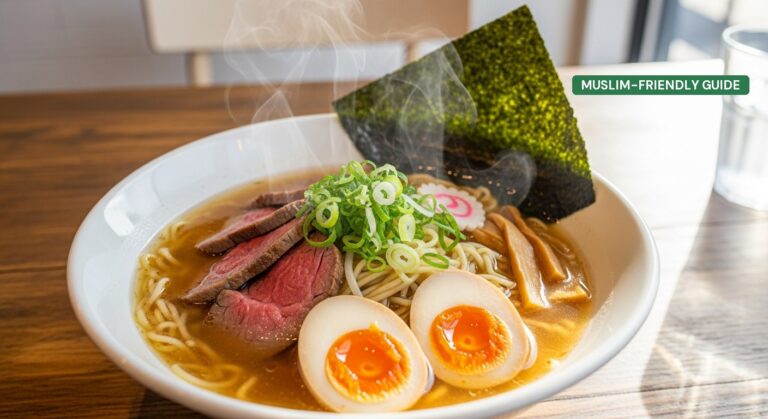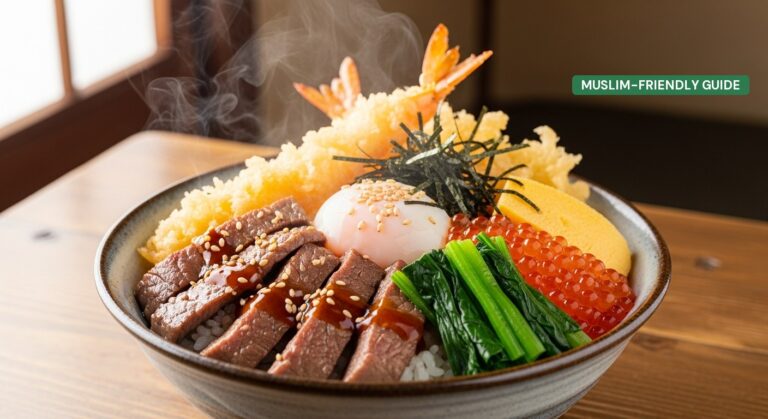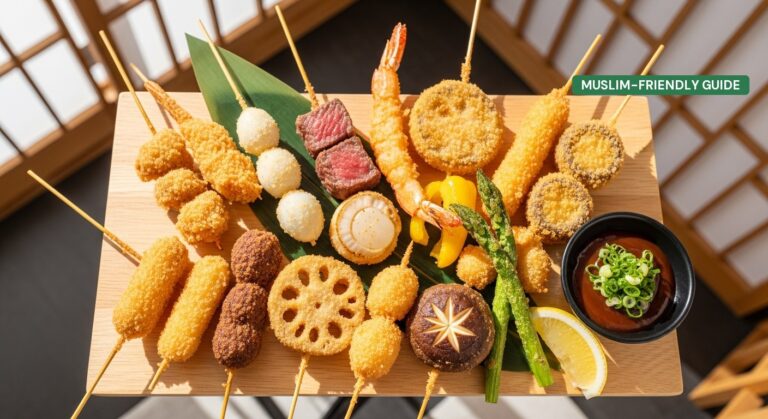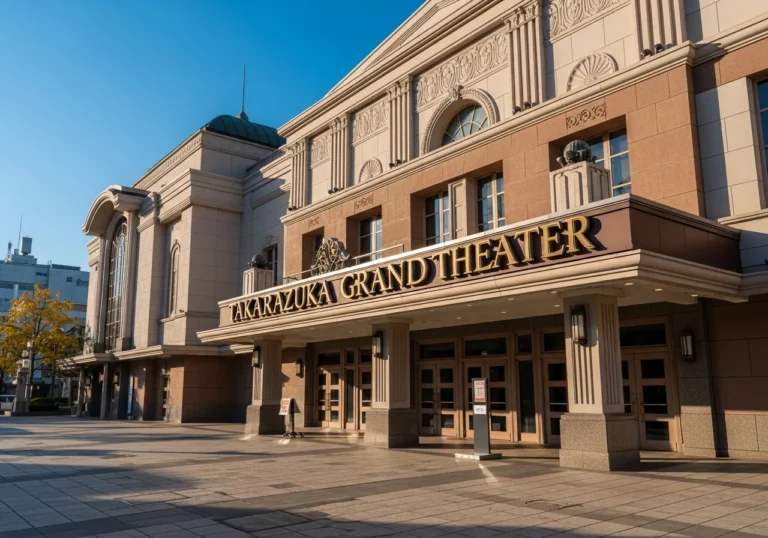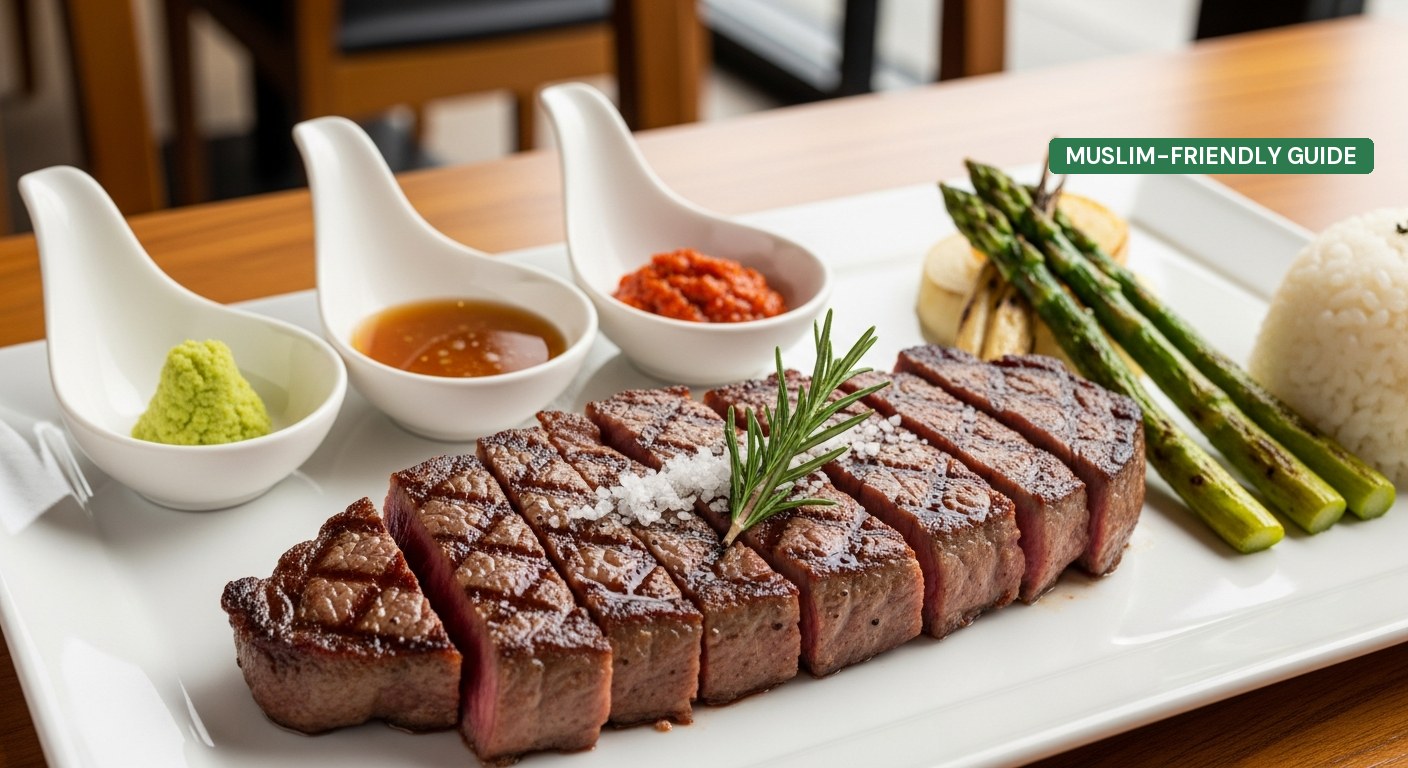
Looking for halal food in Osaka? A5 wagyu — Japan’s most prized beef — is now genuinely accessible to Muslim diners, with three verified halal-certified or Muslim-friendly restaurants across Umeda, Shinsaibashi, and Namba serving everything from crispy gyukatsu to all-you-can-eat yakiniku. Check our Osaka halal guide for the full picture.
MICHI’s Pick — Selected by our Osaka-based team, based on places we’ve visited and on research using Tabelog and Google Maps ratings. In Japan, a Tabelog score of 3.4+ is genuinely high — Japanese reviewers are famously strict, and most locals consider anything above 3.4 a place worth a detour. We feature venues meeting at least one of: Tabelog 3.4+, Google Maps 4.3+, or 100+ reviews — the kind of spots locals quietly trust.
Tabelog and Google Maps scores are accurate as of the time of writing.
1. Halal Wagyu Gyukatsu Shinjuku-tei Osaka Umeda
The Umeda branch of the Shinjuku-tei chain is a halal A5 wagyu steak and wagyu beef cutlet specialty restaurant — no pork, no alcohol, and all dishes prepared with premium halal-certified wagyu.
- ☪️ Halal status: halal-certified
- 🥩 Must-order: A5 Wagyu Gyukatsu Set (¥3,500~)
- 📍 Access: Higashi-Umeda Station (3 min walk)
- 🕒 Hours: 12:00–21:00 (Open daily)
- 📞 Reservation: Recommended
- 🧎 Prayer room: Available on-site
- 🍷 Alcohol served: No
- 🗣 English menu: Yes
- ⭐ Rating: (1,500+ reviews across platforms) (as of writing)
- 🗺 View on Google Maps
- 🔗 Source: halalgourmet.jp
What to order: The gyukatsu is lightly breaded and served with a personal grill so you can cook each bite to your preference; the wagyu yakiniku steak is tender and juicy, finished with a rich house-made sauce that pairs perfectly with rice. A prayer room and separate wudu area are available on the premises, making this one of the most complete halal dining experiences in Osaka.
2. Halal Wagyu Yakiniku Osaka PANGA
A well-known yakiniku restaurant specializing in authentic, top-grade A5 wagyu beef, located in the heart of Shinsaibashi — and especially popular among Muslim travelers for its halal-certified A5 wagyu and halal seasonings and sauces.
- ☪️ Halal status: halal-certified
- 🥩 Must-order: A5 Wagyu 6-Cut Assortment (¥13,200~, for 2)
- 📍 Access: Shinsaibashi Station (2 min walk)
- 🕒 Hours: 18:00–23:30 (Closed: Tuesday)
- 📞 Reservation: Recommended
- 🧎 Prayer room: Available on-site
- 🍷 Alcohol served: No
- 🗣 English menu: Yes
- ⭐ Rating: (500+ reviews) (as of writing)
- 🗺 View on Google Maps
- 🔗 Source: halalgourmet.jp
What to order: PANGA’s A5 wagyu is carefully raised by farmers with balanced feed, resulting in flavorful meat with a smooth texture — they select only the highest quality beef representing just 4% of the top-ranked A5 grade, offered through individual cattle purchases. The restaurant is careful about cross-contamination and prepares food in accordance with Islamic dietary guidelines, using separate utensils and grills for halal meals upon request. If you want to explore the best food in Osaka, this is the wagyu benchmark.
3. Yakiniku Zerohachi Namba OCAT
Located at Namba OCAT, Zerohachi has been a favourite of Muslims in Osaka for yakiniku — the restaurant uses all halal meats and seasonings, so Muslim customers can dine with peace of mind.
- ☪️ Halal status: Muslim-friendly
- 🥩 Must-order: Black Course All-You-Can-Eat (¥6,500~/person, 120 min)
- 📍 Access: JR Namba Station (1 min walk)
- 🕒 Hours: Lunch 11:00–16:00 / Dinner 17:00–22:00 (Closed: 3rd Wednesday)
- 📞 Reservation: Recommended
- 🧎 Prayer room: Available on-site
- 🍷 Alcohol served: Yes
- 🗣 English menu: Limited
- ⭐ Rating: (600+ reviews) (as of writing)
- 🗺 View on Google Maps
- 🔗 Source: muslim-guide.jp
What to order: The halal meats on offer include the special halal Akage Wagyu beef and halal Kobe beef — Akage Wagyu in particular has a lot of lean meat, characterized by its delicate umami flavor and refreshing texture. The restaurant provides a prayer room with an ablution area and telekung for customers’ convenience. Note that alcohol is available on the premises — Muslim diners should be aware of this when choosing seating. To plan your full trip around the area, explore more of Osaka with our area guides.
Frequently Asked Questions
Q. Is it easy to find halal food in Osaka?
Osaka has a growing and well-documented halal dining scene, particularly in Umeda, Shinsaibashi, and Namba. Halal-certified restaurants, prayer spaces, and mosques are spread across the city, and dedicated platforms like halalgourmet.jp and muslim-guide.jp make it straightforward to verify options before you visit.
Q. What does “Muslim-friendly” mean in Japan?
In Japan, “Muslim-friendly” typically means a restaurant uses no pork and no lard, and may avoid alcohol in cooking — but it does not always mean the kitchen is halal-certified by a formal body. Some restaurants describe themselves as “100% Halal” while noting that the restaurant itself is not formally halal-certified, but all foods served are halal — always check the specific certification status before dining.
Q. Are there prayer rooms near halal restaurants in Osaka?
Yes — all three restaurants in this guide have prayer rooms on-site or immediately adjacent. Shinjuku-tei Umeda provides a prayer space, private rooms, and a comfortable, spacious interior; Osaka PANGA also has a prayer room available; and Zerohachi has a prayer space, offers prayer items for loan, and displays a qibla marker.
Q. What hidden ingredients should Muslim travelers watch out for in Japan?
Beyond pork, the most common hidden concerns in Japanese restaurants are mirin (a sweet rice wine used in sauces and marinades), sake (used in broths and glazes), and dashi stock made from bonito (fish) — which is not haram but may surprise diners expecting a beef-only broth. At halal-certified restaurants like those in this guide, all sauces and seasonings are verified halal, so cross-contamination risk is minimized. Always confirm with staff if you have specific concerns.
Last updated: July 4, 2026 · Corrections: [email protected]