Last updated: July 3, 2026
This article reflects information available at the time of writing. Check Google Maps for the latest hours and availability.
Introduction
Tsuruhashi doesn’t need to sell itself. The smoke hits you before you even exit the station — charred batter, sweet Worcestershire sauce, the faint tang of bonito flakes catching heat. This is one of Osaka’s oldest working-class neighbourhoods, and its okonomiyaki culture runs deep. While tourists queue up in Dotonbori for the same three chain restaurants, locals in Tsuruhashi are pulling up stools at iron-plate counters that have barely changed since the 1960s.
The neighbourhood sits at the edge of Osaka’s Koreatown, which means the food scene here has its own particular energy — unpretentious, cash-heavy, and genuinely local. You won’t find Instagram-optimised interiors or English-language sandwich boards. What you will find is some of the most honest okonomiyaki in the city: thick, cabbage-loaded, cooked on a flat iron plate right in front of you, and priced for people who eat here every week. If you want to understand the best food in Osaka, Tsuruhashi is one of the places you have to eat.
This guide covers four iron-plate spots within walking distance of Tsuruhashi Station — from the neighbourhood’s founding chain to a tiny family-run counter that’s been feeding the same regulars for decades. Prices are low, portions are generous, and the atmosphere is the real thing. For more on what to do and eat in the area, explore more of Tsuruhashi with our full neighbourhood guide.
1. Tsuruhashi Fugetsu (鶴橋風月)
- 📍 2-1-17 Tsuruhashi, Ikuno-ku, Osaka-shi, Osaka 544-0011
- 🕐 11:00–22:00 (last order 21:30) (as of May 2026)
- 💰 ¥1,000–¥2,000 per person (food only) / ¥1,500–¥2,500 (with drinks)
- 🚃 Tsuruhashi Station (1 min walk)
- 🗣 English menu: Available
- 🗺 Open in Google Maps
- 📋 Tabelog
What to order: Fugetsu-yaki modan (¥1,320)
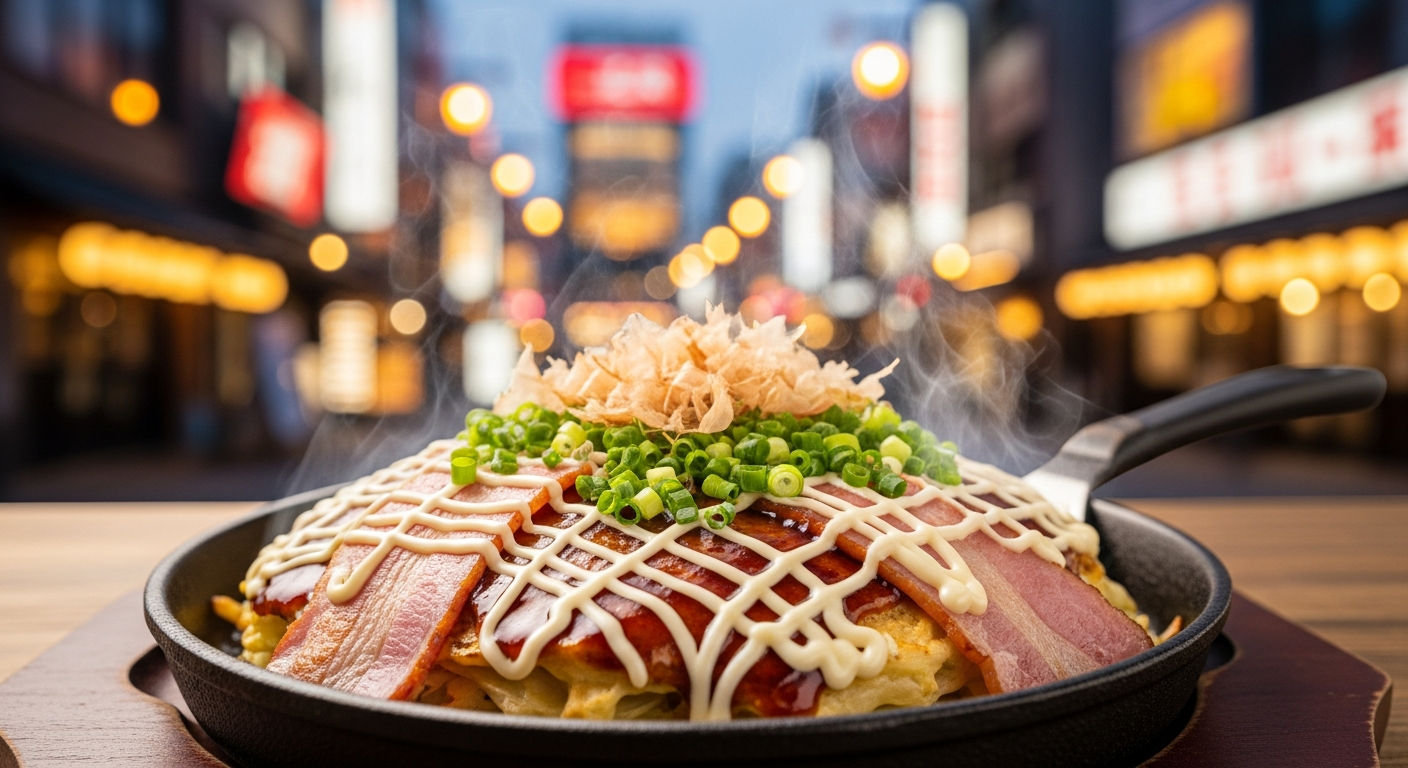
The first Fugetsu store opened right here in Tsuruhashi, and the chain still honours that origin even as it has grown to over 80 locations worldwide. The Tsuruhashi branch is the one to visit — a step up from the mall outposts, with a counter that faces the griddle and staff who cook everything for you. The okonomiyaki is made with minimal batter and loaded with cabbage, fluffy on the inside with a slight char on the outside. Order the modan-yaki if you want the full picture: it features a generous serving of Fugetsu’s uniquely boiled noodles, grilled into the pancake for a properly hearty result.
2. Tsuruhashi Okonomiyaki Omoni (鶴橋 お好み焼き オモニ)
- 📍 3-3-2 Momodani, Ikuno-ku, Osaka-shi, Osaka 544-0012
- 🕐 11:30–22:00 (Wednesday–Sunday); closed Monday and Tuesday (as of May 2026)
- 💰 ¥1,000–¥2,000 per person (food only) / ¥1,500–¥2,500 (with drinks)
- 🚃 Tsuruhashi Station (7 min walk)
- 🗺 Open in Google Maps
- 📋 Tabelog
What to order: Buta-tama (pork and egg okonomiyaki) (¥950)
Omoni sits just past the Korean Town in Tsuruhashi, and its calling cards are a fruity, sweet house sauce and a genuinely wide variety of okonomiyaki options. With 35 types of okonomiyaki and over 30 toppings available, you can build combinations you won’t find at most places. The batter is thick and soft — the kind of okonomiyaki that feels like it was made for a rainy Tuesday, not a food tour. You can customise your order to your own liking, from deep-fried squid to double or triple eggs. Closed Mondays and Tuesdays — plan accordingly.
3. Marufuku (丸福)
- 📍 2-14-7 Tsuruhashi, Ikuno-ku, Osaka-shi, Osaka 544-0011
- 🕐 11:00–20:00; closed Wednesdays (occasional irregular closures) (as of May 2026)
- 💰 ¥700–¥1,500 per person (food only) / ¥1,000–¥2,000 (with drinks)
- 🚃 Tsuruhashi Station (3 min walk)
- 🗺 Open in Google Maps
- 📋 Tabelog
What to order: Ika-tama (squid and egg okonomiyaki) (¥700)
Marufuku is a Tsuruhashi institution — okonomiyaki, kushiage, and a cafeteria-style ease that makes it feel like a neighbourhood canteen rather than a restaurant. The kushikatsu here starts at ¥60 a skewer, which tells you everything about the pricing philosophy. The okonomiyaki is the fluffy, lightly charred Osaka style — nothing experimental, nothing overworked. The sauce comes in two versions: regular or spicy, and the owner is the kind of host who makes first-timers feel like regulars within minutes. Come early — it fills up fast and doesn’t take reservations.
4. Narikoma-ya (成駒家)
- 📍 3-8-15 Momodani, Ikuno-ku, Osaka-shi, Osaka 544-0012
- 🕐 11:00–21:00; closed Wednesdays (as of May 2026)
- 💰 ¥500–¥1,200 per person (food only) / ¥800–¥1,800 (with drinks)
- 🚃 Tsuruhashi Station (7 min walk)
- 🗺 Open in Google Maps
- 📋 Tabelog
What to order: Buta-tama (pork and egg okonomiyaki) (¥530)
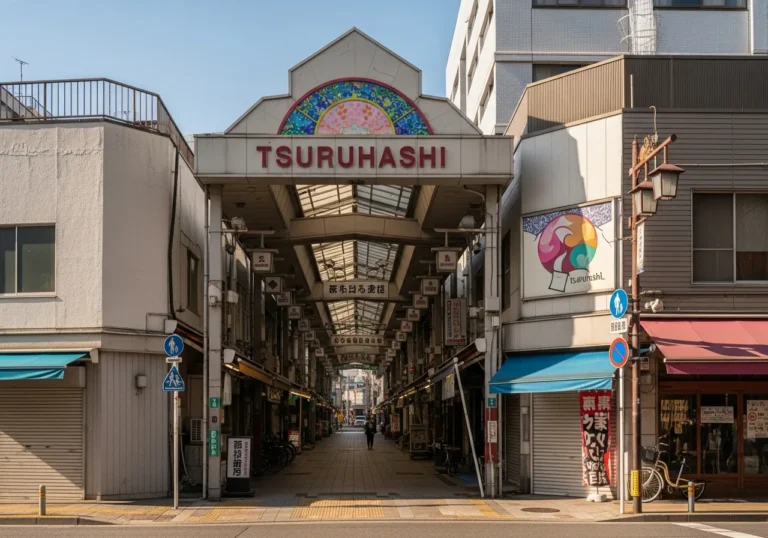
Narikoma-ya sits inside the Koreatown strip and looks exactly like what it is: a Showa-era okonomiyaki counter that has never needed a rebrand. The interior is all old iron-plate tables and round stools, with the kind of atmosphere that makes you feel like you’ve wandered into someone’s living room. The buta-tama at ¥530 is one of the best-value okonomiyaki in the neighbourhood — thick, properly seasoned, with a spicy house sauce that cuts through the richness. They also do a soft-serve ice cream machine that’s been running since the place opened, which is either charming or alarming depending on your outlook. The MICHI Osaka travel guide recommends pairing a visit here with a walk through the Koreatown arcade just outside.
How to Order
Most Tsuruhashi okonomiyaki shops fall into two camps: places where the staff cook everything on the iron plate in front of you, and places where you get a raw bowl of batter and toppings and do it yourself. At Fugetsu and Omoni, the staff handle the cooking. At Marufuku and Narikoma-ya, you may be handed a bowl and a spatula — if you’re unsure, just ask or watch the table next to you.
The standard order is a buta-tama (pork and egg) to start. Once you’ve got the baseline, branch out: modan-yaki adds yakisoba noodles to the mix, negiyaki swaps most of the cabbage for spring onion, and ika-tama uses squid instead of pork. Toppings — bonito flakes, aonori (dried seaweed), mayonnaise, and Worcestershire-style sauce — usually come on the side or are applied by the staff at the end.
Don’t flip the okonomiyaki too early. If you’re cooking yourself, wait until the bottom is properly set and golden — usually 4–5 minutes on a hot plate. Pressing down with the spatula is fine; it helps the heat distribute. Most shops will step in and help if they see you struggling, so don’t be shy about asking.
Cash is the safest bet at smaller spots like Marufuku and Narikoma-ya. Fugetsu and Omoni accept cards. Lunch hours (11:30–13:30) are busy on weekends; arriving just before opening or after 14:00 on weekdays gets you a seat without a wait.
FAQ
Q: Is okonomiyaki in Tsuruhashi expensive?
A: No — it’s one of the most affordable eating options in Osaka. A single okonomiyaki runs ¥530–¥1,320 depending on the shop and toppings. A full meal with a beer comes in at ¥1,500–¥2,500 at most places. Marufuku and Narikoma-ya are the cheapest of the four; Fugetsu and Omoni sit slightly higher but are still well under ¥2,000 per person for food.
Q: Do shops in Tsuruhashi have English menus?
A: Fugetsu has a multilingual menu and English-friendly service. Omoni has a picture menu that makes ordering manageable without Japanese. Marufuku and Narikoma-ya are Japanese-only, but the menus are short and pointing at what the next table is eating works perfectly well.
Q: When is the best time to visit?
A: Weekday lunches (11:30–13:00) and early evenings (17:00–18:30) are the quietest windows. Weekend lunchtimes get busy, especially at Fugetsu which is right outside the station. Omoni, Marufuku, and Narikoma-ya are closed on certain weekdays — check before you go. Narikoma-ya and Marufuku both close on Wednesdays.
Information is accurate as of May 2026. We recommend checking Google Maps for the latest hours and prices before visiting.