Last updated: July 3, 2026
This article reflects information available at the time of writing. Check Google Maps for the latest hours and availability.
Introduction
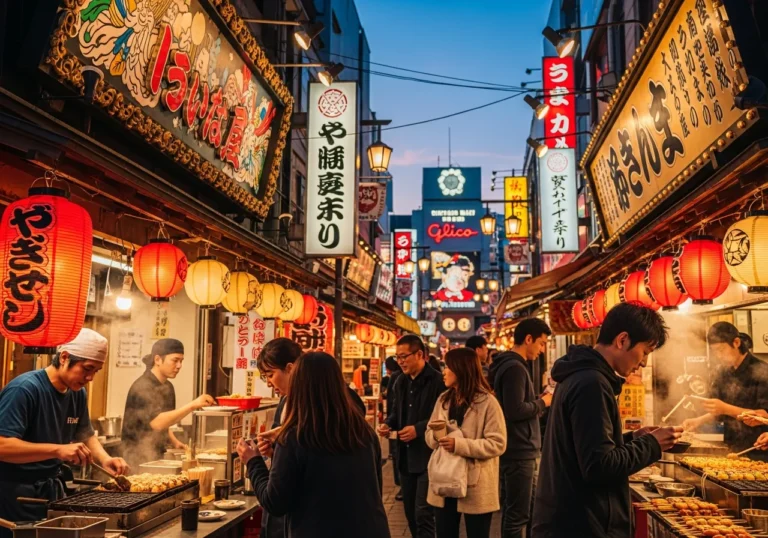
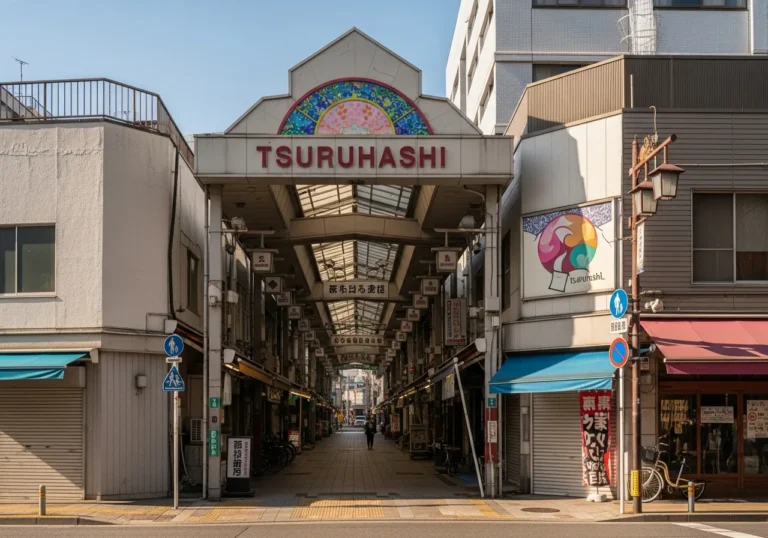
Step off the JR Loop Line at Tsuruhashi and the smell hits you before you’ve even cleared the ticket gates — charcoal smoke, sesame oil, and something frying in a wok somewhere nearby. This is Osaka’s Koreatown, and it’s been feeding the city since the post-war years when Korean immigrants built a market out of nothing in the rubble of Higashinari Ward.
The area splits into two distinct zones. The covered arcade right outside the station — Tsuruhashi Shotengai — is older, denser, and more chaotic: narrow lanes packed with kimchi vendors, yakiniku joints, and offal stalls that have barely changed in decades. Walk fifteen minutes south and you hit Miyuki-dori, the main drag of Ikuno Koreatown, where the crowd skews younger and the food leans into Korean street-food trends — cheese corn dogs, kimbap rolls, hotteok pancakes. Both are worth your time, and this guide covers the best street food across both zones.
If you’re building a full day around eating, this is one of the most rewarding neighbourhoods in the city for it. For more ideas on what to eat across the city, check out the best food in Osaka — but Tsuruhashi deserves its own afternoon. Come hungry, bring cash (many stalls are cash-only), and plan to explore more of Tsuruhashi beyond just the food.
1. Mugi no Ie (麦の家)
- 📍 5-3-17 Momodani, Ikuno-ku, Osaka (Miyuki-dori Shopping Street)
- 🕐 9:00–16:00 (or until sold out) (as of May 2026)
- 💰 ¥250–¥800 per roll (food only)
- 🚃 Tsuruhashi Station (15 min walk) / Momodani Station (5 min walk)
- 🗺 Open in Google Maps
- 📋 Tabelog
What to order: Yakiniku kimbap (¥600–¥800), Bakudan kimbap — limited 50 rolls daily (¥700)
The kimbap specialist that everyone in Koreatown talks about. Mugi no Ie makes everything to order — no pre-rolls sitting in a case — and runs through 15-plus varieties daily, from standard sesame-and-pickled-radish to a yakiniku roll stuffed with wagyu beef. On weekends, the queue forms before 10am and the best rolls sell out by early afternoon. Get here early or ask them to hold a roll when you arrive. Note: an older Tabelog listing shows a previous location as relocated — the current Miyuki-dori address above is the active shop.
2. Choi Obasan no Kimchi (崔おばさんのキムチ)
- 📍 3-15-1 Higashikobashi, Higashinari-ku, Osaka
- 🕐 10:00–20:00 (diner last order 19:30) (as of May 2026)
- 💰 ¥400–¥1,200 (street food / diner counter)
- 🚃 Tsuruhashi Station (2 min walk)
- 🗺 Open in Google Maps
- 📋 Tabelog
- 🌐 Official site
What to order: Seafood pajeon / haemul jeon (¥600–¥800), cup-size portion to eat standing at the counter
Right at the station exit, yellow roof, impossible to miss. The kimchi shop is the main draw — over 40 varieties including tomato kimchi and mountain yam kimchi — but the real reason to stop is the counter out front where they fry pajeon to order. The chive-and-green-chilli version is sharp and savoury, and the portions are sized for eating on your feet. Closed Wednesdays (Thursdays if Wednesday falls on a public holiday).
3. Doi Shoten (土井商店)
- 📍 3-15-2 Higashikobashi, Higashinari-ku, Osaka
- 🕐 11:00–20:00 (varies; check before visiting) (as of May 2026)
- 💰 ¥400–¥900 (food only)
- 🚃 Tsuruhashi Station (1 min walk)
- 🗺 Open in Google Maps
- 📋 Tabelog
What to order: Tteokbokki with boiled egg (¥400–¥500 small), nira pajeon with green chilli (¥600)
Doi Shoten is the closest thing Tsuruhashi has to a proper Korean pojangmacha — a street-stall counter where you sit down, order tteokbokki and pajeon, and eat while the owner cooks in front of you. The tteokbokki is braised long enough that the sauce clings to the rice cakes without being aggressively spicy. The chive pajeon with green chilli is the one to get if you want heat. Sit at the outdoor counter; it’s the whole point.
4. Jonno Hattog (ジョンノハットグ)
- 📍 5-7-1 Momodani, Ikuno-ku, Osaka
- 🕐 10:00–19:00, no regular closing day (as of May 2026)
- 💰 ¥400–¥600 per corn dog (food only)
- 🚃 Tsuruhashi Station (15 min walk) / Momodani Station (5 min walk)
- 🗺 Open in Google Maps
- 📋 Tabelog
What to order: Potato cheese hatogu (¥480), hotteok with nuts and sunflower seeds (¥350)
The queue at Jonno Hattog is the first thing you see when you enter Miyuki-dori from the Tsuruhashi side. The Korean corn dog — battered, fried, coated in crushed potato — is the signature, and the cheese pull when you bite in is genuinely satisfying rather than just photogenic. They also do hotteok, the sweet Korean pancake stuffed with brown sugar, nuts, and sunflower seeds. Order both, eat the hotteok while the corn dog cools slightly, and you’ve covered two of Koreatown’s essential snacks in one stop.
5. Kimchi no Yamada Shoten (キムチの山田商店)
- 📍 5-3-17 Momodani, Ikuno-ku, Osaka (Miyuki-dori Shopping Street)
- 🕐 10:00–18:00, closed Wednesdays (as of May 2026)
- 💰 ¥100–¥300 per tasting / ¥500–¥2,000 for take-home packs
- 🚃 Tsuruhashi Station (15 min walk) / Momodani Station (5 min walk)
- 🗺 Open in Google Maps
- 📋 Tabelog
What to order: Yangnyeom chicken skewer (¥100 per skewer), napa cabbage kimchi to take home (from ¥600)
Yamada Shoten is the kimchi shop that locals actually buy from — the kind of place where you can taste before you buy and the staff will talk you through the difference between the squid-and-cucumber version and the standard napa. The yangnyeom chicken skewers out front are ¥100 each and properly spiced: sticky, sweet-hot glaze over juicy chicken. It’s the best ¥100 you’ll spend in Koreatown. The kimchi itself is made fresh daily and worth packing in your bag for the journey home.
6. Songhot Osaka (ソンホット大阪)
- 📍 Miyuki-dori Shopping Street, 5-chome, Momodani, Ikuno-ku, Osaka
- 🕐 10:00–18:00 (varies by day) (as of May 2026)
- 💰 ¥500–¥700 per corn dog (food only)
- 🚃 Tsuruhashi Station (15 min walk) / Momodani Station (5 min walk)
- 🗺 Open in Google Maps
- 📋 Tabelog
What to order: Cheese hatogu (¥550–¥650)
Songhot opened in 2023 and quickly became one of the most-queued spots on Miyuki-dori. The difference from other corn dog stalls is the frying: each one is made to order, which means a 5–7 minute wait, but the batter comes out genuinely crispy rather than soggy. Order at the vending machine, take your ticket, and wait by the counter. The cheese pull is real and the batter has a slight sweetness that works well with the salty mozzarella inside. If Jonno Hattog has a long queue, this is the move.
7. Fukuichi (福一)
- 📍 5-8-3 Momodani, Ikuno-ku, Osaka
- 🕐 Mon–Fri 17:00–22:00; Sat, Sun & holidays 11:30–15:00 and 17:00–22:00; closed Tuesdays (as of May 2026)
- 💰 ¥700–¥1,500 per person (food only)
- 🚃 Tsuruhashi Station (15 min walk) / Momodani Station (5 min walk)
- 🗺 Open in Google Maps
- 📋 Tabelog
What to order: Haemul pajeon / seafood pancake (¥800–¥1,000), kimchi jeon (¥700)
Fukuichi is the sit-down pajeon specialist that regulars come back to specifically for the pancakes. The haemul version is thick, loaded with squid and spring onion, and arrives at the table still sizzling. It’s not a grab-and-go spot — you’ll want a table and probably a cold Hite beer alongside — but the pancakes here are a cut above what you’ll find at most street stalls. Weekday evenings are the quietest time to visit; weekend lunches fill up fast.
8. Nori-chan (のりちゃん)
- 📍 Miyuki-dori Shopping Street, Momodani, Ikuno-ku, Osaka
- 🕐 10:00–18:00, closed Wednesdays (as of May 2026)
- 💰 ¥400–¥700 per portion (food only)
- 🚃 Tsuruhashi Station (15 min walk) / Momodani Station (5 min walk)
- 🗺 Open in Google Maps
- 📋 Tabelog
What to order: Yangnyeom chicken cup (¥400–¥500)
Nori-chan is the yangnyeom chicken stall that locals on the Maido Osaka guide single out by name — and for good reason. The chicken comes in a small paper cup, coated in a sweet-spicy sauce that’s more nuanced than the standard Koreatown version: there’s a slight smokiness underneath the heat. It’s the right size for a mid-walk snack without filling you up before the next stop. The stall is small and easy to walk past, so look for the queue rather than the signage.
How to Order
Most street food stalls in Tsuruhashi and Miyuki-dori operate on a simple point-and-pay system — you point at what you want, they tell you the price, you hand over cash. A few newer spots (including Songhot Osaka) use ticket vending machines at the entrance, so have ¥500–¥1,000 coins ready. Card acceptance is improving but still patchy; assume cash-only unless you see a card reader at the counter.
For kimbap at Mugi no Ie, you can ask for your roll to be cut into bite-size pieces — just mime a cutting motion and say “katto” (cut). They’ll hand it back with chopsticks. At tteokbokki stalls like Doi Shoten, small portions (ko, or “small”) are usually ¥300–¥500 and sized for one person eating standing up.
Most shops open around 10:00–11:00 and close by 18:00–19:00. Wednesday is the most common closing day across both Tsuruhashi Shotengai and Miyuki-dori — plan around it. On weekends, popular spots like Mugi no Ie and Jonno Hattog sell out before 15:00, so arrive before noon if you want the full selection. The MICHI Osaka travel guide has more timing tips for navigating Osaka’s food neighbourhoods.
FAQ
Q: Is street food in Tsuruhashi Koreatown expensive?
A: No. Most individual items run ¥300–¥700. A corn dog is ¥480–¥650, a kimbap roll is ¥250–¥800 depending on fillings, and a small tteokbokki is ¥300–¥500. Budget ¥2,000–¥3,000 for a full afternoon of grazing across both zones.
Q: Do shops in Tsuruhashi have English menus?
A: Some do, particularly the newer stalls on Miyuki-dori that cater to tourists. Older shops in Tsuruhashi Shotengai typically don’t, but most items are visible in the display case or being cooked in front of you — pointing works fine. A few shops like Choi Obasan no Kimchi have English on their official website, which is worth checking before you go.
Q: When is the best time to visit?
A: Weekday mornings (10:00–12:00) are the calmest. Weekend afternoons from 13:00 onward get genuinely crowded, especially on Miyuki-dori. If you want to hit Mugi no Ie for kimbap, arrive before noon on any day — they sell out early and don’t restock. Wednesday is the most common closing day across the area, so avoid planning your visit then.
Information is accurate as of May 2026. We recommend checking Google Maps for the latest hours and prices before visiting.