Last updated: July 3, 2026
This article reflects information available at the time of writing. Check Google Maps for the latest hours and availability.
Introduction
Most visitors to Tsuruhashi come for the yakiniku smoke and the Korean market lanes. They eat their fill of grilled beef, pick up some kimchi, and leave without realising that the neighbourhood also runs one of Osaka’s more interesting ramen circuits. That’s a mistake worth correcting.
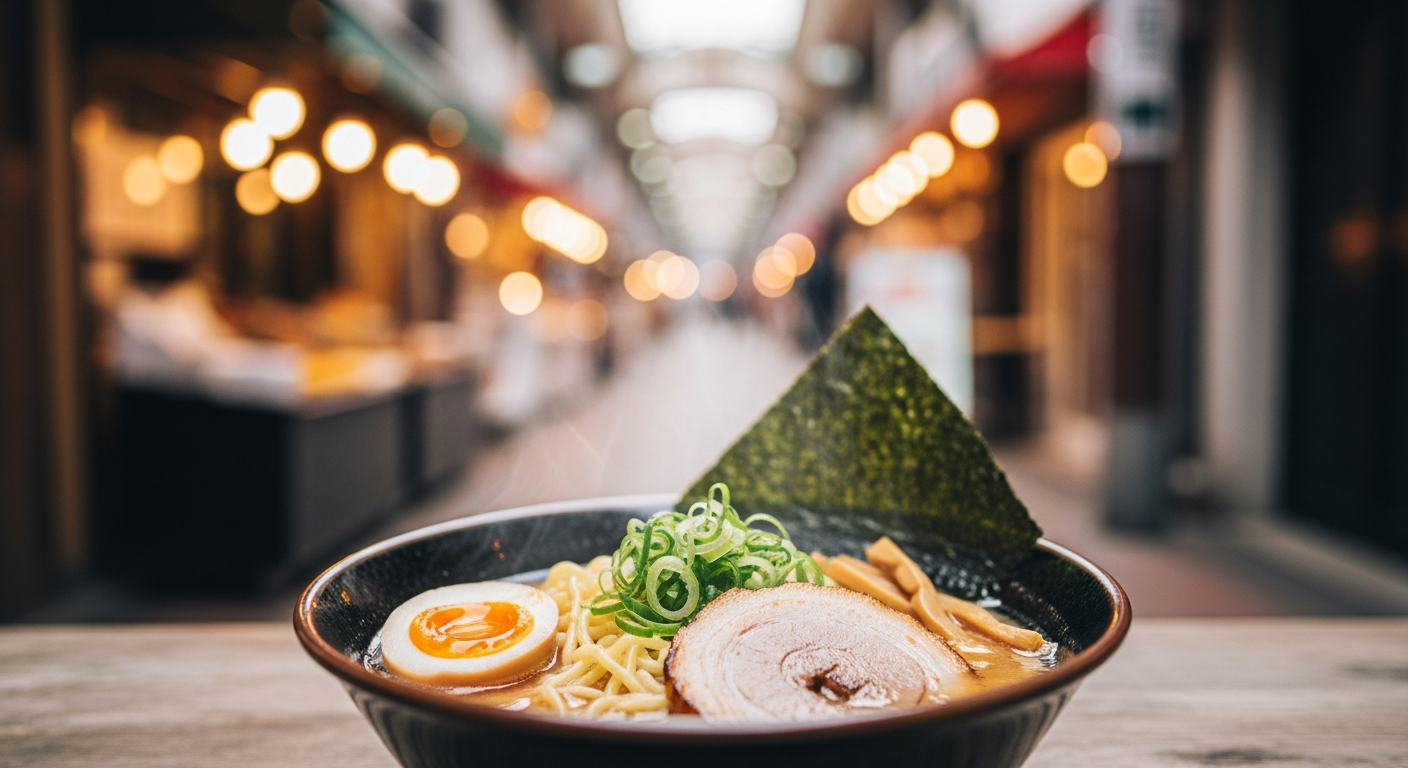
The ramen here reflects the area’s character: punchy, unpretentious, and built for people who actually live nearby. You’ll find garlic-forward tonkotsu that locals eat as a post-drinking wind-down, chicken paitan bowls that have earned Tabelog 100 recognition two years running, and a Korean-inflected horumon mazesoba that you won’t find anywhere else in the city. The price ceiling is low — most bowls land between ¥850 and ¥1,300 — and the walk between shops is rarely more than ten minutes.
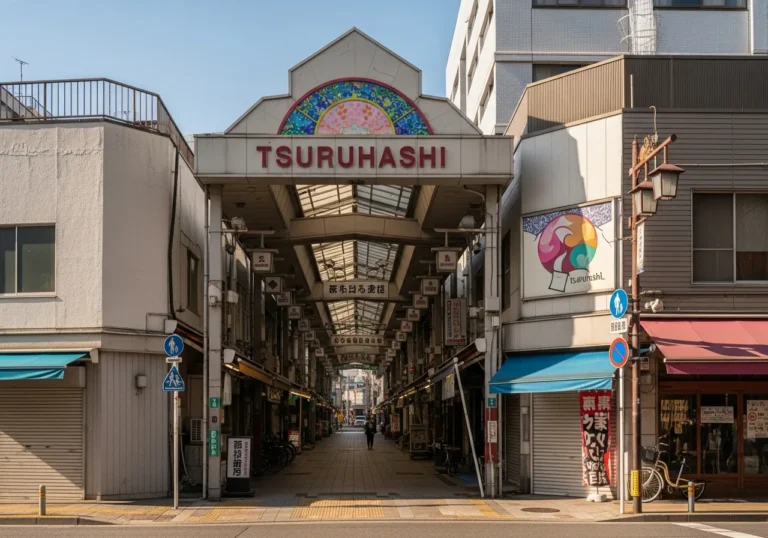
Tsuruhashi sits at the junction of the JR Osaka Loop Line, the Kintetsu Osaka/Nara Lines, and the Osaka Metro Sennichimae Line, which makes it easy to fold into a broader day out. If you’re already planning to explore more of Tsuruhashi — the market, the Korean town, the covered shotengai — the ramen shops here are a natural extension of that, not a detour. For context on how this neighbourhood fits into the best food in Osaka, it punches well above its tourist profile.
This guide covers five shops, ranging from a stamina garlic bowl one minute from the station exit to a refined chicken soba that regularly draws queues from across the city.
1. Ninniku Ramen Sanpei (にんにくらーめん 賛平)
- 📍 18-2 Funahashicho, Tennoji-ku, Osaka
- 🕐 Mon–Sat 11:30–15:00, 18:00–24:00; Sun 11:30–15:00, 18:00–23:00 (as of May 2026)
- 💰 ¥850–¥1,100 (food only)
- 🚃 Tsuruhashi Station (1 min walk)
- 🗺 Open in Google Maps
- 📋 Tabelog
What to order: Sanpei Ramen with garlic (¥850); Chashu Men (¥1,000)
Practically on top of the station exit, Sanpei is the garlic ramen shop that Tsuruhashi regulars treat as a refuelling stop. The shop sits just west of Tsuruhashi Station and regularly draws a queue alongside its neighbour. The base is a collagen-rich blend of pork and chicken paitan, with Aomori garlic and Kujo spring onions cutting through the richness. You choose your garlic level when you order — “normal” is already assertive, so plan your afternoon accordingly. The lunch set adds rice and kimchi at no extra charge, which makes the ¥850 bowl feel like a genuine deal. Reviews from late 2025 confirm it’s still consistently full, with a sign-in system for the queue.
2. Ramen Shuki (らぁめん しゅき)
- 📍 3-14-10 Higashikobashi, Higashinari-ku, Osaka
- 🕐 Wed–Mon 11:30–15:00, 18:00–21:00; closed Tuesday (as of May 2026)
- 💰 ¥1,100–¥1,500 (food only)
- 🚃 Tsuruhashi Station (2 min walk)
- 🗺 Open in Google Maps
- 📋 Tabelog
What to order: Tori Paitan Shoyu Ramen (¥1,200); Shio Tsukemen (¥1,380)
Ramen Shuki has been selected for the Tabelog Ramen Osaka “Tabelog 100” list and consistently scores in the 3.70 range with over 1,100 reviews. It’s 185 metres from Tsuruhashi Station — a two-minute walk at most. The chicken paitan here is the kind of bowl that makes you understand why people queue: the broth is dense and savoury without being cloying, the house-made noodles have real chew, and the chashu is low-temperature cooked to a silky finish. The seasonal limited editions — a cold shio tsukemen in summer, occasional collaboration bowls — are worth checking their social media for before you visit. Arrive at opening or expect to wait.
3. Ramen and Dining Akayoroshi (らぁ麺と食専科 あかよろし)
- 📍 1-1-1 Oiminamimachi, Higashinari-ku, Osaka
- 🕐 Thu–Tue 11:30–14:30, 18:00–22:00; closed Wednesday (as of May 2026)
- 💰 ¥1,000–¥2,500 (food only) / ¥1,500–¥3,000 (with drinks, evening)
- 🚃 Tsuruhashi Station (5 min walk)
- 🗺 Open in Google Maps
- 📋 Tabelog
What to order: Tokusei Ramen (¥1,300–¥1,500); small dishes at dinner
Akayoroshi is a ramen and small dishes restaurant in Tsuruhashi that doubles as a proper evening dining spot — unusual for a ramen shop. It holds one of the highest Google Maps ratings in the area, with a score of 4.7. The ramen itself leans refined: clear, deeply flavoured broths, careful seasoning, and toppings that look considered rather than piled on. At dinner, the kitchen also puts out izakaya-style small plates, which makes it a good option if you want to eat slowly with a drink rather than bolt a bowl and leave. Budget around ¥2,000–¥2,999 for an evening visit; lunch runs under ¥1,000.
4. Men to Niku Daitsuru (麺と肉 だいつる)
- 📍 3-1-17 Higashikobashi, Higashinari-ku, Osaka
- 🕐 Mon–Fri 11:00–15:00, 18:00–22:00; Sat–Sun 11:00–22:00 (as of May 2026)
- 💰 ¥900–¥1,300 (food only)
- 🚃 Tsuruhashi Station (3 min walk)
- 🗺 Open in Google Maps
- 📋 Tabelog
What to order: Umakara Ramen (spicy pork, ¥950); Horumon Mazesoba (¥1,000)
This is the most Tsuruhashi-specific bowl on the list. The signature dish brings an unusual Korean flavour — topped with pork belly, kimchi, crispy potato chips, and chilli powder. The shop is small and cramped, with a single counter next to the kitchen — perfect for watching the staff work. The horumon (offal) mazesoba is the other reason to come: it’s a soupless bowl loaded with tender intestine, spring onion, and a punchy tare that you mix through yourself. The shop draws consistent queues and is one of the most talked-about spots in the Tsuruhashi ramen scene. Not for the faint-hearted, but exactly right for the neighbourhood.
5. Niryo-han Tsuruhashi Honten (二両半 鶴橋本店)
- 📍 2-8-18 Tsuruhashi, Tennoji-ku, Osaka
- 🕐 Mon–Sat 11:00–15:00, 17:00–23:00; Sun 11:00–21:00 (as of May 2026)
- 💰 ¥800–¥1,200 (food only)
- 🚃 Tsuruhashi Station (3 min walk)
- 🗺 Open in Google Maps
- 📋 Tabelog
What to order: Chashu Men (¥1,100); Ramen Teishoku set with rice and gyoza (¥1,050)
Niryo-han is three minutes from Tsuruhashi Station and has been a fixture in the neighbourhood for years. The soup comes in shoyu, miso, or shio — and the chashu men is loaded enough to be a full meal on its own. This is the kind of place that doesn’t need to be fashionable because it’s already full of regulars. The lunch teishoku — ramen, rice, and gyoza for around ¥1,050 — is one of the better-value sets in the area. The gyoza use domestic ingredients and are made in-house, which you’ll notice immediately. Come here when you want something solid and familiar rather than something to photograph. The MICHI Osaka travel guide consistently flags this type of long-running neighbourhood shop as the backbone of any area’s food scene.
How to Order
Most ramen shops in Tsuruhashi use a ticket vending machine (券売機) at the entrance. Buy your ticket before sitting down. The machines at Sanpei and Niryo-han have photo buttons, so you can point at what you want even without reading Japanese. At Ramen Shuki, ordering is done at the counter directly — staff are used to non-Japanese speakers pointing at the menu board.
Garlic level (にんにく量) is a common customisation at Sanpei. “Nashi” means none, “futsuu” is standard, “oo” is extra. If you have work or plans afterwards, “sukuname” (少なめ, a little) is the sensible call.
Lunch hours in this area tend to end sharply at 14:30–15:00, and several shops close between lunch and dinner service. Arriving at 11:30 on a weekday is the easiest way to avoid a queue. Weekend lunches at Shuki and Sanpei regularly back up by noon.
Tipping is not practised in Japan. Saying “oishikatta desu” (it was delicious) on your way out is the local equivalent and always appreciated. Most shops are cash-only or have limited card acceptance — carry ¥2,000 in coins and small notes to be safe.
FAQ
Q: Is ramen in Tsuruhashi expensive?
A: No. Most bowls run ¥850–¥1,300. The lunch teishoku sets at Niryo-han and Sanpei bring the per-person cost down further — rice and kimchi included for under ¥1,100. Akayoroshi is the priciest option, especially at dinner when you add small plates and drinks.
Q: Do ramen shops in Tsuruhashi have English menus?
A: Rarely, but most have photo menus or ticket machines with pictures. Ramen Shuki’s Tabelog page has English reviews that describe the menu clearly, which is useful for pre-visit research. At Daitsuru, pointing at the counter display works fine. None of the five shops listed here require Japanese to order successfully.
Q: When is the best time to visit?
A: Weekday lunch, 11:30–12:00, is the sweet spot — shops are open, queues haven’t formed yet, and the lunch sets are available. Avoid Saturday and Sunday lunch at Shuki and Sanpei unless you’re happy to wait 20–30 minutes. Evening visits work well at Akayoroshi, which has a proper dinner menu and a more relaxed pace than the lunch-focused shops.
Information is accurate as of May 2026. We recommend checking Google Maps for the latest hours and prices before visiting.