Last updated: July 3, 2026
This article reflects information available at the time of writing. Check Google Maps for the latest hours and availability.
Introduction
Nipponbashi doesn’t get the ramen headlines that Namba or Shinsaibashi do, but walk the stretch between Kintetsu Nippombashi Station and Ebisucho and you’ll pass more ramen shops per block than almost anywhere else in central Osaka. The neighbourhood runs a double life: by day it’s Denden Town, Osaka’s answer to Akihabara, packed with anime shops and retro game stores; by night it quietly becomes one of the city’s most reliable late-night eating corridors. That combination — otaku foot traffic, a dense residential backstreet grid, and proximity to Namba’s nightlife overflow — has made it fertile ground for ramen of every stripe.
The range here is genuinely wide. You’ll find a Tabelog Hyakumeiten chicken-broth specialist that’s been on the list seven years running, a Jiro-inspired beast that draws queues from across the city, a clam-broth bowl with Michelin Bib Gourmand pedigree, and a late-night tonkotsu counter that stays open until the early hours. If you’re already exploring more of Nipponbashi, ramen is the easiest and most satisfying way to fuel the day. This guide covers five bowls that between them span the full flavour spectrum — from delicate chicken clear broth to a pork-bone-and-soy sledgehammer — so you can pick your mood and walk straight in.
For a broader look at what to eat across the city, the best food in Osaka guide is a good place to start before you narrow down to a neighbourhood.
1. Men no Youji (麺のようじ)
- 📍 2-1-2 Kozu, Chuo-ku, Osaka 542-0072
- 🕐 Lunch: 11:30–15:00; Dinner: 18:00–21:00 (closed when sold out) as of May 2026
- 💰 ¥900–¥1,300 (food only)
- 🚃 Kintetsu Nippombashi Station (6 min walk) / Tanimachi 9-chome Station (1 min walk)
- 🗺 Open in Google Maps
- 📋 Tabelog
- 🌐 Official site
What to order: Shoyu Soba / Umami Shoyu TORICO (¥950–¥1,050)
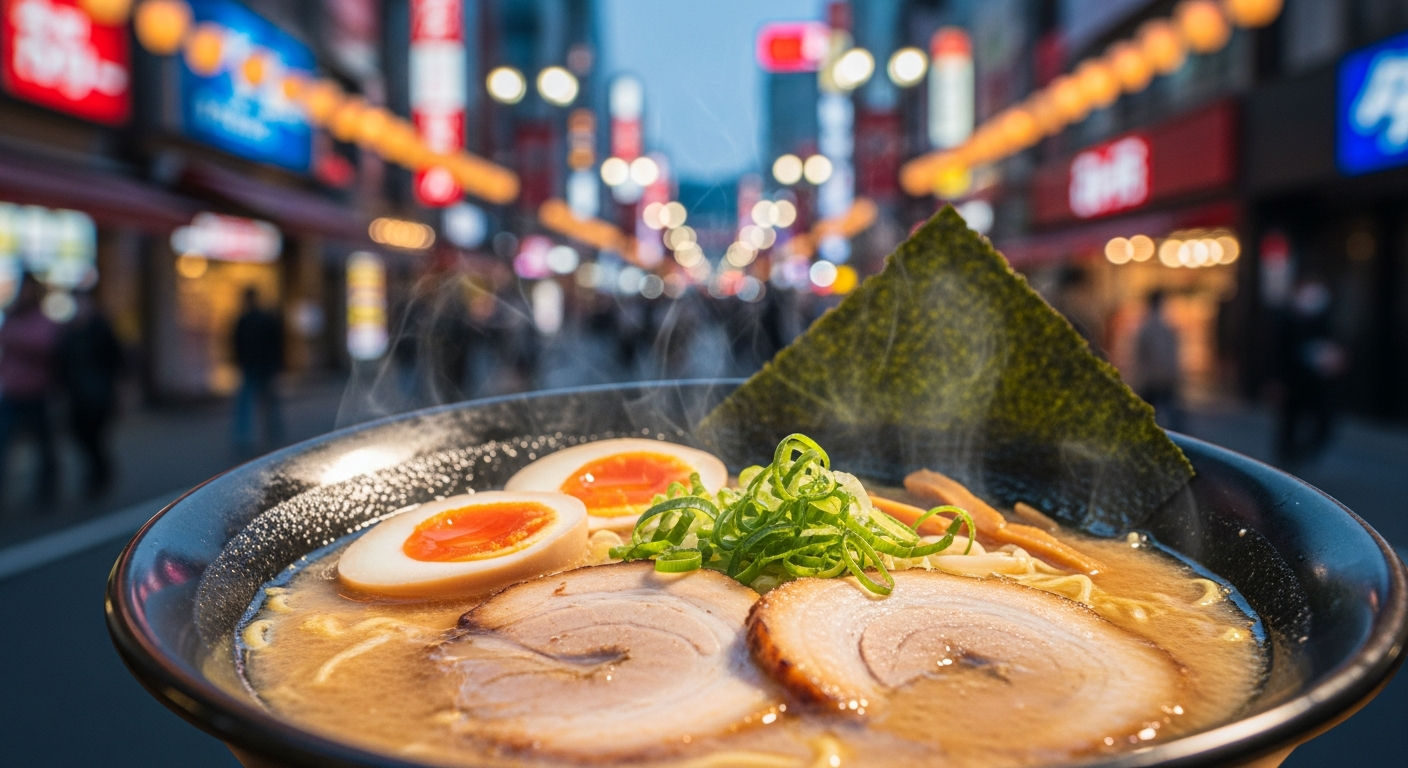
Seven consecutive years on Tabelog’s Hyakumeiten list is not an accident. Men no Youji runs a chicken-and-vegetable broth that’s been refined obsessively since the shop’s days under its old name, Osaka Ken — the owner’s background as a greengrocer shows in how seriously the vegetable component is treated. The shoyu bowl arrives clear and amber, topped with seared chicken thigh, daikon sprouts, and naruto fish cake; the broth is clean but layered, with a finish that keeps pulling you back for another sip. Tiny counter, sells out fast — arrive at opening or expect to queue.
2. Moeyomen-suke Nipponbashi (燃えよ麺助 日本橋店)
- 📍 Kintetsu Namba Station Concourse 1F, 5-1-60 Namba-Naka, Naniwa-ku, Osaka 556-0011
- 🕐 11:00–22:00 (last order 21:30) as of May 2026
- 💰 ¥1,000–¥1,500 (food only)
- 🚃 Kintetsu Nippombashi Station (directly accessible from station concourse)
- 🗺 Open in Google Maps
- 📋 Tabelog
What to order: Hamaguri (Clam) Shio Soba (¥1,100)
The third branch of the Moeyomen-suke group opened inside Kintetsu Namba Station in 2019 and earned a Michelin Bib Gourmand nod in 2021 alongside its sibling shops. The clam broth is the reason to come: pale gold, intensely savoury, with a mineral sweetness that’s nothing like the pork-heavy bowls dominating the neighbourhood. Thin noodles, a slice of rare chashu, and a sheet of nori that slowly dissolves into the soup. It’s the most elegant bowl on this list — and the most convenient, given you can walk straight off the platform.
3. Ramen Ippachi (ラーメン一八)
- 📍 2-8-15 Nipponbashi, Chuo-ku, Osaka 542-0073
- 🕐 18:00–06:00 (next day) as of May 2026
- 💰 ¥900–¥1,300 (food only)
- 🚃 Kintetsu Nippombashi Station (5 min walk) / Namba Station (5 min walk)
- 🗺 Open in Google Maps
- 📋 Tabelog
What to order: Tonkotsu Ramen (¥950)
A short walk south of Kuromon Market, Ippachi is the neighbourhood’s go-to late-night tonkotsu counter — open until 6am, which tells you everything about its clientele. The broth is thick, seafood-inflected pork bone, coating medium-thick egg noodles and tender chashu in something close to a light, savoury gravy. It’s not a subtle bowl, but at 2am after a long night in Namba, subtle is not what you’re after. Reliable, filling, and one of the few places in the area where you can get a proper ramen at dawn.
4. Ramen-sou Rekishi wo Kizame Nipponbashi (ラーメン荘 歴史を刻め 日本橋店)
- 📍 5-14-20 Nipponbashi, Naniwa-ku, Osaka 556-0005
- 🕐 11:00–15:00 / 18:00–23:00; closed Sundays as of May 2026
- 💰 ¥900–¥1,200 (food only)
- 🚃 Ebisucho Station (1 min walk)
- 🗺 Open in Google Maps
- 📋 Tabelog
What to order: Ramen (regular, ¥900) — customise with free toppings
Kansai’s best-known Jiro-inspired chain, and the Nipponbashi branch is one of its most popular. The format is the same as every Jiro-style shop: a mountain of bean sprouts and cabbage over thick, chewy noodles in a pork-bone-and-soy broth loaded with back fat and garlic. You call your toppings at the counter — vegetables, garlic, fat, and sauce, each in amounts from “normal” to “extra extra” — and the bowl that arrives is genuinely enormous. Closed Sundays; expect a queue at lunch on weekdays.
5. Kin-ku-emon Dotonbori (金久右衛門 道頓堀店)
- 📍 1-7-24 Dotonbori, Chuo-ku, Osaka 542-0071
- 🕐 11:00–03:00 (Sun–Thu) / 11:00–05:00 (Fri–Sat) as of May 2026
- 💰 ¥800–¥1,200 (food only)
- 🚃 Kintetsu Nippombashi Station (5 min walk) / Namba Station (5 min walk)
- 🗺 Open in Google Maps
- 📋 Tabelog
What to order: Osaka Black (Osaka Burakku) (¥850)
The Dotonbori branch of Kin-ku-emon sits right on the edge of the Nipponbashi walking zone and is the easiest introduction to Osaka Black — the city’s signature dark-shoyu style. The broth looks intimidating: near-black, glossy, with squid ink and shrimp layered into the soy base alongside red wine and aged rice wine. It tastes far milder than it looks, with a rounded, savoury depth rather than sharp saltiness. Multiple Tabelog Best Ramen awards on the wall, late hours, and a ticket machine at the door. A solid chain pick that earns its reputation. The MICHI Osaka travel guide covers more Dotonbori eating options if you want to make a full evening of it.
How to Order
Most ramen shops in Nipponbashi use a ticket vending machine (券売機) at the entrance. Insert cash, press the button for your bowl, and hand the ticket to the staff when you sit down. If you’re unsure which button to press, the top-left is almost always the signature bowl. Machines at Kin-ku-emon and Ramen-sou Rekishi wo Kizame have photo buttons, which makes it easier.
Customisation at Jiro-style shops (Ramen-sou Rekishi wo Kizame) happens verbally when the staff ask you just before your bowl is served. The standard call is: vegetables (yasai), garlic (ninniku), back fat (abura), and sauce (karame). Say “futsuu” (normal) for everything if you’re not sure — the default bowl is already substantial.
Portion sizes across Nipponbashi ramen shops tend to run large. A standard bowl plus a small rice (¥100–¥200 extra at most shops) is a full meal. Tipping is not practised in Japan. Slurping is fine — expected, even.
Solo dining is the norm at counter-only shops like Men no Youji. Groups of three or more may find it easier at Kin-ku-emon or Ramen Ippachi, which have slightly more flexible seating.
FAQ
Q: Is ramen in Nipponbashi expensive?
A: No. Most bowls run ¥900–¥1,200. Men no Youji and Moeyomen-suke are at the top of that range; Kin-ku-emon’s Osaka Black starts at ¥850. Add ¥100–¥200 for a soft-boiled egg (ajitama) or extra chashu. Budget ¥1,000–¥1,300 per person including a side and you’ll be fine at every shop on this list.
Q: Do shops in Nipponbashi have English menus?
A: Kin-ku-emon has photo buttons on its ticket machine, which makes ordering straightforward without Japanese. Men no Youji and Ramen Ippachi are Japanese-only, but the menus are short and staff are generally patient with pointing. Google Translate’s camera mode works well on ticket machines.
Q: When is the best time to visit?
A: Weekday lunchtimes (11:30–13:00) are the busiest period for Men no Youji and Ramen-sou Rekishi wo Kizame — arrive at opening or after 13:30 to avoid the worst queues. Kin-ku-emon and Ramen Ippachi are late-night operations; both are quieter before 20:00 and busiest after midnight on weekends. Moeyomen-suke, being inside a station concourse, moves quickly at any hour.
Information is accurate as of May 2026. We recommend checking Google Maps for the latest hours and prices before visiting.