Last updated: July 3, 2026
This article reflects information available at the time of writing. Check Google Maps for the latest hours and availability.
Introduction
Nipponbashi sits in a strange, satisfying overlap. On one side you have Den Den Town — Osaka’s answer to Akihabara, all retro game shops and anime figures. On the other, Kuromon Market, the city’s most famous covered food arcade. Threading between them is a dense grid of backstreets where the izakayas are loud, the beer is cold, and nobody is performing for tourists. This is explore more of Nipponbashi at its most honest: a neighbourhood that eats and drinks seriously, without the Dotonbori theatre.
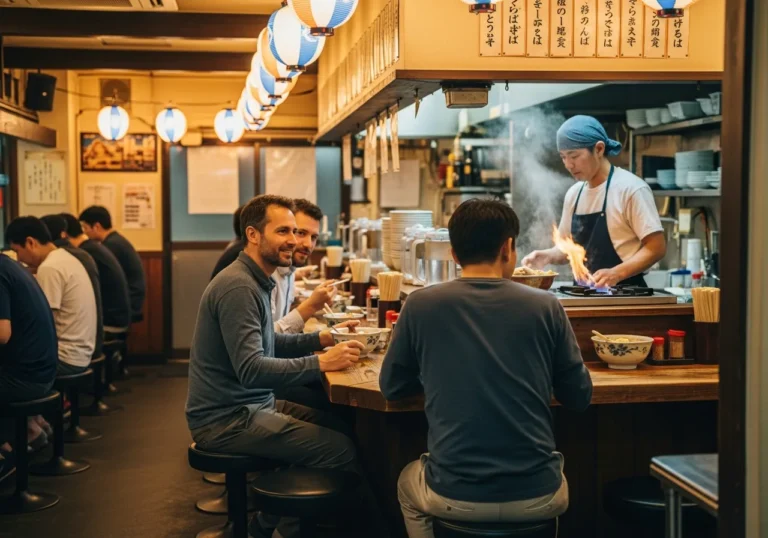
The izakaya scene here skews local. You’ll find counter seats occupied by market workers from Kuromon, electronics traders winding down after a long shift, and regulars who’ve been coming to the same stool for a decade. The food tends to be sharper and more ingredient-focused than the tourist-facing spots a few blocks north — fresh seafood from the market, proper yakitori over charcoal, regional specialities that don’t usually make it onto English-language lists. If you want to understand what the best food in Osaka actually tastes like on a Tuesday night, this is where to start.
This guide covers five izakayas within easy walking distance of Nipponbashi Station (Osaka Metro Sakaisuji and Sennichimae lines) and Kintetsu Nipponbashi Station. All are currently operating as of May 2026. Budget roughly ¥3,000–¥5,000 per person with drinks for a full evening — more if you order well.
1. Washoku Sakaba Yaken (和食酒場 やけん)
- 📍 1-13-8 Nipponbashi, Chuo-ku, Osaka
- 🕐 Lunch (udon counter): Wed–Sun 11:00–15:00; Dinner: daily 18:00–25:00 (L.O. 24:00) (as of May 2026)
- 💰 Budget per person: ¥3,000–¥4,500 (food only) / ¥4,000–¥6,000 (with drinks)
- 🚃 Nipponbashi Station, Exit 8 (3 min walk)
- 🗺 Open in Google Maps
- 📋 Tabelog
- 🌐 Official site
What to order: Bone-in chicken (honetsuki tori, market price ~¥1,200); sashimi platter (¥1,500–¥2,000)
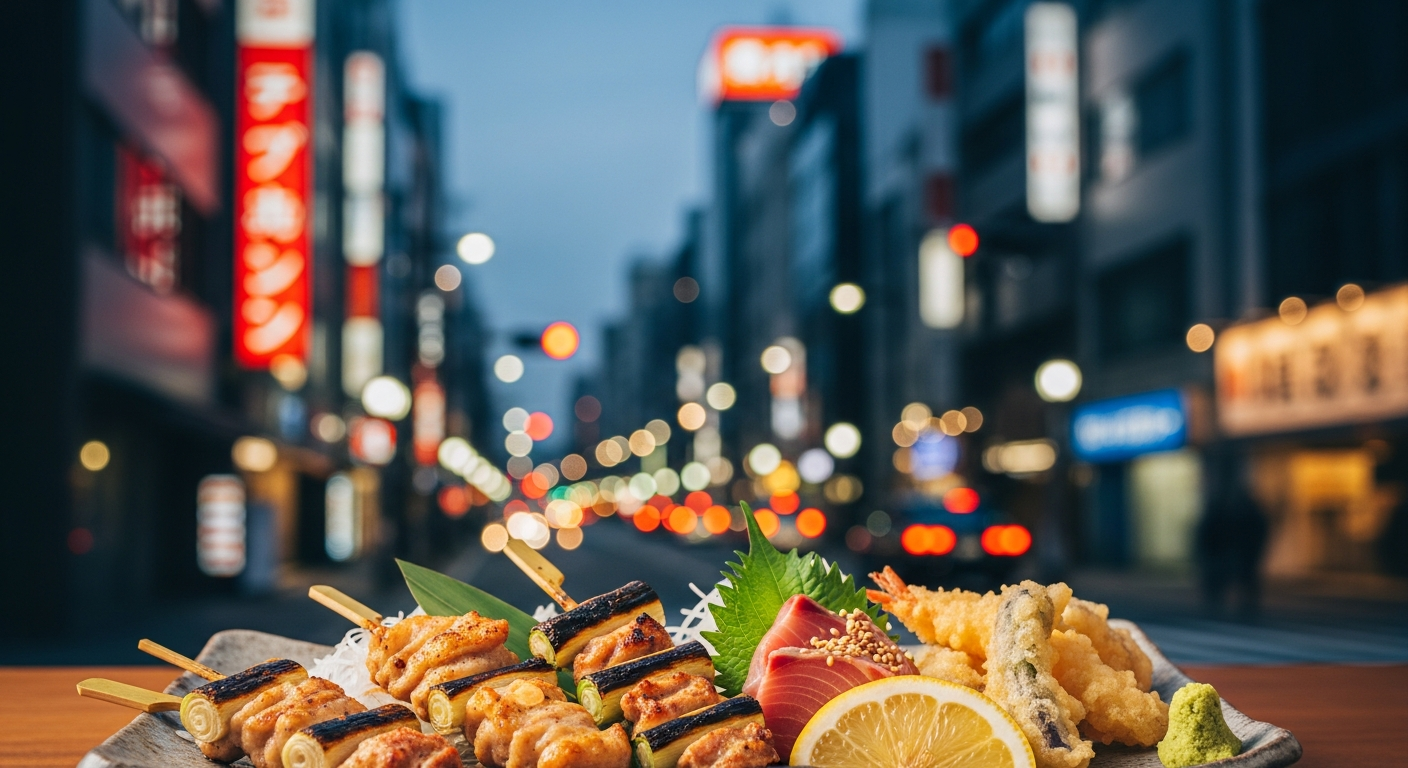
The owner is from Kagawa, and it shows — the signature honetsuki tori (whole roasted bone-in chicken leg, a Kagawa staple) arrives crackling-skinned and juicy, and the finish is a bowl of proper Sanuki udon. The fish comes in daily from the central market, so the sashimi platter changes every night. Counter seats are tight but that’s the point.
2. Sake to Sakana Ryoshi Sakaba (酒と肴 漁師酒場)
- 📍 Chuo-ku, Osaka (near Kintetsu Nipponbashi Station — confirm exact address via Google Maps link)
- 🕐 Daily 11:00–23:00 (L.O. 22:30) (as of May 2026)
- 💰 Budget per person: ¥2,500–¥4,000 (food only) / ¥3,500–¥5,500 (with drinks)
- 🚃 Kintetsu Nipponbashi Station (2 min walk)
- 🗺 Open in Google Maps
- 📋 Tabelog
What to order: Sanriku raw oysters (seasonal, ~¥350 each); seasonal seafood platter (¥1,800–¥2,500)
The name translates roughly as “fisherman’s drinking den,” and the vibe delivers — raw oysters from Sanriku, fresh-catch sashimi, and a sake list that actually rewards attention. It opens at 11am, which makes it one of the few spots in the area where a long, unhurried lunch with a cold beer is a legitimate option.
3. Osaka Yakiton Center (大阪焼きとんセンター)
- 📍 Namba / Nipponbashi area, Chuo-ku, Osaka (5 min walk from Nipponbashi Station and Namba Station)
- 🕐 Daily from approximately 15:00 until late (confirm current hours via Google Maps) (as of May 2026)
- 💰 Budget per person: ¥2,000–¥3,500 (food only) / ¥3,000–¥5,000 (with drinks)
- 🚃 Nipponbashi Station (5 min walk) / Namba Station (5 min walk)
- 🗣 English menu: Not available
- 🗺 Open in Google Maps
- 📋 Tabelog
What to order: Charcoal-grilled pork skewers (yakiton, ~¥150–¥200 per skewer); oden (seasonal, ~¥200 per piece)
A standing bar with no English menu and no pretension — you pour your own sake from the self-service station, pick skewers off the charcoal grill, and stand shoulder-to-shoulder with whoever else showed up. Over 100 types of local sake are available, and the pork skewers are cooked over real charcoal. There’s no English menu, but the staff are exceptionally friendly and the self-service sake makes it a satisfying experience even without Japanese. Go early or expect to wait.
4. Izakaya Toyo (居酒屋とよ)
- 📍 Namba / Nipponbashi area, Chuo-ku, Osaka
- 🕐 Typically opens around 17:00; closes when sold out (often by 21:00–22:00) — confirm via Google Maps (as of May 2026)
- 💰 Budget per person: ¥3,000–¥5,000 (food only) / ¥4,000–¥7,000 (with drinks)
- 🚃 Nipponbashi Station (5 min walk)
- 🗣 English menu: Not available
- 🗺 Open in Google Maps
- 📋 Tabelog
What to order: Seared tuna cheek (maguro hoho-yaki, ~¥1,200); daily sashimi selection (market price)
Izakaya Toyo is a famous Osaka drinking spot with lines forming before opening time. The menu focuses on tuna and seafood, with the signature dish being seared tuna cheek. It’s the kind of place that gets written about constantly and still manages to feel like a local secret — partly because it’s small, partly because it sells out fast. Arrive 20–30 minutes before opening if you want a seat without a wait.
5. Kuromon Maguroya Kurogin (黒門まぐろや黒銀)
- 📍 Kuromon Market, 2-4-1 Nipponbashi, Chuo-ku, Osaka
- 🕐 Approximately 9:00–18:00 daily (market hours; confirm via Google Maps) (as of May 2026)
- 💰 Budget per person: ¥2,000–¥3,500 (food only)
- 🚃 Nipponbashi Station (3 min walk)
- 🗺 Open in Google Maps
- 📋 Tabelog
What to order: Tuna sashimi bowl (maguro don, ~¥2,000–¥2,500); sushi set (¥2,500–¥3,000)
Maguroya Kurogin is one of the representative fresh fish shops in Kuromon Market. The charm is that you can enjoy high-quality, fresh tuna at an affordable price — the seafood bowl topped with plenty of tuna is a dish that symbolises Kuromon Market. It operates more as a seafood counter than a traditional izakaya, but the eat-in option with cold beer mid-morning is one of the more pleasurable things you can do in this neighbourhood. Budget around ¥2,000–¥3,000 per person, which is on the higher side within the market but reasonable compared to high-end sushi restaurants. Note that the market winds down by late afternoon — this is a daytime or early-evening stop.
How to Order
Most izakayas in Nipponbashi operate on a simple rhythm: sit down, order drinks first, then work through the food menu at your own pace. At standing bars like Osaka Yakiton Center, you order directly at the counter — point at what you want on the grill or in the oden pot if you can’t read the menu board.
At table-service spots, a server will usually come to take your order within a few minutes of sitting. If you’re unsure what to order, asking for the osusume (recommendation) almost always works — staff will point you toward whatever’s fresh that day. Many izakayas in this area don’t have English menus, but photo menus are common. Google Translate’s camera function handles most Japanese menus adequately.
Drinks come first, food follows. It’s normal to order in rounds rather than all at once. A standard opening move: one beer or highball each, one shared appetiser (edamame or pickles), then build from there. Tipping is not practised in Japan — good service is standard, not something you pay extra for.
For spots like Izakaya Toyo that sell out early, arriving before the official opening time is not unusual — a small queue outside is a reliable sign you’re at the right place. The MICHI Osaka travel guide has more practical tips on navigating Osaka’s izakaya culture if you’re planning a full evening out.
FAQ
Q: Are izakayas in Nipponbashi expensive?
A: Not particularly. Most of the spots in this guide run ¥3,000–¥5,000 per person with drinks for a full evening. Standing bars like Osaka Yakiton Center can come in under ¥2,500 if you’re disciplined. The higher-end options (Izakaya Toyo, Ryoshi Sakaba) push toward ¥5,000–¥7,000 once you add sake.
Q: Do izakayas in Nipponbashi have English menus?
A: Some do, most don’t. Washoku Sakaba Yaken and Ryoshi Sakaba are your best bets for photo menus or some English labelling. At standing bars, pointing and gesturing works fine. Google Translate’s camera mode is genuinely useful here — download the Japanese language pack before you go so it works offline.
Q: When is the best time to visit?
A: Weekday evenings between 18:00 and 20:00 are the sweet spot — busy enough to feel alive, not so packed that you’re waiting 45 minutes for a seat. Izakaya Toyo is the exception: arrive 20–30 minutes before opening regardless of the day. Kuromon Maguroya Kurogin is a daytime-only option, best visited before 16:00 when the market is still fully stocked.
Information is accurate as of May 2026. We recommend checking Google Maps for the latest hours and prices before visiting.