Last updated: July 3, 2026
This article reflects information available at the time of writing. Check Google Maps for the latest hours and availability.
Introduction
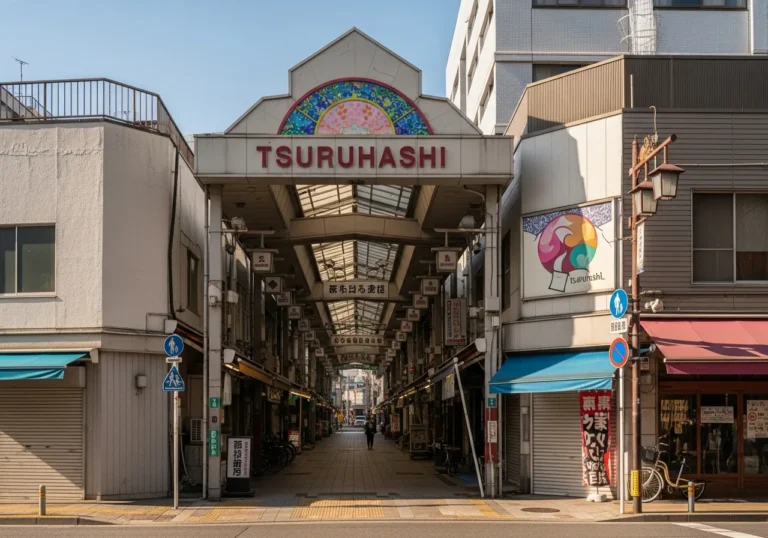
Step off the train at Tsuruhashi and your nose does the navigating. The air is thick with garlic, gochugaru, and fermented brine — a smell that hits you on the platform before you’ve even found the exit. Tsuruhashi is Osaka’s Koreatown and Japan’s largest Korean district, made up of six interconnected marketplaces and shopping streets. The moment you exit the station, you’re plunged into a labyrinth of over 800 market stalls and tiny restaurants that have been operated by the same families for generations.
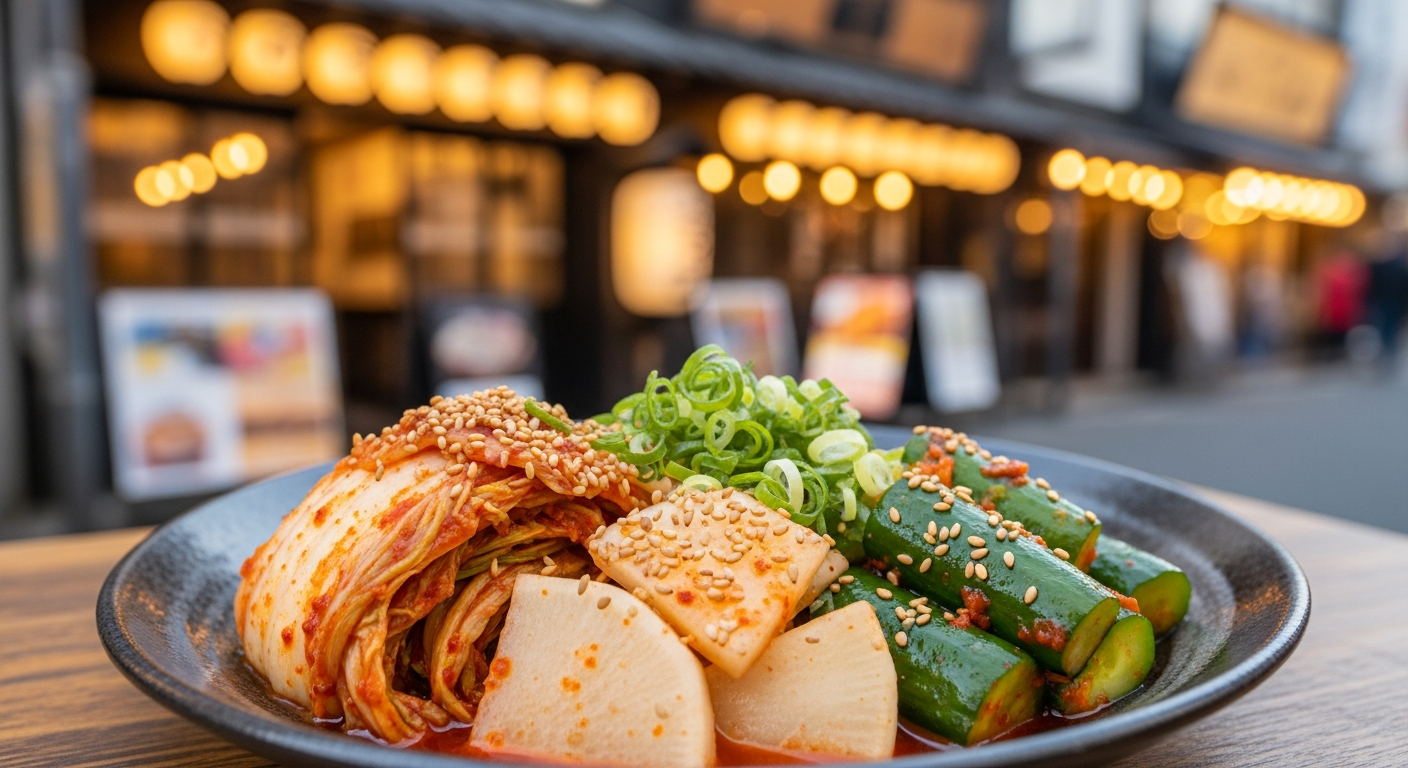
Kimchi is the soul of this neighbourhood. Not the pale, vinegary stuff from a supermarket fridge — the real thing, made fresh each morning from whole napa cabbage, hand-packed with anchovy paste, garlic, and chilli, and sold by the 500g bag to locals who’ve been buying from the same stall for decades. Yamada Shoten alone sells around 80 types of kimchi all year round. That’s before you factor in the dozen other dedicated kimchi shops lining the covered arcades.
This guide covers five shops worth going out of your way for — from the old-school market stalls near the station to the Miyuki-dori strip that runs through the heart of Ikuno Koreatown. Each one makes kimchi differently, and the differences are worth tasting. If you want to go deeper into what makes this neighbourhood tick, explore more of Tsuruhashi with our full area guide. For the wider picture of what to eat across the city, check out the best food in Osaka.
1. Honke Yamada Shoten (本家山田商店)
- 📍 3-14-18 Higashikobashi, Higashinari-ku, Osaka
- 🕐 10:00–18:00 (closed Wednesdays) as of May 2026
- 💰 ¥500–¥2,000 per bag (retail, food only)
- 🚃 Tsuruhashi Station (JR/Kintetsu) (15 min walk)
- 🗺 Open in Google Maps
- 📋 Tabelog
- 🌐 Official site
What to order: Napa cabbage kimchi (¥800/500g), oyster kimchi (seasonal, ¥1,200/200g)
Yamada Shoten sits on Miyuki-dori in Osaka Koreatown, about 15 minutes’ walk from Tsuruhashi Station, and the queue out front is essentially permanent. The secret is the sardine base: rather than using pre-made anchovy extract, the shop buys fresh sardines, salt-cures them in-house, and slow-ferments them into a proprietary liquid that underpins every batch. The result is a kimchi with real depth — savoury, funky, and not aggressively hot. Beyond the napa cabbage, the range stretches to jumbo scallop kimchi, herring roe kimchi, mountain yam, celery, burdock root, lotus root, octopus, and squid. Go early on weekdays; the rarer varieties sell out fast.
2. Che-obasan’s Kimchi (チョおばさんのキムチ)
- 📍 3-15-1 Higashikobashi, Higashinari-ku, Osaka
- 🕐 9:30–20:00 (closed Wednesdays) as of May 2026
- 💰 ¥600–¥1,500 per bag (retail, food only)
- 🚃 Tsuruhashi Station (JR/Kintetsu) (15 min walk)
- 🗺 Open in Google Maps
- 📋 Tabelog
- 🌐 Official site
What to order: Fresh napa cabbage kimchi (¥700/500g)
Che-obasan’s is one of the most popular kimchi shops on the Miyuki-dori strip, known for its gentle, fresh-pickle character — authentic Korean flavour dialled back just enough for those who find most kimchi too aggressive. They use high-quality Japanese napa cabbage and skip preservatives and artificial additives entirely. There’s a small eat-in counter with three seats if you want to taste before you buy — which you should, because the difference between their fresh and aged batches is significant. A solid first stop for anyone new to the neighbourhood.
3. Daikokuya (大黒や)
- 📍 Miyuki-dori Shopping Street, Momodani, Ikuno-ku, Osaka
- 🕐 10:00–18:00 (irregular closures) as of May 2026
- 💰 ¥600–¥1,500 per bag (retail, food only)
- 🚃 Tsuruhashi Station (JR/Kintetsu) (15 min walk)
- 🗺 Open in Google Maps
- 📋 Tabelog
What to order: Mountain yam kimchi (¥800/300g), lotus root kimchi (¥750/300g)
Daikokuya sits in the middle of the Koreatown strip and is famous as the originator of mountain yam kimchi in the area. The yam kimchi became a word-of-mouth sensation and has since been featured on television — chunky, crunchy, and noticeably less fiery than the napa cabbage version. The shop is small and the counter is stacked with tubs of unusual varieties — lotus root, konnyaku, renkon — alongside Korean seaweed and tteok. It’s the kind of place where you end up buying three things you didn’t plan to. Hokkaido-grown mountain yam is the key ingredient, sourced specifically for its texture.
4. Shinmi Shokuhin (眞味食品)
- 📍 5-3-21 Momodani, Ikuno-ku, Osaka
- 🕐 9:00–17:00 (closed Tuesdays) as of May 2026
- 💰 ¥600–¥1,500 per bag (retail, food only)
- 🚃 Tsuruhashi Station (JR/Kintetsu) (12 min walk)
- 🗺 Open in Google Maps
- 📋 Tabelog
What to order: Spring onion kimchi (¥700/300g), jellyfish kimchi (¥900/200g)
Shinmi Shokuhin stocks kimchi made from vegetables you won’t find at most shops — celery, bok choy, mountain yam, and jellyfish — alongside the standard napa cabbage. The spring onion kimchi is the one regulars come back for: punchy, oily, and excellent alongside grilled pork. Bring a cooler bag — the shop doesn’t provide insulated packaging, and the kimchi here is genuinely fresh, not shelf-stable. The jellyfish kimchi in particular draws dedicated fans who make the trip specifically for it. Closes at 17:00, so don’t leave it until after dinner.
5. Yamakame Kimchi (山亀キムチ)
- 📍 1-3-2 Tsuruhashi, Ikuno-ku, Osaka
- 🕐 9:00–18:00 (irregular closures) as of May 2026
- 💰 ¥500–¥1,200 per bag (retail, food only)
- 🚃 Tsuruhashi Station (JR/Kintetsu) (5 min walk)
- 🗺 Open in Google Maps
- 📋 Tabelog
What to order: Napa cabbage kimchi (¥600/500g)
Yamakame Kimchi is a local favourite known for its mild, lightly sweet napa cabbage kimchi — low on acid, easy on the heat, and popular with people who find most Tsuruhashi kimchi too intense. It’s one of the closer shops to the station, which makes it a practical first or last stop on a Tsuruhashi loop. The style here leans toward the Japanese-Korean hybrid end of the spectrum — less fermented funk, more clean vegetable flavour. If you’re buying for people who are kimchi-curious but not yet kimchi-committed, this is the one to start with. Queues form on weekend mornings; MICHI Osaka travel guide recommends arriving before 10:30.
How to Order
Most kimchi shops in Tsuruhashi are retail counters, not restaurants. You point, they scoop, they weigh, they bag. A few things to know before you go:
- Try before you buy. Most shops put out small samples. Don’t be shy — tasting is expected, and it’s the only way to know whether you’re getting a fresh batch or one that’s been sitting.
- Whole head vs. cut. Napa cabbage kimchi comes in two forms: whole-head (the full quartered cabbage, more intense flavour) and pre-cut (easier to eat straight away). Ask which is available — some shops only carry one.
- Bring a bag with insulation. Most shops will double-bag your kimchi in plastic, but on a warm day the fermentation accelerates fast. A small cooler bag or insulated tote is worth carrying.
- Cash is standard. A few shops now accept IC cards or PayPay, but don’t count on it. Bring ¥3,000–¥5,000 in cash if you’re planning to stock up.
- Prices are per 100g or per fixed bag. Confirm the unit before agreeing — ¥800 per 100g and ¥800 per 500g are very different propositions.
- English is limited but pointing works fine. Prices are usually displayed. A smile and a finger goes a long way.
FAQ
Q: Is kimchi in Tsuruhashi expensive?
A: Not particularly. A 500g bag of napa cabbage kimchi runs ¥600–¥900 at most shops — cheaper than supermarket imports and significantly better quality. Specialty varieties (oyster, jellyfish, scallop) run ¥900–¥1,500 for smaller portions of around 200g.
Q: Do kimchi shops in Tsuruhashi have English menus?
A: Most don’t, but it rarely matters. Products are displayed in open tubs or labelled containers, prices are written on tags, and pointing is universally understood. Che-obasan’s Kimchi has an English website if you want to research varieties in advance.
Q: When is the best time to visit?
A: Weekday mornings between 10:00 and 12:00 are ideal — fresh batches are out, queues are short, and the rarer seasonal varieties haven’t sold out yet. Weekends get crowded from around 11:00, particularly on Miyuki-dori. Most shops close by 17:00–18:00, so don’t plan a late afternoon visit. Wednesday is the most common closing day across the neighbourhood.
Information is accurate as of May 2026. We recommend checking Google Maps for the latest hours and prices before visiting.