Last updated: July 3, 2026
This article reflects information available at the time of writing. Check Google Maps for the latest hours and availability.
Introduction
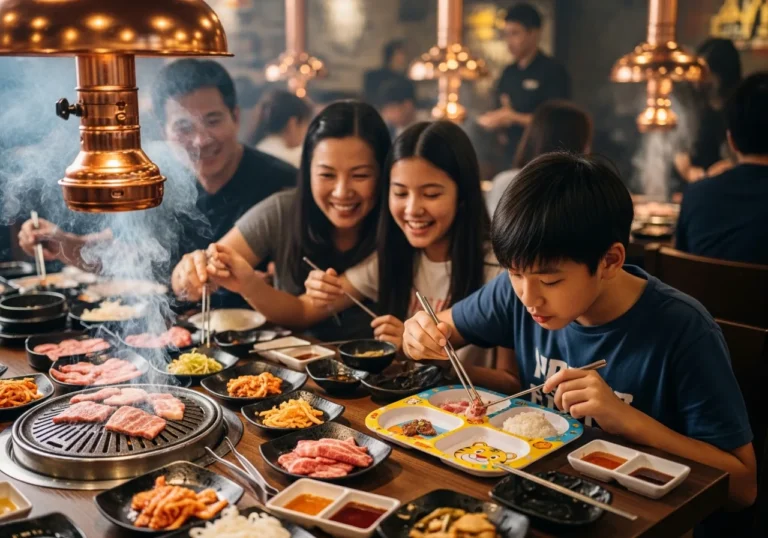
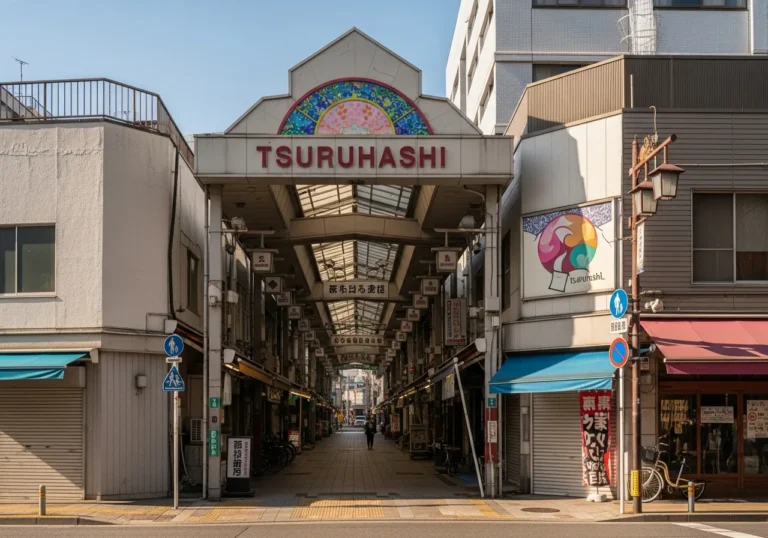
Tsuruhashi has a reputation problem — or rather, a single-track reputation. Ask anyone about eating here and they’ll say yakiniku. They’re not wrong. The smoke-filled lanes around the station, the sizzle of beef offal on charcoal, the market stalls piled with kimchi and banchan — it’s one of the most atmospheric eating districts in all of Osaka. But if yakiniku is all you’re doing in Tsuruhashi, you’re leaving a lot on the table.
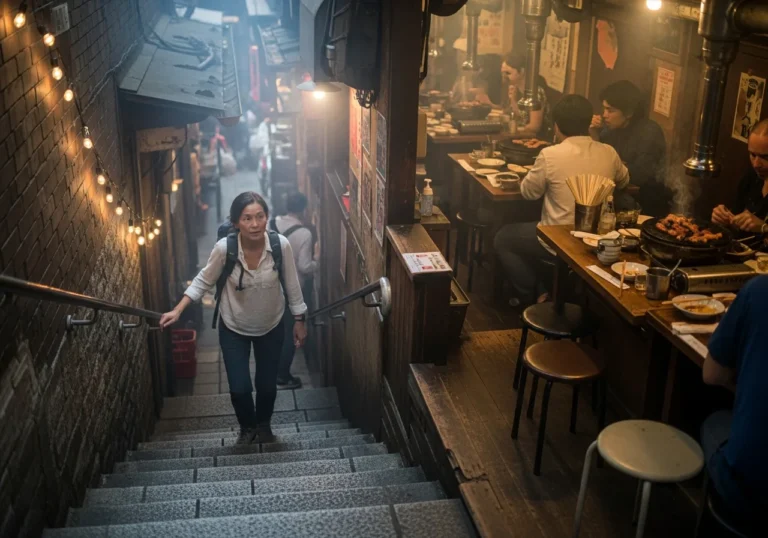
The neighbourhood around JR and Kintetsu Tsuruhashi stations is dense with izakaya that have nothing to do with Korean BBQ. There are old-school wooden-house taverns where the menu hasn’t changed in decades, standing bars under the train tracks serving beef skewers for under ¥200 a pop, yakitori specialists sourcing from local farms, and seafood counters getting daily deliveries from the wholesale market that sits right on the doorstep. This is a working-class neighbourhood with serious drinking culture — the kind of place where a ¥3,000 night out still feels generous.
If you’re already planning to explore more of Tsuruhashi, this guide will take you past the yakiniku strip and into the izakaya that locals actually fill up on weeknights. For a broader look at what to eat across the city, check out the best food in Osaka — but for tonight, Tsuruhashi has you covered.
1. Izakaya Buaisou (居酒や ぶあいそう)
- 📍 1-9-20 Higashikobashi, Higashinari-ku, Osaka
- 🕐 Mon–Sat 17:00–23:30, Sun 16:00–23:00 (as of May 2026)
- 💰 ¥2,500–¥4,000 per person (food only) / ¥3,000–¥5,000 (with drinks)
- 🚃 Tsuruhashi Station (1 min walk)
- 🗺 Open in Google Maps
- 📋 Tabelog
What to order: Buaisou-yaki (¥495) — the signature half-set egg omelette cooked on an iron plate
One minute from the station and a full world away from the tourist strip: Buaisou is a proper old-school izakaya in a converted wooden townhouse, with horigotatsu seating, low lighting, and a menu that mixes Japanese pub classics with Korean-inflected dishes sourced from the Tsuruhashi wholesale market next door. The ¥380 small-plate menu is genuinely generous — this is the kind of place you come to for a long, unhurried evening rather than a quick bite.
2. Jinanbo (次男坊)
- 📍 2-8-18 Tsuruhashi, Ikuno-ku, Osaka
- 🕐 Mon–Sat 17:00–23:00; closed Sunday (as of May 2026)
- 💰 ¥2,500–¥4,000 per person (food only) / ¥3,500–¥5,500 (with drinks)
- 🚃 Tsuruhashi Station (3 min walk)
- 🗺 Open in Google Maps
- 📋 Tabelog
What to order: Pork steak with butter soy sauce (¥880), dashimaki tamago (¥468)
Jinanbo has been pulling in regulars for well over a decade — the kind of izakaya where the owner knows your order by your third visit. The retro wooden interior is warm without being contrived, and the portions run about 1.5 times what you’d expect at the price. The dashimaki tamago is a benchmark dish: fluffy, dashi-soaked, and worth ordering even if you’ve had it a hundred times elsewhere.
3. Kushi Matsuya Honten (串まつ屋 本店)
- 📍 2-7-15 Tsuruhashi, Ikuno-ku, Osaka
- 🕐 Mon–Fri 17:00–23:00, Sat–Sun 15:00–23:00 (as of May 2026)
- 💰 ¥1,500–¥3,000 per person (food only) / ¥2,500–¥4,000 (with drinks)
- 🚃 Tsuruhashi Station (1 min walk)
- 🗺 Open in Google Maps
- 📋 Tabelog
What to order: Beef skewer assortment (¥800 for 5 skewers), draft beer (¥390)
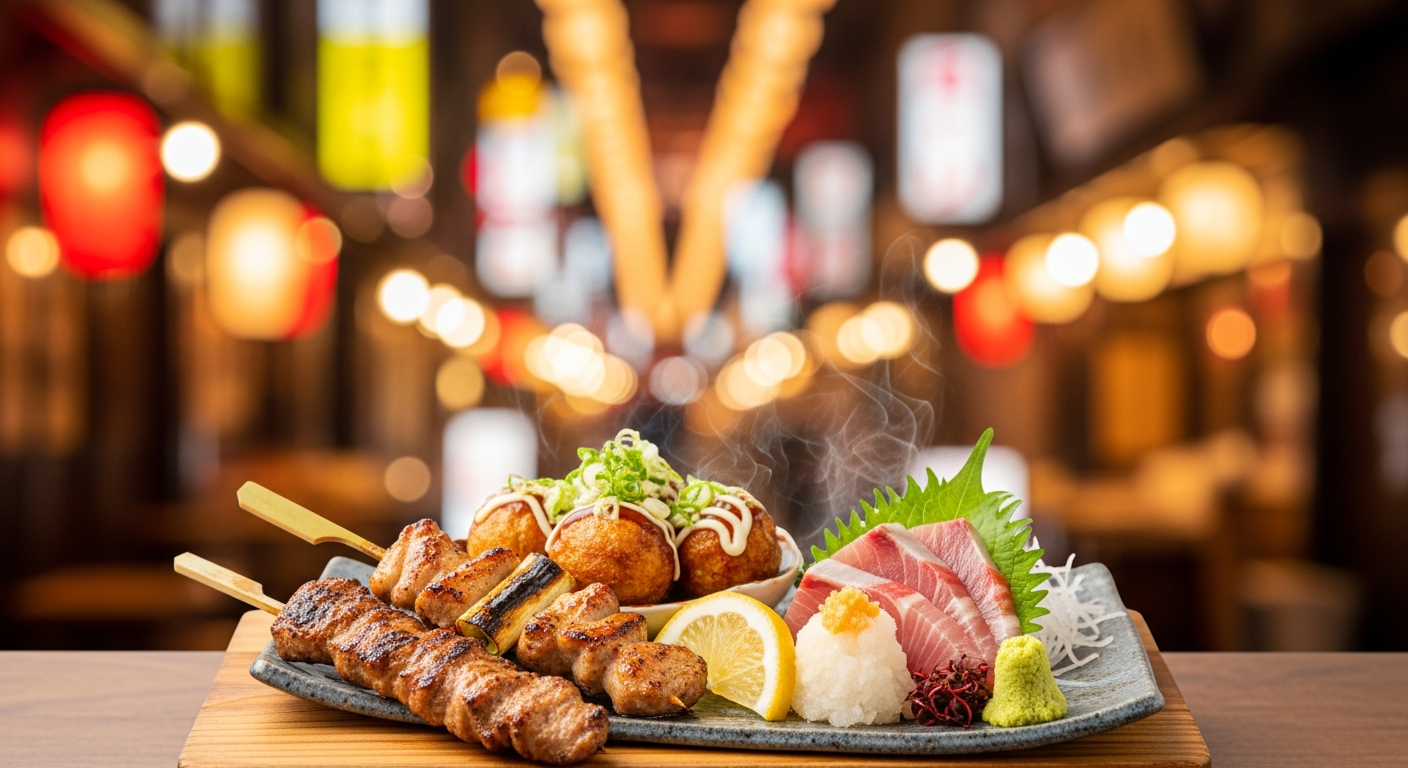
Under the Kintetsu tracks, Kushi Matsuya is the kind of standing-bar-adjacent izakaya that Tsuruhashi does better than anywhere else in Osaka. The focus is on carefully selected fresh beef skewers — harami, horumon, and offal cuts — at prices that make you want to order another round before you’ve finished the first. Grab a counter stool, order the five-skewer set, and let the evening sort itself out.
4. Uohachi Shoten Tsuruhashi (地魚酒場 魚八商店 鶴橋店)
- 📍 2-1-1 Tsuruhashi, Ikuno-ku, Osaka
- 🕐 Mon–Thu, Sun & holidays 11:30–23:30; Fri–Sat 11:30–02:30 (as of May 2026)
- 💰 ¥2,000–¥3,500 per person (food only) / ¥3,000–¥5,000 (with drinks)
- 🚃 Tsuruhashi Station (1 min walk)
- 🗺 Open in Google Maps
- 📋 Tabelog
- 🌐 Official site
What to order: Nigiri sushi (from ¥110 per piece), tempura assortment (from ¥132 per piece)
Thirty seconds from the station exit, Uohachi Shoten gets its fish directly from the Tsuruhashi wholesale market — which means the sashimi and nigiri here are genuinely fresh rather than just marketed as such. The lunch-to-late-night hours make it one of the most flexible spots in the neighbourhood, and the Friday–Saturday 2:30am closing time means it’s also a reliable last stop after a long night of bar-hopping.
5. Toriatama Saburo (鳥頭サブロー)
- 📍 3-1-10 Tamatsu, Higashinari-ku, Osaka
- 🕐 Tue–Sun 17:00–23:00; closed Monday (as of May 2026)
- 💰 ¥2,500–¥4,500 per person (food only) / ¥3,500–¥6,000 (with drinks)
- 🚃 Tsuruhashi Station (5 min walk)
- 🗺 Open in Google Maps
- 📋 Tabelog
What to order: Jidori chicken assorted sashimi platter (¥1,738), charcoal-grilled chicken thigh skewers (¥209 each)
A five-minute walk from the station puts you in quieter residential Tsuruhashi, and Toriatama Saburo is worth every step. The kitchen sources jidori (free-range) chicken and serves it across a range of preparations — raw sashimi, charcoal-grilled skewers, and a cast-iron rice pot to finish. The chicken sashimi is the move here: sissori (oyster cut), momo tataki, and liver, all served with a strict 15-minute eating window. It’s a specialist’s izakaya, and the regulars treat it accordingly.
6. Korean Izakaya Banguri (韓国居酒屋 バングリ)
- 📍 2-8-7 Tsuruhashi, Ikuno-ku, Osaka (Silk Road Building 1F)
- 🕐 Daily 17:00–24:00 (as of May 2026)
- 💰 ¥2,000–¥3,500 per person (food only) / ¥3,000–¥5,000 (with drinks)
- 🚃 Tsuruhashi Station (2 min walk)
- 🗺 Open in Google Maps
- 📋 Tabelog
What to order: Live octopus dish (market price, approx. ¥1,500–¥2,000), pajeon seafood pancake (¥900)
Banguri sits squarely at the intersection of Japanese izakaya and Korean pojangmacha — the kind of hybrid that only really works in Tsuruhashi, where the two food cultures have been overlapping for generations. The live octopus dish is the talking point, but the broader menu of Korean drinking food — spicy stews, seafood pancakes, and cold makgeolli — makes this a strong choice for a group that wants something more interesting than a standard pub crawl. Reviews from April 2025 confirm it’s still drawing a crowd on weeknights.
How to Order
Most izakaya in Tsuruhashi operate on a standard Japanese pub format: you’re seated, given a menu, and order by flagging down staff or pressing a table buzzer. A small otoshi (cover charge snack, usually ¥300–¥500) will arrive automatically — this is normal and not a mistake on the bill.
At standing bars like Kushi Matsuya, you order directly at the counter. Point at what you want if the language barrier is a problem — staff are used to it. At specialist spots like Toriatama Saburo, it’s worth knowing that chicken sashimi must be eaten within 15 minutes of serving; the staff will tell you, but take it seriously.
Drinks come first in izakaya culture. Order a beer or highball immediately — it signals you’re ready to start and keeps the kitchen moving. Most places offer a nomihodai (all-you-can-drink) option for ¥1,000–¥1,500 on top of your food order, usually capped at 90 or 120 minutes. It’s worth it if you’re planning a long session.
Cash is still king at smaller spots in Tsuruhashi, though larger izakaya increasingly accept IC cards and major credit cards. Bring ¥5,000–¥10,000 in cash as a backup. Reservations are recommended on Friday and Saturday evenings, especially at Jinanbo and Toriatama Saburo, which have limited seating. The MICHI Osaka travel guide has more practical tips for navigating the city’s dining scene.
FAQ
Q: Is izakaya dining in Tsuruhashi expensive?
A: Not at all. Most of the spots in this guide run ¥2,500–¥4,500 per person including drinks. Standing bars like Kushi Matsuya can come in under ¥2,000 if you’re disciplined. The neighbourhood skews affordable — this is a local residential area, not a tourist corridor.
Q: Do izakaya in Tsuruhashi have English menus?
A: Rarely. Uohachi Shoten has some English signage, and a few places have picture menus. At most spots, Google Translate’s camera function on the menu works well enough. Staff at Buaisou and Kushi Matsuya are accustomed to non-Japanese-speaking customers and will help you navigate.
Q: When is the best time to visit?
A: Weekday evenings from around 18:00–19:00 are the sweet spot — lively but not packed. Friday and Saturday nights fill up fast, especially at smaller spots with under 20 seats. If you want a counter seat at Kushi Matsuya on a weekend, arrive before 17:30. Sunday afternoons are surprisingly good for a quieter session — Uohachi Shoten opens at 11:30 daily and does a solid lunch-into-afternoon-drinks crowd.
Information is accurate as of May 2026. We recommend checking Google Maps for the latest hours and prices before visiting.