Last updated: July 28, 2026
Information changes — always confirm with the venue/source before relying on it.
Introduction
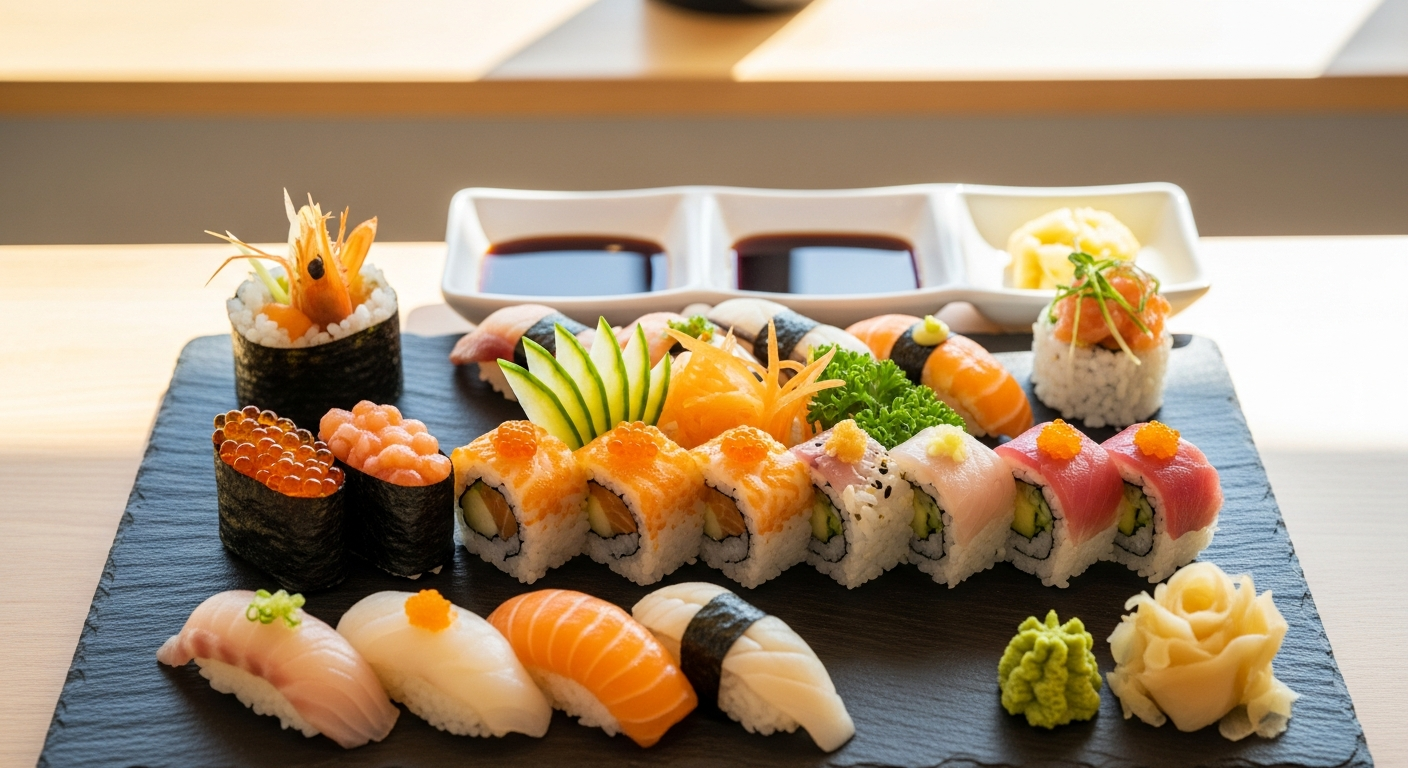
You’ve just landed at Kansai International Airport (KIX) — or you’re about to depart — and the first question on your mind is: can I eat sushi here? It’s a fair question. Sushi is the dish most visitors associate with Japan, and for Muslim travelers it sits in a genuinely complicated middle ground. The fish itself is generally permissible, but the seasoning of the rice, the soy sauce on the side, and the glazes on certain toppings can all introduce alcohol in the form of sake or mirin. Knowing what to look for — and where to find verified halal-friendly Japanese food right at the airport — makes the difference between a confident first meal and an anxious one.
This guide explains why standard sushi in Japan is not automatically halal, what the airport actually offers Muslim travelers in terms of certified and Muslim-friendly dining, and how to extend your options into nearby Rinku Town. For a broader picture of eating halal across the city, see our Osaka halal guide. By the end of this page you’ll know exactly where to eat, what to order, and what questions to ask before you sit down.
🔗 Source: kansai-airport.or.jp
Why Most Sushi in Japan Is Not Automatically Halal
The fish in a standard nigiri or maki roll is not the problem. The foundation of most sushi — fish — is clearly halal under the Sunni schools of jurisprudence. The complications arise from what surrounds the fish.
- Sushi rice seasoning: Most sushi in Japan is not halal, even when it looks like plain fish on rice. The sushi vinegar that seasons the rice often contains a small amount of alcohol, regular Japanese soy sauce is brewed with alcohol, and many garnishes use mirin (sweet cooking sake).
- Mirin in toppings and glazes: Mirin contains alcohol, usually around 14%, which makes it unsuitable for Muslims to consume. While some might say that the alcohol evaporates during cooking, the issue is that once any non-halal ingredient like alcohol is added, the dish is no longer considered halal.
- Cooking sake: Sushi rice is typically seasoned with a mixture of rice vinegar, sugar, and salt. However, some sushi chefs may use mirin, a sweet Japanese rice wine, or sake, another type of Japanese alcohol, to add flavor to the sushi rice or the seafood. If alcohol is used in the preparation of the sushi, it would not be considered halal.
- Cross-contamination: Cross-contamination could occur if the sushi is prepared using the same utensils or in the same area where haram foods, such as pork or non-halal meats, are handled.
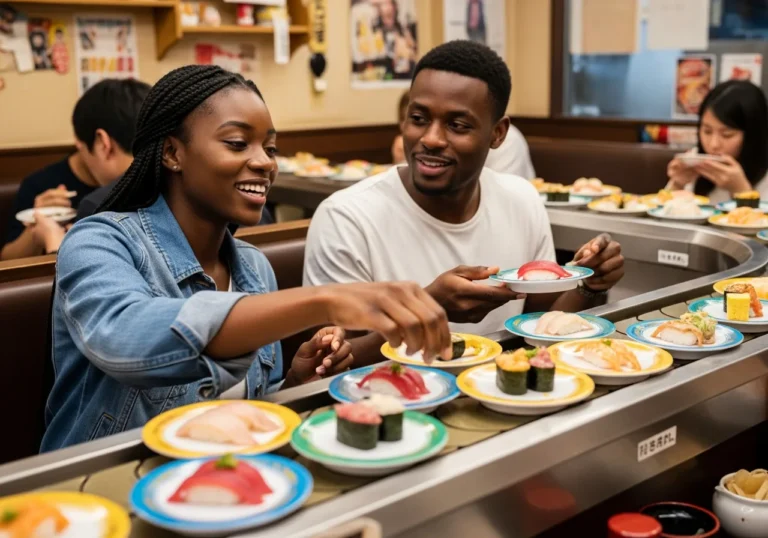
The practical takeaway: at a standard conveyor-belt or counter sushi restaurant inside KIX, you cannot assume the food is halal without explicit certification or a documented no-alcohol preparation process. Some halal-certified restaurants offer alternatives by replacing mirin and sake with halal-friendly substitutes like grape juice, honey, or vinegar to achieve similar flavors. That substitution is exactly what to look for when evaluating any sushi or Japanese food claim at the airport.
🔗 Source: halal-navi.com
What KIX Actually Offers: Halal-Certified vs. Muslim-Friendly Dining
Kansai Airport is a Muslim-friendly airport. There are halal-certified restaurants and restaurants that offer menus without pork or alcohol. Understanding the difference between those two categories is essential before you order.
The clearest halal-certified option inside the terminal is Kineya Mugimaru, a homemade udon restaurant on the Tasty Street food court. Located on the 2nd floor of Terminal 1 (before security), it is a cafeteria-style udon restaurant known for its commitment to freshness, using wheat flour from Mie Prefecture to make noodles right in the store. The restaurant offers a Muslim-friendly menu with halal options. Crucially, each menu has a pictogram of the 14 ingredients used, and there is a logo at the bottom right of the menu stating “All Our Food is Halal.” The official KIX airport website confirms: enjoy freshly cooked udon noodles made in-store with wheat flour from Mie Prefecture, served cafeteria-style — this restaurant is also Muslim-friendly, and offers halal menu items.
So where does sushi fit in? The airport’s dining floor does include sushi and soba options — Japan Traveling Restaurant by BOTEJYU, for example, lists sushi among its menu items — but these venues are not listed as halal-certified on the airport’s own Muslim-friendly dining page. The previous SOJIBO restaurant located at the 3F of Kansai International Airport was halal but it no longer exists. The new SOJIBO restaurant located at the 2F is not halal. However, the restaurant Kineya Mugimaru located at the food court of the same floor (2F) is Muslim-friendly and all the food is halal. This is an important update for travelers who may have read older guides recommending the 3F soba counter.
For travelers who want to explore more of Kansai Airport beyond the food court, the airport’s tourist information desk on 2F can provide a printed Muslim Friendly Airport Guide Map on request. You may also ask for the Muslim Friendly Airport Guide Map at the information centre (2F) to go to the prayer rooms.
🔗 Source: kansai-airport.or.jp · halal-navi.com
Halal Japanese Food Beyond Sushi: What to Order at the Airport
Because halal-certified sushi is not currently available inside KIX Terminal 1, Muslim travelers who want an authentic Japanese meal before or after their flight have strong alternatives in the same food court area.
- Udon: A variety of udon dishes are available, such as with beef, with onsen egg, and plain udon. There are also fried rice and tempura options including eggplant, shrimp, and calamari. Everything in this stall is halal.
- Tempura: Tempura is served as a topping or side at Kineya Mugimaru and is covered under the restaurant’s full halal declaration — a satisfying way to experience one of Japan’s most iconic preparations without any certification doubt.
- Gyudon (beef rice bowl): If you prefer to eat rice, you could choose gyudon (rice beef bowl). Confirm with staff that the specific bowl is covered under the halal menu, as not every item on a mixed menu is always certified.
- Dashi soup: The noodles match well with the dashi (Japanese soup stock) filled soup base. At Kineya Mugimaru the dashi is prepared without alcohol, making it a rare chance to taste authentic Japanese broth with confidence.
The food court also offers free cold water refills and a spacious seating area, making it a practical spot whether you’ve just cleared immigration or are killing time before boarding. The seating area is part of a spacious food court, with plenty of tables, making it easy to find a spot and relax while eating. The overall environment is clean, casual, and convenient for travelers on the go.
🔗 Source: fooddiversity.today · groovyjapan.com
Rinku Town: Halal Options One Stop from the Airport
If you have more time — a long layover, an early arrival, or a late-night departure — Rinku Town station is one stop from KIX on the Nankai Airport Line and opens up a wider range of halal-friendly Japanese dining. This is also where you’ll find the closest options if you’re specifically hunting for a halal sushi experience, since the airport terminal itself does not currently have a halal-certified sushi counter.
One notable venue in Rinku Town is Samurai Wagyu MUSASHI, a halal-certified restaurant inside the Ochi Arena at Rinku Pleasure Town SEACLE. The restaurant is halal-certified and is located in Rinku Town, just minutes from Kansai International Airport. It offers halal-certified Wagyu Sukiyaki dinner, prepared in a Muslim-friendly setting, with the Wagyu officially halal-certified, allowing Muslim guests to dine with confidence and peace of mind. While this is a sukiyaki experience rather than sushi, it represents the kind of full-service halal Japanese dining that is simply not available inside the terminal itself.
Rinku Town is also home to a large premium outlet mall. Rinku Town itself is famous for its premium outlet mall, where thousands of high-end brands are available at discounted prices. Combining a halal meal with some pre-departure shopping is a practical use of a long layover. For ideas on what to eat across the wider city, browse the best food in Osaka before you travel.
🔗 Source: muslim-guide.jp
Prayer Rooms and Muslim Facilities at KIX
Halal food is only part of the picture for Muslim travelers. KIX has invested in a broader set of facilities to make the airport genuinely comfortable.
Prayer rooms: Prayer rooms are located on the 3rd floor of the public area of Terminal 1 and in the international departure gate area of Terminal 1. All rooms are separated by gender, and facilities for ablution (wudu) are provided so that you may cleanse yourself before prayer. There are 3 prayer rooms separated for men and women. All are only available in Terminal 1, with 2 of them located after the checkpoints for international flights. The official KIX floor map labels the 3F level as the “Paid Waiting Room & Prayer Room Floor,” making it straightforward to locate on the airport’s own signage.
Ablution facilities: The 3F Muslim Prayer Rooms offer separate spaces for men and women to worship. Situated between gates 19 and 20, the prayer rooms are spacious and provide ablution facilities.
Condition of facilities: Kansai International Airport in Osaka Prefecture has a comfy prayer room at 3F, separated between men and women. The room is spacious and bright with wudu’ space, allowing for more focused prayer.
| Facility | Location | Notes |
|---|---|---|
| Prayer Room (public area) | Terminal 1, 3F | Gender-separated; wudu facilities; free to use |
| Prayer Rooms (airside) | Terminal 1, International Gate Area (North & South wings) | After security checkpoint; gender-separated |
| Muslim Friendly Guide Map | Tourist Information Centre, 2F | Available on request at the information desk |
| Halal-certified dining | Terminal 1, 2F Tasty Street food court | Kineya Mugimaru; open 7:00–22:00 |
🔗 Source: kansai-airport.or.jp · halalgourmet.jp
Practical Tips for Muslim Travelers at Kansai Airport
- Go straight to Tasty Street on arrival. After clearing immigration and collecting baggage on 1F, head up to the 2F food court (Tasty Street) in Terminal 1. Kineya Mugimaru is the halal-certified anchor of that floor and opens at 7:00 — ideal for early-morning arrivals who want a hot Japanese meal before catching the Nankai Limited Express into Osaka or Kyoto.
- Do not assume the soba or sushi counters are halal. The previous SOJIBO restaurant at 3F was halal but no longer exists, and the current SOJIBO at 2F is not halal. Always look for an explicit halal-certification logo or the airport’s Muslim-friendly designation before ordering at any other counter.
- Check the allergen pictogram board at Kineya Mugimaru. Each menu has a pictogram of the 14 ingredients used, so travelers with additional dietary needs (shellfish, egg, wheat) can make informed choices quickly without needing to speak Japanese.
- Use the Halal Gourmet Japan app before you land. The KIX official tourist links page recommends Halal Gourmet Japan (halalgourmet.jp) as its primary halal restaurant search tool. Download it before your flight so you can search Rinku Town and central Osaka the moment you have Wi-Fi.
- For halal sushi specifically, plan for Rinku Town or central Osaka. No halal-certified sushi counter currently operates inside KIX Terminal 1. If sushi is a priority, budget time for a one-stop trip to Rinku Town on the Nankai line, or save the experience for the city itself — where halal-certified Japanese restaurants are more plentiful.
- Pray before you board, not after. The airside prayer rooms (North and South wings, after security) are the most convenient for departing passengers, but the 3F public-area prayer room is accessible to arriving passengers before they exit the terminal. Factor prayer times into your transit plan using an app like Muslim Pro, which works on KIX’s free Wi-Fi.
Last updated: July 28, 2026 · Corrections: [email protected]