Last updated: July 3, 2026
Information changes — always confirm with the venue/source before relying on it.
Introduction
Osaka has a well-earned reputation as Japan’s kitchen — a city where eating is practically a competitive sport. But for vegan travelers arriving for the first time, the sheer abundance of food can feel deceptive. Osaka is most well known for its food, but all of the staples like takoyaki, okonomiyaki, and kushikatsu are usually non-vegan. Dig a little deeper, though, and the picture changes fast. While the country is known for some very un-vegan-friendly things, Osaka has a fabulous vegan scene — behind the neon lights of Dotonbori, you will find plenty of places serving up veganized Osakan favorites like takoyaki, okonomiyaki, kushikatsu, and more.
The real challenge is not a shortage of plant-based food — it is knowing what you can actually eat, which dishes hide animal ingredients, and how to communicate your needs clearly. This guide answers exactly those questions. By the end, you will understand the hidden ingredient landscape of Japanese cooking, know which traditional dishes are naturally plant-based, and have the practical tools — phrases, apps, and konbini strategies — to eat well every single day in Osaka. For a broader overview of where to eat, see our Osaka vegan guide.
🔗 Source: veggiesabroad.com
The Dashi Problem: Japan’s Most Misunderstood Ingredient
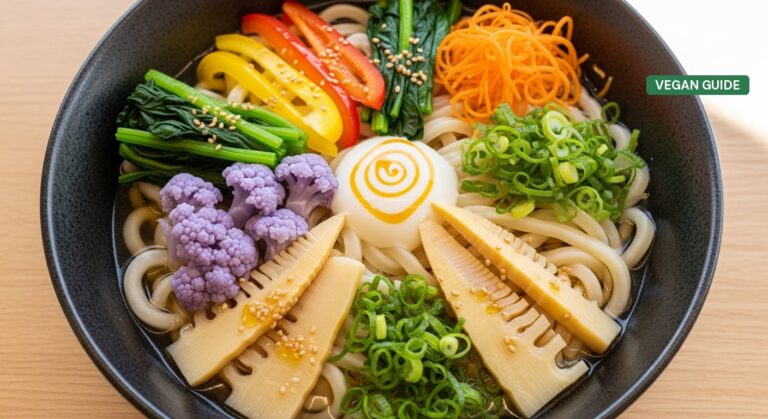
Before you order anything in Osaka, you need to understand dashi. Dashi, the savoury stock pervasive in Japanese food, forms the foundation of the country’s cuisine. The most commonly used recipe involves soaking dried kombu seaweed with katsuobushi — fish flakes made from drying and smoking bonito fish. The problem for vegan travelers is that dashi is invisible. You may order a bowl of “Vegetable Ramen” or a simple “Seaweed Soup,” only to find that the flavor is anchored by an invisible ingredient: dashi. In the Japanese kitchen, dashi is the primary source of umami, and its presence is so fundamental that many chefs do not consider it to be “meat” or “fish” in the traditional sense.
The biggest culprit making the search a lot more difficult is dashi — soup stock that is used in tons of dishes, including ramen, takoyaki, and miso soup. Dashi is not vegan as it includes katsuobushi (dried bonito fish flakes), but many restaurants will still claim a dish is vegan or vegetarian even if it uses dashi — not out of malice, but simply because the definition of “vegan” is a little different in Japan.
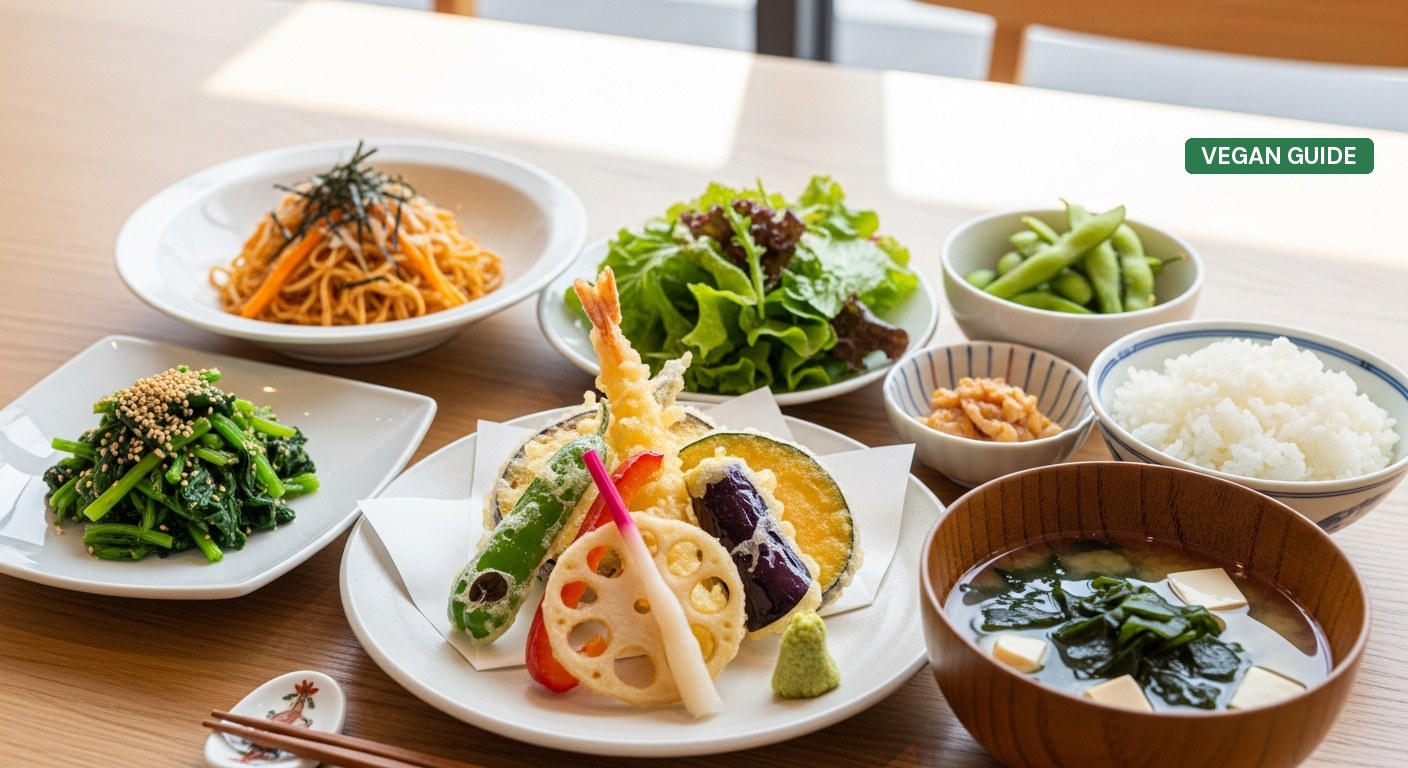
The high-risk dishes to watch are not just soups. Because dashi is clear and often used to season vegetables or tofu, a dish may appear perfectly vegetarian while being saturated with fish protein. The high-risk foods include miso soup, dipping sauces for cold soba, tempura sauce, and nearly every “clear” soup in a traditional teishoku set. Vegetable tempura is another common trap: Japanese tempura batter often contains a beaten egg, and therefore is not vegan. Even seemingly safe chilled tofu (hiyayakko) can be problematic — it is often topped with dried katsuobushi fish flakes, so make sure to ask that the dish not be topped with it in order to keep it vegan.
The good news: the two most important ingredients to know for Shojin dashi — the stock developed by Buddhist monks seeking fish-free alternatives — are kombu seaweed and dried shiitake mushrooms. An increasing number of Osaka restaurants now use kombu-based broths, and the katakana term “puranto-beesu” (plant-based) is the most reliable marker on modern menus, indicating a dish designed without animal products from the ground up.
🔗 Source: voyapon.com
Traditional Japanese Dishes That Are Naturally Plant-Based
Even though Japanese cuisine is full of vegetables, rice, and soy products, it is actually very tricky to tell apart truly vegan dishes from the rest. That said, a solid core of traditional foods is either fully vegan or easily made so. Knowing this list before you arrive in Osaka means you will never go hungry. For a deeper dive into the full food culture of the city, explore the best food in Osaka.
- Onigiri (rice balls) with safe fillings — While many fillings use fish or meat, vegan-friendly options like umeboshi (pickled plum), konbu tsukudani (simmered seaweed), or takana (pickled mustard greens) are easy to find. At convenience stores, look for labels with 梅 (plum) or 昆布 (kelp) to stay vegan-safe, and avoid onigiri labeled ツナマヨ (tuna mayo), 鮭 (salmon), or 明太子 (mentaiko/cod roe).
- Inari sushi — Sweet and savory tofu pouches filled with sushi rice are typically vegetarian, though sometimes flavored with dashi or additives, so best to confirm ingredients.
- Edamame — Fully vegan and widely available at convenience stores and izakayas as a starter.
- Natto — Fermented soybeans with a sticky, pungent character that divides people instantly. Love it or hate it, natto is 100% plant-based and packed with protein.
- Zaru soba (cold buckwheat noodles) — Many cold and hot soba and udon dishes can also be vegan. If you’re worried about the broth, go for zaru soba, which are cold noodles eaten with fresh veggies, pickles, and soy sauce instead of broth. Always ask about the dipping sauce.
- Vegetable sushi rolls — Look for options like cucumber rolls (kappa maki), pickled radish rolls (oshinko maki), and avocado rolls. These are typically vegan and widely available at convenience stores and sushi restaurants.
- Mochi and yokan — Many are naturally vegan, like mochi or yokan (sweet bean jelly), though modern versions sometimes add dairy, so double-check.
In Osaka specifically, the city’s street food icons have plant-based versions. There are two words you may never have expected to see together: vegan takoyaki. That’s right — try some of Osaka’s most famous street foods, made vegan. In the world of Osaka street food, takoyaki and kushikatsu deep-fried skewers are culinary giants, and now it’s your turn to experience their vegan versions at OKO Takoyaki. Similarly, Shinsekai Paprika Shokudo opened in 2023 and is a veganized izakaya experience, offering a small menu of traditional snacks and dishes. Izakayas are popular with after-work and late-night crowds and can be found all over Japan, but they are rarely vegan-friendly.
🔗 Source: itravelforveganfood.com
Shojin Ryori: Japan’s Ancient Plant-Based Cuisine
Long before “plant-based” became a global trend, Japan had its own fully vegan culinary tradition. There is a traditional Japanese vegetarian cuisine dating back over 1,000 years. Shojin ryori, traditional Buddhist cooking in Japan, is known for its plant-based dishes and usage of local seasonal ingredients. While its history is in the halls of Buddhist temples, it has also been finding popularity more recently in cities, with vegetarians, vegans, and people looking for healthier food options alike becoming interested in shojin ryori.
The typical shojin ryori meal focuses on soybeans, vegetables in season, root vegetables, as well as wild herbs and plants. Shojin ryori often features broths made from kombu (kelp) and shiitake mushrooms, which brings a rich umami flavor to dishes. These broths serve as the foundation for soups, stews, and sauces, providing depth and complexity to each bite. One important caveat for vegan travelers: while traditional shojin ryori is 100% plant-based, many modern restaurants now use dashi (broth) made from bonito fish flakes. If you are vegan, you must specify “jun-vegan” (pure vegan) when you book to ensure no animal products are used.
Also note that shojin ryori excludes more than just animal products. Shojin ryori uses many soy-based goods, wheat gluten, and seasonal vegetables — neither meat nor fish is utilized. In its strictest form, it even eliminates the consumption of some items that both vegetarians and vegans would typically find enjoyable. For instance, the “Gokun” family of root vegetables — which includes leek, chives, onion, and garlic — receives particular attention.
For Osaka visitors, Kyoto, known for its thousand temples, is a top spot for this cuisine. You can also indulge in shojin ryori at Koyasan in Wakayama Prefecture or specialty restaurants in major cities like Tokyo, Osaka, and Nagoya. In Osaka itself, Japanese Fermented Degustation Bar ODORU, located a 5-minute walk from Honmachi Station in Osaka City, offers dishes that utilize fermentation nurtured by Japan’s climate. The vegan-style cuisine, based on shojin ryori, is gentle on both the mind and body, and the flavors and charms of the ingredients are concentrated. Always book ahead and confirm your dietary requirements in writing.
🔗 Source: byfood.com
Navigating Convenience Stores (Konbini) as a Vegan
In Osaka, a konbini is never more than a few minutes away. The convenience store, or konbini, is a food and shopping spot that plays a vital role in everyday life in Japan. Found every couple of blocks in Tokyo, Osaka, and other cities and suburbs nationwide, Seven-Eleven, Lawson, FamilyMart, and other convenience stores are everywhere. It is easy to drop in to buy snacks and drinks at low prices. For vegan travelers, however, there are quite a lot of things to be careful about in convenience stores, as items that may look vegan are actually not. So double-check the ingredients of everything carefully before you buy.
Here is what you can reliably reach for:
- Plain salt onigiri — A plain rice onigiri is completely plant-based and vegan-friendly, containing white rice and salt. A typical white rice ball will be priced around 100 yen and is among the most inexpensive options at a convenience store.
- Umeboshi (pickled plum) onigiri — Generally plant-based, but formulations change. The plum onigiri at 7-Eleven is currently vegan. Always scan the label.
- Edamame — An easy option for those looking for vegetables; edamame is sold at convenience stores in triangular-shaped packages that are easy to open and consume wherever you are.
- Potato chips (shio / lightly salted / nori flavors) — Potato chips are a classic snack. Vegan-friendly options found at the convenience store include shio, usu shio (lightly salted), and nori, which contains small flakes of dried seaweed.
- Anman (sweet red bean steamed buns) — Among the hot, steamed Chinese buns next to the cash register, you’ll usually find a sweet red bean paste one. That is vegan. Look out for the sesame paste anman from Lawson.
- Soy milk drinks — KIKKOMAN Tounyu soy milk is widely stocked; check flavors as some contain dairy additives.
One important warning: some rice balls from Lawson contain katsuo (skipjack tuna) per Lawson customer service, even if it doesn’t appear on the ingredient list. The natto roll also contains niboshi, made from small, dried fish, even if it does not appear on the ingredient list. Labels are mostly in Japanese, so look for the words “植物性” (plant-based) or icons like green leaves and the term “ビーガン” (vegan). Use Google Translate’s camera function to scan packaging in real time.
🔗 Source: matcha-jp.com
How to Ask for Vegan Food in Japanese
Vegetarian and vegan eating is genuinely difficult in Japan not because of bad intentions but because dashi (fish stock) is a background ingredient in many dishes that appear safe. Research restaurants in advance using apps like HappyCow, and specify dashi mo dame desu (no dashi either) when communicating restrictions.
One critical cultural note: if you simply say “Niku wa dame desu” (Meat is no good), a chef may still serve you fish dashi or even small pieces of seafood, as “meat” (niku) often specifically refers to beef, pork, or chicken in a Japanese culinary context. You need to be explicit. The following phrases will serve you well at restaurants across Osaka:
- I am vegan: ヴィーガンです (Bīgan desu)
- I don’t eat meat or fish: 肉と魚は食べません (Niku to sakana wa tabemasen)
- Does this contain meat or fish? これは肉や魚が入っていますか? (Kore wa niku ya sakana ga haitteimasu ka?)
- Does it have fish broth? だしは使っていますか? (Dashi wa tsukatteimasu ka?)
- Do you have any plant-based dishes? 植物の料理はありますか? (Shokubutsu no ryōri wa arimasu ka?)
- Without [ingredient], please: [ingredient] なしでください ([ingredient] nashi de kudasai)
Carry a written allergy card in Japanese listing your specific allergens — several free printable versions exist online specifically for Japan travel. Spoken phrases are helpful, but a card gives staff something concrete to bring to the kitchen. The HappyCow app and the Japan-specific Ume app are both strong tools for pre-trip planning: unlike other apps, every restaurant on Ume is manually checked — Masaki and her team actually call restaurants to confirm if vegan or vegetarian options are available. In Osaka, they contacted over 300 restaurants, and only 200 made the cut.
Things are gradually shifting. Vegetarianism and veganism are on the rise in Japan, particularly in large cities like Tokyo, Kyoto, and Osaka. Restaurants are starting to include English menus or icons that show dietary information, and there’s a growing number of cafés and eateries that cater specifically to plant-based diets.
🔗 Source: byfood.com
Practical Tips for Vegan Travelers in Osaka
- Use HappyCow and Ume before every meal. As with anywhere in Japan, you will struggle as a vegetarian in Osaka if you just wander into a random restaurant. The HappyCow website or app is the best resource for finding veggie-friendly meals nearby. Download both apps before you leave home.
- Seek out fully vegan restaurants for stress-free dining. Osaka has a growing number of fully vegan spots — Green Earth (near Shinsaibashi, open since 1991), OKO Takoyaki (Namba area), and Paprika Shokudo Vegan (Shinsaibashi) all offer plant-based versions of Osaka’s signature dishes without the dashi guesswork.
- At konbini, scan every label with Google Translate. Reading Japanese labels can be tricky as not only is it in another language, but the laws don’t require manufacturers to indicate everything in it if only a small amount is used. A lot of packaging includes ingredients and an allergen list, but not all provide allergen information. Use the camera mode of Google Translate or the Papago app to scan in real time.
- Print or save a Japanese vegan dining card. A card listing 肉 (meat), 魚 (fish), 卵 (egg), 乳製品 (dairy), and だし (dashi) as ingredients you cannot eat is far more reliable than spoken phrases alone in a busy kitchen environment. Free printable versions are available online.
- For shojin ryori, always book ahead and confirm in writing. Some facilities prepare shojin ryori using katsuo (bonito) fish broth. Those looking for an entirely plant-based meal are encouraged to check directly in advance with the restaurant or temple they are planning on visiting. Specify “jun-vegan” (純ビーガン) when making your reservation.
- Explore the Horie and Shinsaibashi-west neighborhoods. The area west of the main Shinsaibashi block is surprisingly calm and full of fashionable boutiques and unique restaurants, including plenty of vegan spots. This pocket of Osaka has one of the highest concentrations of plant-based eateries in the city and is easy to reach on the Osaka Metro Nagahori Tsurumi-ryokuchi Line.
Ready to plan the rest of your trip? Explore more of Osaka with our full area guide.
🔗 Source: veggiesabroad.com
Last updated: July 3, 2026 · Corrections: [email protected]