Last updated: July 3, 2026
Information changes — always confirm with the venue/source before relying on it.
Introduction
Navigating a city famous for its street food when you need to avoid both animal products and gluten is one of the more demanding dietary challenges a traveller can face. Osaka’s food culture — built on okonomiyaki, takoyaki, kushikatsu, and ramen — leans heavily on wheat flour, soy sauce, and dashi, all of which can hide gluten or animal-derived ingredients. The good news is that a surprising number of places to eat vegan and gluten-free exist in Osaka, and the city’s reputation as Japan’s food capital has attracted a new wave of dedicated operators who take both restrictions seriously at the same time.
This guide is not a restaurant directory. Instead, it explains why the dual restriction is tricky in Osaka, which types of cuisine and venues are naturally safer, what hidden ingredients to watch for, how to search and communicate effectively, and what the convenience-store fallback looks like. By the end, you will have a practical framework for eating well across every meal of the day. For a broader overview of plant-based dining in the city, start with our Osaka vegan guide before diving into the gluten-free layer below.
Why the Dual Restriction Is Harder in Osaka Than Elsewhere in Japan
Japan’s cuisine looks naturally safe on the surface — rice, tofu, vegetables — but the seasonings tell a different story. While Japanese cuisine looks naturally gluten-free with rice, fish, and vegetables, popular seasonings like soy sauce, dashi, and miso often contain hidden wheat. In Osaka specifically, the problem compounds because the city’s most iconic dishes are built around wheat-heavy batters and sauces.
Here is where gluten hides most reliably in Osaka’s food scene:
- Soy sauce (shoyu): Traditional Japanese soy sauce typically includes four main ingredients: soybeans, wheat, salt, and water — and the inclusion of wheat is essential to the brewing process. This affects virtually every sauce, marinade, and dipping condiment in a standard restaurant.
- Dashi: Many instant dashi powders add soy sauce or seasoning that contains wheat. Even dishes labelled “vegetable” may use a dashi base that contains both fish and wheat.
- Miso: Miso is a fermented paste made from soybeans, salt, and koji. However, some miso varieties include barley (麦) or wheat (小麦) in the fermentation process. Rice-based kome miso (米みそ) is generally the safer choice.
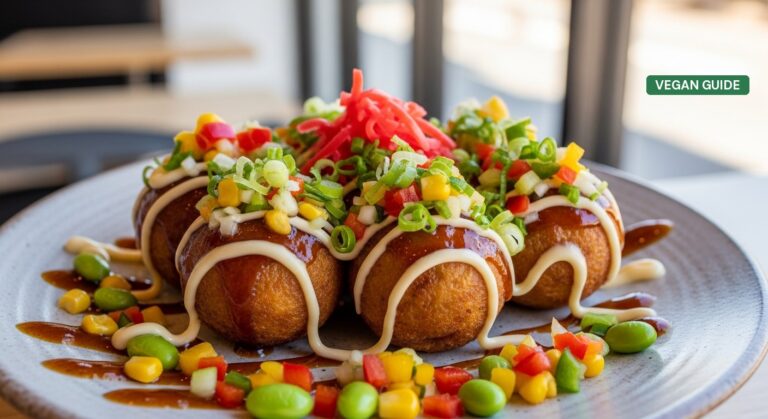
- Okonomiyaki and takoyaki batter: Both of Osaka’s signature street foods are traditionally made with wheat flour. Standard versions are off-limits for gluten-free diners unless the venue specifically uses rice flour or soy-based alternatives.
- Panko and kushikatsu coating: Deep-fried products typically use panko breadcrumbs made from wheat, and the oil used to deep-fry could contain gluten as well.
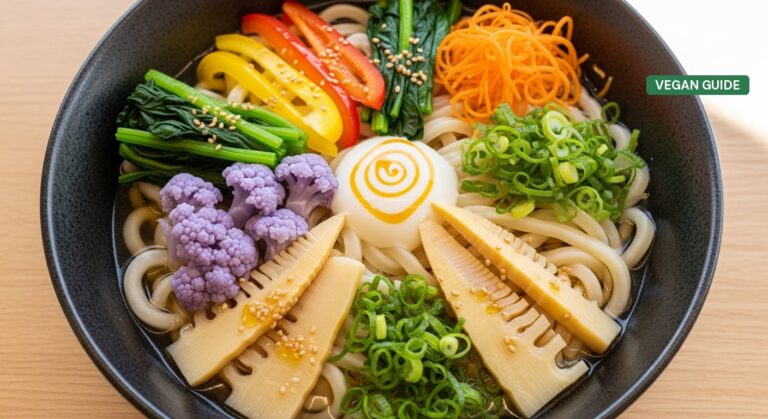
- Noodles: Udon, somen, and ramen noodles are made with wheat flour. Soba can be safe, but only if it is 100% buckwheat — many commercial blends include wheat.
- Barley tea (mugicha): Barley tea is very popular in summer as an iced tea beverage commonly served alongside water in restaurants. If you are eating gluten-free, this is a tea to avoid.
The vegan layer adds another complication: dashi (fish stock) is common — even in vegetable dishes. A dish can be gluten-free but still contain bonito or sardine dashi, meaning vegan and gluten-free travellers must verify both dimensions simultaneously.
Most restaurants in Osaka are vegan or vegetarian first, gluten-free second — which is why dedicated dual-restriction venues are so valuable, and why this guide focuses on understanding the landscape rather than assuming any single venue will solve everything.
🔗 Source: komelina.com
The Dedicated Dual-Restriction Scene: What Exists in Osaka
Osaka has a small but growing cluster of venues that are fully vegan and fully gluten-free by design — not by modification. Understanding the types of venues that exist helps you plan by neighbourhood and meal type rather than hunting venue by venue.
Fully vegan and fully gluten-free restaurants are the gold standard for this combination. The most prominent example is the aptly named Vegan & Gluten Free Osaka, located underground in the Osaka Ekimae Dai-4 Building near Umeda. All food menu items are vegan and gluten-free. If you have heard it mentioned as an Osaka dish, you will probably find it here, from okonomiyaki, kushikatsu, takoyaki, and temakizushi (hand-roll sushi) to karaage, gyoza, and ramen. Crucially, the menu gives the full ingredient list for each and every item, which is extremely helpful for those with other specific dietary limitations such as allergies or religious practices. The restaurant achieves this by substituting rice flour for wheat throughout — the Kansai-style okonomiyaki uses corn flour in the batter, mixed and then baked.
Fully vegan takoyaki and kushikatsu bars represent a uniquely Osaka category. OKO Takoyaki (near Shinsaibashi) is a standout: the takoyaki and kushikatsu are both vegan and gluten-free, and the takoyaki is made with soybeans instead of wheat flour. More specifically, the batter is made with okara, which is the leftover pulp from soybeans. An eclectic, five-storey restaurant with a nostalgic vibe, they specialise in gluten-free vegetarian/vegan takoyaki and kushikatsu.
Fully vegan and fully gluten-free cafés are emerging in residential neighbourhoods. FOLK茶菓 (Folksaka), near Fukushima Station, is one example: it is a charming all-vegan and gluten-free café, just a short walk from Fukushima station. It serves meals that are 100% vegan and gluten-free, open every day except Wednesdays and Thursdays, with hearty dishes, lots of sweet treats, and excellent coffee and tea.
Fully vegan sushi with gluten-free options is another niche that Osaka covers. Shojin Sushi Minamo is a fully vegan and fully gluten-free sushi restaurant opened in September 2024 by the owners of Paprika Shokudo Vegan. Shojin Sushi Minamo is a vegan, gluten-free sushi spot near America-Mura in Osaka. “Shōjin” refers to traditional Buddhist vegetarian cooking.
Vegan izakayas with gluten-free menus are rarer but exist. Shinsekai Paprika Shokudo is one: izakayas are popular with after-work and late-night crowds and can be found all over Japan, but they are rarely vegan-friendly — this spot is also gluten-free, and the great thing about a vegan izakaya is that it allows you to try various things because most dishes are small and generally affordable.
For a broader sense of what explore more of Osaka has to offer beyond the dual-restriction niche, the city’s plant-based scene extends well beyond these dedicated venues.
🔗 Sources: veganandglutenfree-osaka.com · happycow.net · veggiesabroad.com
Osaka Dishes That Are Naturally Safer — and Those That Are Not
Understanding which traditional Osaka dishes can be adapted — and which are structurally incompatible with the dual restriction — saves time and prevents disappointment at the table.
| Dish | Default Status | What to Look For |
|---|---|---|
| Plain steamed rice / onigiri | Generally safe | Avoid seasoned rice blends (zakkoku-mai may contain barley); check fillings for fish or egg |
| Edamame | Generally safe | Confirm no soy-sauce seasoning added |
| Hiyayakko (chilled tofu) | Generally safe | Ask for plain tofu; standard toppings (bonito, soy sauce) are neither vegan nor GF |
| 100% buckwheat soba (juwari soba) | Potentially safe | Must be 100% buckwheat; dipping sauce often contains wheat-based soy sauce |
| Okonomiyaki | Not safe (standard) | Safe only at dedicated venues using rice flour or corn flour batter |
| Takoyaki | Not safe (standard) | Safe only at venues using okara or rice flour batter, and without octopus |
| Kushikatsu | Not safe (standard) | Standard coating is panko (wheat); safe only at dedicated GF venues |
| Ramen | Not safe (standard) | Wheat noodles and soy-sauce broth; safe only at dedicated plant-based GF ramen shops |
| Sushi (rice-based) | Partially safe | Sushi rice may use wheat-containing vinegar; request GF tamari instead of standard soy sauce |
| Gyoza | Not safe (standard) | Wrappers are wheat-based; safe only at venues using rice flour wrappers |
The key insight is that Osaka’s most beloved dishes are all wheat-dependent in their standard form. This is precisely why dedicated dual-restriction venues matter so much here compared to other Japanese cities. At non-dedicated restaurants, most places are not necessarily gluten-free, but most vegan restaurants can accommodate dietary needs — you may need to ask upfront.
🔗 Source: legalnomads.com
How to Search, Filter, and Communicate Your Restrictions
Finding the right venue before you leave your hotel is far more reliable than hoping to improvise on the street. Several tools are specifically designed for this combination.
HappyCow remains the most widely used international resource. HappyCow remains the gold standard for navigating Japan. In major cities like Tokyo, Osaka, and Kyoto, it is indispensable for locating dedicated vegan restaurants or shops. Use the filter for “vegan” venues and then read individual listings carefully for gluten-free notes in the description or reviews.
Vegewel is a Japan-specific platform that is particularly useful for the dual restriction. Vegewel is a website with a restaurant search function and over 1,000 listings throughout Japan. The website is free to use and available in English, translated from Japanese. Its restaurant search allows users to search with categories — browse through eateries with vegan, vegetarian, organic, low-carbohydrate, gluten-free, and macrobiotic menus. You can apply both “vegan” and “gluten-free” filters simultaneously, which is its key advantage over HappyCow for this use case.
Find Me Gluten Free (findmeglutenfree.com) is a dedicated gluten-free app with an Osaka listing that includes a vegan filter. It is particularly useful for celiac travellers who need cross-contamination information, as reviews often address kitchen practices in detail.
Communicating in Japanese is essential even when menus are available in English, because kitchen staff may not speak English. Key phrases and kanji to know:
- グルテンフリー (guruten furī) — gluten-free
- 小麦不使用 (komugi fushiyō) — does not use wheat
- 小麦アレルギーがあります (komugi arerugī ga arimasu) — I have a wheat allergy
- 醤油抜きで (shōyu nuki de) — without soy sauce
- ヴィーガンです (vīgan desu) — I am vegan
- だしは何ですか? (dashi wa nan desu ka?) — What is the dashi made from?
Having someone who can speak Japanese or a good allergy card is a must. If you are able to book restaurants ahead of time and notify them of your allergies, this can be extremely helpful. Printed bilingual allergy cards — available from services such as Equal Eats or Legal Nomads — are more reliable than verbal communication alone, especially for celiac-level sensitivity.
Note that Japan’s Food Labeling Standards continue to evolve, but there is still no specific “gluten-free” rule — so shopper vigilance is key. A label reading “wheat-free” (小麦不使用) is not the same as a certified gluten-free claim, and barley (大麦) or rye (ライ麦) might still appear even when wheat is absent. Because there is no official “gluten-free” standard, read ingredients and look for recognised GF certifications.
🔗 Sources: vegewel.com · happycow.net
Convenience Stores and Supermarkets as a Backup
Even in a city with a growing dedicated scene, there will be moments — early mornings, late nights, or days spent far from Namba or Umeda — when a convenience store is the most practical option. When it comes to convenience stores, options are limited. However, you can find foods like plain rice balls and Soyjoy protein bars if you know where to look. They also usually stock salads and vegetables with separate dressing packets. You can also find soymilk, almond milk, and sometimes even oat milk in the refrigerated section, as well as dried fruits, nuts, chips, and drinks that do not contain animal products or gluten.
The safest convenience-store picks for the dual restriction are:
- Plain onigiri (rice balls): The plain salted (shio) or plum (ume) onigiri are often safer bets for vegans, but ingredients can be tricky and sometimes include non-vegan hidden ingredients not mentioned in the ingredient list. Always scan the label for 小麦 (wheat) and bonito-derived seasonings.
- Edamame and plain nuts: Packaged without seasoning, these are reliably safe.
- Soymilk cartons: Widely available at 7-Eleven, FamilyMart, and Lawson; check for added barley malt.
- Fresh fruit cups: Sold in the refrigerated section; no hidden ingredients.
- Tamari soy sauce packets: Some larger convenience stores and natural food shops stock certified GF tamari — useful to carry as a condiment when eating out.
For a more substantial shop, natural and organic supermarkets such as Kaldi Coffee Farm (multiple Osaka locations) and Aeon’s natural food sections stock certified gluten-free tamari, rice-flour products, and a wider range of plant-based staples. There is miso that does not have wheat included, but most premade sauces and spice packets come with a gluten risk. Stick to single-ingredient products where possible.
🔗 Sources: katinjapan.com · itravelforveganfood.com
Cuisine Types That Overlap Naturally With Both Restrictions
Beyond dedicated vegan-and-GF venues, certain cuisine categories in Osaka are structurally more compatible with the dual restriction and worth seeking out.
Shōjin ryōri (Buddhist temple cuisine) is the most historically plant-based tradition in Japan. Shōjin refers to traditional Buddhist vegetarian cooking. It is a good term to look for when researching vegan and vegetarian restaurants. Not all shōjin food is GF, though — wheat-based fu (wheat gluten) and soy sauce are common, so always confirm with the venue. Shojin Sushi Minamo in Osaka applies shōjin principles to sushi with a fully gluten-free approach.
Indian and South Asian restaurants are a reliable category for the dual restriction. If you are looking for familiar sustenance, do not overlook the international dining scene. Japan — especially cities like Tokyo and Osaka — is obsessed with global cuisines, and these restaurants can often be a “safe harbour” for vegans because their base ingredients are naturally plant-based. Many Indian restaurants use rice-based dishes (dal, rice, vegetable curries) that are naturally gluten-free, though naan and some spice blends may contain wheat — always confirm.
Rice-flour-based cafés are a growing category in Osaka. Several cafés have built their entire menus around domestic Japanese rice flour (kome-ko, 米粉) as a wheat substitute, producing bread, cakes, pancakes, and savoury dishes that are both plant-based and gluten-free. Look for the term 米粉 on signage and menus. Comoconoco Gluten Free Laboratory & Cafe near Osaka Castle, for example, serves homemade gluten-free bread and desserts made from Japanese rice flour.
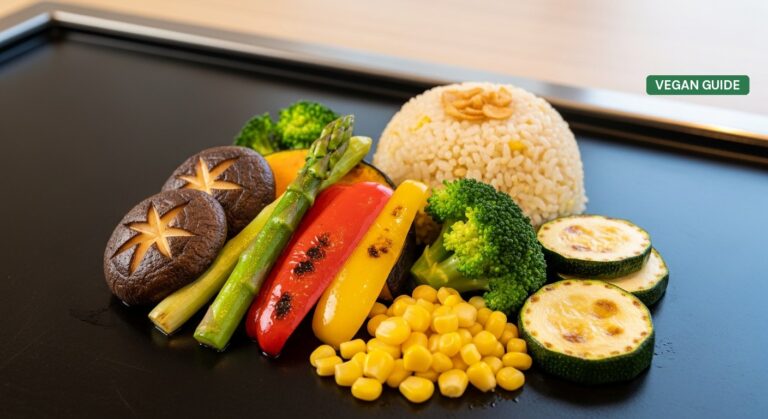
Yakiniku (grilled meat) restaurants may seem an unlikely category, but the format — where diners grill individual ingredients at the table — allows for precise control. Plain vegetables, tofu, and mushrooms grilled without sauce are naturally vegan and gluten-free. The risk lies in shared grills and wheat-containing tare sauces; request salt (shio) seasoning only and confirm the grill is not shared with wheat-battered items.
For a full picture of the best food in Osaka across all dietary styles, the city’s culinary range extends well beyond these categories — but the above represent the most reliable entry points for dual-restriction travellers.
🔗 Sources: itravelforveganfood.com · legalnomads.com
Practical Tips for Vegan and Gluten-Free Travellers in Osaka
- Use Vegewel with both filters active before you travel. Go to vegewel.com/en/prefstate/27 and apply both the “vegan” and “gluten-free” menu filters simultaneously. Vegewel allows you to search from over 1,300 restaurants with vegan, vegetarian, organic, and gluten-free options by area. Screenshot your shortlist before arriving — mobile data can be unreliable underground.
- Carry a bilingual allergy card that covers both restrictions. A generic vegan card is not enough. Your card should specify: no wheat (小麦), no barley (大麦), no soy sauce (醤油), no fish-based dashi (魚のだし), no dairy, no eggs — and request that the kitchen use separate utensils. Services like Equal Eats produce Japan-specific cards for this combination.
- Make reservations and declare restrictions in advance. Restaurants in Japan take food allergies seriously, so if you inform your server that you have a wheat allergy and mention the specific foods you need to avoid, most restaurants will be cooperative. It is best to call ahead, especially if you are dining omakase style or worried about cross-contamination. For dedicated venues like Vegan & Gluten Free Osaka (Osaka Ekimae Dai-4 Building, B1, near Higashi-Umeda Station on the Tanimachi Line), booking ahead is strongly recommended.
- Carry certified GF tamari packets. For home cooking, look for tamari soy sauce made with 100% soybeans and no wheat. When dining out, it may be difficult to know if the soy sauce served at a restaurant is gluten-free, so you may want to carry your own packets of tamari soy sauce. Small tamari packets are available at Kaldi Coffee Farm and natural food sections of larger Aeon supermarkets in Osaka.
- At convenience stores, scan for 小麦 (komugi) on every label. Always check for 小麦 (wheat) or 大麦 (barley) on labels. Plain shio onigiri, edamame, soymilk, and fresh fruit cups are the most reliable dual-safe picks at 7-Eleven, FamilyMart, and Lawson across Osaka.
- Treat “wheat-free” and “gluten-free” as different claims. Japan has no official gluten-free certification standard. A product labelled 小麦不使用 (wheat-free) may still contain barley or rye. For celiac-level sensitivity, look for internationally recognised GF certification marks or stick to dedicated fully vegan and fully gluten-free venues where the entire kitchen operates without wheat.
Last updated: July 3, 2026 · Corrections: [email protected]