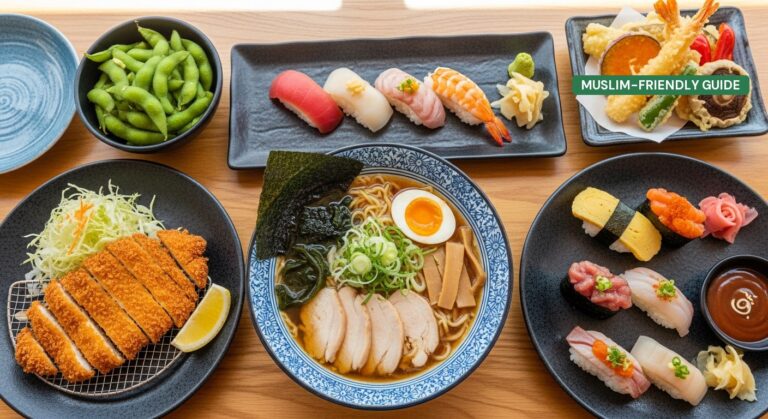
Looking for halal food in Shinsaibashi, Osaka? Three halal-certified ramen and wagyu noodle shops sit within the Shinsaibashi district itself — no detour required. Whether you want a classic soy-sauce bowl, a multi-dish Japanese feast, or A5 wagyu ramen, this stretch of Chuo Ward has you covered. Check our Osaka halal guide for the full city picture.
MICHI’s Pick — Selected by our Osaka-based team, based on places we’ve visited and on research using Tabelog and Google Maps ratings. In Japan, a Tabelog score of 3.4+ is genuinely high — Japanese reviewers are famously strict, and most locals consider anything above 3.4 a place worth a detour. We feature venues meeting at least one of: Tabelog 3.4+, Google Maps 4.3+, or 100+ reviews — the kind of spots locals quietly trust.
Tabelog and Google Maps scores are accurate as of the time of writing.
1. Halal Ramen Naniwaya (浪速屋)
The longest-running halal-certified ramen shop in Shinsaibashi, certified by the Japan Islamic Trust, with a prayer room on-site and zero alcohol or pork anywhere on the menu.
- ☪️ Halal status: halal-certified
- 🍜 Must-order: Shoyu Ramen (¥900)
- 📍 Access: Shinsaibashi Station (7 min walk) / Namba Station (10 min walk)
- 🕒 Hours: 12:00–22:30 (L.O. 22:00) (Open daily)
- 📞 Reservation: Not needed
- 🧎 Prayer room: Available on-site
- 🍷 Alcohol served: No
- 🗣 English menu: Yes
- ⭐ Rating: Google 4.3 (200+ reviews) (as of writing)
- 🗺 View on Google Maps
- 🔗 Source: naniwaya-osaka.com
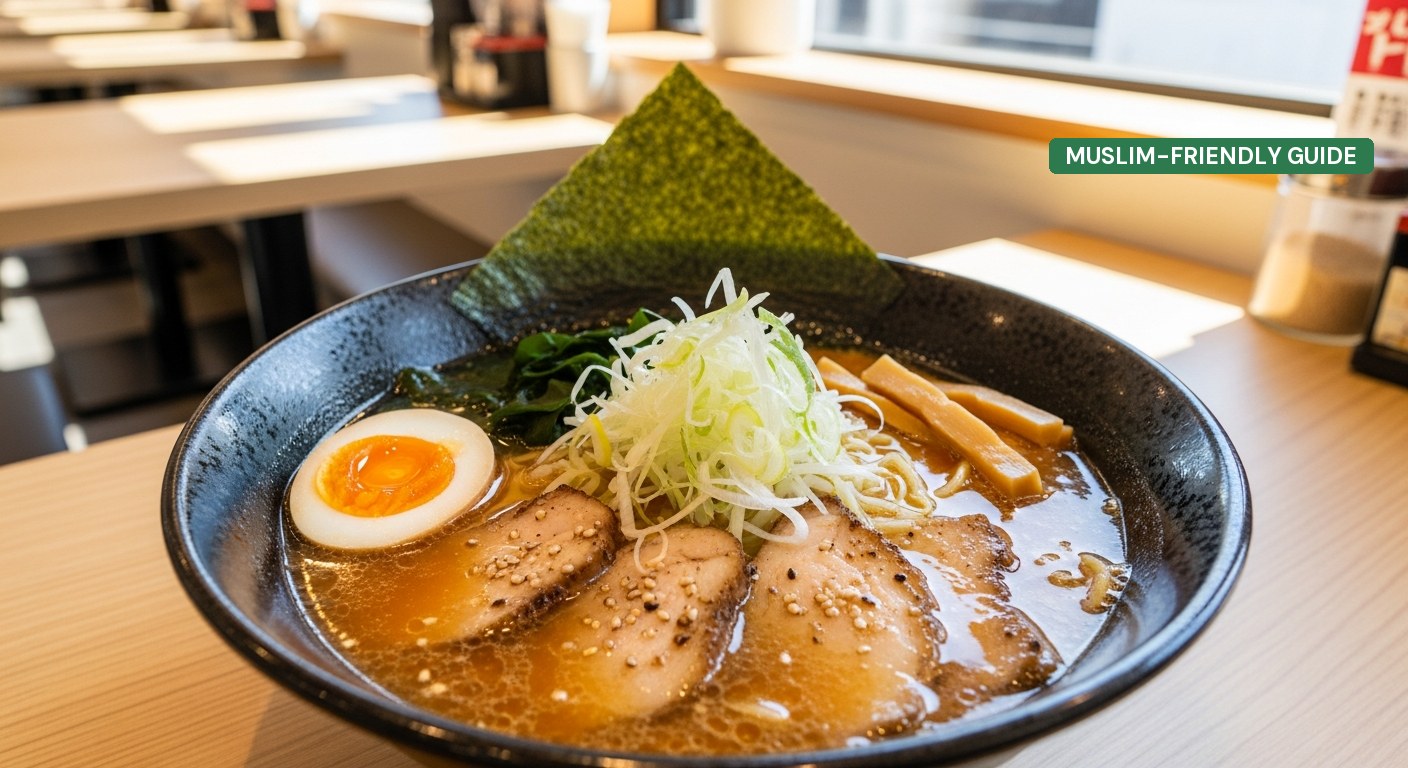
What to order: The Shoyu Ramen uses halal-certified soy sauce and chicken broth with custom-ordered noodles from a dedicated factory — clean, additive-free, and deeply satisfying. Spice lovers should try the Spicy Miso Ramen, where you can dial the heat up or down to taste.
2. Halal Honolu Grande Shinsaibashi (帆のるぐらんで心斎橋)
A fully halal-certified flagship store on Shinsaibashi-suji arcade that goes far beyond ramen — think takoyaki, okonomiyaki, gyukatsu, and Kobe beef steak, all under one halal roof.
- ☪️ Halal status: halal-certified
- 🍜 Must-order: Chicken Paitan Ramen (¥1,200)
- 📍 Access: Shinsaibashi Station (6 min walk)
- 🕒 Hours: 11:30–21:00 (Open daily)
- 📞 Reservation: Not needed
- 🧎 Prayer room: Nearby (Daimaru South Building 7F, 3 min walk)
- 🍷 Alcohol served: No
- 🗣 English menu: Yes
- ⭐ Rating: Google 4.8 (1,346 reviews) (as of writing)
- 🗺 View on Google Maps
- 🔗 Source: halalramenjapan.com
What to order: The Chicken Paitan Ramen is built on halal chicken broth and served with halal-certified toppings — a rich, creamy bowl that holds its own against any mainstream ramen shop. If you want to explore the best food in Osaka beyond noodles, the halal takoyaki and gyukatsu here are genuinely worth ordering alongside.
3. Halal Wagyu Ramen & Sukiyaki GYUMON Osaka/Shinsaibashi (牛門 大阪心斎橋)
The Shinsaibashi outpost of Japan’s pioneering halal wagyu group, serving 100% halal-certified A5 wagyu ramen and sukiyaki in a refined setting — the premium choice for a special-occasion bowl.
- ☪️ Halal status: halal-certified
- 🍜 Must-order: A5 Halal Wagyu Ramen (¥2,200)
- 📍 Access: Nagahoribashi Station (3 min walk) / Shinsaibashi Station (8 min walk)
- 🕒 Hours: Lunch & Dinner (check official site for current hours) (Open daily)
- 📞 Reservation: Recommended
- 🧎 Prayer room: Available on-site
- 🍷 Alcohol served: No
- 🗣 English menu: Yes
- ⭐ Rating: Google 4.7 (100+ reviews) (as of writing)
- 🗺 View on Google Maps
- 🔗 Source: groovyjapan.com
What to order: The A5 Halal Wagyu Ramen features a broth made from over 20 varieties of wagyu beef, producing a depth of umami that is genuinely unlike any standard ramen. If you’re dining with a group, pair it with the sukiyaki set — thinly sliced wagyu simmered in a sweet soy broth — for a full Japanese hot-pot experience. You can explore more of Shinsaibashi after dinner; the Shinsaibashi-suji arcade is a short walk away.
Frequently Asked Questions
Q. Is it easy to find halal food in Shinsaibashi, Osaka?
Easier than most parts of Japan. The Shinsaibashi–Namba corridor has the highest concentration of halal-certified restaurants in Osaka, and all three shops listed here are within a 10-minute walk of Shinsaibashi Station. Signage and English menus are standard at each venue.
Q. What does “Muslim-friendly” mean in Japan?
In Japan, “Muslim-friendly” typically means a restaurant has removed pork and alcohol from its menu but has not obtained formal halal certification from a recognised Islamic body. Ingredients such as mirin, sake-based sauces, or lard may still be present unless the shop explicitly states otherwise. All three shops in this article are halal-certified — a stricter standard — meaning a certifying authority has verified the sourcing and preparation of ingredients.
Q. Are there prayer rooms near halal restaurants in Shinsaibashi?
Yes. The Daimaru South Building (Shinsaibashi-suji 1-6-3, 7th floor) has a dedicated prayer room with separate rooms for men and women, qibla direction marked, and regular cleaning — it is a 3-minute walk from Honolu Grande Shinsaibashi. Halal Ramen Naniwaya and GYUMON both have prayer rooms available on-site.
Q. What hidden ingredients should Muslim travelers watch out for in Japan?
The main risks in ramen specifically are tonkotsu (pork bone) broth, lard added to the tare seasoning, mirin (a sweet rice wine used in many Japanese sauces), and sake used in marinades. Even “chicken ramen” at non-certified shops may use a pork-based base stock. At halal-certified shops like those listed here, these ingredients are replaced or eliminated entirely — but at any uncertified restaurant, always ask staff directly about broth composition and seasoning.
Last updated: July 7, 2026 · Corrections: [email protected]