Last updated: July 4, 2026
Information changes — always confirm with the venue/source before relying on it.
Introduction
Tenma is one of Osaka’s most lived-in neighbourhoods — a place where locals shop for groceries, grab a quick bite at an izakaya, and stroll the length of explore more of Tenma and its famous covered arcade. For Muslim travellers, that everyday energy is exactly the appeal — but it also raises a practical question: where, along 2.6 kilometres of food stalls, izakayas, and market vendors, can you eat with confidence?
Osaka is one of Japan’s most attractive regions, offering a blend of traditional and modern culture and a variety of culinary delights — and the number of restaurants where Muslim visitors can enjoy meals with peace of mind is increasing, with establishments that have obtained halal certification or offer Muslim-friendly services. Tenma sits at the northern end of that growing scene, and this guide explains what kinds of dining options exist in and around the arcade, how to read the street’s food landscape as a Muslim traveller, where to find prayer facilities nearby, and how to fill gaps with convenience-store picks. By the end, you will know exactly how to plan a full day in Tenma without compromising your dietary needs.
🔗 Source: halalgourmet.jp
Understanding the Tenjinbashi-suji Food Landscape
Tenjinbashi-suji Shopping Street is said to be the longest straight and covered shopping arcade in Japan at approximately 2.6 km in length, running north–south and accessible from multiple subway and JR stations including Tenma, Minami-Morimachi, and Tenjinbashi-suji 6-chome. Stretching a whopping 2.5 kilometres, it is home to over 600 shops and restaurants, and its mix of old and new gives a great insight into one of Osaka’s oldest merchant areas.
For Muslim travellers, the key thing to understand about this street is that it is primarily a local eating district — not a tourist-facing halal hub like Dotonbori. The majority of its food stalls and izakayas serve pork-heavy Osaka classics: kushikatsu, yakitori with pork skewers, and ramen with tonkotsu (pork-bone) broth. That does not mean you go hungry — it means you need to know what to look for and where to look.
The arcade is divided into numbered chome (blocks) from 1-chome in the south to 7-chome in the north. In the alleys next to Ten-go (Tenjinbashi-suji 5-chome), there is a strong Showa-era atmosphere, with izakayas and standing bars everywhere, and when night falls this area becomes incredibly lively. Muslim travellers should be aware that alcohol is served widely in this zone. The more practical eating options for Muslim visitors tend to cluster around the 3-chome and 4-chome sections, closer to JR Tenma Station.
🔗 Source: ehalal.io
Halal-Certified and Muslim-Friendly Dining Near the Arcade
The most notable Muslim-friendly dining option directly on the arcade is Seven Hills Express, a halal-certified Arabic cuisine restaurant. Located inside Tenjinbashi-suji Shopping Street at Tenjinbashi 3-3-18, Kita Ward, the interior is filled with a Middle Eastern atmosphere, the menu has photos and descriptions making it easy to understand, and the staff are kind and accommodating. Dishes include Kubbeh (fried dumplings of bulgur stuffed with minced meat, a representative dish of Syria and Lebanon), Kufta lamb meatballs with seasonal vegetables in tomato sauce, and Kunafa, a popular Arabic dessert. This is a rare find: a halal-certified venue sitting directly within the arcade itself, making it an ideal anchor for your Tenma food day.
A short walk from JR Tenma Station, the Kerapirka restaurant at 4-12-15 Tenjimbashi, Kita-ku, has previously been listed on Halal Gourmet Japan as a Muslim-friendly Ainu and Italian cuisine venue. It is located very conveniently near JR Tenma Station, and the restaurant also has a praying space on-site. Note that this venue has been operating since at least 2017 — always confirm current status before visiting.
For a broader view of what is available across Osaka’s halal scene — including wagyu yakiniku, halal ramen, and Japanese home cooking — see our Osaka halal guide, which covers the full city.
The number of restaurants where Muslim visitors can enjoy meals with peace of mind is increasing, and Halal Gourmet Japan introduces establishments that have obtained halal certification or offer Muslim-friendly services. Use the Halal Gourmet Japan search tool filtered to the Tenma / Tenjinbashi area for the most current listings before your visit.
🔗 Source: halalgourmet.jp · halalmedia.jp
Reading the Street: What Muslim Travellers Can and Cannot Eat
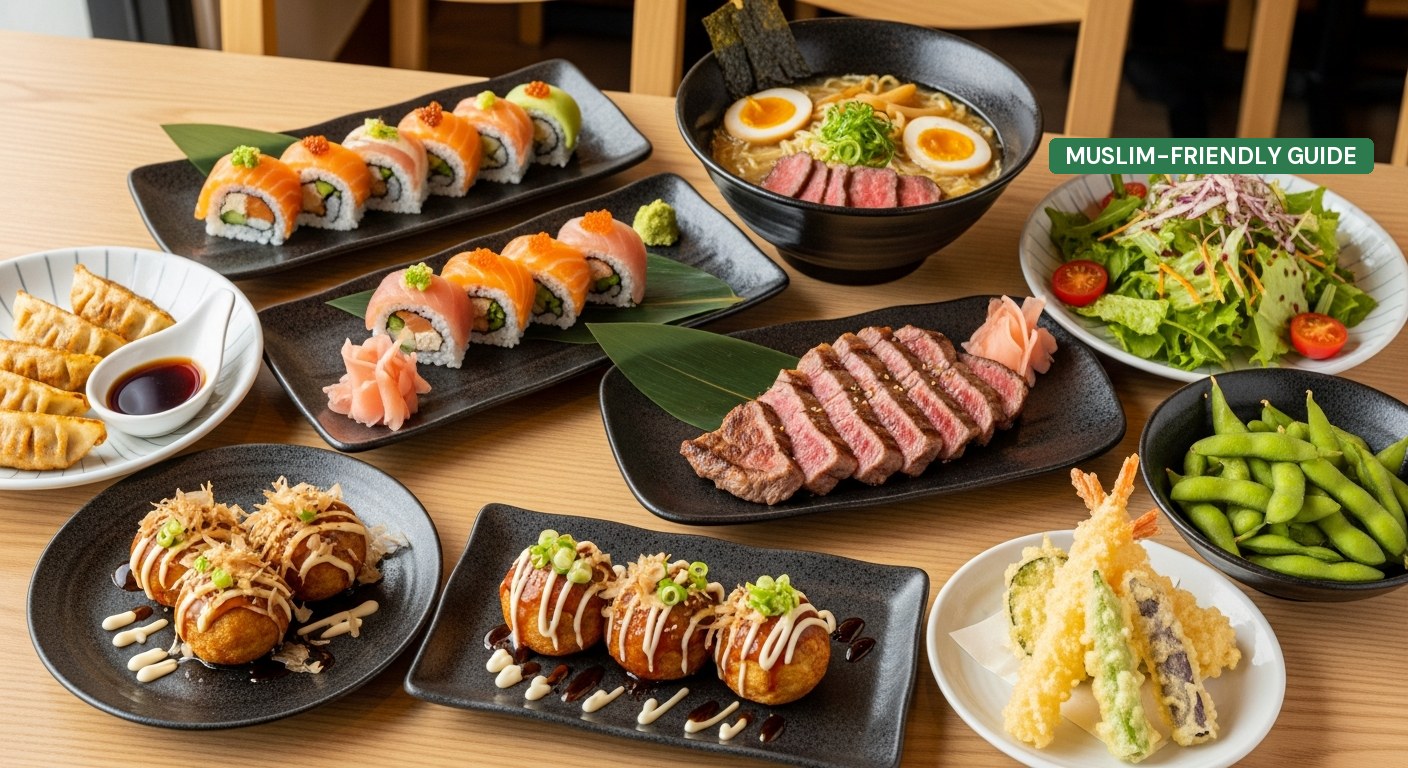
Most of the food stalls along Tenjinbashi-suji are not halal-certified and are not Muslim-friendly. However, understanding the street’s food categories helps you navigate confidently.
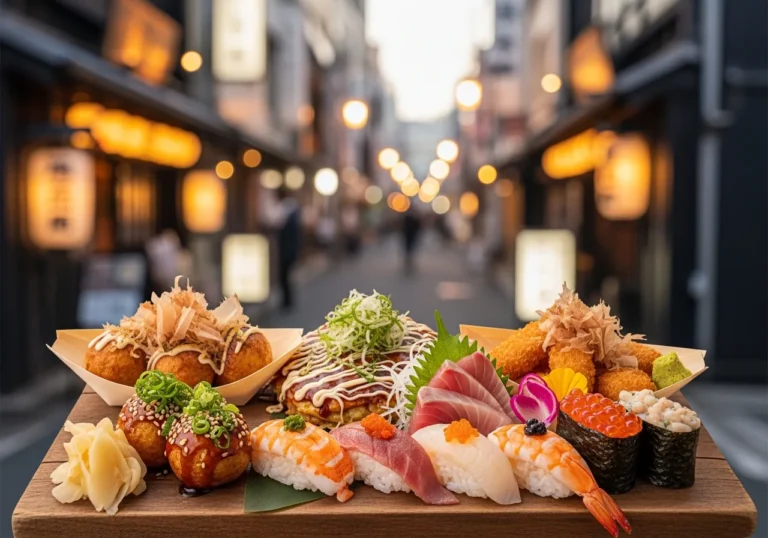
- Seafood stalls and fresh fish vendors — Seafood is naturally permissible under Islamic dietary law. Seafood is naturally halal, so sushi and ramen with vegetable or chicken broth are common alternatives. Fresh fish, grilled squid (ika), and plain seafood onigiri from market vendors are generally safe choices — always confirm no pork-based sauces or mirin are used.
- Kushikatsu stalls — Avoid. The shared frying oil almost always contains pork skewers, and cross-contamination cannot be ruled out.
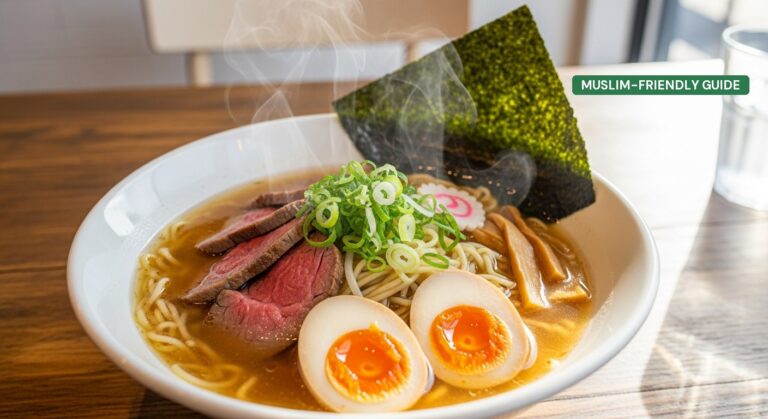
- Ramen shops — Most use tonkotsu (pork-bone) broth. Unless a shop explicitly displays a “no pork no lard” or halal-certified sign, skip it.
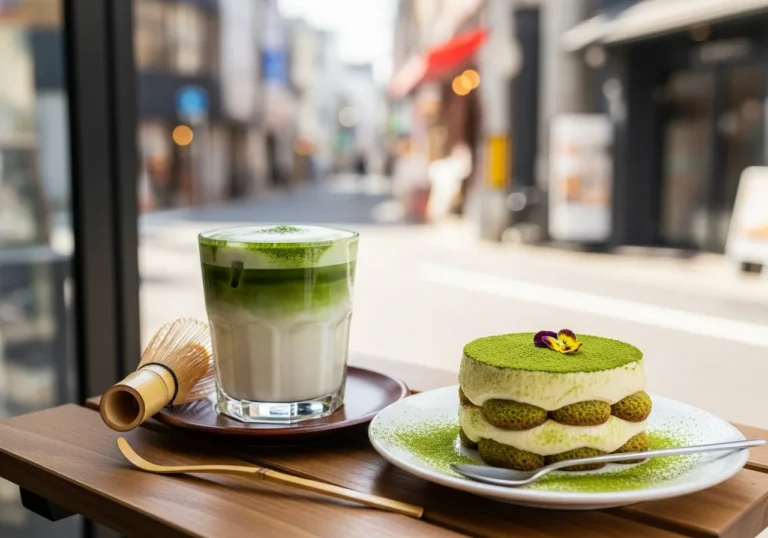
- Wagashi (Japanese sweets) shops — Traditional Japanese confectionery such as mochi, dorayaki, and warabi mochi is typically made from rice flour, red bean paste, and sugar with no animal-derived ingredients. The street is dotted with long-established Japanese confectionery shops and deli-style stores where you can enjoy the authentic flavours of the neighbourhood. These are generally safe, but check for gelatin (ゼラチン) in jelly-type sweets.
- Fruit and produce vendors — Tenma’s market character means fresh fruit and vegetables are readily available and always permissible.
Halal certification is provided by organisations like the Japan Islamic Trust or international bodies, but “Muslim-friendly” spots — those without pork and alcohol and using separate utensils — offer additional choices. When in doubt, look for the words ハラール (halal), 豚肉不使用 (no pork used), or ラード不使用 (no lard used) displayed at the stall or on packaging.
🔗 Source: japanichibantours.com
Convenience Store Backup: Konbini on the Arcade
Multiple convenience stores (konbini) are located along and immediately adjacent to Tenjinbashi-suji, making them a reliable fallback for snacks, breakfast, or a quick meal between sightseeing stops.
The important caveat: Japanese convenience stores are not halal-certified, and none of the three major chains — 7-Eleven, Lawson, or FamilyMart — hold JAKIM, MUIS, or any other internationally recognised halal certification for their private-label products. However, many items are naturally free of pork and alcohol, particularly plain rice dishes, certain breads, boiled eggs, fresh fruit, and some snack categories.
Safer picks to look for on the shelf:
- Onigiri (rice balls) — Plain fillings such as salmon (鮭), pickled plum (梅), or kombu seaweed are generally free of pork and alcohol. Always avoid fillings labelled チャーシュー (chashu pork) or 豚 (pork). Flavoured seasonings in some onigiri may contain mirin — check the full ingredient list on the back of the wrapper.
- Packaged snacks — Safer picks verified against current manufacturer disclosures include Orihiro Purunto Konnyaku Jelly (plant-based, no gelatin), Furuta Uji Matcha sandwich cookies (no animal-derived ingredients on the official allergen list), and most plain onigiri with seafood fillings.
- Label reading — Key Japanese terms to recognise include ゼラチン (gelatin — source may be pork or beef), エキス (extract — e.g. 豚エキス = pork extract), and 動物性油脂 (animal fat — unspecified). If you see any of these on a label, either skip the product or research the specific ingredient further.
- Google Translate camera mode — Using a translation app with camera mode can help you read labels in real time.
🔗 Source: halal-navi.com · halal-navi.com (FamilyMart guide)
Prayer Facilities Near Tenma
Tenma does not have a mosque or dedicated prayer room within the arcade itself, but several options are reachable by public transport or on foot.
Osaka is one of the most Muslim-friendly cities in Japan, with several mosques, halal restaurants, and a halal souvenir shop scattered throughout the city. The closest major facility to Tenma is the Osaka Mosque (also referred to as the central Osaka mosque), located in the Chuo-ku area. Osaka Mosque opened in 2010 and is located in the central area of Osaka, with four floors in the building: the first floor used for halal shops, the second floor as a prayer hall, the third floor as an Islamic madrasah, and the fourth floor for kitchen and dining hall.
Osaka is one of Japan’s regions where Muslims can find prayer facilities, including both dedicated mosques for regular prayers and temporary prayer spaces located in airports, shopping malls, and tourist areas. For a comprehensive, up-to-date map of prayer spaces across Osaka, use the Halal Gourmet Japan prayer space finder or the Halal Navi app before your visit.
When travelling in Osaka, rather than “looking for a place of worship later,” it is important to incorporate prayer into your sightseeing route in advance — by doing so, Muslim travellers should be able to enjoy their trip to Osaka with peace of mind.
🔗 Source: halalgourmet.jp (prayer spaces) · matcha-jp.com
Getting to Tenma and the Arcade
The nearest transport options include JR Osakatemmangu Station on the JR Tozai Line and Temma Station on the JR Osaka Loop Line by train; Minami-morimachi Station on the Osaka Metro Tanimachi and Sakaisuji Lines and Ogimachi Station on the Osaka Metro Sakaisuji Line by subway; and Tenjimbashisuji 6-chome Station on the Osaka Metro Tanimachi and Sakaisuji Lines and Hankyu Senri Line for subway and train combined.
The most practical entry point for Muslim travellers is JR Tenma Station (Osaka Loop Line), which drops you directly at the southern end of the arcade’s busiest food section (3-chome to 4-chome), closest to Seven Hills Express and the Kerapirka restaurant. From Namba or Shinsaibashi, take the Osaka Metro Sakaisuji Line to Minami-morimachi Station (approx. 10 minutes). For the best food in Osaka beyond Tenma, the Sakaisuji Line also connects you south to Namba and north toward Umeda with a single transfer.
🔗 Source: insideosaka.com
Practical Tips for Muslim Travelers
- Anchor your day at Seven Hills Express (3-chome). This halal-certified Arabic restaurant sits directly inside the arcade at Tenjinbashi 3-3-18, Kita Ward. Use it as your main meal stop and explore the street before or after.
- Use Halal Gourmet Japan before you go. Apps such as Halal Gourmet Japan and Halal Navi let you scan product barcodes and locate nearby eateries. Filter the map to the Tenma / Tenjinbashi area and screenshot your shortlist while you have Wi-Fi.
- Carry a Muslim dietary card in Japanese. Carry a Muslim dietary card for situations where you need staff to verify ingredients. Cards are available as free printable PDFs from muslim-guide.jp and JNTO’s Muslim Welcome Guide.
- Stick to seafood and wagashi at market stalls. Fresh fish, grilled squid, plain mochi, and red-bean sweets from the arcade’s long-established confectionery shops are your safest no-pork-no-lard street-food options. Always ask about sauces.
- Plan prayer times around your route. The nearest full mosque facilities are in central Osaka (Chuo-ku). Use the Halal Gourmet Japan prayer space map or the JNTO Muslim Welcome Guide at muslimguide.jnto.go.jp to identify the closest option to your position on the arcade.
- Enter the arcade from JR Tenma Station for the best halal-friendly section. The 3-chome to 4-chome zone, closest to Tenma Station, has the highest concentration of non-izakaya food options and is where the halal-certified and Muslim-friendly venues are located.
Last updated: July 4, 2026 · Corrections: [email protected]