Last updated: July 3, 2026
This article reflects information available at the time of writing. Check Google Maps for the latest hours and availability.
Introduction
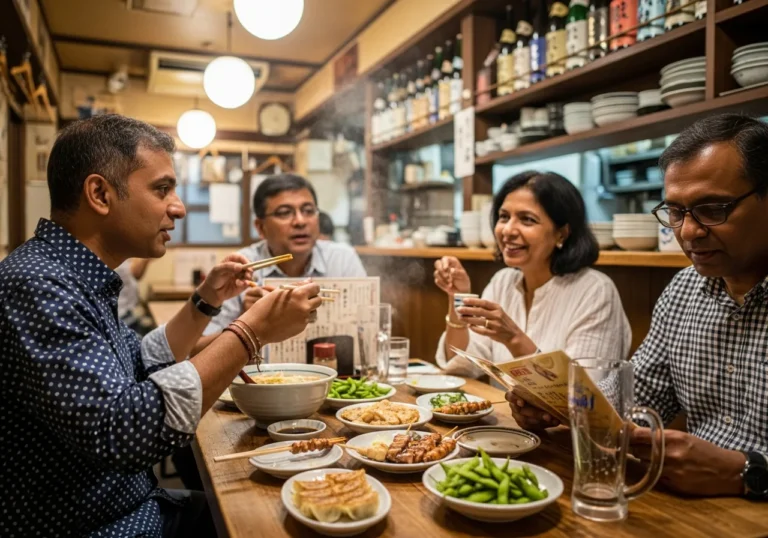
Fukushima doesn’t get the tourist foot traffic of Dotonbori or Namba, and that’s exactly why it’s worth the detour. This low-rise neighbourhood just west of Osaka Station has quietly become one of the city’s most serious eating districts — and yakitori is where it really earns its reputation.
The story goes that many of the best yakitori chefs in Fukushima trained at a single counter on a back street near Shin-Fukushima Station. That lineage is real, and you can taste it across the neighbourhood: precise fire control, quality regional chicken, and a general refusal to cut corners. Osaka is known as a city of food, and the Fukushima area is packed with incredible dining options — a short distance from Osaka Station, it has become a favourite spot for both locals and tourists.
What you’ll find here ranges from a Michelin Bib Gourmand institution that’s been shaping the local scene for decades, to a newer generation of charcoal-grill spots that bring in Tanba chicken, Kyoto duck, and seasonal vegetables from direct farm relationships. Prices run from around ¥4,000 for a casual a-la-carte evening to ¥10,000-plus for an omakase course. Reservations are essential at most places — walk-ins are possible but risky, especially on weekends.
This guide covers five verified, currently operating yakitori spots in Fukushima, Osaka, anchored by the neighbourhood’s Tabelog Top 100 pick.
1. Ayamuya (あやむ屋)
- 📍 Kusunoki Bldg., 5-17-39 Fukushima, Fukushima-ku, Osaka
- 🕐 Mon–Sat & public holiday eves: 17:30–22:00 (food LO 21:15, drinks LO 21:30) (as of May 2026)
- 💰 ¥8,000–¥9,999 per person (food only)
- 🚃 Shin-Fukushima Station (1 min walk)
- 🗺 Open in Google Maps
- 📋 Tabelog
What to order: Omakase 10-skewer course (¥8,000+)
Selected for the Tabelog Yakitori WEST Top 100 in 2025, Ayamuya is the neighbourhood’s founding counter — many of the chefs who went on to open popular yakitori spots across Fukushima trained here first. The chicken is Hyogo-prefecture Tanba jidori, sourced directly from the farm, and the owner personally assesses each cut’s condition before skewering — every part is served at its optimal state. Closed Sundays; book well ahead.
2. Sumiyaki Kobo Gen (炭焼巧房 源)
- 📍 Fukushima Bldg. Kitakan 1F, 7-13-7 Fukushima, Fukushima-ku, Osaka
- 🕐 Daily 17:00–22:00 (LO 21:30) (as of May 2026)
- 💰 ¥4,000–¥6,000 per person (food only)
- 🚃 Fukushima Station (3 min walk)
- 🗺 Open in Google Maps
- 📋 Tabelog
What to order: Omakase skewer set — 7 pieces (¥approx. ¥2,500), chicken sashimi platter (¥approx. ¥1,200)
Rated 3.71 on Tabelog and selected for the Yakitori WEST Top 100 in 2024, Gen is an a-la-carte counter with 18 seats — 10 at the bar, 8 on a raised tatami section — where the menu ranges from charcoal-grilled skewers to seasonal vegetables and the occasional Miyazaki-sourced game. The chicken sashimi platter (breast, liver, heart, gizzard, and sasami) arrives with a 15-minute freshness window — the kitchen means it.
3. Tori to Hatake (鶏と畑)
- 📍 1-5-2 Fukushima, Fukushima-ku, Osaka
- 🕐 Lunch 11:30–13:30 / Dinner 17:00–24:00 (LO 23:30); irregular holidays (as of May 2026)
- 💰 ¥4,000–¥6,000 per person (food only)
- 🚃 Fukushima Station (Hanshin) (3 min walk)
- 🗺 Open in Google Maps
- 📋 Tabelog
- 🌐 Official site
What to order: Omakase course (¥3,750 excl. tax), charcoal-grilled seasonal vegetables
Tori to Hatake sources its chicken from trusted producers and its vegetables direct from farms and the market, grilling everything over charcoal to let the ingredients speak for themselves. The late closing time (midnight LO) makes it one of the few serious yakitori spots in Fukushima where you can actually show up after 10pm and still eat well.
4. Yakitori Watakabe (焼鳥わたかべ)
- 📍 Fukushima, Fukushima-ku, Osaka (2 min walk from JR Fukushima Station — confirm exact address via Google Maps)
- 🕐 Dinner from 17:00; check Google Maps for current hours (as of May 2026)
- 💰 ¥3,000–¥5,000 per person (food only)
- 🚃 Fukushima Station (JR) (2 min walk)
- 🗺 Open in Google Maps
- 📋 Tabelog
- 🌐 Official site
What to order: Skewer assortment, charcoal-grilled vegetables
Watakabe was opened by someone who trained at another popular Fukushima yakitori spot, and was recommended by the owner of yet another — it arrived with serious neighbourhood credentials before it even opened. Every skewer is hand-threaded daily and grilled over premium binchotan charcoal, with a house tare made from fresh vegetables and no chemical seasonings. The one-piece counter is the best seat in the house.
5. Torisho Zen (鶏匠 膳)
- 📍 Twin Court Fukushima 1F, 3-12-20 Fukushima, Fukushima-ku, Osaka
- 🕐 Mon–Fri 17:00–22:30 / Sat–Sun 16:00–22:30; closed Wednesdays (as of May 2026)
- 💰 ¥8,000–¥14,999 per person (food only)
- 🚃 Shin-Fukushima Station (2 min walk)
- 🗺 Open in Google Maps
- 📋 Tabelog
What to order: Omakase course (from ¥7,000 food only)
Torisho Zen — also selected for the Tabelog Top 100 — offers special courses and omakase skewer selections, with attention paid to presentation and dishware that makes the whole experience feel considered rather than casual. The interior balances a sense of occasion with approachability: counter seats alongside table seating, one section of which has a semi-private feel. Weekend slots go fast — book at least a week out.
How to Order
Most serious yakitori spots in Fukushima operate on a course or omakase model, especially at the higher end. At places like Ayamuya and Torisho Zen, you’ll typically choose a course at booking — a set number of skewers, sometimes with sashimi and a closing dish included. At more casual spots like Gen and Tori to Hatake, a-la-carte ordering is the norm: start with chicken sashimi if it’s on the menu, work through the skewers (mix of salt and tare), and finish with a rice or noodle dish.
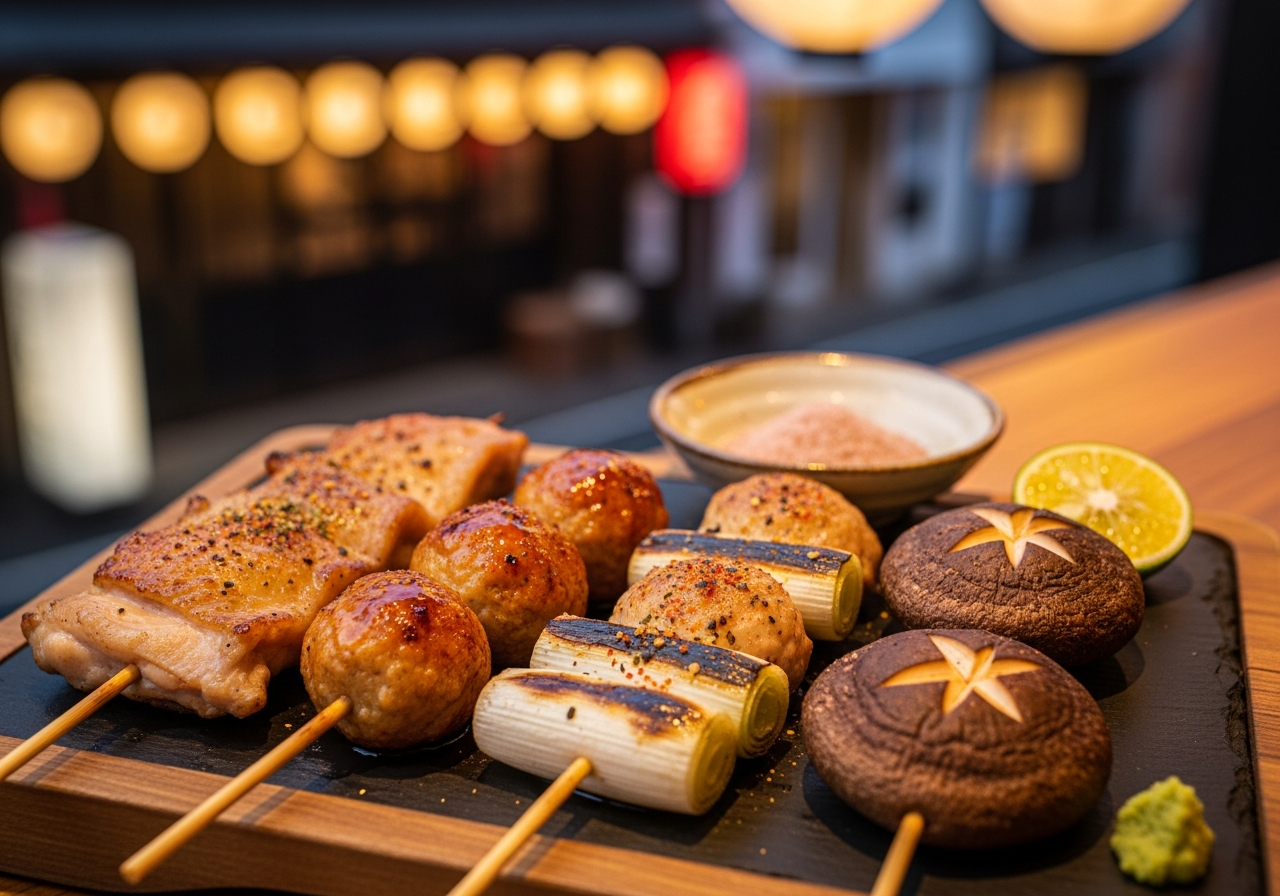
On the skewers themselves: sasami (tenderloin) is usually served with wasabi and is often the kitchen’s calling card — order it. Seseri (neck meat) is fatty and intensely flavoured; bonjiri (tail) is crispy and rich. If you’re unsure, ask for the omakase selection and let the chef decide.
Reservations are essential at Ayamuya and Torisho Zen — both fill up days in advance, especially on Fridays and Saturdays. For Gen and Watakabe, same-day bookings are sometimes possible on weeknights. Tori to Hatake’s late hours make it a viable second stop if your first reservation ends early.
Most menus are in Japanese only. Pointing at neighbouring tables’ dishes works fine; staff at most spots are used to non-Japanese-speaking guests.
FAQ
Q: Is yakitori in Fukushima expensive?
A: It depends on where you go. Casual spots like Tori to Hatake and Watakabe run ¥3,000–¥5,000 per person with drinks. Mid-range counters like Gen sit around ¥5,000–¥7,000. The top-end omakase spots — Ayamuya and Torisho Zen — will cost ¥8,000–¥15,000 per person before drinks. None of these are cheap nights out, but the quality-to-price ratio at every level is strong by Osaka standards.
Q: Do yakitori shops in Fukushima have English menus?
A: Most do not. Ayamuya’s reservation system has an English-language option for international visitors (via a concierge booking link), but the in-house menu is Japanese. At omakase-style spots, this matters less — you’re eating what the chef sends out. At a-la-carte counters, a translation app pointed at the menu works well enough. Staff are generally patient.
Q: When is the best time to visit?
A: Weeknight dinners between 18:00 and 19:30 are the sweet spot — busy enough to feel lively, but you won’t be competing with large groups. Friday and Saturday evenings are packed across the board; if you want a weekend seat at Ayamuya or Torisho Zen, book at least a week ahead. Tori to Hatake is the most walk-in-friendly option, particularly on weeknights after 21:00.
Information is accurate as of May 2026. We recommend checking Google Maps for the latest hours and prices before visiting.