Last updated: July 4, 2026
Information changes — always confirm with the venue/source before relying on it.
Introduction
Fukushima — the low-key dining belt one stop west of Umeda on the JR Osaka Loop Line — is one of the city’s best-kept secrets for plant-based eating. While most vegan visitors head straight for Shinsaibashi or Namba, vegetables are almost always part of a Japanese dish, but it’s not easy to find plant-based dining options in Japan — though in recent years “vegetarian” and “vegan” have become more familiar concepts, and Osaka is one of the cities that is vegetarian- and vegan-friendly. Fukushima punches above its weight in this regard: the neighbourhood hosts a small but serious cluster of fully vegan and plant-based cafes that cater to the brunch crowd, from early-opening coffee shops to gluten-free bakeries. For a deeper look at the wider city scene, start with our Osaka vegan guide. This article focuses specifically on what vegan travellers need to know before sitting down for brunch in Fukushima — from decoding the menu to understanding Japan’s vegan certification system.
Why Fukushima Is Worth the Detour for Vegan Brunch
Fukushima ward sits directly adjacent to Umeda, Osaka’s main transport hub, making it genuinely easy to reach from almost anywhere in the city. Yet it retains the feel of a neighbourhood rather than a tourist zone — the izakaya streets are locally beloved, and the cafes that have opened here tend to serve a regular community of residents rather than a purely tourist clientele. That mix produces something valuable for vegan travellers: places that take their food seriously.
Folksaka is a charming all-vegan and gluten-free cafe just a short walk from Fukushima station. Step inside and you’ll be greeted by a warm, cosy space with plenty of natural light, housed in a renovated traditional Japanese house, which adds to its charm. FOLK茶菓 (folksaka), located at 1-chōme-6-29 Fukushima, Fukushima Ward, serves meals that are 100% vegan and gluten-free, and is open every day except Wednesdays and Thursdays, serving hearty dishes, lots of sweet treats, and excellent coffee and tea.
Also in the ward, Mercy Vegan Factory is a JAS vegan-certified bakery and cafe with seating that also has menu items like Korean gimbap, deep-fried ‘chicken’, vegan sweets (tarts, cakes, pudding), speciality breads and vegan salty butter rolls. Its address is 1-6-29 Fukushima, Fukushima-ku, Osaka. And for those who want to grab something on the go, 7Story.co is a specialty coffee store that is an official retailer of Osaka-based vegan restaurant and bakery Mercy Vegan Factory, offering their vegan baked goods such as cinnamon rolls, salt bread and melon bread, open Monday through Sunday 9:00am–7:00pm. It is located at Yataryu Building 1F, 1 Chome-2-4 Fukushima, Fukushima Ward, Osaka.
To explore more of Fukushima beyond its cafes — including its evening izakaya culture and riverside walks — the neighbourhood rewards a full half-day visit.
🔗 Source: itravelforveganfood.com, happycow.net, legalnomads.com
Hidden Animal Ingredients to Watch For at Brunch
Even in a neighbourhood with dedicated vegan cafes, understanding what to look for at non-specialist venues is essential. For many years, visitors who followed a plant-based diet found it difficult to enjoy Japanese cuisine without compromise — fish stock (dashi), eggs, and hidden animal-based seasonings are so common that eating strictly vegan can be tricky.
The most common pitfalls at a Japanese brunch table include:
- Dashi: Dashi is a common soup stock made from dried fish (bonito flakes or sardines), used in miso soup, noodle broths, simmered dishes, and even rice seasoning. It can appear invisibly in sauces, dressings, and even bread doughs at non-specialist cafes.
- Bonito flakes (katsuobushi): Shaved dried fish is often sprinkled over tofu, noodles, or rice and added as a garnish without being listed on menus.
- Eggs and mayonnaise: Eggs and mayonnaise are frequently used in sauces, dressings, and as a binder in rice balls or croquettes — Japan’s popular Kewpie mayonnaise brand contains eggs.
- Dairy in unexpected places: Animal-derived ingredients can appear as additives in unexpected places, in the form of milk powders, lactic acids from dairy sources, butter or egg flavorings, and even animal-based emulsifiers or eggshell calcium.
- Okonomiyaki batter: Depending on the store, okonomiyaki batter is made using dashi stock, and the batter might also contain eggs. Always ask at non-vegan venues.
Fish and dairy-based foods are often the sticking point, as water-based wildlife does not fall into the “meat” category within the Japanese language, and milk and dairy aren’t meat either — the common misconception within Japan is that vegans only refrain from eating land-based meats, and not from animal-based products altogether. This is precisely why choosing a fully vegan cafe in Fukushima removes the guesswork entirely.
🔗 Source: byfood.com, kokorocares.com
What “Fully Vegan” Actually Means in Japan — and Why Certification Matters
Japan has its own national vegan certification framework, and understanding it helps you make confident choices. On September 6, 2022, the Japanese Agricultural Standards (JAS) for processed foods suitable for vegetarians or vegans was established. It was developed with reference to ISO 23662, the International Organization for Standardization’s definitions and technical criteria for foods and food ingredients suitable for vegetarians or vegans and for labelling and claims, published in March 2021.
The JAS vegan mark is a fairly new marker and not yet common, but more and more products are starting to carry it. It is important because it guarantees the product is fully vegan, unlike some items labelled “plant-based” in Japan, which can still contain animal-derived ingredients like fish broth or dairy. Spotting the vegan certification makes shopping a lot easier, so it’s worth familiarising yourself with the logo before your trip.
In practice, this means that a cafe or product carrying the JAS vegan certification — such as Mercy Vegan Factory, which holds JAS 0026 (ISO23662) certification issued by the Ministry of Agriculture, Japan — has been independently verified to contain no animal products. A venue that simply describes itself as “plant-based” or “healthy” without certification warrants more careful questioning. There have been cases where companies released “healthy” soy burgers that actually contained meat or a “plant-based” soy dessert that included eggs — this inconsistency is a common issue across Japan.
When in doubt at any non-certified venue, ask directly using a card that says “No meat, no fish, no egg, no dairy, no dashi” — it’s clearer than simply saying “vegan.”
🔗 Source: label-bank.com, thejapaneserose.com
What to Expect on a Vegan Brunch Menu in Fukushima
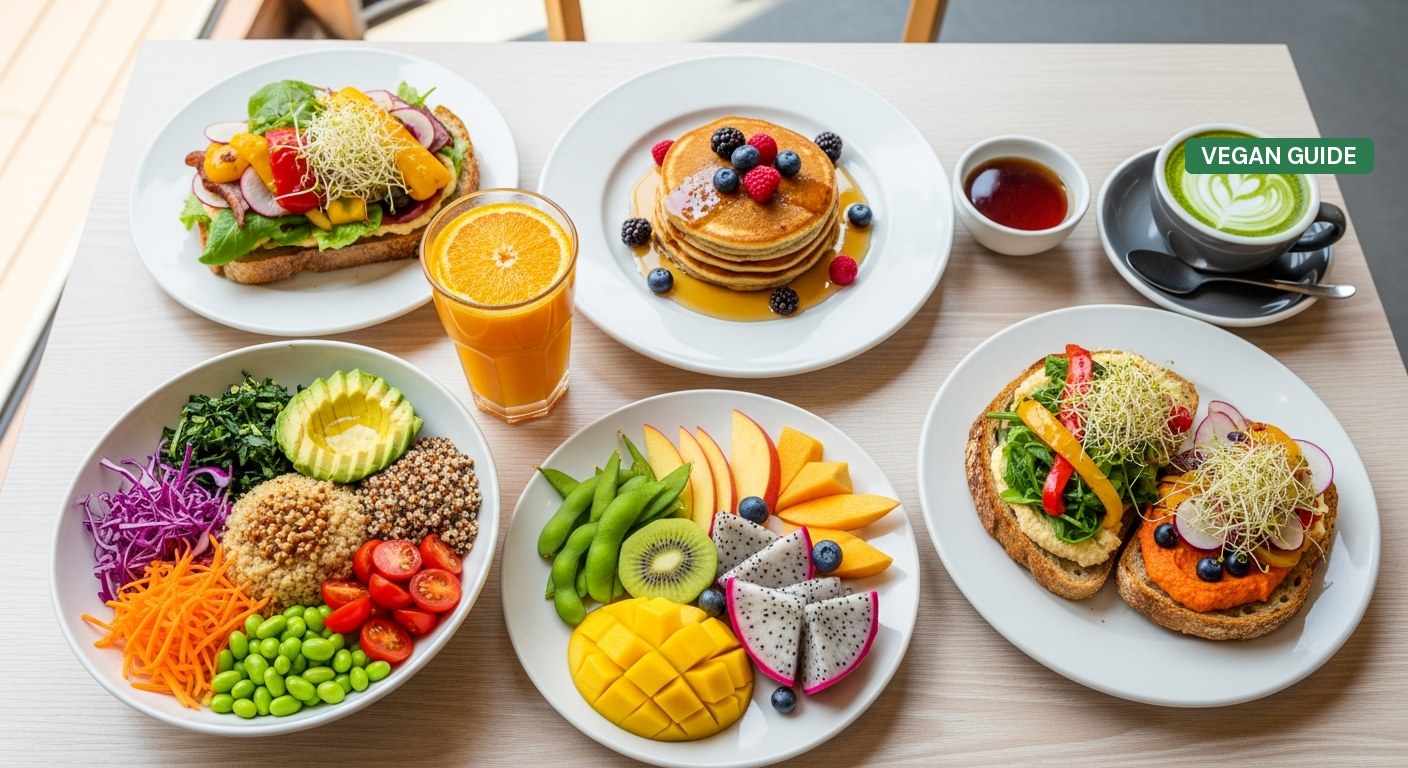
Vegan brunch in Fukushima spans a wider range of styles than you might expect. At Folksaka, for breakfast expect to find options like veggie sandwiches and French toast, often featuring house-made breads such as focaccia, and keep an eye out for their rotating selection of cabinet baked goods, which may include vegan brownies, scones, and cookies. Their spiced apple rice porridge is also a highlight, and sandwiches are available for takeaway to enjoy while sightseeing.
The gluten-free angle is significant here: Folksaka is a vegan and gluten-free cafe and bakery that uses fresh seasonal ingredients and does not use any animal products or wheat-containing ingredients. For travellers managing both a vegan and gluten-free diet simultaneously, this is a rare find in Osaka.
At Mercy Vegan Factory, the brunch offer leans toward comfort food with a Japanese-Korean twist. The JAS-certified bakery and cafe offers menu items including Korean gimbap, deep-fried ‘chicken’, vegan sweets such as tarts, cakes and pudding, speciality breads and vegan salty butter rolls. They serve great breakfast, opening pretty early at 8am, as well as lunch and dinner. Their vegan egg sandwich — with a realistic vegan egg salad served on soft sandwich bread — pairs well with a creamy soy cream coffee.
For those who want to browse the best food in Osaka more broadly, the Fukushima neighbourhood also has strong options for evening dining, including izakaya-style venues with plant-based options available.
🔗 Source: itravelforveganfood.com, vegewel.com
How to Find and Verify Vegan Options in Fukushima
Knowing where to look before you arrive saves significant time and stress. Several tools and approaches work well specifically for the Fukushima area:
- HappyCow: HappyCow provides personal recommendations from community members, featuring vegan restaurants as determined by the highest scores calculated from community member reviews. Filtering by the Fukushima ward area surfaces the venues listed in this guide, along with user-submitted updates on hours and menu changes.
- Japan VegeMap (vegemap.org): The Japan VegeMap lists venues by vegan status — “All Vegan,” “Vegan Option(s),” or “Certified” — and includes multiple Fukushima ward listings. It is particularly useful for identifying certified venues at a glance.
- “Is It Vegan? Japan” (isitveganjapan.com): Japanese companies don’t always list all ingredients or flavorings if they are in small enough quantities or fall under the category of “other” — the “Is It Vegan? Japan” website has lists of products confirmed to be vegan and ways to decipher ingredient labels and allergen warnings.
- Google Translate camera: Use a translation app like Google Translate to scan packaged food labels, and look out for kanji like 魚 (fish), 肉 (meat), 卵 (egg), or 乳 (milk).
- Allergen charts as a starting point: Fish dashi — skipjack tuna dashi in particular — is very commonly used in Japan in sauces, soups, and savoury dishes, and other types of fish, seafood such as scallops, and honey can also be present in food and not mentioned on allergen charts. Use allergen charts to narrow your search, then ask follow-up questions.
- Convenience stores as backup: You’ll find Japanese convenience stores like 7-Eleven, FamilyMart, and Lawson at every corner in Osaka, and they can be a source for a quick vegan breakfast, especially if you’re in a pinch — plain salted (shio) or plum (ume) onigiri are often safer bets for vegans, but ingredients can be tricky.
🔗 Source: happycow.net, vegemap.org, isitveganjapan.com
Practical Tips for Vegan Travellers in Fukushima
- Go to Folksaka on a weekday morning. The cafe is open every day except Wednesdays and Thursdays, so plan accordingly. Arrive early — the baked goods cabinet sells out as the morning progresses.
- Look for the JAS vegan mark. When buying packaged goods at supermarkets or health food shops near Fukushima Station, the JAS vegan mark guarantees the product is fully vegan, unlike some items labelled “plant-based” in Japan, which can still contain animal-derived ingredients like fish broth or dairy.
- Use a printed vegan card in Japanese. Many vegan travellers use wallet-size cards with symbols and text that help avoid miscommunication at non-specialist venues. Free printable versions are available from HappyCow and other vegan travel sites.
- Pick up Mercy Vegan Factory goods at 7Story.co. If the main Mercy Vegan Factory location is closed or full, 7Story.co is a specialty coffee store and official retailer of Mercy Vegan Factory, offering their vegan baked goods such as cinnamon rolls, salt bread and melon bread — a convenient grab-and-go option right in Fukushima ward.
- Check Instagram before visiting any Fukushima cafe. Restaurant opening times can be irregular — before visiting, make sure to check the opening days and times to make sure you are not disappointed by a closed restaurant. Most restaurants are closed at least one or two days per week and are usually not open all day.
- Use HappyCow’s map view centred on Fukushima Station. Get the HappyCow app to map what’s near you — filtering to “vegan only” within a 500-metre radius of JR Fukushima Station gives you a reliable shortlist without wading through omnivore venues.
Last updated: July 4, 2026 · Corrections: [email protected]