Last updated: July 3, 2026
This article reflects information available at the time of writing. Check Google Maps for the latest hours and availability.
Introduction
Tenmabashi sits in a quiet pocket of central Osaka that most visitors walk straight through on their way to Osaka Castle. That’s their loss. The neighbourhood — a mix of government offices, old shotengai side streets, and the broad sweep of the Okawa river — has a low-key, workaday energy that keeps rents reasonable and restaurants honest. Which is exactly the kind of conditions that produce good sushi.
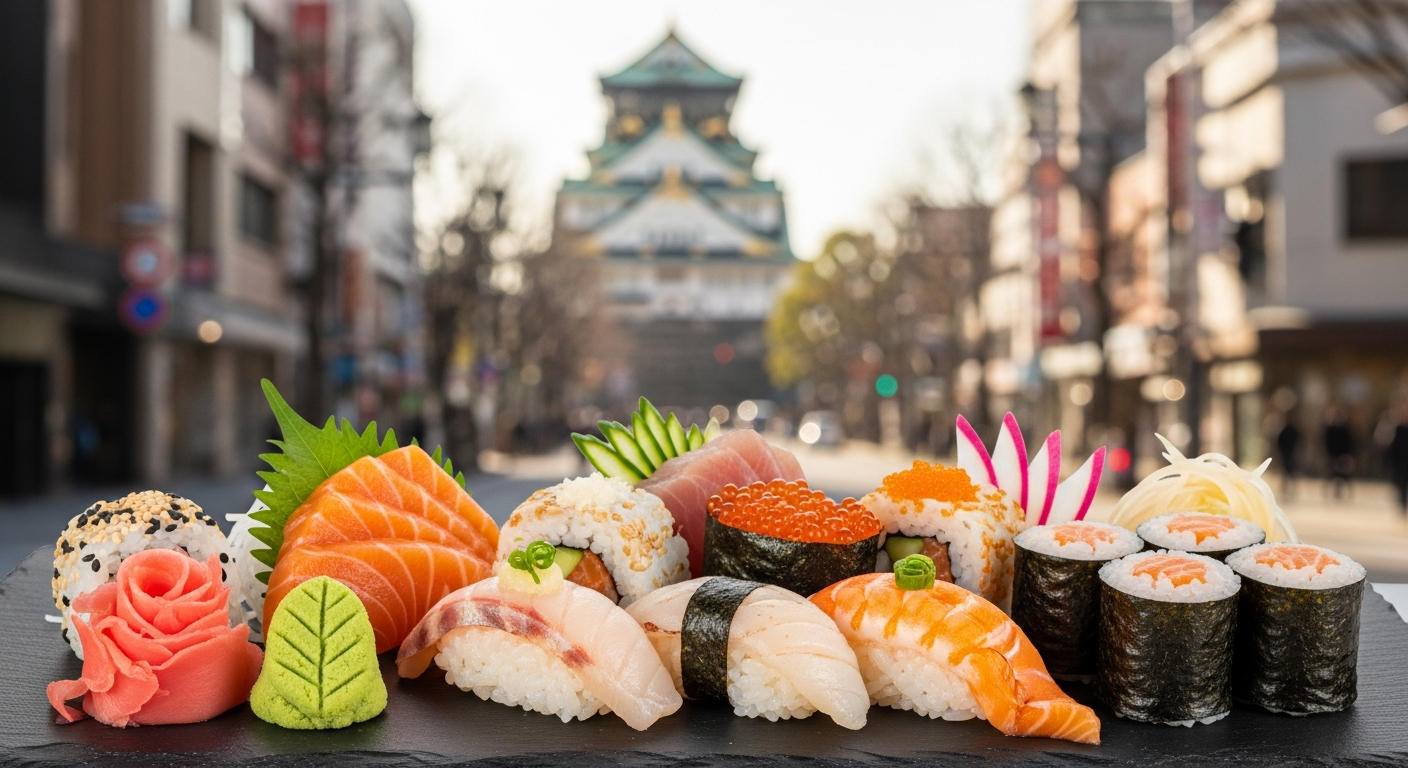
The three counters in this guide cover the full range of what the area does well: a chef-driven omakase run by a former expat who spent years cooking in Canada before coming home to get serious about nigiri; a lively sushi-izakaya where the omakase course comes with free-flow drinks and enough food to put you horizontal; and a neighbourhood standby where the chef sources from three different markets every morning and charges ¥300 a piece. None of them require a three-month wait or a Japanese-speaking friend to book.
If you’re already planning a day around the castle or the Osaka Mint, this is where you eat. For more ideas on what to do with your appetite in this city, browse the best food in Osaka — and when you’re ready to go deeper into the neighbourhood, explore more of Tenmabashi beyond the sushi counters.
1. Kodan Tenmabashi (こだん 天満橋)
- 📍 2-3-14 Ishimachi, Chuo-ku, Osaka
- 🕐 Dinner from 18:00 (hours vary; check Instagram before visiting) (as of May 2026)
- 💰 ¥10,000–¥14,999 per person (food only)
- 🚃 Tenmabashi Station (2 min walk)
- 🗺 Open in Google Maps
- 📋 Tabelog
What to order: Omakase course (¥10,000–¥14,000)
The chef ran a Japanese restaurant in Canada for many years before returning to Japan and relaunching here in Tenmabashi — and his approach is all-natural, Edo-mae style, with every piece of seafood sourced from wild-caught fish. The counter is small and the pacing is unhurried; the drinks are priced at a flat rate, which keeps the bill predictable, and the seasonal pickled vegetables served alongside the nigiri are a genuinely interesting touch. Note that Kodan also operates a second location in Toyonaka — reservations at either site are shared, so book well ahead.
2. Sushinoya (すしのや)
- 📍 1-2-9 Uchihiranomachi, Chuo-ku, Osaka (Grand Maison Otemae 101)
- 🕐 Dinner from 18:00; Lunch from 12:00 (Sat–Sun) (as of May 2026)
- 💰 ¥7,000–¥15,800 per person (food only) / ¥15,800 (with free-flow drinks)
- 🚃 Tenmabashi Station (5 min walk)
- 🗺 Open in Google Maps
- 📋 Tabelog
What to order: Omakase course with free-flow drinks (¥15,800)
The counter seats eight in an L-shape, with two four-person tables alongside — and the omakase dinner at ¥15,800 includes unlimited drinks. The menu swings between classic nigiri and more creative plates: toro, seared eel hand rolls, a sea urchin-and-crab-and-ikura parfait, and a tuna millefeuille layered with cheek meat, marinated lean, and fatty toro. It’s a lot of food, it moves fast, and the free-flow sake selection keeps things lively. The lunch course (¥9,900) is the quieter, more composed version if you’d rather not commit to a full evening.
3. Kaisen Sushidokoro Kaido (海鮮 寿司処 海どう)
- 📍 Tanimachi 4-chome area, Chuo-ku, Osaka (approx. 3 min walk from Tenmabashi Station)
- 🕐 Lunch 11:30–14:00 / Dinner 17:30–22:00; closed Mondays (as of May 2026)
- 💰 ¥3,000–¥6,000 per person (food only)
- 🚃 Tenmabashi Station (3 min walk)
- 🗺 Open in Google Maps
- 📋 Tabelog
What to order: Seasonal nigiri, from ¥300 per piece
The chef visits three different markets every morning to source the day’s fish — which is why the specials board changes constantly and why regulars don’t bother asking what’s good. Just sit at the counter and let him decide. Nigiri starts at ¥300 a piece, with seasonal options like lightly oiled mackerel, plump scallop, and even vegetable nigiri like aubergine and spring onion. This is the most casual of the three — no omakase pressure, no dress code, and you can be in and out for under ¥4,000 if you’re disciplined (you won’t be). For more neighbourhood context, the MICHI Osaka travel guide has the full picture on what’s around.
How to Order
At Kodan and Sushinoya, you’re committing to an omakase course — there’s no à la carte option. Book in advance (both accept reservations via phone or online booking platforms), and let the chef know about any allergies when you reserve. Turning up without a booking is possible on quiet weeknights but risky on weekends.
At Kaido, the format is more flexible: nigiri is ordered piece by piece, either verbally across the counter or by pointing at the fish in the case. If your Japanese is limited, pointing works fine — the chefs are used to it.
At all three counters, the standard etiquette is to eat nigiri by hand rather than chopsticks, and to eat it in one or two bites immediately after it’s placed in front of you. The rice is warm and the balance of vinegar is calibrated for that moment — don’t let it sit.
Cash is accepted everywhere. Kodan and Sushinoya also take cards; confirm with Kaido before you go. None of the three are particularly loud or formal, but Sushinoya’s free-flow format means the room gets livelier as the evening progresses — factor that in if you’re after a quieter meal.
FAQ
Q: Is sushi in Tenmabashi expensive?
A: It depends on the format. Kaido is the most accessible — you can eat well for ¥3,000–¥5,000 per person ordering à la carte. Kodan runs ¥10,000–¥14,000 for the omakase. Sushinoya sits in the middle at ¥7,000–¥15,800, with the top end including unlimited drinks — which makes it reasonable value for what you get.
Q: Do these sushi counters have English menus?
A: Kaido has no English menu, but the counter format means you can point at fish in the display case without any Japanese. Sushinoya’s omakase is explained verbally; some staff have basic English. Kodan’s chef has international experience and is generally comfortable communicating with non-Japanese speakers.
Q: When is the best time to visit?
A: Weekday evenings are your best bet at all three. Sushinoya fills up fast on Fridays and Saturdays — book at least a week ahead for weekend dinners. Kaido is the most walk-in-friendly, but even there, arriving before 18:30 on a weeknight gives you the best chance of a counter seat without waiting. Lunch at Kaido is a good option if you want the full counter experience without the evening commitment.
Information is accurate as of May 2026. We recommend checking Google Maps for the latest hours and prices before visiting.