Last updated: July 3, 2026
This article reflects information available at the time of writing. Check Google Maps for the latest hours and availability.
Introduction
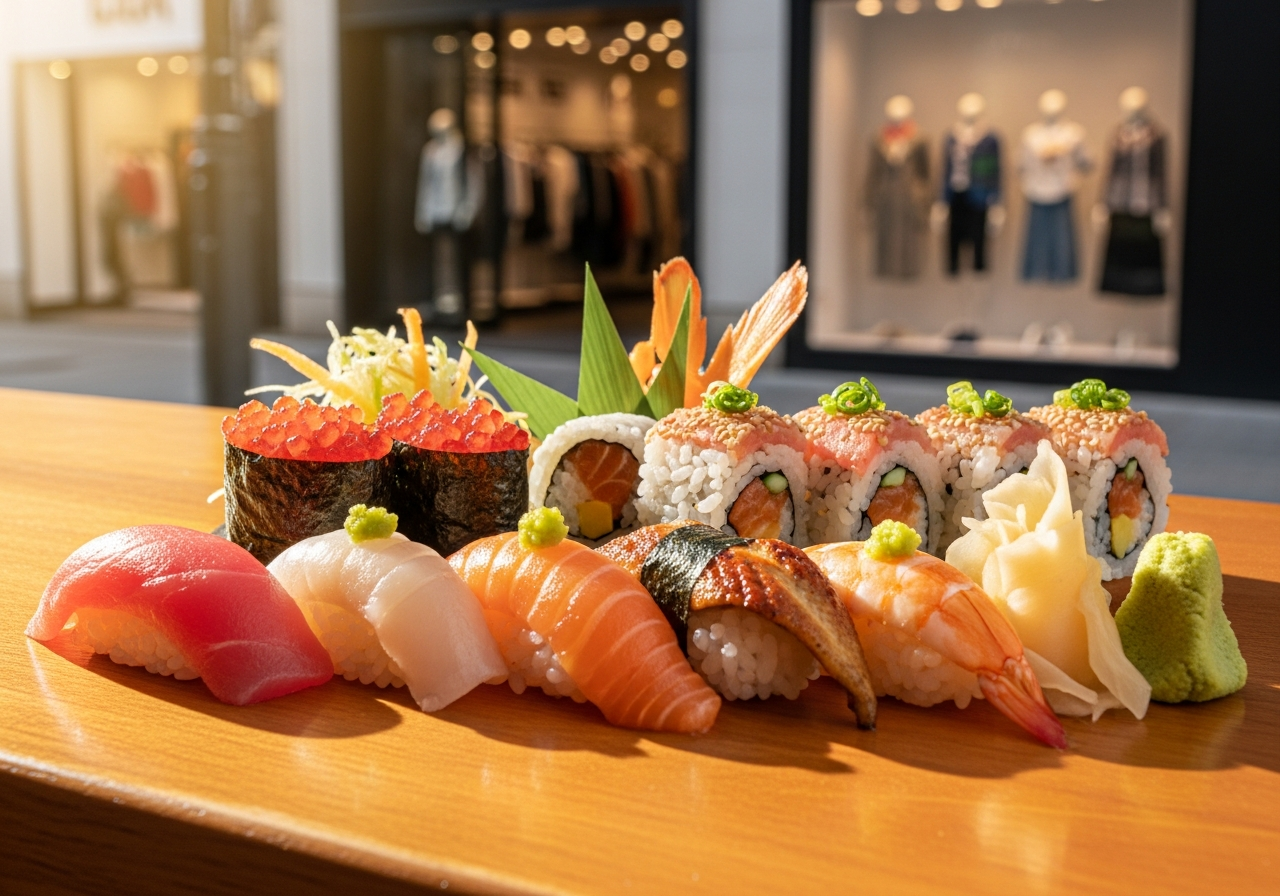
In Japan, sushi isn’t just a special-occasion meal—it’s a part of everyday life. In the Shinsaibashi-suji area, you’ll find everything from budget-friendly conveyor belt sushi to standing counters offering freshly made bites. This guide covers the spectrum from accessible everyday spots to serious omakase destinations. What sets Shinsaibashi apart is its density of options—from premium tuna nigiri for just ¥110 at casual counters to creative kaiseki-style courses reaching ¥22,000. Some shops offer standing counters, allowing for fast, casual eating. Whether you’re after quick bites between shopping or a memorable dinner counter experience, this neighbourhood delivers without the trek to Tokyo’s famous sushi districts.
1. New Sushi Center (ニューすしセンター)
- 📍 1-8-3 Shinsaibashi-suji, Chuo-ku, Osaka, Shinsaibashi PARCO B2F
- 🕐 11:00–22:00 [Fri/Sat/Holidays] 11:00–23:00 (as of May 2026)
- 💰 Budget per person: ¥2,000–3,000 (food only) / ¥3,000–4,000 (with drinks)
- 🚃 Shinsaibashi Station (2 min walk)
- 🗺 Open in Google Maps
- 📋 Tabelog
What to order: Premium Tuna Nigiri (¥110 each)
The standout budget counter in Parco’s neon-lit basement food court. Casual standing counter offering fresh upper tuna, sashimi platters, red clam and dancing prawns, with abundant fresh seafood that’s carefully selected for quality.
2. Sushitetsu Shinsaibashi (すしてつ 心斎橋店)
- 📍 1-5-7 Shinsaibashi-suji, Chuo-ku, Osaka, Gourmet Building Sena 1F
- 🕐 Mon, Tue, Thu–Sun, Holidays, Pre-holidays: 17:00–23:30 (Food L.O. 23:00, Drink L.O. 22:30) (as of May 2026)
- 💰 Budget per person: ¥4,000–5,000 (food only) / ¥5,000–6,000 (with drinks)
- 🚃 Shinsaibashi Station Exit 6 (5 min walk)
- 🗺 Open in Google Maps
- 📋 Tabelog
- 🌐 Official site
What to order: All-you-can-eat sushi course (¥3,500)
Over 70 types of sushi prepared by skilled craftsmen, all available as all-you-can-eat. The concept bridges casual dining and traditional counter service with surprising quality for the price point.
3. Sushi Hasegawa Shinsaibashi Honten (寿司 はせ川 心斎橋本店)
- 📍 1-16-20 Higashi-Shinsaibashi, Chuo-ku, Osaka, Stage A Building 4F
- 🕐 Mon–Sun: 17:00–23:00 (L.O. 22:00) (as of May 2026)
- 💰 Budget per person: ¥10,000–15,000 (food only) / ¥12,000–18,000 (with drinks)
- 🚃 Shinsaibashi Station Exit 6 (5 min walk)
- 🗺 Open in Google Maps
- 📋 Tabelog
- 🌐 Official site
What to order: Kaiseki course with sushi five pieces (from ¥6,500)
A step into Kyoto-style ambiance with stone pathways and traditional Kyoto paper partitions creating intimate booth seating, alongside modern table areas and an active counter where skilled craftsmen work with market-fresh fish.
4. Oyaji Saigo no Nigiri (心斎橋寿司居酒屋おやじ最後の握り)
- 📍 1-19-8 Higashi-Shinsaibashi, Chuo-ku, Osaka, Nippo Promenade Building 1F
- 🕐 [Daily] 17:00–03:00 (L.O. 02:30) (as of May 2026)
- 💰 Budget per person: ¥7,000–9,000 (food only) / ¥9,000–12,000 (with drinks)
- 🚃 Shinsaibashi Station (5 min walk)
- 🗺 Open in Google Maps
- 🌐 Official site
What to order: Oyaji Maki (market price)
High-grade ingredients including caviar, Hokkaido sea urchin, ikura, and honmaguro toro luxuriously layered in their signature roll, finished tableside for maximum visual impact. A late-night sushi izakaya that operates until 3 AM with both counter and private room options.
5. Sushi Tsukinone Shinsaibashi Honten (鮨 月のね 心斎橋本店)
- 📍 2-7-28 Higashi-Shinsaibashi, Chuo-ku, Osaka, Key Care Building 1F
- 🕐 18:00–03:00 (as of May 2026)
- 💰 Budget per person: ¥18,000–25,000 (food only) / ¥22,000–30,000 (with drinks)
- 🚃 Shinsaibashi Station (8 min walk)
- 🗺 Open in Google Maps
- 🌐 Official site
What to order: Sushi Master Omakase Course (¥20,000)
Beautiful traditional woodwork kumiko craftsmanship creates the backdrop for Edomae sushi and sake pairings, featuring select bluefin tuna from Osaka’s wholesale market crafted by skilled chefs. Two floors offer different experiences: omakase courses downstairs, à la carte options upstairs.
6. Sushi Shizuku (鮨 Shizuku)
- 📍 2-1-27 Higashi-Shinsaibashi, Chuo-ku, Osaka, Suomachi Wings
- 🕐 Mon, Tue, Thu–Sun: 18:00–23:00 (as of May 2026)
- 💰 Budget per person: ¥18,000–26,000 (food only) / ¥22,000–32,000 (with drinks)
- 🚃 Nagahoribashi Station (3 min walk)
- 🗺 Open in Google Maps
- 📋 Tabelog
- 🌐 Official site
What to order: Omakase Course (¥22,000)
Creative sushi that pushes boundaries one step ahead. This restaurant requires 9-month advance reservations for first seating, 8 months for second, reflecting its popularity for innovative approaches that break free from traditional Edomae constraints.
7. Jukusei Sushi Rita Namba Shinsaibashi (熟成鮨利他 難波 心斎橋)
- 📍 2-6-7 Nishi-Shinsaibashi, 3F s-Front Dotonbori, Chuo-ku, Osaka
- 🕐 Mon–Sun: 18:00–22:30 (complete reservation only) (as of May 2026)
- 💰 Budget per person: ¥12,500–17,500 (food only) / ¥15,000–22,000 (with drinks)
- 🚃 Namba Station (10 min walk)
- 🗺 Open in Google Maps
- 📋 Tabelog
What to order: Aged Sushi Omakase Course (¥14,800)
Opened May 1, 2025, this all-counter space specializes in seasonal fish aged to perfection. Four courses range from affordable lunch options to luxurious preparations with spiny lobster, with wine and sake pairings available for enhanced experiences.
How to Order
Most budget spots use picture menus or display cases—point and order freely. Mid-range places often offer set courses (¥4,000–8,000) alongside à la carte options. Dip nigiri fish-side down into soy sauce, using minimal amounts to avoid overwhelming delicate flavors. Try to eat nigiri in one bite—cutting makes it messy. High-end counters operate on omakase (chef’s choice) principles where you’ll be guided through the meal. When unsure about procedure, watch other diners or politely ask staff for guidance. Even basic sushi in Japan maintains high quality standards. Reservations become essential as price points increase, with top-tier spots requiring months of advance planning.
FAQ
Q: Is sushi in Shinsaibashi expensive?
A: Range varies dramatically. Budget options start at ¥110 per piece, mid-range courses run ¥4,000–8,000, while premium omakase experiences reach ¥20,000+. Most casual counter spots average ¥2,000–4,000 per person.
Q: Do shops in Shinsaibashi have English menus?
A: Some establishments offer English menus and English-speaking staff, particularly in department store locations and tourist-oriented venues. Budget spots rely more heavily on picture displays and pointing systems.
Q: When is the best time to visit?
A: Popular spots maintain lines during most operating hours, especially weekends. Early dinner (5:30