Last updated: July 3, 2026
This article reflects information available at the time of writing. Check Google Maps for the latest hours and availability.
Introduction
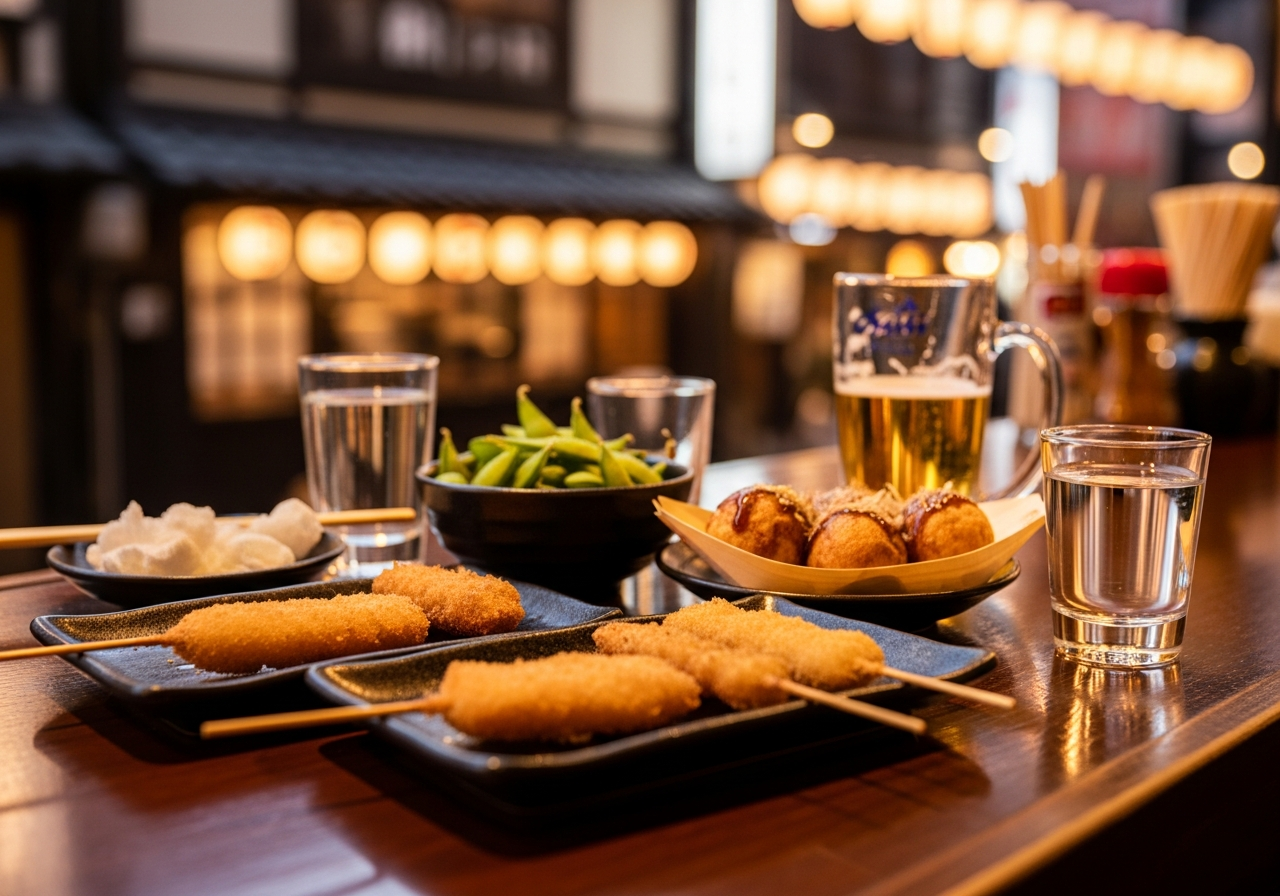
Fukushima is not Dotonbori. There are no neon takoyaki signs, no tourist queues, no one performing for a camera. What you get instead is one of Osaka’s most genuinely local drinking neighbourhoods — a tight grid of streets between JR Fukushima Station and the Hanshin line, packed with standing bars that range from old-school sake shops to polished natural wine counters that wouldn’t look out of place in Paris’s 11th arrondissement.
The area has been a salaryman stronghold for decades, but over the past five years a second wave has moved in: younger owners, more adventurous pours, and a crowd that mixes office workers with food-obsessed regulars who commute here specifically for the drinking. Sleek, modern standing bars specialising in craft beer or natural wine have taken root in Fukushima, sitting comfortably alongside the old-guard sake counters that have been here since before anyone called the neighbourhood “trendy.”
This guide covers five spots worth your evening — two classic tachinomi, two sake-forward standing bars, and one wine-focused counter — all within a ten-minute walk of each other. The format is the same everywhere: stand at the counter, order a drink, order a small plate, repeat. A typical stay runs twenty to forty minutes — just enough time for one or two drinks and a few small plates. The aim isn’t to get drunk; it’s to decompress, shake off the day, and enjoy a brief human connection before moving on. Fukushima is built for hopping. Plan three or four stops in a single evening.
1. Tachinomi Jack to Machilda (立ち呑み ジャックとマチルダ)
- 📍 5-6-8 Fukushima, Fukushima Ward, Osaka
- 🕐 Mon–Sun 15:00–24:00 (as of May 2026)
- 💰 ¥1,500–¥3,000 per person (food and drinks)
- 🚃 Fukushima Station (JR) (2 min walk) / Fukushima Station (Hanshin) (3 min walk)
- 🗺 Open in Google Maps
- 📋 Tabelog
What to order: Sakana yonshubori (assorted fish and obanzai, ¥770) / glass of sake (¥390–¥590)
Tachinomi Jack to Machilda scores a 3.65 on Tabelog with over 660 reviews, and has been running for around nine years — a long time for a standing bar to stay this packed. The kitchen runs well above izakaya standard: seasonal fish, obanzai, and grilled chicken sit alongside more creative plates, all at prices that make ordering another round an easy decision. The square counter wraps around the kitchen, so wherever you stand you’re watching something cook. Fills up fast after 18:00 on weekdays — arrive early or expect to wait at the door.
2. Ponshuya Santoku Rokumi Fukushima Honten (ぽんしゅや三徳六味 福島本店)
- 📍 1-6-11 Fukushima, Fukushima Ward, Osaka
- 🕐 Weekdays 18:00–25:00 / Sat 17:00–24:00 / Sun & Holidays 17:00–23:00 (LO 1 hour before close) (as of May 2026)
- 💰 ¥4,000–¥4,999 per person (food and drinks)
- 🚃 Fukushima Station (Hanshin) (1 min walk)
- 🗺 Open in Google Maps
- 📋 Tabelog
What to order: Yakimiso (walnut miso grilled on a skewer, ¥560) / seasonal sake by the glass (¥350–¥800)
A Tabelog Standing Bar Top 100 selection for 2025, this is Fukushima’s most talked-about sake counter. The building is a converted old townhouse with high ceilings — more stylish bar than traditional tachinomi — and the owner stocks rare limited-release sake that you won’t find at most other spots in the city. The kitchen turns out inventive small plates: the yakimiso is a signature, and the one-shot sukiyaki at ¥1,260 is worth the splurge. Golden-hour queues are real. Show up at 18:00 sharp or book online via Tabelog.
3. Nihonshu Sakaba Tachinomi Jin (日本酒酒場立呑み 仁)
- 📍 8-17-1 Fukushima, Fukushima Ward, Osaka
- 🕐 Mon–Sat 18:00–24:00 (LO 23:00) / Closed Mondays and irregular holidays (as of May 2026)
- 💰 ¥1,000–¥1,999 per person (food and drinks)
- 🚃 Fukushima Station (JR) (5 min walk)
- 🗺 Open in Google Maps
- 📋 Tabelog
What to order: Daily fresh fish plate (market price, typically ¥400–¥600) / sake glass (¥350 flat rate)
Planted in the middle of the Seitendori shopping street, Jin announces itself with its name painted large across the facade. The owner’s obsession with sake is not a marketing line — the selection runs to over 70 types at any given time, and most glasses are a flat ¥350. The fresh seafood, bought daily from the market, is consistently good and generously portioned. This is the most affordable stop on this list and the easiest one to walk into alone. The standing counter at the front fills up; the 25 seated tables at the back are quieter if you want to linger.
4. Jozo UCHIYAMADA (醸造 UCHIYAMADA)
- 📍 1-4-4 Fukushima, Fukushima Ward, Osaka (Central 70 B1F)
- 🕐 Mon–Fri Lunch 11:30–14:00 / Mon–Sat Dinner 18:00–22:00 / Closed Sundays (as of May 2026)
- 💰 ¥5,000–¥6,000 per person (dinner, food and drinks)
- 🚃 Fukushima Station (JR) (6 min walk)
- 🗺 Open in Google Maps
- 📋 Tabelog
- 🌐 Official site
What to order: Tasting sake set (owner’s selection, ¥1,200–¥1,800) / teppan hamburg steak (¥1,300)
Walk six minutes from the station, find a basement door glowing at the bottom of a staircase, and you’re in. The owner holds a sake sommelier qualification and sources around 49 types at a time, including rare low-distribution bottles that most bars in Osaka can’t get hold of. The recommended entry point is the tasting set — the owner asks about your preferences and builds a flight around them. The teppan iron plate in the kitchen produces both the signature hamburg steak and seasonal grilled dishes that pair well with the sake. Pricier than the other spots here, but the curation justifies it.
5. Takeuchi Saketen (竹内酒店)
- 📍 Near JR Fukushima Station (former Kansai Shogi-kai building side), Fukushima Ward, Osaka
- 🕐 Mon–Sat from 17:00 / Closed Sundays (as of May 2026)
- 💰 ¥800–¥1,500 per person (food and drinks)
- 🚃 Fukushima Station (JR) (2 min walk)
- 🗺 Open in Google Maps
- 📋 Tabelog
What to order: Yaki atsuage (grilled thick-cut tofu, ¥200–¥300) / draft beer or shochu (¥300–¥500)
This is a proper kakuuchi — a liquor shop that serves drinks at the counter. It opens at 17:00 and has been doing this for years: a long counter for eight, a couple of small table counters at the back, and a showcase fridge of snacks and small plates you point at to order. The rule is simple: you must order at least one food item with your drink — no drink-only visits. Thursday brings oden; Friday brings doteni (beef tendon miso stew) — both worth timing your visit around. The cheapest and most no-frills stop on this list. Bring cash.
How to Order
Standing bars in Fukushima operate on a walk-in, first-come basis. Most do not take reservations — the notable exception is Ponshuya Santoku Rokumi, which accepts online bookings via Tabelog and fills up fast on weekends. For everywhere else, arrive early (18:00–18:30 on weekdays) or accept that you may wait five to fifteen minutes outside.
At the counter, catch the staff’s eye and order your first drink immediately — it signals you’re in. Food orders follow naturally. Most menus are handwritten on boards or laminated sheets; point if you’re unsure. English menus are not common in Fukushima’s standing bars — this is part of the experience. A translation app with camera function is genuinely useful here.
Payment is usually at the end of your visit, not as you go — though Takeuchi Saketen runs a pay-as-you-order system. Cash is strongly preferred at older spots like Takeuchi and Jin; the newer bars (Jack to Machilda, Santoku Rokumi) generally accept cards and IC payments. Confirm before you order if you’re only carrying one or the other.
The unspoken rule at any standing bar: don’t spread out. Keep your bag off the counter, your elbows in, and your coat folded. The golden rule is to make yourself as small as possible — hang your bag on a hook under the counter or place it on the floor between your feet, never on the counter itself. Move on after 45–60 minutes if the bar is packed. That’s the rhythm of the neighbourhood.
FAQ
Q: Are standing bars in Fukushima expensive?
A: It depends on the spot. Takeuchi Saketen and Tachinomi Jin are the cheapest — budget ¥1,000–¥1,500 for a couple of drinks and a snack. Jack to Machilda runs ¥1,500–¥3,000 depending on how many rounds you do. Santoku Rokumi and UCHIYAMADA are the pricier end at ¥4,000–¥6,000, but the sake quality reflects it. A full evening hopping three or four spots typically costs ¥4,000–¥7,000 per person.
Q: Do these bars have English menus?
A: Mostly no. Many places in Fukushima mainly cater to locals, so English menus are not always available. Santoku Rokumi has some English signage and the staff are used to non-Japanese-speaking guests. At the others, pointing at dishes on the counter display or using a camera translation app works fine. The staff at Jack to Machilda are notably friendly with first-timers.
Q: When is the best time to visit?
A: Weekday evenings between 18:00 and 19:30 are the sweet spot — busy enough to feel alive, not so packed that you’re waiting outside every bar. Friday and Saturday nights after 20:00 are genuinely difficult at the most popular spots; Santoku Rokumi in particular can have a queue out the door. If you want to hop multiple bars in one evening, start at 17:30–18:00 and work your way through. Sunday is quieter across the board, and some spots (UCHIYAMADA, Jin) are closed entirely.
Information is accurate as of May 2026. We recommend checking Google Maps for the latest hours and prices before visiting.