Last updated: July 3, 2026
This article reflects information available at the time of writing. Check Google Maps for the latest hours and availability.
Introduction
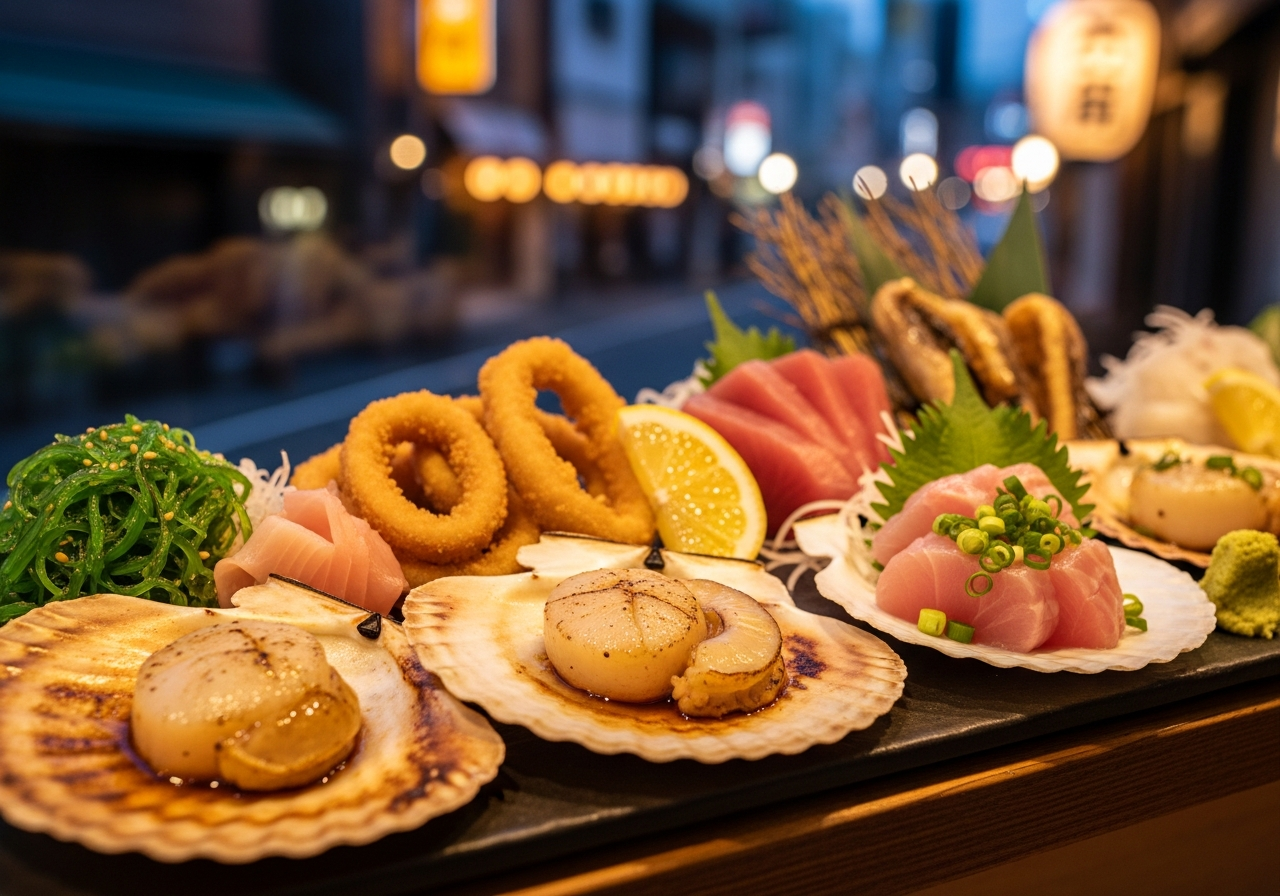
Fukushima doesn’t get the tourist traffic of Dotonbori, and that’s exactly the point. This compact neighbourhood just west of Umeda is where Osaka’s office workers, chefs, and serious eaters actually go out — a dense grid of izakayas, counter restaurants, and drinking alleys that punches well above its size. The seafood scene here is particularly strong. You’re close to the old Osaka Central Wholesale Market corridor, and the area has long attracted fishmongers-turned-restaurateurs who know their product cold.
What you’ll find in Fukushima is a range that goes from rowdy group izakayas doing whole-fish haul buckets and grilled shellfish platters, to quiet counters where a single chef is aging sashimi with real precision. There’s a live prawn fishing bar where you catch your dinner before it’s cooked. There’s a mackerel specialist that’s been running on a single-fish obsession for years. And there are neighbourhood spots where the sashimi platter changes daily based on what came in that morning.
This guide covers five spots across that spectrum — different price points, different vibes, all worth your time. Fukushima Station (JR and Hanshin) and Shin-Fukushima Station (JR Tozai Line) are both within a few minutes’ walk of everything listed here.
1. Kaisensakaba Hatahata Fukushima Honten (海鮮酒場はたはた 福島本店)
- 📍 5-12-23 Fukushima, Fukushima-ku, Osaka (Fujinaga Building 2F)
- 🕐 Mon–Fri 17:00–23:00; Sat–Sun & holidays 16:00–22:00 (as of May 2026)
- 💰 ¥3,000–¥4,500 per person (food only) / ¥4,000–¥5,500 (with drinks)
- 🚃 Fukushima Station (JR/Hanshin) — 1 min walk
- 🗺 Open in Google Maps
- 📋 Tabelog
What to order: Kaisen sashimi yaki-shabu moriawase (¥680 per person, 2-person minimum)
Hatahata’s signature move is the yaki-shabu — sashimi-grade fish sliced thin, held over a hot iron plate for about five seconds, then dipped in ponzu with onion. The restaurant is well known for its fresh seafood, and the lightly grilled yaki-shabu in particular has a reputation for an aroma and taste that sticks with you. It sounds gimmicky; it isn’t. The brief heat changes the texture just enough without cooking the fish through, and it pairs well with the cold sake selection. The restaurant has been operating in Fukushima for over 20 years, which in this neighbourhood is a meaningful endorsement. The haul bucket — a wooden tub of whole fish brought to your table so you can pick your own and have it cooked to order — is the move for groups.
2. Kaiebi Robata Orb Fukushima (海老炉端 orb 福島)
- 📍 5-12-14 Fukushima, Fukushima-ku, Osaka
- 🕐 Daily 17:00–00:00 (last order 23:30) (as of May 2026)
- 💰 ¥3,500–¥5,000 per person (food only) / ¥4,000–¥6,000 (with drinks)
- 🚃 Fukushima Station (JR) — 3 min walk
- 🗺 Open in Google Maps
- 📋 Tabelog
- 🌐 Official site
What to order: Live prawn fishing + robata-grilled prawns (fishing fee + ¥300–¥500 per prawn for cooking)
Orb Fukushima is a two-storey converted townhouse where the ground floor has counter seats facing the robata grill, and the second floor handles larger groups. The draw is the live prawn fishing tank — you pick up a rod, catch your own prawns from the tank, and hand them over to be cooked on the charcoal grill. Staff source the prawns themselves by visiting fishing ports directly, and the concept is built around communicating the story behind each catch. Beyond the fishing gimmick, the robata-grilled whole prawns are genuinely good — charred shells, sweet flesh, the kind of thing that justifies the trip on its own. The oversized ember-grilled prawn and the live lobster (reservation required) round out the menu for anyone who wants to go further.
3. SABAR Osaka Fukushima (さば料理専門店 SABAR 大阪福島店)
- 📍 2-2-2 Fukushima, Fukushima-ku, Osaka (City Side Stage Fukushima 1F)
- 🕐 Mon–Sat & holidays: Lunch 11:30–14:00; Dinner 17:30–22:00 (as of May 2026)
- 💰 ¥1,500–¥2,500 per person (lunch) / ¥3,000–¥4,500 (dinner, food only)
- 🚃 Fukushima Station (Hanshin) — 2 min walk
- 🗺 Open in Google Maps
- 📋 Tabelog
What to order: Toro-saba shioyaki (salt-grilled fatty mackerel, ~¥1,200); saba oshi-zushi (pressed mackerel sushi, ~¥900)
SABAR is a mackerel-specialist restaurant that recently reopened at its original Fukushima location. The entire menu is built around saba — the restaurant sources exclusively from Hachinohe in Aomori Prefecture, selecting fish with a fat content above 21%, which they brand as “toro-saba.” The salt-grilled version is the draw: the fish is fatty and juicy inside, and the aroma when it hits the grill pulls people in from the street. The pressed mackerel sushi is a shareable order worth adding. It’s a one-trick restaurant in the best possible way — if you like mackerel, this is the place to eat it in Osaka. The lunch sets are particularly good value.
4. Uoya Juchuuhakku Fukushima Honten (魚屋 十忠八九 福島本店)
- 📍 7-2-6 Fukushima, Fukushima-ku, Osaka (Fukumaru-dori 57)
- 🕐 Daily 17:30–02:00 (as of May 2026)
- 💰 ¥3,000–¥4,000 per person (food only) / ¥4,000–¥5,500 (with drinks)
- 🚃 Fukushima Station (JR) — 3 min walk
- 🗺 Open in Google Maps
- 📋 Tabelog
What to order: Kaisen yukke sara (seafood yukhoe plate, ~¥880); seasonal sashimi moriawase (5-piece, ~¥1,580)
Juchuuhakku sits on Fukumaru-dori, the covered alley that’s become one of Fukushima’s most recognisable drinking streets. The menu runs from fresh sashimi and seasonal fish dishes through to oden and wagyu beef, with a strong sake and shochu selection. The kaisen yukke — raw seafood dressed in a Korean-style egg yolk and sesame sauce — is the signature dish and a good reason to come. The terrace seats out front are lively in summer; in winter they set up kotatsu tables for hot-pot. It’s a loud, sociable place that stays open until 2am, which makes it a natural second or third stop on a Fukushima bar crawl.
5. Sushi Fukushima (鮨 福島)
- 📍 1-2-17 Fukushima, Fukushima-ku, Osaka 553-0003 (Meet Me Umeda Nishi 1F)
- 🕐 Check Google Maps for current hours — reservation required (as of May 2026)
- 💰 ¥8,000–¥15,000 per person (omakase course, food only)
- 🚃 Shin-Fukushima Station (JR Tozai Line) — 3 min walk
- 🗺 Open in Google Maps
- 📋 Tabelog
What to order: Omakase course (from ¥8,000)
Sushi Fukushima is ranked among the top three restaurants in all of Osaka on Tripadvisor, with nearly 500 reviews averaging a perfect score — rare for any restaurant, let alone a neighbourhood sushi counter. The omakase courses blend traditional and innovative flavours with fresh ingredients, and the atmosphere is consistently described as lively and welcoming rather than stiff. Chef Masa is both passionate and entertaining at the counter, and the ingredients are sourced with clear attention to quality. This is the splurge option on this list — book well in advance, especially for weekends. Walk-ins are essentially impossible.
How to Order
Most seafood izakayas in Fukushima operate on a standard izakaya model: you order dishes as you go, drinks are separate, and all-you-can-drink (nomihodai) courses are widely available if you’re in a group. At places like Hatahata and Juchuuhakku, the set courses with nomihodai are genuinely good value — typically ¥4,000–¥5,500 per person for 8–10 dishes plus 90–120 minutes of drinks.
For sashimi, the best approach is to ask what came in that day rather than ordering from a fixed menu. Most counters will have a daily special board (higawari) — point at it if you can’t read it, and staff will usually explain. At Hatahata, the haul bucket (tairyo oke) is brought to your table so you can pick your own whole fish; just point to what you want and indicate how you’d like it cooked (salt-grilled, simmered, or fried are the standard options).
At Orb, the live prawn fishing is straightforward — you’ll be handed a rod and shown the tank. No Japanese required. At SABAR, a picture menu is available. Sushi Fukushima requires advance reservation; email or phone booking is standard, and some international booking platforms list it as well.
Cash is accepted everywhere. Cards are accepted at most of these spots but confirm before ordering at smaller counters.
FAQ
Q: Is seafood in Fukushima expensive?
A: It depends on where you go. The izakayas — Hatahata, Juchuuhakku, Orb — run ¥3,000–¥5,500 per person with drinks, which is reasonable for the quality. SABAR is cheaper still at lunch (¥1,500–¥2,500). Sushi Fukushima is the outlier at ¥8,000–¥15,000 per person for the omakase, but it’s a special-occasion restaurant, not a casual drop-in.
Q: Do these restaurants have English menus?
A: SABAR has a picture menu that makes ordering easy without Japanese. Orb’s live prawn fishing concept is self-explanatory. At the izakayas, picture menus or QR code menus with photos are common. Sushi Fukushima is a counter omakase — no menu to read, just watch and eat. Google Translate’s camera function handles most situations at the others.
Q: When is the best time to visit?
A: Weekday evenings from around 18:00–19:00 are the sweet spot — lively but not impossible to get a table without a reservation at the izakayas. Friday and Saturday nights fill up fast; book ahead for Hatahata and Juchuuhakku if you’re going in a group of four or more. Sushi Fukushima requires a reservation regardless of the day. SABAR is the most accessible for a solo or spontaneous visit, especially at lunch.
Information is accurate as of May 2026. We recommend checking Google Maps for the latest hours and prices before visiting.