Last updated: July 3, 2026
This article reflects information available at the time of writing. Check Google Maps for the latest hours and availability.
Introduction
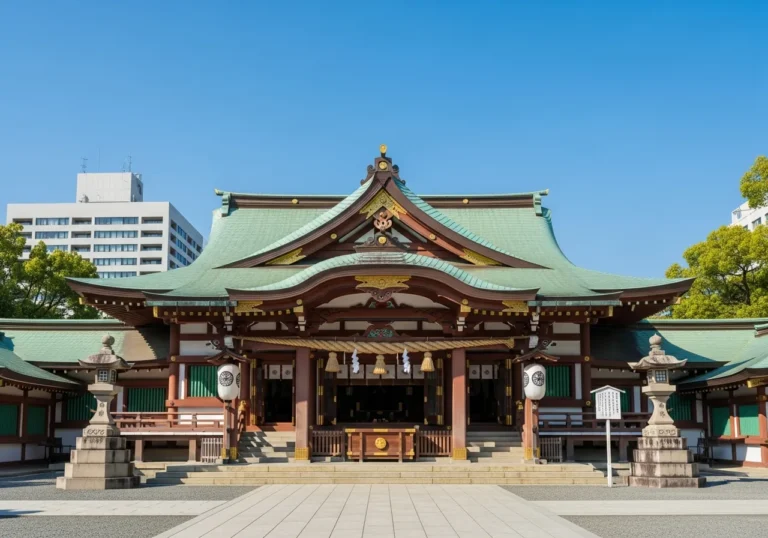
Sumiyoshi Taisha is one of Japan’s oldest shrines — predating Buddhism’s arrival in the country — and the neighbourhood around it has the unhurried, lived-in feel to match. This is southern Osaka: residential, low-rise, and refreshingly free of the tourist-trap density you get around Dotonbori. After crossing the arched stone bridge and paying your respects, you’ll find yourself genuinely hungry and in a part of the city where the lunch options are built for locals, not visitors.
That’s a good thing. The streets around Sumiyoshi Taisha station and the adjacent Kohama Shotengai — a covered shopping arcade that’s been running since the Meiji era — are home to a handful of spots that punch well above their postcode. Yoshoku (Japanese-style Western cooking) is the headline act here, anchored by a 90-year-old institution that draws queues on weekends. But there’s also handmade udon, okonomiyaki, Indian curry, and a few neighbourhood lunch counters that have been feeding the same families for decades. If you want to understand what the best food in Osaka looks like outside the tourist belt, this is a solid place to start.
Most spots are within a 10-minute walk of Sumiyoshi Taisha station (Nankai Main Line) or Sumiyoshi Toriimae station (Hankai Tramway). Lunch hours are tight — many kitchens close by 13:30 or 14:00 — so aim to arrive before noon. To explore more of Sumiyoshi, factor in a stroll through Kohama Shotengai before or after eating.
1. Yoshoku Yaroku Honten (洋食やろく 本店)
- 📍 3-30-16 Higashikohama, Sumiyoshi-ku, Osaka
- 🕐 11:00–13:30 (lunch); 16:30–19:30 (dinner, closes when sold out) (as of May 2026)
- 💰 ¥1,200–¥2,200 (food only)
- 🚃 Sumiyoshi Station (Hankai Line) (2 min walk)
- 🗺 Open in Google Maps
- 📋 Tabelog
- 🌐 Official site
What to order: Tamago Korokke set (¥1,200–¥1,500)
Yaroku has been in the same spot for over 90 years, and the egg croquette — a round, golden orb filled with creamy egg salad rather than potato — is the reason people queue 40 minutes on a Saturday. The lunch counter fits about nine people; arrive at 11:00 if you want a seat without the wait. Closed Wednesdays; Tuesday is lunch-only.
2. Yoshoku Yaroku Mochikaeri Senmonten (洋食やろく 持ち帰り専門店)
- 📍 Under the Nankai Sumiyoshi Taisha Station elevated tracks, Sumiyoshi-ku, Osaka
- 🕐 11:00–13:30 (or until sold out) (as of May 2026)
- 💰 ¥200–¥600 per item (takeout only)
- 🚃 Sumiyoshi Taisha Station (Nankai Line) (1 min walk)
- 🗺 Open in Google Maps
- 📋 Tabelog
What to order: Tamago Korokke (¥250–¥300 per piece)
If the main restaurant is full — and it often is — the takeout kiosk under the station tracks has been running for over 25 years. Grab a couple of egg croquettes and eat them on the shrine grounds. It sells out fast; don’t show up after noon expecting much.
3. Hisaya Kohama (ひさ家 粉浜店)
- 📍 Under the Nankai Kohama Station elevated tracks, Suminoe-ku, Osaka (station underpass, Konohama Station)
- 🕐 11:00–15:00 (Mon, Wed, Fri, Sat, Sun); 10:00–19:30 (Tue only); closed Thursdays (as of May 2026)
- 💰 ¥700–¥1,500 (food only)
- 🚃 Kohama Station (Nankai Line) (1 min walk)
- 🗺 Open in Google Maps
- 📋 Tabelog
What to order: Handmade udon set with rice (¥880–¥1,000)
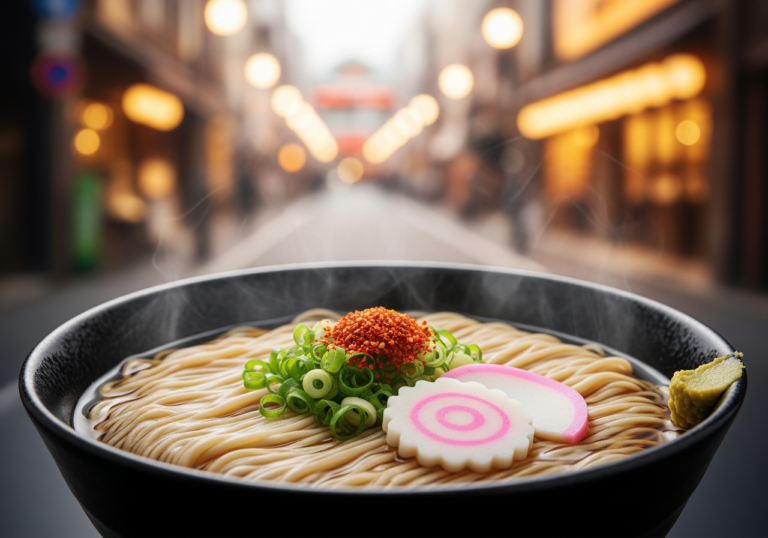
Hisaya makes its udon from scratch with no additives — the kitchen’s whole philosophy is built around clean, simple ingredients. The flat, chewy noodles sit in a delicate dashi broth with ginger and daikon on the side. It’s the kind of bowl that doesn’t announce itself loudly but stays with you. Kohama Station is one stop south of Sumiyoshi Taisha on the Nankai Line.
4. Miyako Koshu (みやこ・広州)
- 📍 Kohama Shotengai, Suminoe-ku, Osaka (inside the covered arcade)
- 🕐 Approx. 11:00–14:00 (lunch); check locally for current hours (as of May 2026)
- 💰 ¥700–¥1,200 (food only)
- 🚃 Kohama Station (Nankai Line) (2 min walk)
- 🗺 Open in Google Maps
- 📋 Tabelog
What to order: Handmade udon teishoku with Chinese side dish (¥800–¥1,000)
An unusual hybrid: handmade udon is the main event, but the kitchen also turns out small Chinese plates — fried rice, gyoza, stir-fries — as side dishes. The two-storey space has a ground floor counter and a tatami-style upper floor that seats 28. It’s the kind of place that only exists inside a Meiji-era shotengai, and it’s better for it.
5. Kokoro (古々路)
- 📍 3-12-10 Higashikohama, Sumiyoshi-ku, Osaka
- 🕐 11:30–14:30 (lunch); 17:00–22:00 (dinner); closed Mondays (as of May 2026)
- 💰 ¥900–¥1,500 (food only)
- 🚃 Sumiyoshi Taisha Station (Nankai Line) (1 min walk)
- 🗺 Open in Google Maps
- 📋 Tabelog
What to order: Kokoro-yaki teishoku (¥1,100–¥1,300)
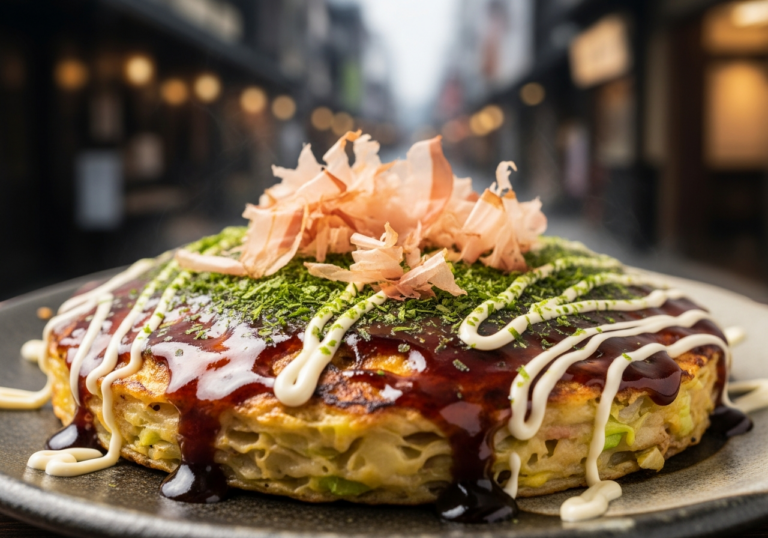
The signature “Kokoro-yaki” is the shop’s take on modan-yaki — a thick okonomiyaki layered over salt-fried noodles and packed with 170g of Okinawan agu pork. It’s a serious amount of food. The lunch set comes with rice and miso soup, and the teppan right in front of you keeps everything warm while you eat. Expect a short queue on weekends.
6. ARYAN Indian Restaurant Sumiyoshi Taisha (ARYANインド料理レストラン 住吉大社前店)
- 📍 Near Sumiyoshi Taisha Station, Sumiyoshi-ku, Osaka
- 🕐 11:30–15:00 (lunch); 17:00–22:00 (dinner) (as of May 2026)
- 💰 ¥900–¥1,500 (lunch set, food only)
- 🚃 Sumiyoshi Taisha Station (Nankai Line) (3 min walk)
- 🗺 Open in Google Maps
- 📋 Tabelog
What to order: Special Lunch set with two curries + cheese naan (¥1,200–¥1,500)
A proper neighbourhood curry house that draws a loyal local crowd. The lunch sets are the move: choose two curries, get a salad, tandoori chicken, naan, and a drink. The scallop seafood curry — limited to 15 portions a day — is worth timing your visit around. Fluffy naan, generous portions, and prices that make it one of the better-value lunches in the area.
7. Izumoya (いづもや)
- 📍 Near Sumiyoshi Taisha Shrine, Sumiyoshi-ku, Osaka
- 🕐 11:30–14:00 (lunch); 17:00–21:00 (dinner); closed Tuesdays (as of May 2026)
- 💰 ¥1,500–¥3,500 (food only)
- 🚃 Sumiyoshi Toriimae Station (Hankai Tramway) (3 min walk)
- 🗺 Open in Google Maps
- 📋 Tabelog
What to order: Unaju (eel over rice) lunch set (¥2,000–¥3,500)
Izumoya is the splurge option on this list — a traditional Japanese restaurant right by the shrine that does unagi in the Edo style: steamed first, then grilled, so the flesh is soft all the way through. The lacquered box arrives with liver soup and pickles. It’s a proper sit-down lunch, not a quick bite, and the setting — calm, unhurried, close to the shrine grounds — suits the pace of a Sumiyoshi afternoon. The MICHI Osaka travel guide covers more options in this style across the city.
How to Order
Most of these spots are small, counter-heavy lunch restaurants with no English menus. A few practical notes:
- Point and gesture. Plastic food displays or picture menus are common at okonomiyaki and udon spots. At Yaroku, the menu is written on a board — ask the staff to point to the set options.
- Arrive early. Yaroku’s lunch counter fills by 11:30 on weekends. Hisaya and Kokoro are more relaxed on weekdays. The ARYAN lunch sets sell out; aim for before 12:30.
- Cash is safest. Most of these neighbourhood spots are cash-only or have limited card acceptance. Bring ¥2,000–¥3,000 in coins and small notes.
- Teishoku = set meal. At most places, ordering the teishoku (set) gets you the main dish plus rice, miso soup, and pickles for a fixed price — always better value than ordering à la carte.
- Lunch hours are short. Several kitchens stop taking orders at 13:30 or 14:00. If you’re visiting the shrine first, go early — don’t leave lunch until after 13:00.
FAQ
Q: Is lunch near Sumiyoshi Taisha expensive?
A: Not at all. Most udon and okonomiyaki sets run ¥800–¥1,300. Yaroku’s lunch sets are ¥1,200–¥2,000. The only spot that pushes past ¥2,000 is Izumoya, where the unagi sets start around ¥2,000 and go up to ¥3,500 for the premium box.
Q: Do shops near Sumiyoshi Taisha have English menus?
A: Mostly no. ARYAN Indian Restaurant is the most accessible for non-Japanese speakers — staff are used to international visitors and can explain the lunch sets. At the other spots, picture menus, plastic displays, or pointing at what other diners are eating will get you through. Google Translate’s camera function works well on handwritten boards.
Q: When is the best time to visit?
A: Weekday lunches between 11:00 and 12:00 are the sweet spot — you’ll avoid queues at Yaroku and get a seat at Hisaya without waiting. On weekends and public holidays (especially around New Year, when Sumiyoshi Taisha draws huge crowds for hatsumode), expect 20–40 minute waits at the most popular spots. The shrine itself is quietest on weekday mornings.
Information is accurate as of May 2026. We recommend checking Google Maps for the latest hours and prices before visiting.