Last updated: July 3, 2026
This article reflects information available at the time of writing. Check Google Maps for the latest hours and availability.
Introduction
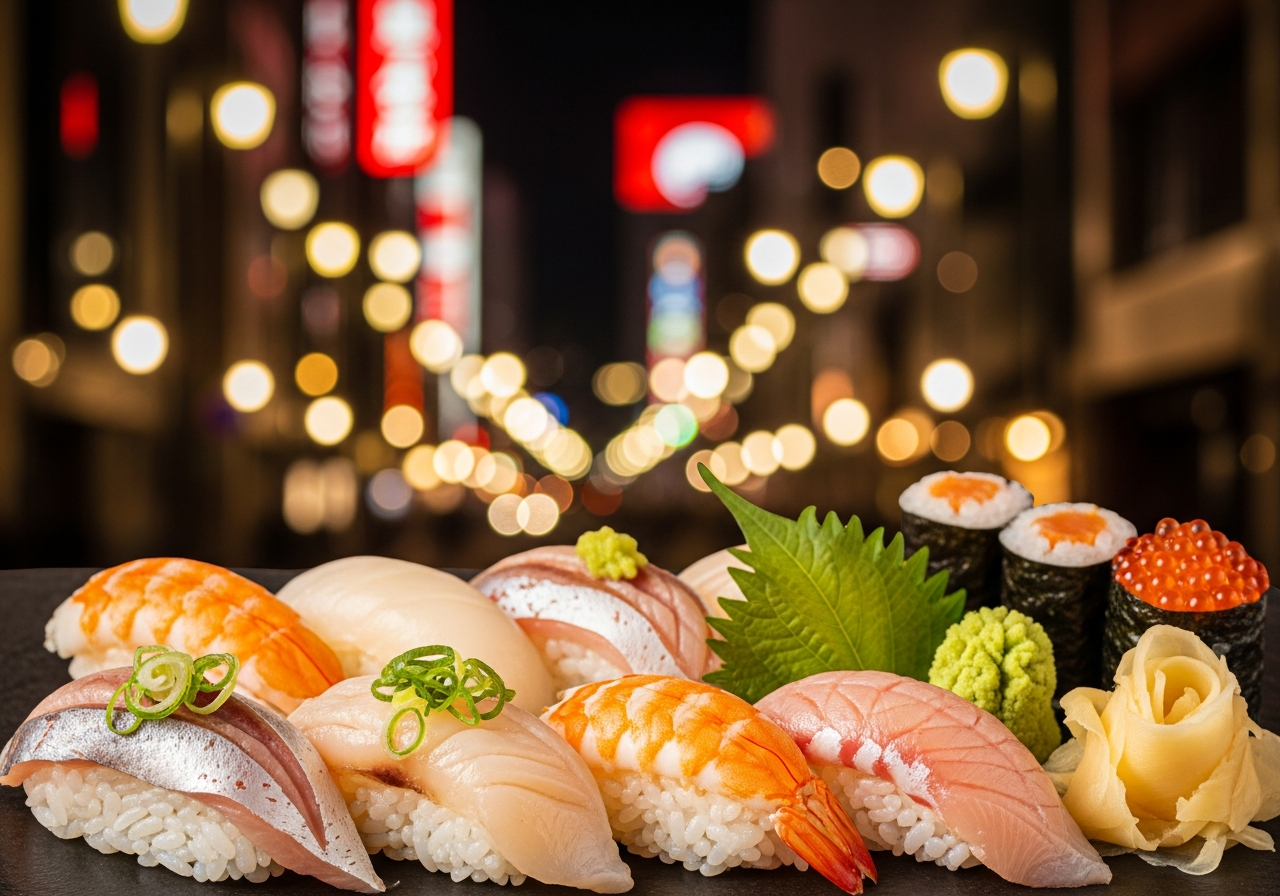
Kitashinchi has one job, and it does it exceptionally well: feeding Osaka’s business elite in rooms that cost more per square metre than most apartments. The best food in Osaka doesn’t always announce itself loudly — and nowhere is that truer than here, where the best sushi counters are tucked into basement floors and upper-storey walk-ups, identifiable only by a discreet noren curtain and a reservation you booked three weeks ago.
This is Osaka’s answer to Tokyo’s Ginza sushi belt. The district sits just west of Osaka Station, a compact grid of narrow streets where every other door leads to a ryotei, a whisky bar, or a counter serving omakase courses that run from ¥15,000 to well north of ¥30,000. The chefs here are serious — many trained at Tokyo institutions before returning west, and Michelin has been paying attention for years. What sets Kitashinchi apart from Ginza, though, is the Kansai sensibility: the itamae (head chef) will actually talk to you, the sake list leans local, and the rice tends toward a lighter, more delicate seasoning than the assertive red-vinegar style of Edomae orthodoxy.
This guide covers six omakase counters worth your time and money — from a Michelin one-star that’s been quietly consistent for half a decade to a 2024 newcomer whose bilingual chef makes the whole experience genuinely accessible to international visitors. All require advance reservations. None will disappoint. To explore more of Kitashinchi beyond sushi — the bars, the kaiseki rooms, the late-night ramen — our full neighbourhood guide has you covered.
1. Sushi Murakami Jiro (鮨 村上二郎)
- 📍 3F Yakushido Building, 1-3-19 Dojima, Kita-ku, Osaka
- 🕐 Dinner only: 18:00–23:00 (Mon–Sat) (as of May 2026)
- 💰 ¥20,000–¥30,000 per person (food only) / ¥25,000–¥40,000 (with drinks)
- 🚃 Kitashinchi Station (JR Tozai Line), 3 min walk
- 🗺 Open in Google Maps
- 📋 Tabelog
What to order: Omakase course (¥20,000–¥25,000)
Michelin one-star every year from 2020 through 2025, and a Tabelog Sushi Hyakumeiten selection in 2021, 2022, and 2025 — Murakami Jiro is the kind of counter that regulars guard jealously. The chef’s tuna and sea urchin comparisons by origin are a signature move, and the eight-seat counter means you’re close enough to watch every cut. Book at least two weeks out for a weekday seat; weekends are essentially impossible without a connection.
2. Kitashinchi Sushi Shiorian Yamashiro (北新地 鮨 栞庵 やましろ)
- 📍 Kyotomi Building B1F, 1-3-16 Sonezaki Shinchi, Kita-ku, Osaka
- 🕐 Lunch 11:30–14:00 / Dinner 17:00–23:00 (weekdays); Dinner from 16:00 (weekends) (as of May 2026)
- 💰 ¥17,800–¥25,000 per person (food only) / ¥22,000–¥35,000 (with drinks)
- 🚃 Kitashinchi Station (JR Tozai Line), 3 min walk
- 🗺 Open in Google Maps
- 📋 Tabelog
- 🌐 Official site
What to order: Omakase Tokujo Nigiri Course (¥17,800–¥20,000)
A Michelin Guide restaurant from Ginza, Tokyo, now operating in Kitashinchi — bringing its evolving Edomae sushi style west. The basement counter is sleek and unhurried, and the kitchen sources fish daily from market buyers who prioritise quality over fixed origin. The special omakase course runs to 12 nigiri pieces plus small dishes, appetisers, and a mini-don — substantial enough that you won’t leave hungry. One of the few counters in the district open on Sundays.
3. Sushi Taiga (鮨 大雅)
- 📍 Kitashinchi, Kita-ku, Osaka (confirm exact address via reservation platform)
- 🕐 Lunch Tue, Thu–Sat 12:00–14:00 / Dinner Mon–Sat: Part 1 18:00–20:00, Part 2 20:00–22:30 (as of May 2026)
- 💰 ¥20,000–¥30,000 per person (food only) / ¥25,000–¥40,000 (with drinks)
- 🚃 Kitashinchi Station (JR Tozai Line), 3 min walk
- 🗣 English menu: Yes (English, Chinese, and Malay supported)
- 🗺 Open in Google Maps
- 📋 Tabelog
What to order: Omakase dinner course (¥20,000–¥25,000)
Chef Kanekuni honed his skills in Tokyo, ran Taiga Dining in Singapore, then returned to Japan to open Sushi Taiga in Kitashinchi in 2024. The interior features a 200-year-old hinoki cypress counter. He stays true to his Kochi roots, focusing on fresh ingredients and rice seasoned with red and white vinegar — and the counter operates in English, Chinese, and Malay, making it one of the most genuinely international-friendly omakase rooms in the district. For first-timers to Kitashinchi sushi, this is the most accessible entry point.
4. Kitashinchi Sushi Ikken (北新地 寿司一軒)
- 📍 Kitashinchi, Kita-ku, Osaka (1 min walk from Kitashinchi 3rd Building; confirm exact address on reservation)
- 🕐 Lunch and Dinner (check Tabelog for current seatings) (as of May 2026)
- 💰 ¥15,000–¥25,000 per person (food only) / ¥20,000–¥35,000 (with drinks)
- 🚃 Kitashinchi Station (JR Tozai Line), 2 min walk
- 🗺 Open in Google Maps
- 📋 Tabelog
What to order: Exquisite Omakase Course — 21–25 dishes (¥20,000–¥25,000)
At Sushi Ikken, the kitchen uses a blend of red and white vinegar in the shari to enhance the natural sweetness and umami of the rice — a detail that separates the serious counters from the merely expensive ones. The full omakase runs 21–25 dishes, incorporating charcoal-grilled elements alongside sashimi and nigiri. Located just a minute from the Kitashinchi 3rd Building side, the room has around 10 counter seats and a focused sake list curated to match the day’s fish. A newer addition to the neighbourhood that’s already earning consistent repeat visitors.
5. Sushi Monji (鮨 文次)
- 📍 3F Yakushido Building, 1-3-19 Dojima, Kita-ku, Osaka
- 🕐 Lunch 11:30–14:00 (weekdays & Sat) / Dinner 18:00–24:00 (entry after 22:00 accepted) (as of May 2026)
- 💰 ¥18,000–¥25,000 per person (food only) / ¥22,000–¥35,000 (with drinks)
- 🚃 Kitashinchi Station (JR Tozai Line), 3 min walk
- 🗣 English menu: Yes (English-speaking staff available)
- 🗺 Open in Google Maps
- 📋 Tabelog
What to order: Omakase course (¥18,000–¥20,000)
A 3-minute walk from Kitashinchi Station, Sushi Monji serves seasonal fresh fish with carefully sourced seafood from across Japan, the balance between fish and rice spreading rich flavour through an omakase course that tracks the four seasons. The head chef is known for warm, detailed explanations of each dish, and English-speaking staff are on hand — making this one of the more relaxed entry points for international visitors unfamiliar with omakase protocol. The counter seats are spacious, and there are private tatami rooms in a separate building if you’re dining in a group.
6. Sushi Senkodo (鮨 仙光堂)
- 📍 2F Dojima Leisure Building, 1-5-35 Dojima, Kita-ku, Osaka
- 🕐 Lunch weekdays 11:30–14:00, weekends 11:00–15:00 / Dinner Mon–Sat 18:00–22:00 (as of May 2026)
- 💰 ¥15,000–¥25,000 per person (food only) / ¥20,000–¥30,000 (with drinks)
- 🚃 Nishi-Umeda Station (Osaka Metro Yotsubashi Line), 3 min walk / Kitashinchi Station (JR), 5 min walk
- 🗺 Open in Google Maps
- 📋 Tabelog
What to order: Omakase nigiri course — 10 or 15 pieces (¥15,000–¥20,000)
Nigiri-only omakase sets come in 8-, 10-, or 15-piece options, with full course lunches and dinners also available. Just two minutes from Kitashinchi Station, the warm lighting and wooden interior make it one of the more inviting rooms in the area — a good place to unwind with premium sake and fine nigiri. Among the many restaurants in Kitashinchi, this one is known to those in the know — only six counter seats, and a calm atmosphere that puts even first-timers at ease. The flexible nigiri-count format also makes it the most approachable option if you want omakase without committing to a 25-course marathon.
How to Order
Every counter on this list runs on reservations — walk-ins are not a realistic option, and most seats are booked one to four weeks in advance. Use Tablecheck, the restaurant’s own booking page, or Tabelog’s online reservation system. For non-Japanese speakers, the OMAKASE Japan Eatinerary platform lists several of these counters with English-language booking support.
Once seated, the format is straightforward: the chef sets the pace, and you eat what arrives. If you have allergies or strong dislikes (shellfish, sea urchin, raw fish in general), declare them at the time of booking — not when you sit down. Most counters will accommodate reasonable requests with advance notice.
Soy sauce is usually pre-applied to nigiri by the chef. Eating with your hands is perfectly acceptable — in fact, at many traditional counters it’s preferred. Don’t dunk the rice into the soy dish; the chef has already seasoned the piece. Between courses, small pickled ginger (gari) cleanses the palate. Sake pairings are available at all six counters; ask the chef or staff for a recommendation rather than ordering blind from the list.
Cancellations within 24–48 hours typically incur a full-course cancellation fee. Treat your reservation like a theatre ticket.
FAQ
Q: Is omakase sushi in Kitashinchi expensive?
A: Yes, by most standards. Budget ¥15,000–¥20,000 per person for food at the more accessible counters (Sushi Senkodo, Sushi Ikken), and ¥20,000–¥30,000 at the Michelin-level rooms (Murakami Jiro, Shiorian Yamashiro). Add ¥5,000–¥10,000 if you’re drinking sake or beer. Lunch courses at counters that offer them — Shiorian Yamashiro and Sushi Monji both do — run ¥7,000–¥15,000 and are the best-value entry point.
Q: Do these counters have English menus?
A: Sushi Taiga and Sushi Monji both have English-speaking staff and can explain dishes in English. Shiorian Yamashiro’s Tabelog page is available in English and the staff are accustomed to international guests. At Murakami Jiro and Sushi Senkodo, English support is limited — but omakase requires no ordering, so you can get through the meal comfortably with a translation app for any questions.
Q: When is the best time to visit?
A: Kitashinchi sushi counters are busiest Thursday through Saturday evenings, when the business entertainment crowd fills every seat. Tuesday and Wednesday dinners are the easiest to book at short notice. Lunch seatings — where available — are significantly quieter and often 30–40% cheaper than dinner. Spring (March–May) and autumn (September–November) bring the best seasonal fish variety; summer is peak season for sea urchin and young sweetfish (ayu).
Q: Do I need to speak Japanese to enjoy omakase here?
A: Not at all. The format is self-explanatory — you sit, the chef cooks, you eat. Sushi Taiga is the most explicitly international-friendly counter, with multilingual service built in. At the others, a few words of Japanese (or a willingness to point and nod) goes a long way. The MICHI Osaka travel guide has a practical Japanese phrases section if you want to prepare.
Information is accurate as of May 2026. We recommend checking Google Maps for the latest hours and prices before visiting.