Last updated: July 3, 2026
This article reflects information available at the time of writing. Check Google Maps for the latest hours and availability.
Introduction
Kitashinchi is not a neighbourhood that does things quietly. Explore more of Kitashinchi and you’ll find that this compact rectangle of streets — bounded by the Dojima River to the south and Midosuji to the east — packs more serious restaurants per square metre than almost anywhere else in Osaka. It’s where Osaka’s business elite have been entertaining clients for decades, and where chefs who’ve trained at the city’s top hotels quietly open their own places and immediately fill every seat.
Chinese food in Kitashinchi sits at a different altitude from the Cantonese banquet halls of Namba or the casual Sichuan spots around Shinsaibashi. Here, you’re looking at former hotel head chefs running 26-seat dining rooms, Michelin-starred kitchens fusing Shanghai technique with Japanese produce, and stone-pot hotpot served in private rooms by staff in cheongsam. The price point reflects all of that — dinner typically runs ¥8,000–¥20,000 per person — but so does the quality. If you want to understand why Osaka is considered one of the world’s great eating cities, this is a good place to start. For a broader picture of the best food in Osaka, the MICHI Osaka travel guide has you covered.
This guide covers four upscale Chinese restaurants in Kitashinchi, each with a distinct personality: a Michelin-starred fusion counter, a Sichuan-Cantonese powerhouse run by a former hotel chef, a theatrical Taiwanese stone-pot experience, and a Bib Gourmand mapo tofu specialist that doubles as a late-night anchor. Reservations are essential at all four.
1. Kushin Garando (空心我楽多)
- 📍 1F, 1-8-16 Sonezaki Shinchi, Kita-ku, Osaka
- 🕐 Dinner only: 18:00–23:00 (LO 21:30); closed Sundays (as of May 2026)
- 💰 ¥15,000–¥25,000 per person (omakase course, with drinks)
- 🚃 Kitashinchi Station (JR Tozai Line), 3 min walk
- 🗺 Open in Google Maps
- 📋 Tabelog
What to order: Omakase course (¥15,000–, includes Peking duck and clay-pot rice with Kumamoto kuruma prawn)
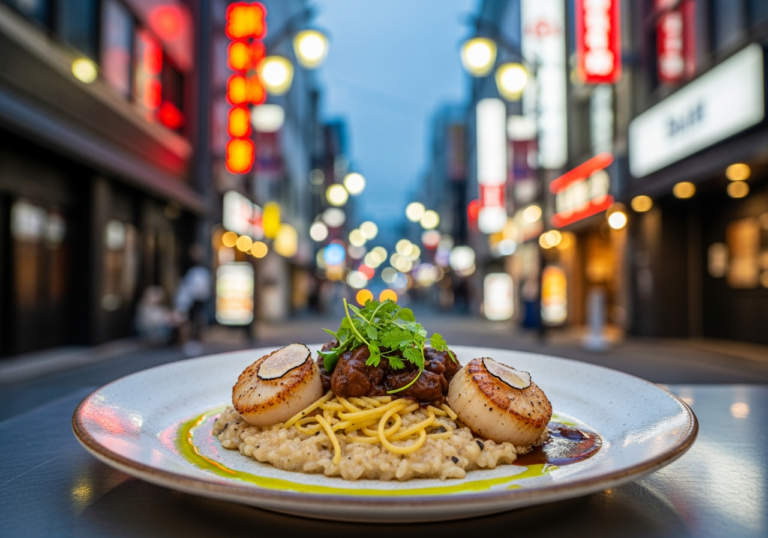
Recognised as U Garando in the Michelin Guide before its rename, Kushin Garando earned its Michelin star through the bold flavours and innovative Chinese-Japanese fusions of chef Osawa Hiroaki, an Osaka native who honed his craft in Shanghai. Expect char siu melon bread with actual diced melon, Peking duck, and clay-pot rice concealing Kumamoto kuruma prawn underneath. The room leans into ornate, old-world Chinese decor — it’s theatrical without being kitsch, and the cooking matches the ambition of the setting.
2. Chusai Labo Choyo (中菜Labo.朝陽)
- 📍 B1F, Dojima Linden Building, 1-3-8 Dojima, Kita-ku, Osaka
- 🕐 Lunch: 11:30–14:00 (weekdays only); Dinner: 17:30–22:00 (LO 21:30); closed Sundays (as of May 2026)
- 💰 ¥1,000–¥1,500 (lunch) / ¥8,000–¥15,000 (dinner, with drinks)
- 🚃 Kitashinchi Station (JR Tozai Line), 5 min walk
- 🗺 Open in Google Maps
- 📋 Tabelog
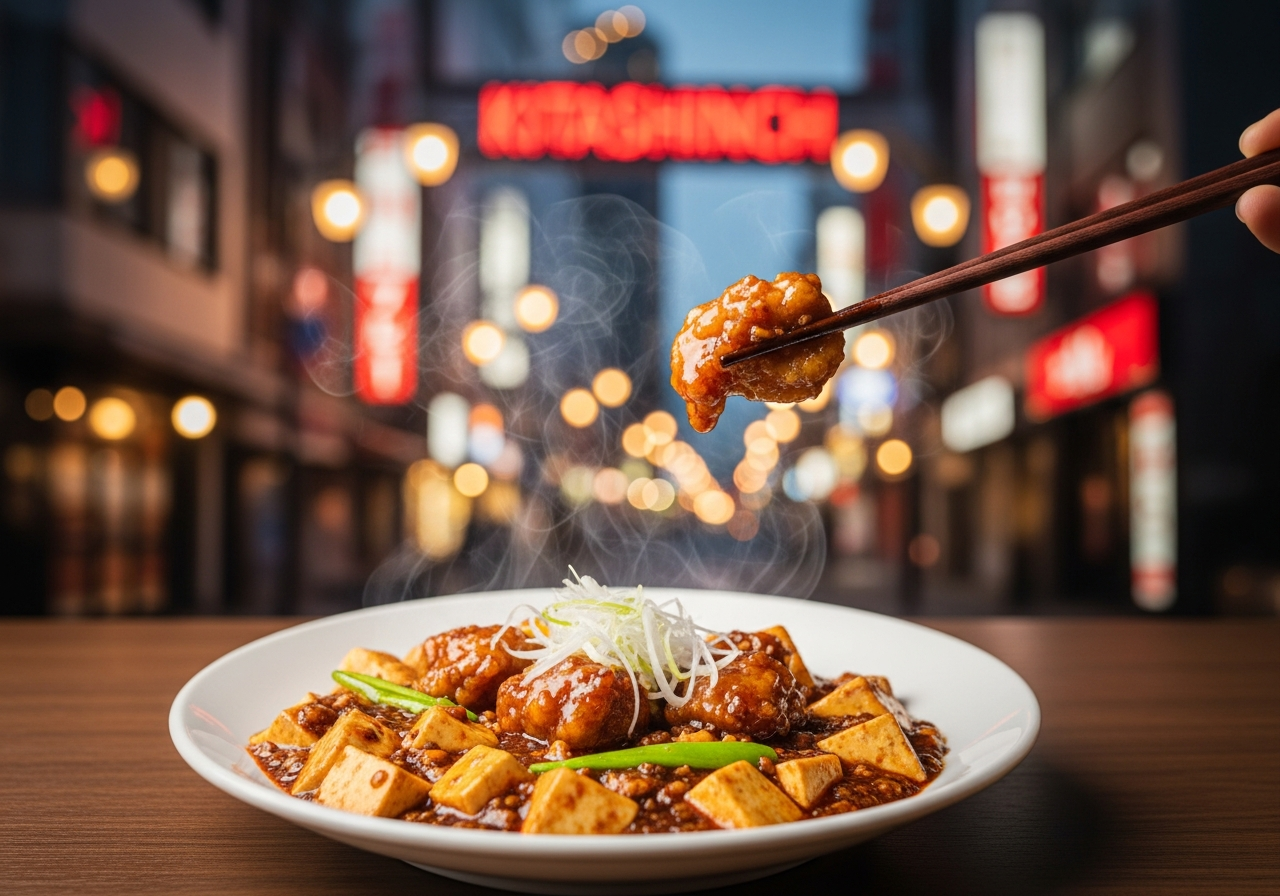
What to order: Saikyo Mapo Tofu — “Kitashinchi’s Strongest Mapo Tofu” (¥1,850); Shark Fin with Shanghai Crab Miso (¥1,600 per 100g)
Chef Hideo Takahashi took the Chinese offerings from the Dojima Hotel and elevated them to a new level when he opened this basement dining room. Using an original-blend doubanjiang, the kitchen turns out over 10,000 portions of its signature mapo tofu annually — a number that tells you everything about how good it is. The 26-seat room, done in black and red, feels like a private club. Book ahead; walk-ins rarely work.
3. Ensei (圓石)
- 📍 8F, Matsuki Kosan Building, 1-5-21 Sonezaki Shinchi, Kita-ku, Osaka
- 🕐 17:00–22:00; closed Sundays and public holidays (as of May 2026)
- 💰 ¥15,000–¥30,000 per person (course, with drinks)
- 🚃 Kitashinchi Station (JR Tozai Line), 4 min walk
- 🗺 Open in Google Maps
- 📋 Tabelog
What to order: Stone-pot hotpot course with spiny lobster and abalone (course price varies by season; budget ¥20,000+)
Ensei is a long-established upscale stone-pot restaurant where each private room comes with a dedicated staff member who cooks the entire meal tableside. The format is closer to Taiwanese shabu-shabu than mainland Chinese hotpot — premium ingredients like spiny lobster, abalone, and horse mackerel sashimi go into a collagen-rich broth, finished with the restaurant’s own noodles. The sesame dipping sauce, spiked with garlic and house chilli oil, is the kind of thing you’ll think about on the flight home. Regulars have been coming for a decade or more; first-timers should call ahead and ask about the seasonal course.
4. Zendo (善道)
- 📍 1-3-14 Dojima, Kita-ku, Osaka
- 🕐 Dinner: 18:00–22:00 (LO 21:30); closed Sundays (as of May 2026)
- 💰 ¥6,000–¥12,000 per person (with drinks)
- 🚃 Kitashinchi Station (JR Tozai Line), 5 min walk
- 🗺 Open in Google Maps
- 📋 Tabelog
What to order: Mapo tofu (¥1,500); dandan noodles (¥1,200)
Eight counter seats, one chef, no sign outside. Zendo earned a Michelin Bib Gourmand listing in 2022 and has been a fixture on the Kitashinchi late-night circuit ever since. The mapo tofu — built on a Sichuan base but with the chef’s own adjustments to the numbing-heat ratio — is the reason people book. The dandan noodles, served in a rich sesame broth with ultra-thin noodles, are the reason people stay for a second bowl. Cash only; reservations strongly recommended, especially Thursday through Saturday.
How to Order
Most upscale Chinese restaurants in Kitashinchi operate on a course-only or course-first basis at dinner. At Kushin Garando and Ensei, you’ll be eating whatever the kitchen has decided to serve that evening — communicate dietary restrictions when you book, not when you arrive. At Chusai Labo Choyo and Zendo, a la carte is available alongside set courses, which gives you more flexibility if you want to zero in on a specific dish.
Reservations are non-negotiable at all four spots. Most accept bookings via Tabelog, their own websites, or by phone. If you’re calling, a few words of Japanese help — “yoyaku shitai desu” (I’d like to make a reservation) and your party size and date will get you most of the way there. Many of these restaurants have dealt with international guests before and will manage.
Kitashinchi restaurants typically close on Sundays and public holidays, reflecting the area’s business-entertainment roots. Plan accordingly. Dinner services usually start at 17:30 or 18:00 and last orders fall around 21:00–21:30, so don’t arrive expecting a 22:00 seating.
Dress code is smart-casual at minimum. These are rooms where Osaka’s business community entertains clients — turning up in shorts and trainers will feel out of place, even if no one says anything.
FAQ
Q: Is upscale Chinese in Kitashinchi expensive?
A: Yes, by most standards. Dinner at Kushin Garando or Ensei will run ¥15,000–¥30,000 per person including drinks. Chusai Labo Choyo is more accessible at ¥8,000–¥15,000 for dinner, and Zendo is the most approachable at ¥6,000–¥12,000. Lunch at Chusai Labo Choyo is a genuine bargain — around ¥1,000–¥1,500 for dishes that come from the same kitchen as the evening menu.
Q: Do these restaurants have English menus?
A: Partially. Chusai Labo Choyo and Zendo have some English-language support, and staff at Kushin Garando are accustomed to international guests. Ensei is the most Japanese-language-dependent — bring a translation app or ask your hotel concierge to call ahead and explain your situation. Google Translate’s camera mode handles printed menus reasonably well.
Q: When is the best time to visit?
A: Weekday evenings are the sweet spot — the business crowd fills these rooms Thursday and Friday, so Tuesday and Wednesday tend to be slightly easier for walk-in luck (though reservations are still recommended). Lunch at Chusai Labo Choyo is a weekday-only affair and significantly less crowded than dinner. Avoid public holidays entirely — most of these restaurants are closed.
Information is accurate as of May 2026. We recommend checking Google Maps for the latest hours and prices before visiting.