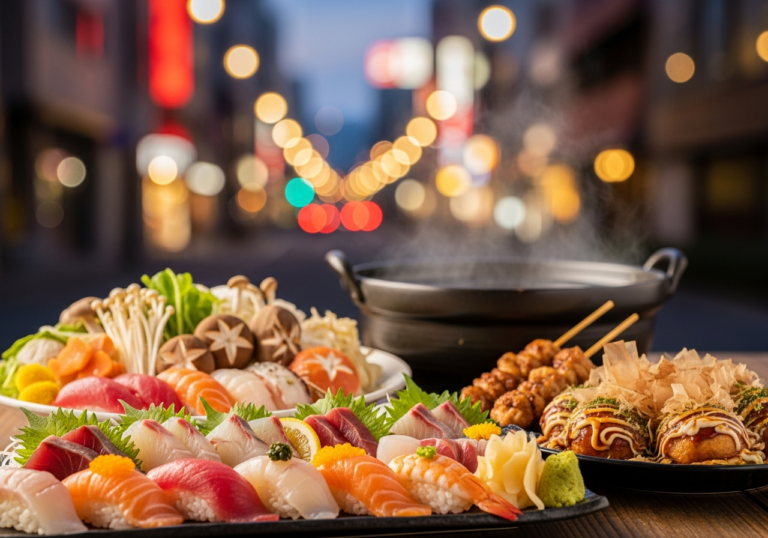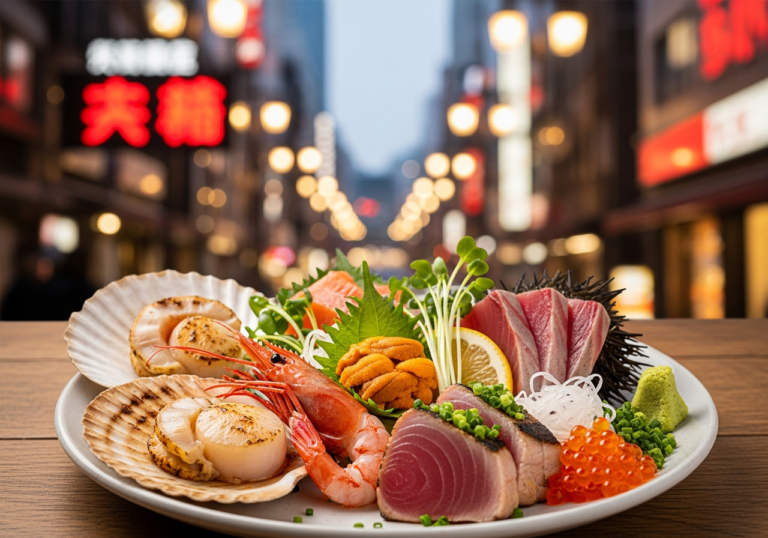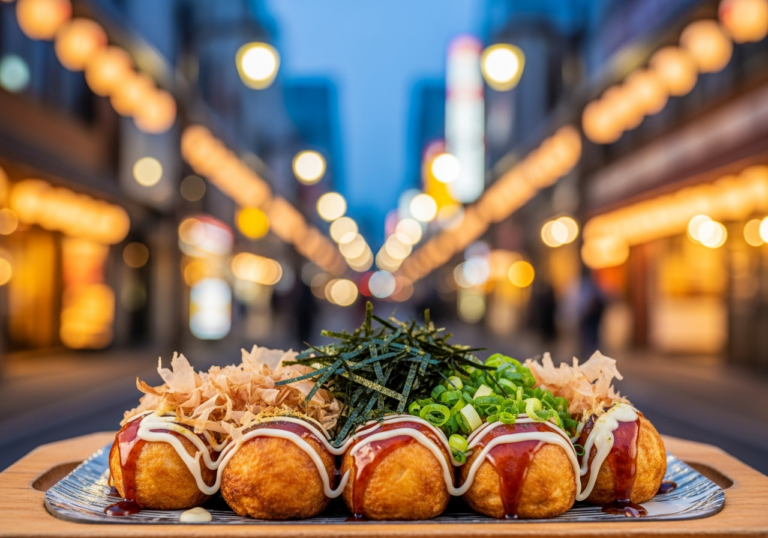
Looking for the best food streets in Osaka? This guide covers eight distinct eating districts — from the neon-lit canal strip of Dotonbori to the Korean BBQ alleys of Tsuruhashi — each with its own personality, price range, and signature bites. Whether you have one afternoon or a full week, there’s a street here for every appetite and every budget.
MICHI’s Pick — Selected by our Osaka-based team, based on places we’ve visited and on research using Tabelog and Google Maps ratings. In Japan, a Tabelog score of 3.4+ is genuinely high — Japanese reviewers are famously strict, and most locals consider anything above 3.4 a place worth a detour. We feature venues meeting at least one of: Tabelog 3.4+, Google Maps 4.3+, or 100+ reviews — the kind of spots locals quietly trust.
Tabelog and Google Maps scores are accurate as of the time of writing.
Osaka has earned its reputation as Japan’s kitchen over centuries, and the city’s food streets are where that reputation lives and breathes. The best food in Osaka isn’t locked inside Michelin-starred restaurants — it’s on the street, under covered arcades, and in narrow alleys that smell of frying oil and dashi from 10am until well past midnight. Below, eight districts worth building your itinerary around.
1. Dotonbori (道頓堀)
📍 Dotonbori, Chuo-ku, Osaka 542-0071
🕐 Open 24 hours (individual stalls vary) (as of May 2026)
💰 ¥500–¥2,500 per person (street food grazing)
🚃 Namba Station (3 min walk)
🗣 English menu: Yes (most major stalls and restaurants)
⭐ Rating: Google 4.4+ (district-wide) (as of writing)
🗺 Open in Google Maps
📋 Tabelog
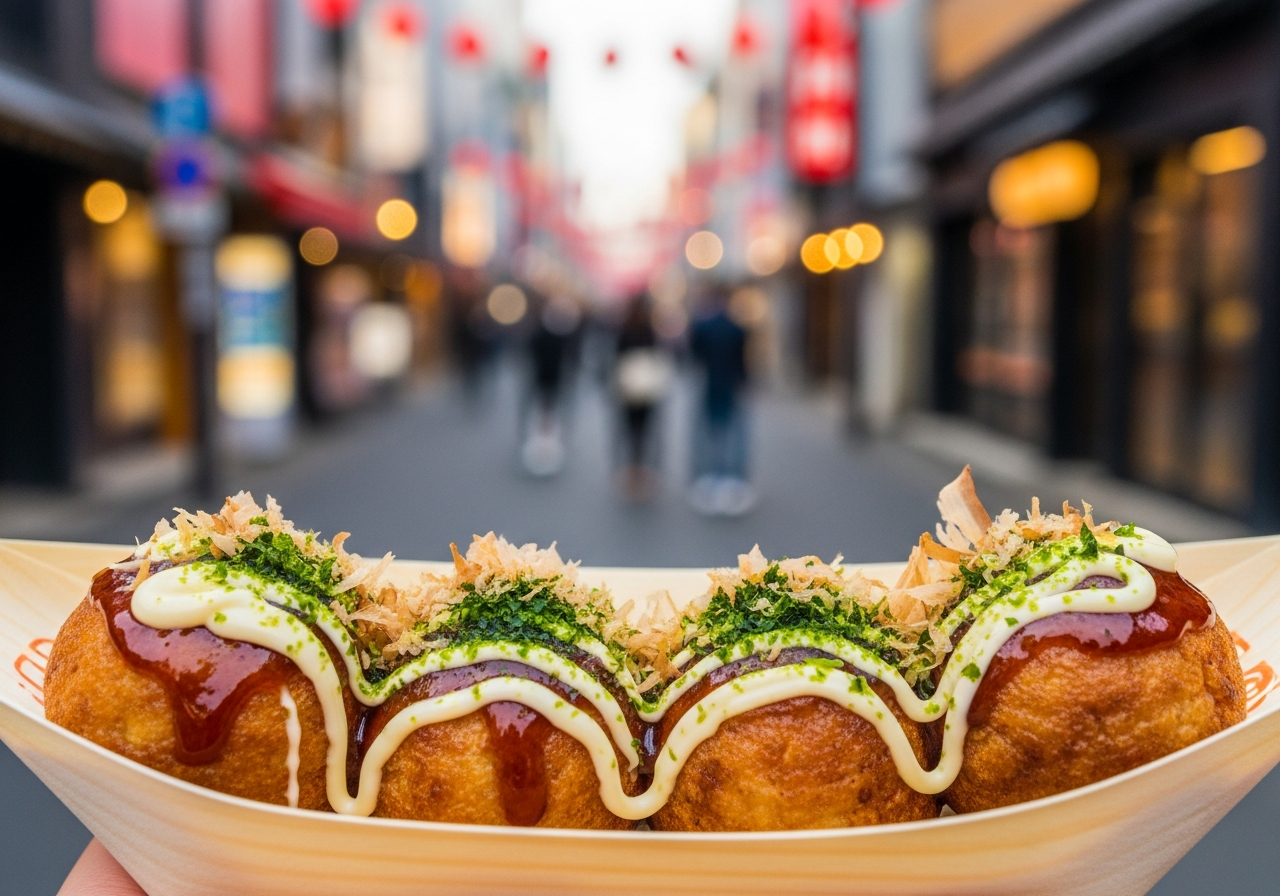
What to order: Takoyaki (¥600–¥800 for 8 pieces), okonomiyaki (¥1,000–¥1,500)
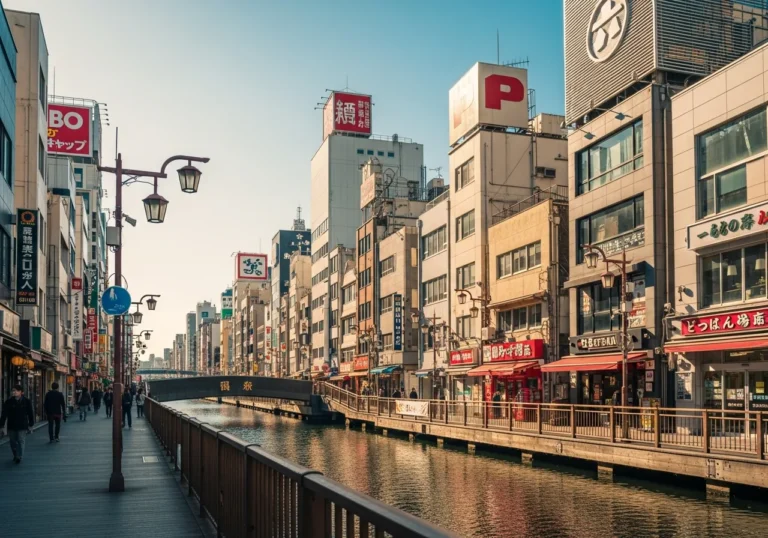
Dotonbori is the single most photographed street in Kansai, and yes, it’s a tourist circus after 7pm — but go anyway. The trick is timing: turn up around 5pm, watch the signs flicker on along the canal, eat your way down the strip, and clear out before the weekend crush peaks. The strip covers classic Osaka street food like takoyaki and okonomiyaki, but it also offers so much more — you can get pretty much every type of Japanese street food imaginable here. Wanaka and Kukuru are the reliable takoyaki stops; for okonomiyaki, Mizuno on the main drag has been doing it for over 60 years.
2. Kuromon Ichiba Market (黒門市場)
📍 2 Chome Nipponbashi, Chuo-ku, Osaka 542-0073
🕐 Most stalls 9:00–18:00; some close Sunday (as of May 2026)
💰 ¥1,000–¥3,000 per person (street food); ¥3,000–¥5,000 (sit-down)
🚃 Nippombashi Station (2 min walk, Exit 10)
🗣 English menu: Available at most tourist-facing stalls
⭐ Rating: Google 4.3+ (as of writing)
🗺 Open in Google Maps
📋 Tabelog
What to order: Grilled scallops (¥400–¥600 each), fresh sashimi on sticks (¥300–¥800), tamago-yaki (¥300–¥500)
Known as “Osaka’s Kitchen,” Kuromon Ichiba is a covered market stretching 580 meters with over 150 stalls. While it has become tourist-heavy, the quality remains high. Must-tries include fresh sashimi on sticks, grilled scallops and crab, tamago-yaki, and seasonal fruits from the specialist vendors. Go before 11am for the best atmosphere and freshest items. One street food you absolutely must try is the scallop skewers — thick and satisfying, the stall regularly draws a line of eager visitors. Note that the market is closed or partially closed on some Sundays and national holidays — check the official website (kuromon.com) before your visit.
3. Shinsekai and Jan Jan Yokocho (新世界・ジャンジャン横丁)
📍 Shinsekai, Naniwa-ku, Osaka 556-0002
🕐 Most kushikatsu shops 11:00–22:00 (as of May 2026)
💰 ¥1,500–¥2,500 per person (kushikatsu and beer)
🚃 Dobutsuen-mae Station (5 min walk)
⭐ Rating: Google 4.3+ (district-wide) (as of writing)
🗺 Open in Google Maps
📋 Tabelog
What to order: Kushikatsu assortment (¥100–¥200 per skewer), doteyaki (beef tendon stew, ¥400–¥600)
For the best kushikatsu experience, head to the Shinsekai district near Tsutenkaku Tower. Walk south from the main Tsutenkaku area into Jan Jan Yokocho, a narrow covered arcade with old-school game parlors, shogi clubs, and small izakayas. The street food here leans toward grilled items and oden from small counter shops. It’s less polished than Dotonbori but feels more authentically Osaka. The golden rule applies everywhere in Shinsekai: no double-dipping in the shared sauce. Kushikatsu Daruma’s original Shinsekai branch is the most famous stop, but the smaller, no-name counters along Jan Jan Yokocho are where the real regulars sit.
4. Tenjinbashisuji Shopping Street (天神橋筋商店街)
📍 Tenjinbashi 1–7 Chome, Kita-ku, Osaka 530-0041
🕐 Most shops 10:00–20:00; some restaurants open until 22:00 (as of May 2026)
💰 ¥300–¥1,500 per person (street food and light meals)
🚃 Tenjinbashisuji Rokuchome Station (direct access) / JR Tenma Station (3 min walk)
⭐ Rating: Google 4.3+ (street-wide) (as of writing)
🗺 Open in Google Maps
📋 Tabelog
What to order: Korokke / croquettes at Nakamuraya (under ¥100 each), mitarashi dango (¥150–¥300)
Japan’s longest shopping street, Tenjinbashisuji, stretches 2.6 kilometers and is packed with small eateries and food stalls. Nearby Tenma is an after-work drinking and eating neighborhood where office workers crowd into tiny standing bars and street-side stalls. This is where Osakans eat when they are not performing for tourists. The one street food stop everyone talks about in Tenjinbashisuji is Nakamuraya (中村屋) in 2-chome, at 2-3-21 Tenjinbashi, Kita-ku. This tiny shop sells croquettes that have been a local institution for decades. The standard potato croquette is priced under ¥100 — making it one of the cheapest bites in this guide.
5. Hozenji Yokocho (法善寺横丁)
📍 Hozenji Yokocho, Namba 1-chome, Chuo-ku, Osaka 542-0076
🕐 Restaurants typically 17:00–23:00; some open from lunch (as of May 2026)
💰 ¥2,000–¥5,000 per person (dinner with drinks)
🚃 Namba Station (5 min walk)
⭐ Rating: Google 4.4+ (alley-wide) (as of writing)
🗺 Open in Google Maps
📋 Tabelog
What to order: Okonomiyaki (¥1,000–¥1,500), kushikatsu (¥150–¥250 per skewer), yakitori (¥200–¥400)
For those who are foodies but also culturally inclined, Hozenji Yokocho is the perfect balance of Japanese tradition and street food culture. It translates to “the street beside Hozenji” — just 80 metres long, with a cobblestone walkway that gives you olden-day vibes. Hozenji Yokocho surprisingly boasts quite a happening food scene, with a huge variety of local and authentic foods, from yakitori grills to kushikatsu, okonomiyaki, and katsu cutlets. The moss-covered stone lanterns and the sound of water ladled over the temple’s Fudo Myo-o statue make this the most atmospheric 80 metres of eating in the city. Come at dusk.
6. Amerikamura (アメリカ村)
📍 Nishishinsaibashi 2-chome, Chuo-ku, Osaka 542-0086
🕐 Shops and stalls typically 11:00–21:00; bars until late (as of May 2026)
💰 ¥500–¥2,000 per person (street food and casual dining)
🚃 Shinsaibashi Station (5 min walk)
⭐ Rating: Google 4.2+ (district-wide) (as of writing)
🗺 Open in Google Maps
📋 Tabelog
What to order: Takoyaki near Triangle Park (¥600–¥800), Korean-influenced street snacks (¥300–¥600)
Amerikamura is known as the centre of Osaka’s youth culture and street fashion scene, lined with stores selling vintage clothing, records, and books, alongside live music venues and restaurants. Plenty of people swear the takoyaki at Kougaryu near Triangle Park is among the best in the city, so join that queue. The food here skews younger and more eclectic than Dotonbori — expect Korean-influenced snacks, crepe stands, and independent coffee roasters tucked between the vintage shops. Weekend afternoons are when it really hums; on a quiet weekday morning it’s half-asleep.
7. Tsuruhashi Korea Town (鶴橋コリアタウン)
📍 Momodani / Tsuruhashi area, Ikuno-ku, Osaka 544-0031
🕐 Most shops 10:00–19:00; some restaurants open until 22:00 (as of May 2026)
💰 ¥800–¥2,500 per person (street food and Korean BBQ)
🚃 Tsuruhashi Station (5 min walk)
⭐ Rating: Google 4.2+ (district-wide) (as of writing)
🗺 Open in Google Maps
📋 Tabelog
What to order: Yakiniku (Korean BBQ, ¥1,500–¥3,000), cheese hotteok (¥300–¥500), kimchi by the bag (¥500–¥1,500)
Tsuruhashi is Osaka’s Korea Town, and the food scene here reflects that heritage. You’ll find Korean BBQ, kimchi, Korean-style fried chicken, and fusion dishes that blend Korean and Japanese flavours. The market here is smaller and more local than Kuromon. You’ll find ingredients for Korean cooking, ready-made kimchi, and a variety of Korean snacks and sweets. It’s a good place to experience a different side of Osaka’s food culture. Tsuruhashi rules yakiniku — the covered market maze around the station is one of the most disorienting and rewarding 30 minutes you can spend in this city. Follow the smoke.
8. Ura-Namba (裏なんば)
📍 Namba / Sennichimae area, Chuo-ku, Osaka 542-0074
🕐 Most izakayas 17:00–midnight or later (as of May 2026)
💰 ¥2,000–¥4,000 per person (drinks and small plates)
🚃 Namba Station (5 min walk)
⭐ Rating: Google 4.2–4.4 (varies by venue) (as of writing)
🗺 Open in Google Maps
📋 Tabelog
What to order: Kushikatsu (¥150–¥250 per skewer), yakitori (¥200–¥400), late-night ramen (¥800–¥1,200)
Namba is a broad area south of Dotonbori, and while the main streets are busy with tourists, the back alleys known as Ura-Namba are where Osaka’s food workers and nightlife staff eat after their shifts. The area is packed with tiny izakayas, standing bars, and late-night ramen shops. Street food in the traditional sense is less common here — Ura-Namba is more of a sit-down neighbourhood. But it fills a gap that Dotonbori and Shinsekai do not: affordable, unpretentious, and open late. Many places serve until midnight or later. This is the district to end your night in. Explore more of Osaka and you’ll keep coming back to Ura-Namba — it’s the city eating for itself, not for the camera.
FAQ
Q: What is the best food street in Osaka?
A: Dotonbori is the most iconic and the easiest starting point — it has the widest variety of Osaka’s signature dishes in the smallest area. But if you want something more local, Tenjinbashisuji or Ura-Namba will feel more like the city actually eating, rather than performing.
Q: How many food streets and districts are in Osaka?
A: Osaka has dozens of distinct eating districts, but the eight covered in this guide — Dotonbori, Kuromon Ichiba, Shinsekai, Tenjinbashisuji, Hozenji Yokocho, Amerikamura, Tsuruhashi, and Ura-Namba — cover the full range from tourist-facing to deeply local. Most cluster in the Minami (south) area, making it easy to hit three or four in a single day on foot.
Q: Do Osaka food street restaurants have English menus?
A: In Dotonbori, Kuromon Ichiba, and Amerikamura, English menus or picture menus are common at most stalls. In Tenjinbashisuji, Tsuruhashi, and Ura-Namba, English is less reliable — but pointing, pictures on your phone, and a willingness to guess will get you far. Most street food is ordered by pointing anyway.
Q: What should I order at food streets in Osaka?
A: Start with takoyaki (octopus balls, ¥600–¥800 for 8 pieces) and kushikatsu (deep-fried skewers, ¥100–¥250 each) — these are the two dishes most closely tied to Osaka’s street food identity. Add okonomiyaki (savory pancake, ¥1,000–¥1,500) if you want something more substantial, and grilled scallops or fresh sashimi at Kuromon if seafood is your priority.
Last updated: July 3, 2026 · Corrections: [email protected]