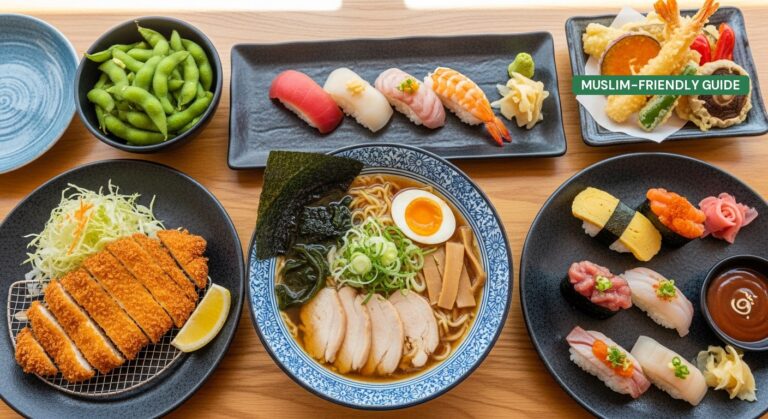
Looking for halal food in Shinsaibashi, Osaka? Dedicated halal sushi counters are rare here, but three halal-certified restaurants in the area serve Japanese wagyu dishes — including aburi wagyu nigiri — alongside ramen, gyukatsu, and Osaka street-food classics. All three suit Muslim travelers who want certified, pork-free Japanese dining steps from the Shinsaibashi-suji arcade. Check our Osaka halal guide for the full city picture.
MICHI’s Pick — Selected by our Osaka-based team, based on places we’ve visited and on research using Tabelog and Google Maps ratings. In Japan, a Tabelog score of 3.4+ is genuinely high — Japanese reviewers are famously strict, and most locals consider anything above 3.4 a place worth a detour. We feature venues meeting at least one of: Tabelog 3.4+, Google Maps 4.3+, or 100+ reviews — the kind of spots locals quietly trust.
Tabelog and Google Maps scores are accurate as of the time of writing.
1. Halal Wagyu Naritaya (Naniwaya) Osaka Minami
The only fully halal-certified restaurant in the Shinsaibashi area that serves aburi wagyu nigiri alongside its signature ramen — no pork, no alcohol, and a prayer room upstairs.
- ☪️ Halal status: halal-certified
- 🍢 Must-order: Aburi Wagyu Nigiri (炙り肉寿司) (¥880–¥1,200)
- 📍 Access: Shinsaibashi Station (5 min walk)
- 🕒 Hours: Mon–Fri 11:00–15:00, 17:00–22:00 / Sat, Sun & Holidays 12:00–22:00 (Open daily)
- 📞 Reservation: Not needed
- 🧎 Prayer room: Available on-site
- 🍷 Alcohol served: No
- 🗣 English menu: Yes
- ⭐ Rating: Google 4.2 (600+ reviews) (as of writing)
- 🗺 View on Google Maps
- 🔗 Source: halalfoodinjapan.com
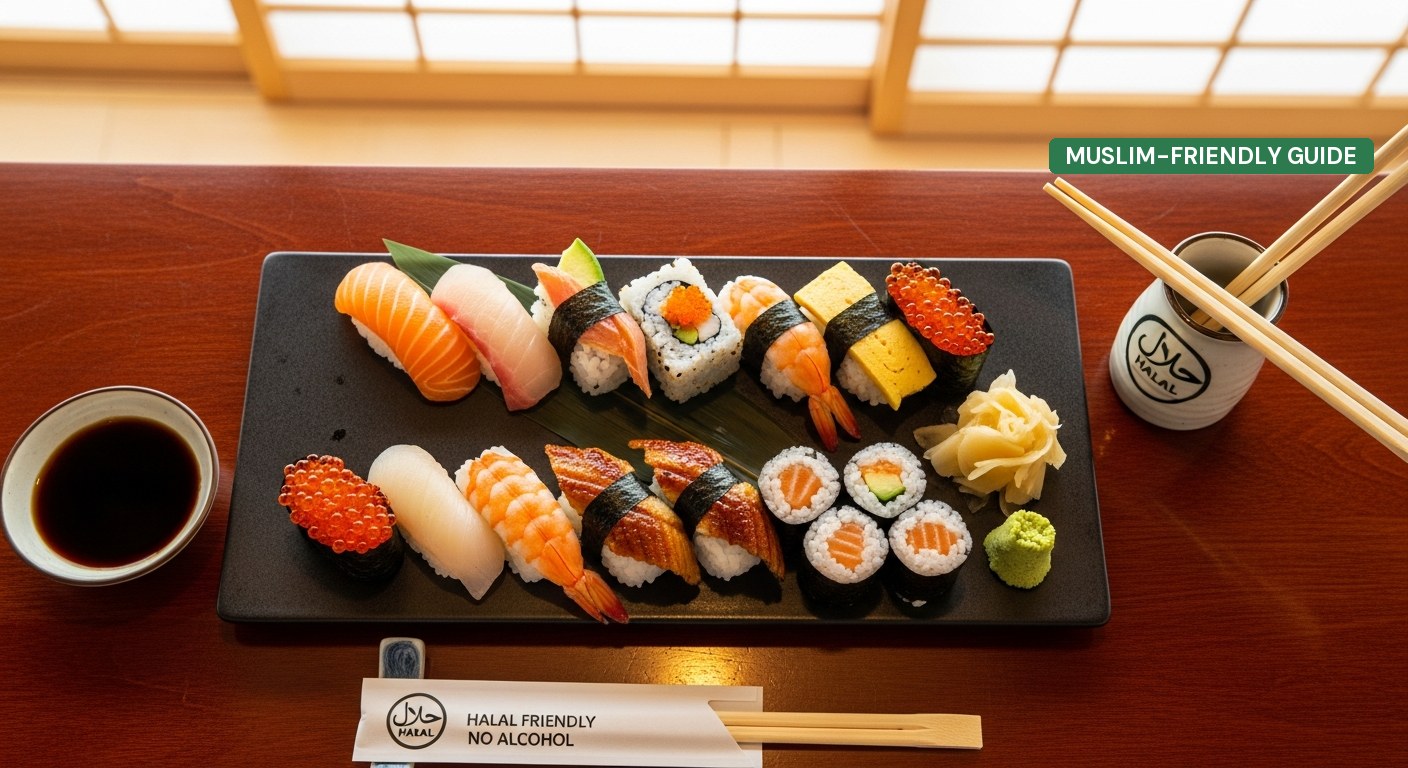
What to order: The aburi wagyu nigiri — seared A3-grade halal wagyu on vinegared rice — is the closest thing to proper halal sushi you’ll find in Shinsaibashi, and it’s made with halal-certified soy sauce throughout. Pair it with the wagyu ramen for a full Japanese meal that covers all the bases.
2. Halal Honolu Grande Shinsaibashi
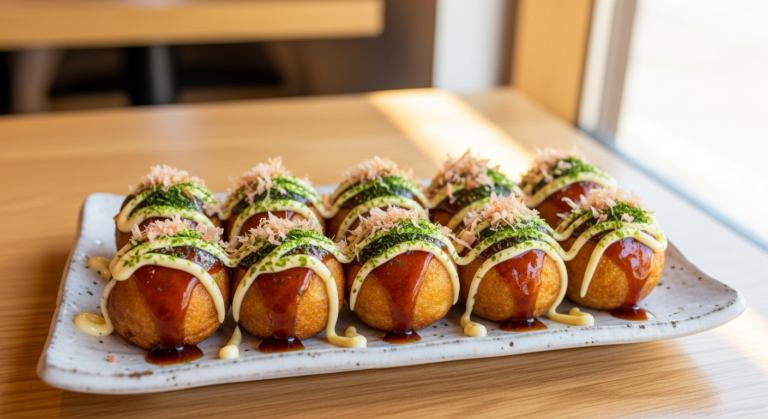
A halal-certified Japanese food hall on Shinsaibashisuji serving Osaka street-food classics — takoyaki, okonomiyaki, gyukatsu — all made with A5 Kobe beef and halal-certified ingredients, with a prayer space and wudu facilities on-site.
- ☪️ Halal status: halal-certified
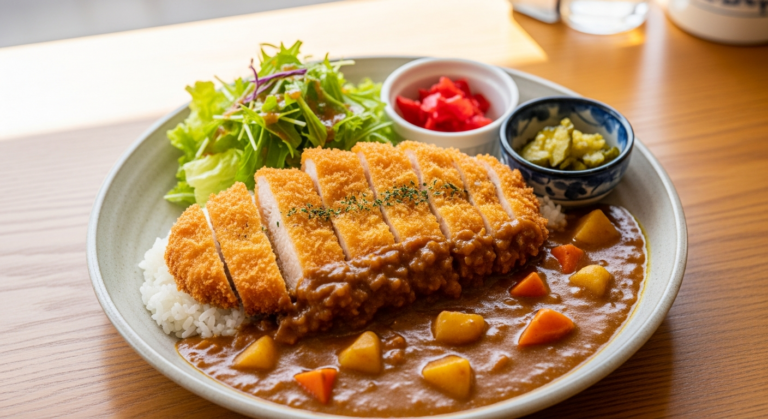
- 🥩 Must-order: A5 Kobe Beef Gyukatsu (¥1,800–¥2,500)
- 📍 Access: Shinsaibashi Station (6 min walk)
- 🕒 Hours: 11:30–21:00 (Open daily)
- 📞 Reservation: Not needed
- 🧎 Prayer room: Available on-site
- 🍷 Alcohol served: No
- 🗣 English menu: Yes
- ⭐ Rating: Google 4.8 (1,346 reviews) (as of writing)
- 🗺 View on Google Maps
- 🔗 Source: groovyjapan.com
What to order: The A5 Kobe beef gyukatsu — a panko-crusted wagyu cutlet served with halal dipping sauce — is the crowd favourite and sells out early on weekends. If you want to explore more of Shinsaibashi after eating, the restaurant sits right on the arcade, making it an easy mid-shopping stop.
3. Halal Wagyu Yakiniku Panga Shinsaibashi
A halal-certified A5 wagyu yakiniku restaurant on Shinsaibashisuji where every cut is sourced from individually purchased whole cattle — the most premium halal beef experience in the area.
- ☪️ Halal status: halal-certified
- 🥩 Must-order: A5 Wagyu Sirloin Steak Course (¥8,800–)
- 📍 Access: Shinsaibashi Station (6 min walk) / Namba Station (5 min walk)
- 🕒 Hours: 17:00–23:00 (Closed: Monday)
- 📞 Reservation: Required
- 🧎 Prayer room: None
- 🍷 Alcohol served: No
- 🗣 English menu: Yes
- ⭐ Rating: Google 4.3 (100+ reviews) (as of writing)
- 🗺 View on Google Maps
- 🔗 Source: halalgourmet.jp
What to order: The Panga Course (¥8,800) includes premium tongue, thinly sliced kalbi, and sirloin — all A5 halal wagyu grilled tableside. Book at least a day ahead; walk-ins are rarely accepted, and this is one of the best halal beef experiences listed in the best food in Osaka roundups.
Frequently Asked Questions
Q. Is it easy to find halal food in Shinsaibashi, Osaka?
Halal-certified restaurants are growing in Shinsaibashi, but they are not on every corner — you’ll find a handful of solid certified spots within a 6-minute walk of the station. Dedicated halal sushi counters remain rare; your best bet for sushi-style dishes is the aburi wagyu nigiri at Naritaya or the gyukatsu at Honolu Grande.
Q. What does “Muslim-friendly” mean in Japan?
In Japan, “Muslim-friendly” typically means a restaurant has removed pork and lard from its menu and may use halal-certified soy sauce and other condiments, but it does not necessarily hold formal halal certification from a recognised body. “Halal-certified” is the stronger label — it means an accredited organisation has audited the kitchen, ingredients, and supply chain. All three restaurants in this article are halal-certified, not merely Muslim-friendly.
Q. Are there prayer rooms near halal restaurants in Shinsaibashi?
Yes — both Naritaya and Honolu Grande have prayer rooms on-site, with wudu (ablution) facilities available. Panga does not have a prayer room, but the Osaka Mosque in Imamiya is reachable by subway (about 15 minutes from Shinsaibashi Station on the Midosuji Line toward Namba, then transfer).
Q. What hidden ingredients should Muslim travelers watch out for in Japan?
Mirin (sweet rice wine) and sake are used in many Japanese sauces, marinades, and broths — including seemingly simple dishes like teriyaki glaze, dashi stock, and sushi rice vinegar. Some soy sauces also contain trace alcohol. At non-certified restaurants, always ask specifically about mirin, sake, and pork-derived dashi; at the halal-certified spots in this article, these ingredients have been replaced with halal-compliant alternatives.
Last updated: July 28, 2026 · Corrections: [email protected]