Last updated: July 3, 2026
Information changes — always confirm with the venue/source before relying on it.
Introduction
Osaka has a well-earned reputation as Japan’s food capital — a city where locals live by the philosophy of kuidaore, eating until you drop. For Muslim travelers, that promise can feel complicated at first glance. Osaka is renowned for its diverse and delicious food offerings, but for Muslim travelers and residents, finding halal-friendly dining options can be challenging — though the city is increasingly accommodating, with a growing number of restaurants offering halal-friendly menus.
The good news: the scene has changed significantly. Osaka is one of Japan’s most attractive regions, offering a blend of traditional and modern culture and a variety of culinary delights, and the number of restaurants where Muslim visitors can enjoy meals with peace of mind is increasing, with establishments that have obtained halal certification or offer Muslim-friendly services. This guide explains the food landscape by topic — what the key terms mean, which districts to focus on, which Japanese dishes are now accessible, how to navigate convenience stores, and how to read labels — so you can eat confidently from your first day in the city. For a curated list of specific venues, see our Osaka halal guide.
Halal-Certified vs. Muslim-Friendly vs. No Pork No Lard: What the Terms Actually Mean
Before you sit down to eat anywhere in Osaka, it helps to understand the three tiers of halal status you will encounter on menus, apps, and signage.
- Halal-certified means a recognized certification body has inspected the restaurant and verified that all ingredients, meat sourcing, preparation methods, and kitchen equipment meet halal standards. A recognized body has inspected the restaurant and verified that all ingredients, meat sourcing, preparation methods, and kitchen equipment meet halal standards. In Japan, the main certifiers include the Japan Islamic Trust (JIT), the NPO Japan Halal Association (JHA), and the Muslim Professional Japan Association (MPJA). NPO Japan Halal Association is a halal certification body approved by JAKIM (Malaysia), MUIS (Singapore), BPJPH (Indonesia), HAK (Turkey), GAC (Gulf countries), and MOIAT (UAE). JIT Halal Certification Body provides services for analyzing, scrutinizing, and testing products manufactured by Japanese manufacturers so that these products satisfy the rulings of the Quran and Hadith.
- Muslim-friendly means the restaurant has made efforts to accommodate Muslim diners — no pork in certain dishes, halal meat options — but may still use mirin or cooking sake, share kitchen equipment with non-halal items, and serve alcohol to other tables. Always ask staff to confirm the specific dish you are ordering.
- No pork no lard is the most basic declaration: the kitchen does not use pork or pork-derived fat. This does not address alcohol, mirin, or slaughter method. It is a useful starting point for vegetable and seafood dishes, but insufficient on its own for meat.
One nuance worth knowing: standard Japanese soy sauce contains approximately 1.5–2% alcohol from fermentation, and whether this makes it non-halal is debated — some treat it as acceptable because the alcohol is a natural fermentation byproduct, while others hold that any measurable alcohol content makes it non-halal. Halal-certified restaurants typically use specifically certified halal soy sauce. Know your own standard before you order.
🔗 Source: tabemasen.io · halal.islam.or.jp (JIT) · jhalal.com (JHA)
Which Districts Have the Most Options
Osaka’s halal and Muslim-friendly dining is not evenly spread across the city. Knowing which neighborhoods to prioritize saves time and reduces the risk of arriving somewhere with nothing suitable to eat. In Osaka, dining options vary depending on the tourist area, such as Namba, Shinsaibashi, Umeda, and Tempozan.
- Dotonbori / Namba is the single most productive area for Muslim travelers. Known as Osaka’s kitchen and the embodiment of the local philosophy of kuidaore — to eat until you drop — this iconic canal-side promenade is a feast for the senses. Several halal-certified and Muslim-friendly restaurants operate within walking distance of Namba Station, and Namba CITY has a prayer room inside the facility, with reception required at the Information Center on B2F.
- Shinsaibashi is a short walk north of Dotonbori and is home to the Muslim Tourist Information Centre, which provides travel information on halal restaurants and itineraries, a prayer room, and houses the Muslim-friendly souvenir shop JAPANeid, approximately 5–15 minutes’ walk from the Shinsaibashi area. Ali’s Kitchen, a halal-certified Pakistani and Arab cuisine restaurant, is approximately 2 minutes’ walk from Shinsaibashi Station and has been featured in the Michelin Guide.
- Umeda / Higashi-Umeda is Osaka’s main transport and business hub in the north of the city. Osaka Buyuden Higashi-Umeda, approximately 1 minute’s walk from Higashi-Umeda Station, offers highly-rated, rich ramen featuring spicy options and seared wagyu beef. A musalla is available on-site.
- Shin-Osaka is worth knowing for travelers arriving or departing by Shinkansen. Halal beef ramen Gyukotsu no Ou is located in the Arde Shin-Osaka inside JR Shin-Osaka Station, and as Shin-Osaka is a major bullet train station connecting major cities such as Tokyo, Hiroshima, and Nagoya, it’s convenient to stop by before or after your travels.
🔗 Source: halalgourmet.jp · halalinjapan.com · enjoy-osaka-kyoto-kobe.com
Japanese Dishes You Can Actually Eat — and How to Find Them
One of the most common questions Muslim visitors ask is whether they can eat real Osaka food — not just South Asian or Middle Eastern cuisine transplanted to Japan. The answer, increasingly, is yes. Finding halal food in Japan, especially in Osaka, is easier than ever, with certified ramen, sushi, and international cuisines available. Here is how the main Osaka food categories break down.
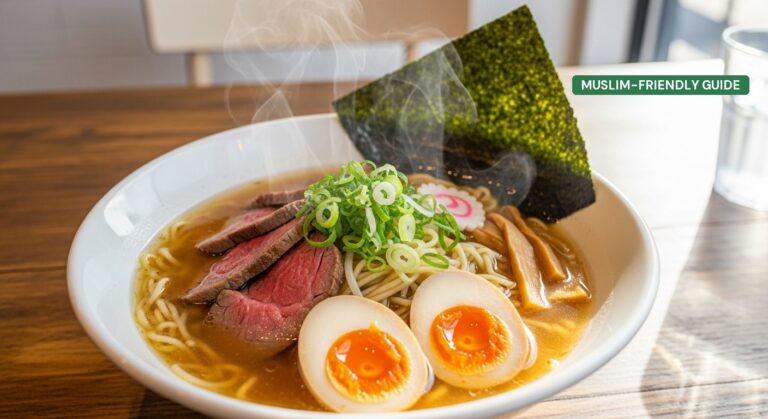
- Ramen is the most developed halal category in Osaka. The key shift has been replacing pork-bone (tonkotsu) broth with beef-bone or chicken-based broths. Halal Ramen Honolu Osaka Namba offers a unique dining experience with its certified halal chicken, noodles, and soy sauce — a rare gem in Osaka’s food scene. The signature dish is the Chicken Paitan Ramen, featuring a rich chicken broth prepared fresh daily and noodles made from Hokkaido wheat. For wagyu ramen, Gyukotsu no Ou near Shin-Osaka is described as the ultimate halal ramen made without chemical seasonings, using only the natural flavor of the ingredients, with halal A5 wagyu beef available.
- Okonomiyaki — Osaka’s beloved savory pancake — is available in a Muslim-friendly format at Chibo Diversity in Dotonbori. Chibo, a long-established okonomiyaki restaurant with over 50 years of history, has a dedicated Muslim-friendly branch on the 7th floor of Dotonbori’s main street. Using halal-certified meat and Muslim-friendly seasonings, Chibo serves its signature Chibo-yaki alongside okonomiyaki, yakisoba, and teppanyaki dishes like wagyu sirloin steak, with all dishes prepared without any contact with pork or alcohol. A prayer room is also available on-site.
- Wagyu beef is now a genuine option for Muslim travelers in Osaka. Shinjukutei Osaka Umeda is a halal A5 wagyu steak and wagyu beef cutlet specialty restaurant in Umeda, serving premium halal-certified A5 wagyu steak and crispy wagyu beef cutlets with no pork or alcohol used, with a Muslim-friendly kitchen and English menu. The Osaka Umeda branch offers a broader range of Japanese cuisine (washoku) through dishes like gyukatsu and yakiniku, allowing Muslim guests to explore more of Japan’s culinary culture beyond ramen.
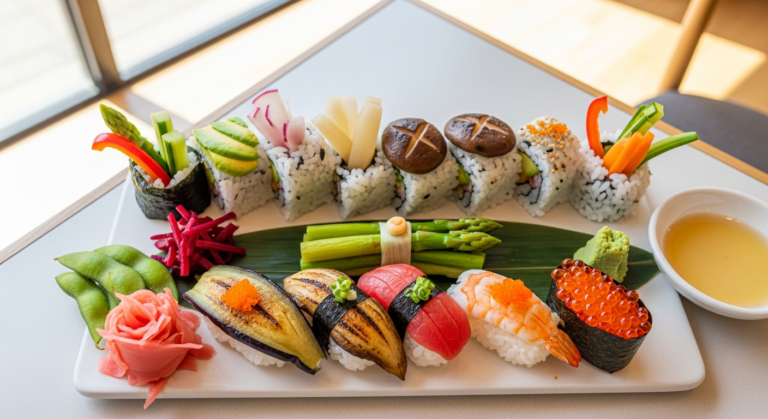
- Kaiseki and sushi are more niche but available. Hotel Plaza Osaka’s KADEN restaurant in Juso offers halal-friendly kaiseki meals, with a menu including appetizers, sashimi, grilled seafood, halal-certified beef cooked on a ceramic plate, and tempura.
- Japanese tea and sweets are an often-overlooked option. Chatei Jin, a cafe specializing in Japanese tea in the Tsutenkaku area of Osaka, serves the highest quality Japanese tea carefully selected by Nakayama Kisshoen, established in 1865. All tea leaves used are halal-certified, the cafe is equipped with a prayer room, the Japanese sweets served are halal-compliant, and alcohol is not served.
To explore the best food in Osaka more broadly, keep in mind that seafood-based dishes — sashimi, tempura, grilled fish — are generally the safest category at non-certified restaurants, as they avoid the pork and alcohol issues that affect meat-based dishes.
🔗 Source: enjoy-osaka-kyoto-kobe.com · halalgourmet.jp · halal-shinjukutei.com
Navigating Convenience Stores (Konbini)
Japan’s convenience stores — 7-Eleven, FamilyMart, and Lawson — are open 24 hours and found on almost every block in Osaka. They are a practical backup for early mornings, late nights, or days when you are between neighborhoods. The picture for Muslim travelers is mixed but manageable.
7-Eleven Japan has no halal-certified section, but several private-brand and partner products contain no haram ingredients and are widely available at any of the chain’s 21,000+ outlets. The same applies to FamilyMart and Lawson. The most important rule: in Japan’s convenience stores, fried chicken is everywhere — Lawson has L-chiki, FamilyMart has Famichiki, and Seven-Eleven has Nanachiki — however, these chickens are not halal because the meat is not slaughtered according to Islamic guidelines. Even if the ingredients look simple, the slaughtering process is what determines whether food is halal or not.
What can you pick up? Focus on these categories:
- Packaged snacks with halal certification marks — although Islam is not a major religion in Japan, there are some halal-certified items at konbini. Many Pringles sold in Japan are imported from Malaysia, and their factory is halal-certified.
- Fruit jellies made with konjac (konnyaku) — most fruit jellies in Japan are made with pork or beef gelatin, which is what made Orihiro Purunto Konnyaku Jelly pouches a Muslim-traveler favorite. According to Orihiro’s official English product page, the standing pouches use konjac powder plus a polysaccharide thickener as the gelling agent, with no animal-derived gelatin in the formula.
- Onigiri (rice balls) with seafood fillings — tuna, salmon, and kombu (kelp) fillings avoid pork and meat slaughter concerns, though they are not formally halal-certified. Always check the ingredient label.
- Label reading — every packaged food sold in Japan must display an ingredient list and an allergen disclosure under the Food Labeling Act. For a Muslim shopper, three sections of the label matter: 原材料名 (genzairyōmei) — the ingredient list in descending order by weight; and アレルギー物質 (arerugii busshitsu) — the mandatory allergen disclosure. Additionally, check labels for 豚 (pork), ゼラチン (gelatin), みりん (mirin), and 酒 (sake).
🔗 Source: halal-navi.com · paulonia.tokyo · halalinjapan.com
Finding Halal Food by App and Map
Osaka’s halal dining scene changes quickly — new restaurants open, certifications lapse, menus change. Relying on a single printed guide is not enough. The most reliable approach is to combine two or three live sources before and during your trip.
- Halal Gourmet Japan (halalgourmet.jp) — one of the most comprehensive Japanese-language and English databases of halal-certified and Muslim-friendly restaurants in Osaka, with filters for prayer space, certification body, and cuisine type. Use it to verify current status before visiting any venue.
- Halal In Japan (halalinjapan.com) — organizes Osaka listings by neighborhood (Namba, Umeda, Tennoji, Osaka Bay Area, Den Den Town), making it easy to plan by area rather than by restaurant name.
- Muslim Guide Japan (muslim-guide.jp) — provides information on Muslim-friendly services using icons, including: has a halal or Muslim-friendly menu; has a non-pork, non-alcoholic menu; has a vegetarian menu; has a prayer space; offers prayer items for loan; and has a Qibla marker display. This icon system makes it fast to assess a venue at a glance.
- Halal Japan App — a smartphone app that allows you to scan product barcodes in convenience stores and supermarkets to check halal status in real time. Particularly useful for konbini shopping.
- Google Maps — search “halal Osaka” or “Muslim friendly Osaka” and cross-reference any result against halalgourmet.jp or halalinjapan.com before visiting.
To plan your wider trip around the city, explore more of Osaka with our area guides covering neighborhoods, transport, and sightseeing.
🔗 Source: halalgourmet.jp · halalinjapan.com · muslim-guide.jp
Practical Tips for Muslim Travelers
- Use Namba as your food base. The Dotonbori–Shinsaibashi corridor has the highest concentration of halal-certified and Muslim-friendly restaurants in Osaka, plus the Namba CITY prayer room (B2F information counter) and the Muslim Tourist Information Centre near Shinsaibashi Station.
- Carry a halal dietary card in Japanese. Most restaurant staff don’t speak English fluently, and verbal explanations of halal requirements often get lost in translation — a written card in Japanese gives the kitchen something concrete to work with. Download a printable version from halalinjapan.com before you travel.
- Verify certification before you visit, not on arrival. Check halalgourmet.jp or muslim-guide.jp the evening before to confirm a restaurant is still operating and still certified. Certification status can change without notice.
- At konbini, stick to seafood onigiri, konjac-based snacks, and products with a visible halal mark. Avoid all fried chicken counters (Famichiki, L-chiki, Nanachiki) — none are halal-certified regardless of how the ingredients appear on the label.
- For wagyu and Japanese beef dishes, ask specifically about the certification body. Shinjukutei Osaka Umeda uses certified halal A5 wagyu beef and follows halal preparation methods — this is the level of specificity you should expect from any restaurant claiming halal wagyu. If a venue cannot name its certifier, treat the claim with caution.
- Plan prayer times around your dining itinerary. Key prayer spaces near tourist areas include: Namba CITY (B2F, reception required), the Muslim Tourist Information Centre near Shinsaibashi, and the musalla at Osaka Buyuden Higashi-Umeda (near Higashi-Umeda Station). The Osaka Masjid is the main mosque for Friday prayers.
Last updated: July 3, 2026 · Corrections: [email protected]