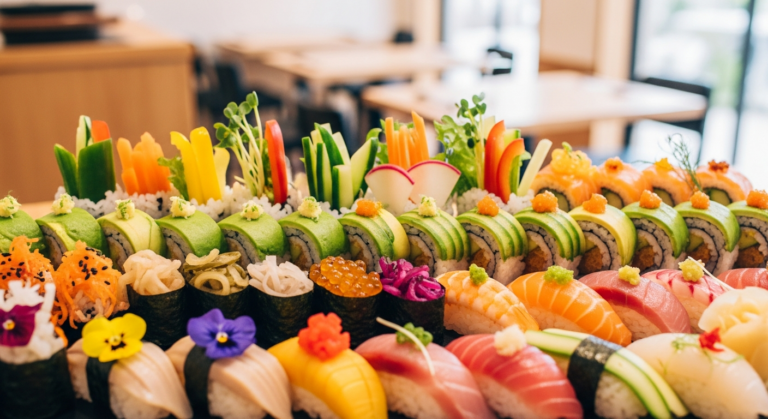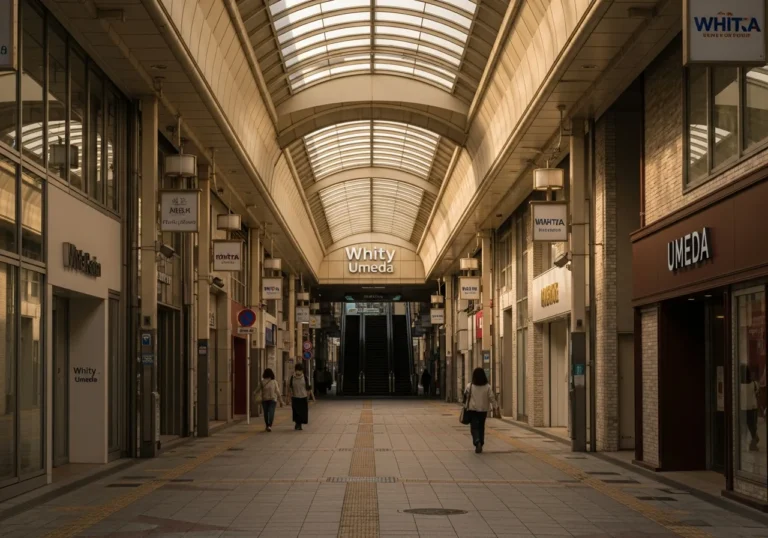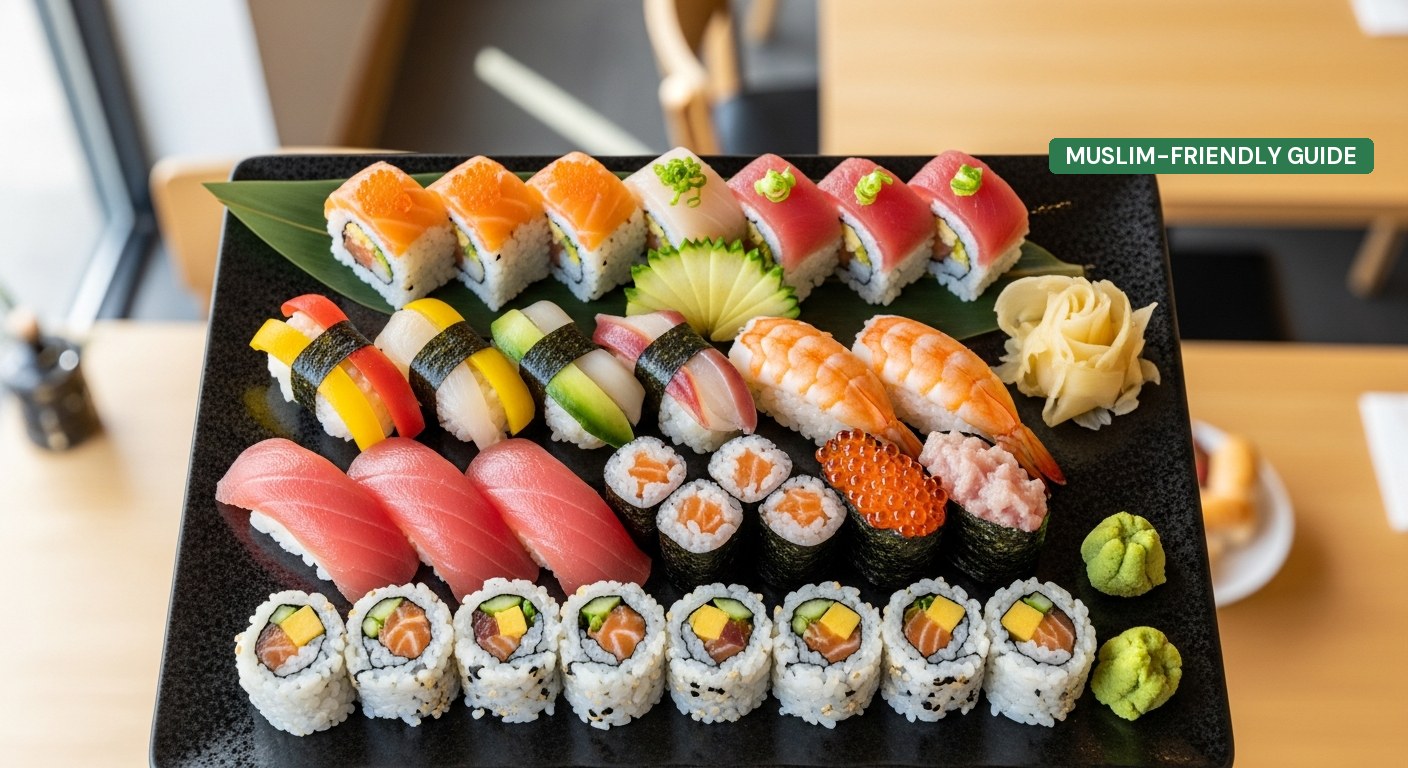
Looking for halal food in Umeda, Osaka? Three verified spots serve Muslim-friendly Japanese food in this north-Osaka hub — two of them plate wagyu beef sushi alongside their headline dishes, making them the closest thing to a dedicated halal sushi counter in the area. Ideal for travelers who want authentic Japanese flavours without compromise, and for those who want to explore more of Umeda between meals.
MICHI’s Pick — Selected by our Osaka-based team, based on places we’ve visited and on research using Tabelog and Google Maps ratings. In Japan, a Tabelog score of 3.4+ is genuinely high — Japanese reviewers are famously strict, and most locals consider anything above 3.4 a place worth a detour. We feature venues meeting at least one of: Tabelog 3.4+, Google Maps 4.3+, or 100+ reviews — the kind of spots locals quietly trust.
Tabelog and Google Maps scores are accurate as of the time of writing.
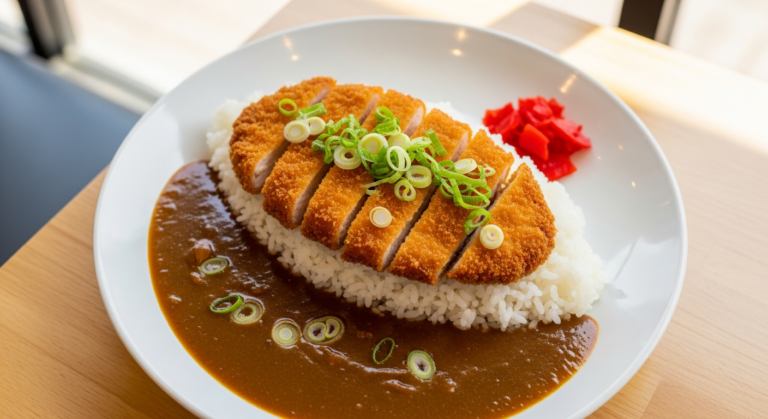
1. HALAL WAGYU GYUKATSU SHINJUKU-TEI Osaka Umeda
The only halal-certified wagyu counter in Umeda where you can eat A5 beef sushi, gyukatsu, and yakiniku steak — all from a halal-only kitchen — and then step into the on-site prayer room without leaving the building.
- ☪️ Halal status: halal-certified
- 🥩 Must-order: Wagyu Gyukatsu Set with Wagyu Beef Sushi (from ¥3,500)
- 📍 Access: Umeda Station (5 min walk) — 7F Pont Nouveau, 2-5-30 Sonezaki, Kita-ku
- 🕒 Hours: 12:00–21:00 (Open daily)
- 📞 Reservation: Recommended
- 🧎 Prayer room: Available on-site
- 🍷 Alcohol served: No
- 🗣 English menu: Yes
- 🗺 View on Google Maps
- 🔗 Source: halalgourmet.jp
What to order: The Wagyu Gyukatsu Set arrives with lightly breaded A5 wagyu that you finish on a personal grill, plus wagyu beef sushi, miso soup, and salad — a full Japanese meal built entirely on halal-certified beef. The sushi pieces use halal soy sauce, so there are no hidden ingredients to worry about.
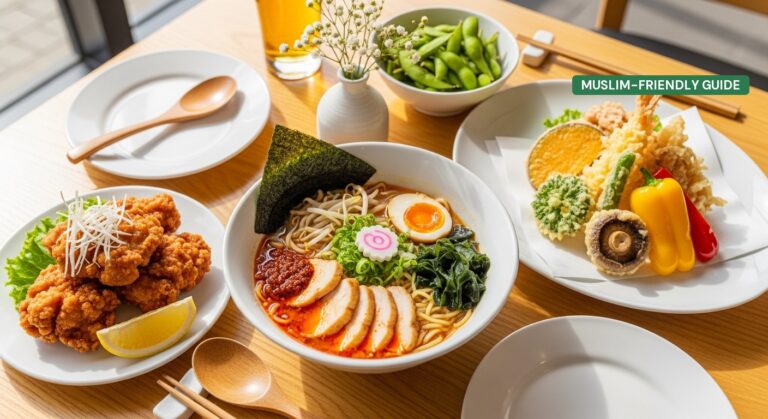
2. Osaka Buyu-Den Halal Wagyu Ramen Higashi-Umeda
A halal-certified ramen shop one minute from Higashi-Umeda Station that also serves wagyu beef sushi and karaage, with a prayer room and wudu facilities inside — one of the most complete Muslim-friendly setups in the Umeda area.
- ☪️ Halal status: halal-certified
- 🍜 Must-order: Premium Set — Wagyu Ramen + Wagyu Beef Sushi + Karaage (from ¥1,800)
- 📍 Access: Higashi-Umeda Station (1 min walk) — SUNSUN Higashi-Umeda 2F, 5-16 Doyama-cho, Kita-ku
- 🕒 Hours: 12:00–21:00 (Open daily)
- 📞 Reservation: Not needed
- 🧎 Prayer room: Available on-site
- 🍷 Alcohol served: No
- 🗣 English menu: Yes
- 🗺 View on Google Maps
- 🔗 Source: halalfoodinjapan.com
What to order: Upgrade to the Premium Set to get wagyu beef sushi alongside your ramen bowl — the sushi is made with the same A5 halal wagyu used in the broth, giving you two Japanese classics in one sitting. The broth is beef-and-chicken based with zero pork, so it’s safe for the whole family. For more halal dining ideas across the city, browse our Osaka halal guide.
3. Le Marrakech
A Moroccan-owned halal restaurant steps from Umeda Sky Building — not sushi, but a reliable fully halal kitchen with a Tabelog score above 3.5 and over 100 reviews, making it the area’s most-reviewed halal dining room.
- ☪️ Halal status: Muslim-friendly
- 🥘 Must-order: Lamb Tagine (from ¥2,500)
- 📍 Access: Nakatsu Station (5 min walk), adjacent to Umeda — near Umeda Sky Building, Kita-ku
- 🕒 Hours: Lunch & dinner (Closed: Sunday and 2nd & 4th Monday)
- 📞 Reservation: Recommended
- 🧎 Prayer room: None
- 🍷 Alcohol served: No
- 🗣 English menu: Yes
- ⭐ Rating: Tabelog 3.52 / (124 reviews) (as of writing)
- 🗺 View on Google Maps
- 🔗 Source: halalgourmet.jp
What to order: The lamb tagine is slow-cooked with preserved lemon and Moroccan spices — a complete break from Japanese food that still fits perfectly into a halal Umeda day. Staff speak English, Arabic, French, and Japanese, so communicating dietary needs is straightforward. If you want to plan your full day around the best food in Osaka, Le Marrakech works well as an evening option after a wagyu lunch at Shinjuku-Tei.
Frequently Asked Questions
Q. Is it easy to find halal food in Umeda, Osaka?
Easier than most Japanese cities. Umeda has at least three verified halal or Muslim-friendly restaurants within walking distance of Osaka/Umeda Station, including two with on-site prayer rooms. The concentration is smaller than Namba, but the quality is high and the access is excellent.
Q. What does “Muslim-friendly” mean in Japan?
In Japan, “Muslim-friendly” typically means a restaurant has removed pork and alcohol from its menu and takes care to avoid cross-contamination, but has not obtained formal halal certification from a recognised certifying body. “Halal-certified” means a third-party authority has audited the kitchen, ingredients, and supply chain. Always check which label applies before you visit — this article uses both terms precisely.
Q. Are there prayer rooms near halal restaurants in Umeda?
Yes — both Shinjuku-Tei and Osaka Buyu-Den have prayer rooms inside the restaurant itself, with wudu facilities and qibla direction available. Osaka Station also has a prayer space inside the building, making Umeda one of the more prayer-friendly transport hubs in western Japan.
Q. What hidden ingredients should Muslim travelers watch out for in Japan?
The most common issues are mirin (sweet rice wine used in sauces and glazes), sake (used in mariners and broths), and dashi made from bonito (fish stock that may be processed on shared equipment). At the restaurants in this article, all three risks are addressed — the halal-certified kitchens use halal soy sauce and halal-compliant seasonings throughout.
Last updated: July 28, 2026 · Corrections: [email protected]