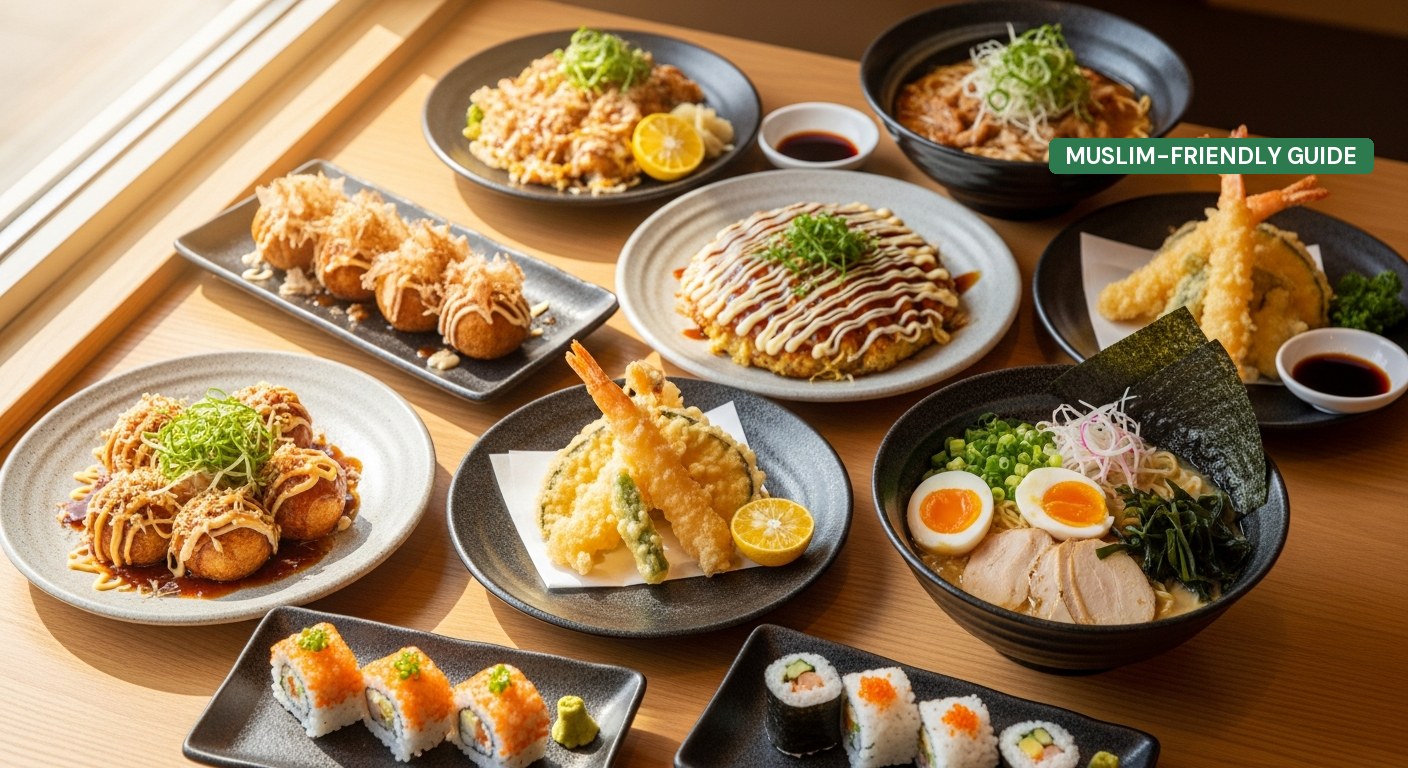
Looking for halal food in Dotonbori, Osaka? You’ll find at least three verified Muslim-friendly and halal-certified spots right on the strip — covering okonomiyaki, wagyu ramen, and Indonesian Padang. Whether you’re a solo traveler or a family, check our Osaka halal guide for the full city picture before you head out.
MICHI’s Pick — Selected by our Osaka-based team, based on places we’ve visited and on research using Tabelog and Google Maps ratings. In Japan, a Tabelog score of 3.4+ is genuinely high — Japanese reviewers are famously strict, and most locals consider anything above 3.4 a place worth a detour. We feature venues meeting at least one of: Tabelog 3.4+, Google Maps 4.3+, or 100+ reviews — the kind of spots locals quietly trust.
Tabelog and Google Maps scores are accurate as of the time of writing.
1. CHIBO Diversity Dotonbori
The most famous okonomiyaki chain in Japan runs a dedicated Muslim-friendly floor right on Dotonbori’s main street — a separate kitchen, brand-new teppan grills, halal-certified meat, and a prayer room, all under one roof.
- ☪️ Halal status: Muslim-friendly
- 🍳 Must-order: Chiboyaki — beef, shrimp, scallop & squid okonomiyaki (¥2,200~)
- 📍 Access: Namba Station (5 min walk)
- 🕒 Hours: 12:00–21:00 (Open daily)
- 📞 Reservation: Recommended
- 🧎 Prayer room: Available on-site
- 🍷 Alcohol served: No
- 🗣 English menu: Yes
- ⭐ Rating: Google 4.0 (500+ reviews) (as of writing)
- 🗺 View on Google Maps
- 🔗 Source: groovyjapan.com
What to order: The Chiboyaki is the signature — a thick, teppan-grilled savoury pancake loaded with halal beef, shrimp, scallop, and squid, cooked tableside using Muslim-friendly seasonings and a dedicated halal teppan. Portions are generous enough to share between two people, making it excellent value for families.
2. Halal Wagyu & Vegan Ramen Gyumon Osaka Dotonbori
A halal-certified ramen shop steps from the Glico sign, serving A5 wagyu beef bowls with adjustable spice levels from 1 to 10 — one of the very few halal ramen spots physically inside Dotonbori.
- ☪️ Halal status: halal-certified
- 🍜 Must-order: Spicy Wagyu Ramen (¥1,980~)
- 📍 Access: Namba Station (5 min walk)
- 🕒 Hours: 12:00–23:00 (Open daily)
- 📞 Reservation: Not needed
- 🧎 Prayer room: Available on-site
- 🍷 Alcohol served: No
- 🗣 English menu: Yes
- ⭐ Rating: Google 4.2 (400+ reviews) (as of writing)
- 🗺 View on Google Maps
- 🔗 Source: groovyjapan.com
What to order: The Spicy Wagyu Ramen arrives with tender slices of A5 halal wagyu in a rich bone broth — choose your spice level honestly, as level 5 and above is genuinely hot. If you’re visiting with non-meat eaters, the vegan ramen uses a separate vegetable-based broth and is equally well-regarded. To explore more of Dotonbori after your bowl, the Glico sign is literally one minute away.
3. Matahari Padang Dotonbori Halal
An Indonesian-run Padang restaurant on the 5th floor of the Zelkova Tre building, serving rich rendang, sambal dishes, and nasi padang spreads — a full halal Southeast Asian meal in the heart of Osaka’s tourist centre.
- ☪️ Halal status: Muslim-friendly
- 🍛 Must-order: Nasi Padang Set with Beef Rendang (¥1,500~)
- 📍 Access: Namba Station (5 min walk)
- 🕒 Hours: 11:30–22:00 (Closed: Monday)
- 📞 Reservation: Not needed
- 🧎 Prayer room: Nearby (5 min walk)
- 🍷 Alcohol served: No
- 🗣 English menu: Yes
- ⭐ Rating: Tabelog 3.05 / Google 4.6 (167 reviews) (as of writing)
- 🗺 View on Google Maps
- 🔗 Source: havehalalwilltravel.com
What to order: The Nasi Padang set is the move — a plate of steamed rice surrounded by small portions of beef rendang, ayam penyet (smashed fried chicken), and sambal, all cooked by Indonesian chefs using halal ingredients. The rendang in particular draws repeat visitors, and the high-floor view over the Dotonbori rooftops is a bonus. For more ideas on where to eat across the city, browse the best food in Osaka on MICHI.
Frequently Asked Questions
Q. Is it easy to find halal food in Dotonbori, Osaka?
Easier than you might expect. Dotonbori now has at least three dedicated halal or Muslim-friendly restaurants within a five-minute walk of each other, covering Japanese, ramen, and Indonesian cuisines. The density of options has grown significantly since 2022, and English menus are standard at all three spots above.
Q. What does “Muslim-friendly” mean in Japan?
In Japan, “Muslim-friendly” typically means a restaurant uses halal-certified meat and avoids pork and alcohol in its cooking, but may not hold formal certification from a recognised halal authority. It is a step below “halal-certified,” which requires third-party verification by a body such as the Japan Halal Foundation or Japan Muslim Association. When in doubt, ask staff directly about cross-contamination and sauce ingredients — most Dotonbori restaurants catering to Muslim diners are well-practised at answering these questions.
Q. Are there prayer rooms near halal restaurants in Dotonbori?
Yes. CHIBO Diversity and Gyumon Ramen both have prayer rooms on-site, including wudu facilities. Namba City shopping mall (a 5–7 minute walk from Dotonbori) also has a prayer room available via the information counter — useful if you’re between restaurants or shopping.
Q. What hidden ingredients should Muslim travelers watch out for in Japan?
The most common pitfalls are mirin (sweet rice wine used in sauces and glazes), sake (used in marinades and broths), and dashi stock made from pork bones or bonito (dried fish). Even dishes that appear pork-free may use these as base flavourings. At the restaurants listed above, these ingredients are specifically excluded from the halal menu — but at general restaurants in Dotonbori, always ask about the broth base and sauce ingredients before ordering.
Last updated: July 7, 2026 · Corrections: [email protected]