Last updated: July 3, 2026
This article reflects information available at the time of writing. Check Google Maps for the latest hours and availability.
Introduction
Horie has always punched above its weight for a neighbourhood this compact. The streets between Yotsubashi and Nishi-Ohashi are lined with independent boutiques, design studios, and — if you know where to look — some of the most serious pastry work in Osaka. This isn’t the tourist-facing sugar rush of Dotonbori. The sweets scene here is quieter, more considered, and built for people who actually care what goes into a canelé.
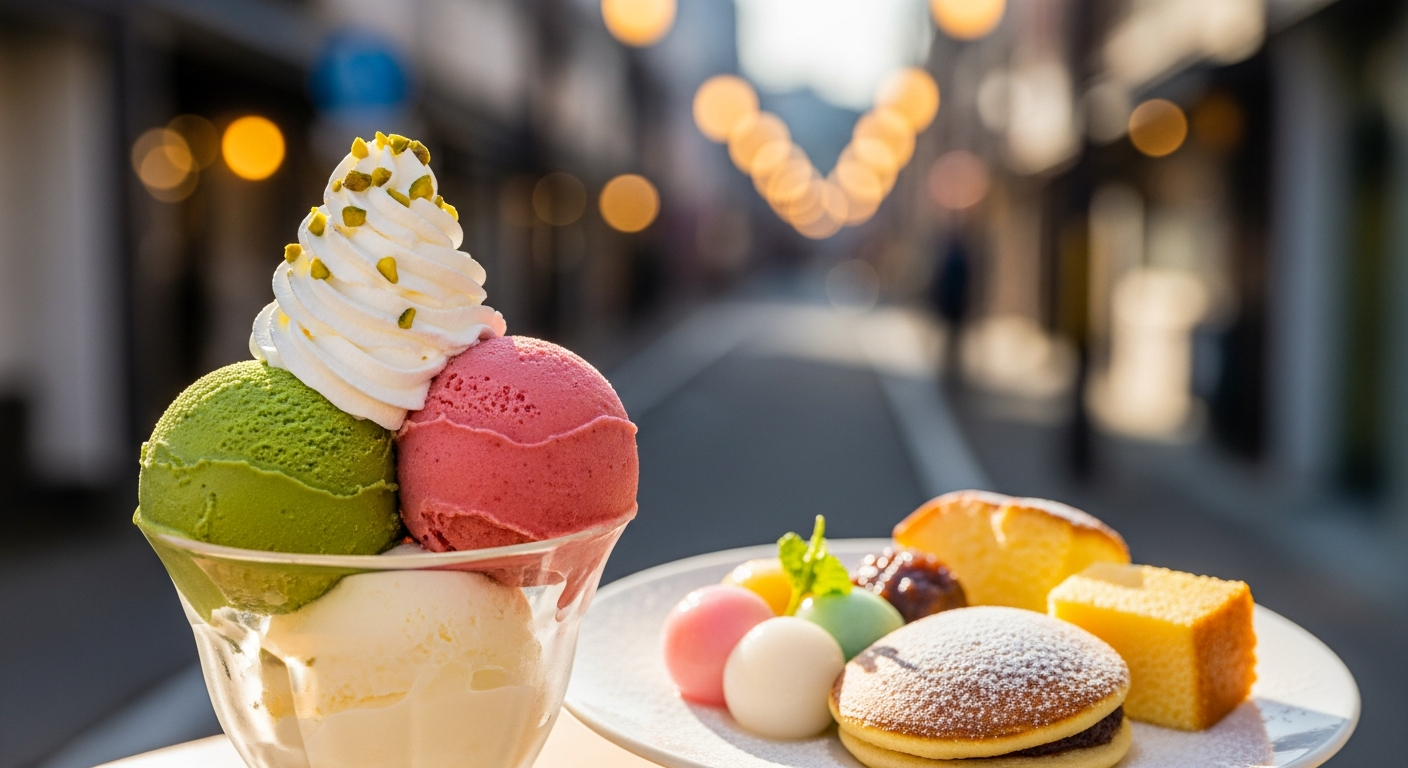
The range is genuinely wide. You’ll find a Tabelog Sweets West 100-listed patisserie doing precise French cakes with seasonal Japanese ingredients, a soft-serve counter that locals treat like a neighbourhood institution, a kakigori stand tucked inside a 400-year-old temple garden, and a chocolatier-patisserie hybrid that fills its choux to order. If you’re building a day around the best food in Osaka, Horie’s sweets circuit is worth a dedicated afternoon.
Most shops here are small — four seats, maybe six — and several close early or sell out before closing time. Weekday visits are almost always easier. This guide covers seven spots across North and South Horie, from a ¥390 soft-serve to a ¥620 signature chocolate cake. To explore more of Horie beyond sweets, the neighbourhood rewards slow walking in every direction.
1. Patisserie Rechercher (パティスリー ルシェルシェ)
- 📍 Mignon Minami-Horie 1F, 3-9-28 Minami-Horie, Nishi-ku, Osaka
- 🕐 11:00–19:00 (eat-in last order 17:30); closed Mon & Tue, plus occasional irregular closures (as of May 2026)
- 💰 ¥600–¥1,500 per person (food only) / ¥1,000–¥2,000 (with drinks)
- 🚃 Nishinagahori Station (3 min walk)
- 🗺 Open in Google Maps
- 📋 Tabelog
- 🌐 Official site
What to order: Prince Noir chocolate cake (¥620) / Canelé (¥280)
Three consecutive years on Tabelog’s Sweets West 100 list, and the cakes still justify the reputation. The owner-chef trained under the late Nakatani-tei — one of Osaka’s most respected patisseries — and the precision shows in every layer. The Prince Noir is the one to get: a dense, tonka-bean-scented chocolate mousse built in tight, deliberate strata. The small eat-in counter (four seats) means you can have it plated properly with a coffee, which is the right way to do it.
2. LE PINEAU (ル・ピノー) Kitahorie Honten
- 📍 2-4-12 Kita-Horie, Nishi-ku, Osaka
- 🕐 Cafe: 9:00–20:00; closed New Year’s Day only (as of May 2026)
- 💰 ¥500–¥1,200 per person (food only) / ¥900–¥1,800 (with drinks)
- 🚃 Yotsubashi Station (3 min walk)
- 🗺 Open in Google Maps
- 📋 Tabelog
- 🌐 Official site
What to order: Strawberry tart (¥460) / seasonal gelato (from ¥400)
The setup here is clever: secure a seat in the attached cafe first, then walk next door to the patisserie counter and pick your cake — the bill comes back to the cafe. LE PINEAU has been a Tabelog Sweets 100 fixture and the strawberry tart is the crowd favourite, loaded with fruit over a clean, not-too-sweet cream. The gelato range rotates seasonally and is worth checking on their Instagram before you visit.
3. GUFO (グーフォ)
- 📍 1-16-3 Kita-Horie, Nishi-ku, Osaka
- 🕐 12:00–19:00 (hours vary; check Instagram before visiting) (as of May 2026)
- 💰 ¥390–¥700 per person
- 🚃 Yotsubashi Station (5 min walk)
- 🗺 Open in Google Maps
- 📋 Tabelog
What to order: Milk soft-serve (¥390) / Cream soda (¥570)
GUFO is the kind of soft-serve counter that earns Tabelog Sweets 100 status without any fuss — no elaborate toppings, no Instagram gimmicks, just exceptionally clean milk soft-serve at ¥390. The shop is small and often full inside, so most people take their cone to go and eat it on the street. The seasonal cream soda is worth ordering if you’re visiting in summer: lemon-spiked, cold, and genuinely refreshing.
4. Patisserie face (パティスリーフェス)
- 📍 4-31-22 Minami-Horie, Nishi-ku, Osaka
- 🕐 10:00–20:00; irregular holidays (as of May 2026)
- 💰 ¥420–¥600 per person
- 🚃 Dome-mae Chiyozaki Station (6 min walk)
- 🗺 Open in Google Maps
- 📋 Tabelog
What to order: Fraisier (¥450) / Gateau Fraise (¥420)
Chef MASAKI trained at the Rihga Royal Hotel before opening this compact patisserie at the southern edge of Horie. The cakes are colourful and technically confident — the fraisier pairs pistachio sponge with fresh strawberries in a way that’s restrained rather than showy. Prices are fair for the quality, and the display case changes regularly enough that repeat visits make sense.
5. Patisserie Chocolaterie Ordinaire (パティスリー ショコラトリー オーディネール)
- 📍 Faveur Minami-Horie 1F, 2-4-16 Minami-Horie, Nishi-ku, Osaka
- 🕐 11:00–20:00; closed Mon (as of May 2026)
- 💰 ¥300–¥800 per person
- 🚃 Nishi-Ohashi Station (3 min walk)
- 🗺 Open in Google Maps
- 📋 Tabelog
What to order: Choux cream (¥300) / seasonal entremets (¥550–¥700)
The choux here is filled to order — the pastry shell stays crisp, the custard inside is rich without being cloying, and at ¥300 it’s one of the better-value bites in the neighbourhood. The shop also does serious chocolate work alongside its cake range, so if you’re after a box of bonbons to take home, this is the place. The Orange Street location means it’s easy to fold into a longer Horie walk.
6. Naniwa Hyoshitsu (浪花氷室)
- 📍 1-11-3 Kita-Horie, Nishi-ku, Osaka
- 🕐 Seasonal hours; typically open afternoons in summer; closed on rainy days (as of May 2026)
- 💰 ¥200–¥500 per person
- 🚃 Yotsubashi Station (5 min walk)
- 🗺 Open in Google Maps
- 📋 Tabelog
What to order: Matcha kakigori with condensed milk (¥350–¥450)
A tiny storefront in North Horie doing old-school kakigori — fluffy shaved ice in classic flavours like strawberry, melon, matcha, and blue hawaii, all at prices that won’t hurt. There’s no seating, so you eat standing on the pavement or find a nearby bench. The shop closes on rainy days, which is either charming or inconvenient depending on your plans. Check their Instagram the morning of your visit.
7. Chaniwa at Manpukuji Temple (茶庭 at 万福寺)
- 📍 1-14-23 Minami-Horie, Nishi-ku, Osaka (inside Manpukuji Temple grounds)
- 🕐 Varies seasonally; typically 11:00–17:00 (as of May 2026)
- 💰 ¥1,000–¥2,000 per person (food only)
- 🚃 Sakuragawa Station (7 min walk)
- 🗺 Open in Google Maps
- 📋 Tabelog
- 🌐 Official site
What to order: Seasonal kakigori or cake set (¥1,000–¥2,000); cash only
Chaniwa sits inside the grounds of Manpukuji, a Buddhist temple with at least 400 years of history, directly across from Horie Park. The cafe serves teas, coffees, cakes, and seasonal kakigori year-round against a backdrop of manicured greenery and traditional latticed architecture. It’s the most atmospheric stop on this list — and the most unusual. Come prepared with cash, as cards are not accepted, and check the official site for current seasonal hours before making the trip.
How to Order
Most sweets shops in Horie are small, counter-style operations. A few practical things to know before you go:
- Arrive early. Patisseries like Rechercher and LE PINEAU sell out of popular items — especially on weekends. By 3pm on a Saturday, the best cakes are often gone. Aim for opening time or shortly after.
- Eat-in vs. takeaway. Several shops (Rechercher, LE PINEAU’s cafe) have a small number of eat-in seats. These fill quickly. If you want to sit down, go on a weekday or arrive right at opening.
- Cash at Chaniwa. Manpukuji’s Chaniwa is cash-only. Every other shop on this list accepts IC cards or major credit cards, but confirm at the counter if you’re unsure.
- Seasonal menus. Horie patisseries rotate their cakes frequently — sometimes weekly. The dishes listed here are reliable signatures, but seasonal specials come and go. Check each shop’s Instagram the day before for the current lineup.
- No double-dipping on seats. At LE PINEAU, you secure your cafe seat first, then choose your cake from the adjacent shop. Don’t browse the cake counter before sitting down — the staff will direct you.
- Rainy days. Naniwa Hyoshitsu closes when it rains. Plan accordingly.
FAQ
Q: Is the sweets scene in Horie expensive?
A: Not particularly. You can eat very well for ¥400–¥700 per item at most shops. The soft-serve at GUFO starts at ¥390, kakigori at Naniwa Hyoshitsu runs ¥200–¥500, and even the most serious patisserie cakes at Rechercher top out around ¥700. A full afternoon of sweets-hopping — two or three stops — typically costs ¥1,500–¥2,500 per person.
Q: Do sweets shops in Horie have English menus?
A: Most don’t have printed English menus, but the display cases do the work for you — you point, they package. Prices are clearly marked. Google Translate’s camera function handles any written descriptions. Staff at most shops are accustomed to non-Japanese-speaking customers and will manage fine.
Q: When is the best time to visit?
A: Weekday afternoons between 12:00 and 15:00 are the sweet spot — shops are stocked, seats are available, and the neighbourhood is calm. Weekend mornings work too if you arrive close to opening time. Avoid Saturday afternoons: popular items sell out, and the small eat-in spaces fill up fast. For kakigori at Naniwa Hyoshitsu, summer weekday afternoons are ideal — and always check the weather first.
Information is accurate as of May 2026. We recommend checking Google Maps for the latest hours and prices before visiting.