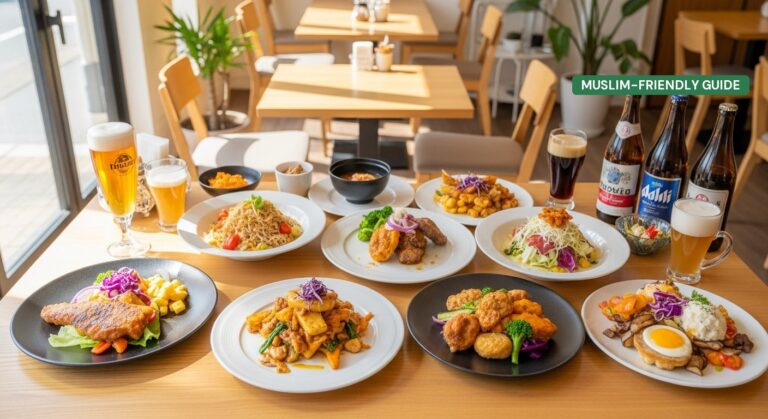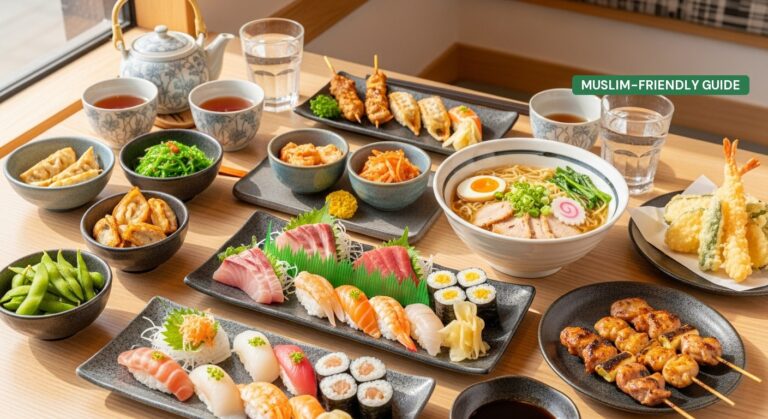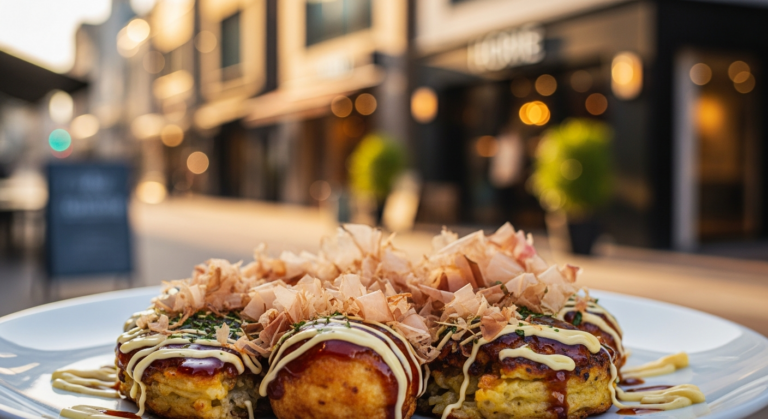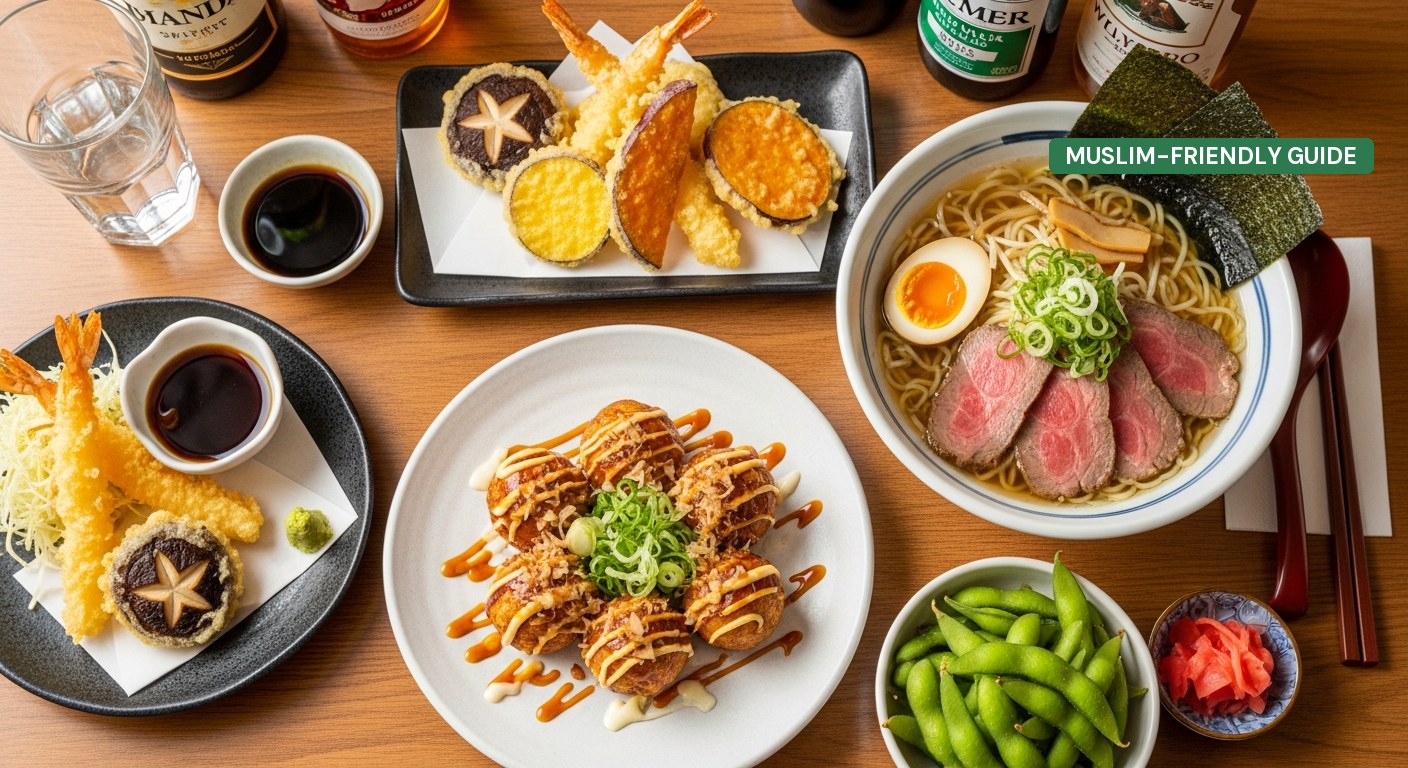
Looking for halal food in Horie, Osaka? This calm, design-forward neighbourhood west of Shinsaibashi has three verified Muslim-friendly and halal-certified spots — a Persian grill, a Turkish café with an on-site prayer room, and a Japanese all-you-can-eat sushi and crab restaurant. Ideal for couples, families, and solo travellers who want variety without heading to Namba. Check our Osaka halal guide for the wider city picture.
MICHI’s Pick — Selected by our Osaka-based team, based on places we’ve visited and on research using Tabelog and Google Maps ratings. In Japan, a Tabelog score of 3.4+ is genuinely high — Japanese reviewers are famously strict, and most locals consider anything above 3.4 a place worth a detour. We feature venues meeting at least one of: Tabelog 3.4+, Google Maps 4.3+, or 100+ reviews — the kind of spots locals quietly trust.
Tabelog and Google Maps scores are accurate as of the time of writing.
1. HAFEZ Persian Restaurant
The only Iranian-run restaurant in Horie, where the Muslim owner personally confirms halal status for every table — a rare level of transparency in Osaka’s dining scene.
- ☪️ Halal status: Muslim-friendly
- 🍢 Must-order: Koobideh Kebab with basmati rice (¥1,800)
- 📍 Access: Yotsubashi Station (4 min walk)
- 🕒 Hours: 11:00–23:00 (Open daily)
- 📞 Reservation: Not needed
- 🧎 Prayer room: None
- 🍷 Alcohol served: Yes
- 🗣 English menu: Yes
- ⭐ Rating: Google 4.3 (681 reviews) (as of writing)
- 🗺 View on Google Maps
- 🔗 Source: halalfoodinjapan.com
What to order: The koobideh kebab — ground lamb and beef on a skewer, served over fluffy basmati rice — is the dish reviewers return for. The owner, Ali, is known for making sure Muslim diners know exactly what is and isn’t halal on the menu, so ask freely.
—
2. Mezze Horie Turkish Cafe & Restaurant
The most comprehensively Muslim-friendly venue in Horie: halal-certified kitchen, prayer space on-site, qibla marker, and a Muslim owner-chef who trained in Turkey.
- ☪️ Halal status: halal-certified
- 🥙 Must-order: Charcoal-grilled chicken kebab set (¥1,500)
- 📍 Access: Yotsubashi Station (4 min walk)
- 🕒 Hours: Lunch 11:30–14:30 / Dinner 17:30–22:00 (Closed: check official site)
- 📞 Reservation: Recommended
- 🧎 Prayer room: Available on-site
- 🍷 Alcohol served: Yes
- 🗣 English menu: Limited
- ⭐ Rating: Tabelog 3.30 / Google 4.6 (26 reviews) (as of writing)
- 🗺 View on Google Maps
- 🔗 Source: muslim-guide.jp
What to order: The charcoal-grilled kebab, cooked live at the counter, is the centrepiece — chicken, lamb, and beef skewers prepared with halal-only utensils in a dedicated kitchen. Finish with the semolina pudding or stretchy Turkish ice cream for a proper Anatolian send-off.
—
3. FUJIYAMA TOKYO Kitahorie
A Japanese all-you-can-eat sushi and snow crab restaurant that offers a fully halal-certified course — rare in Osaka — using halal soy sauce, halal vinegared rice, and a dedicated preparation area kept separate from the regular kitchen.
- ☪️ Halal status: Muslim-friendly
- 🍣 Must-order: Halal all-you-can-eat sushi & snow crab course (from ¥5,500)
- 📍 Access: Yotsubashi Station (5 min walk)
- 🕒 Hours: 11:30–22:00 (Open daily)
- 📞 Reservation: Required
- 🧎 Prayer room: None
- 🍷 Alcohol served: Yes
- 🗣 English menu: Yes
- 🗺 View on Google Maps
- 🔗 Source: matcha-jp.com
What to order: Book the halal course in advance — it includes premium nigiri, snow crab, and fresh seafood, all prepared with halal-certified seasonings. If you want to explore the best food in Osaka beyond the usual tourist trail, this is one of the few places where Muslims can eat high-quality Japanese sushi without compromise.
—
Frequently Asked Questions
Q. Is it easy to find halal food in Horie, Osaka?
Horie is quieter than Namba and has fewer restaurants overall, but the three venues above are all within a short walk of Yotsubashi Station. Mezze Horie is the most self-contained option for observant Muslims, with a prayer room and halal-certified kitchen on-site. Explore more of Horie to plan your full day in the neighbourhood.
Q. What does “Muslim-friendly” mean in Japan?
In Japan, “Muslim-friendly” typically means a restaurant has removed pork and lard from the relevant dishes and may use halal-certified meat, but it does not necessarily mean the kitchen is fully halal-certified or that alcohol is absent from the premises. Always confirm with staff if cross-contamination is a concern. “Halal-certified” (as at Mezze Horie) means a recognised certifying body has audited the kitchen and ingredients.
Q. Are there prayer rooms near halal restaurants in Horie?
Mezze Horie Turkish Cafe & Restaurant has a prayer room, prayer items for loan, and a qibla marker directly on-site — the most convenient option in the area. The nearest mosque is Osaka Masjid (大阪マスジド) in Namba, approximately 15 minutes on foot or one stop by subway from Yotsubashi Station.
Q. What hidden ingredients should Muslim travelers watch out for in Japan?
The most common hidden issues are mirin (sweet rice wine used in sauces and glazes), sake (used in marinades and soups), and dashi stock made from bonito (dried fish). Even dishes that appear meat-free — like miso soup or ramen broth — often contain these. At the restaurants above, ask staff specifically about dashi and cooking wine; at halal-certified venues like Mezze Horie, these ingredients are already excluded.
Last updated: July 4, 2026 · Corrections: [email protected]