Last updated: July 3, 2026
This article reflects information available at the time of writing. Check Google Maps for the latest hours and availability.
Introduction
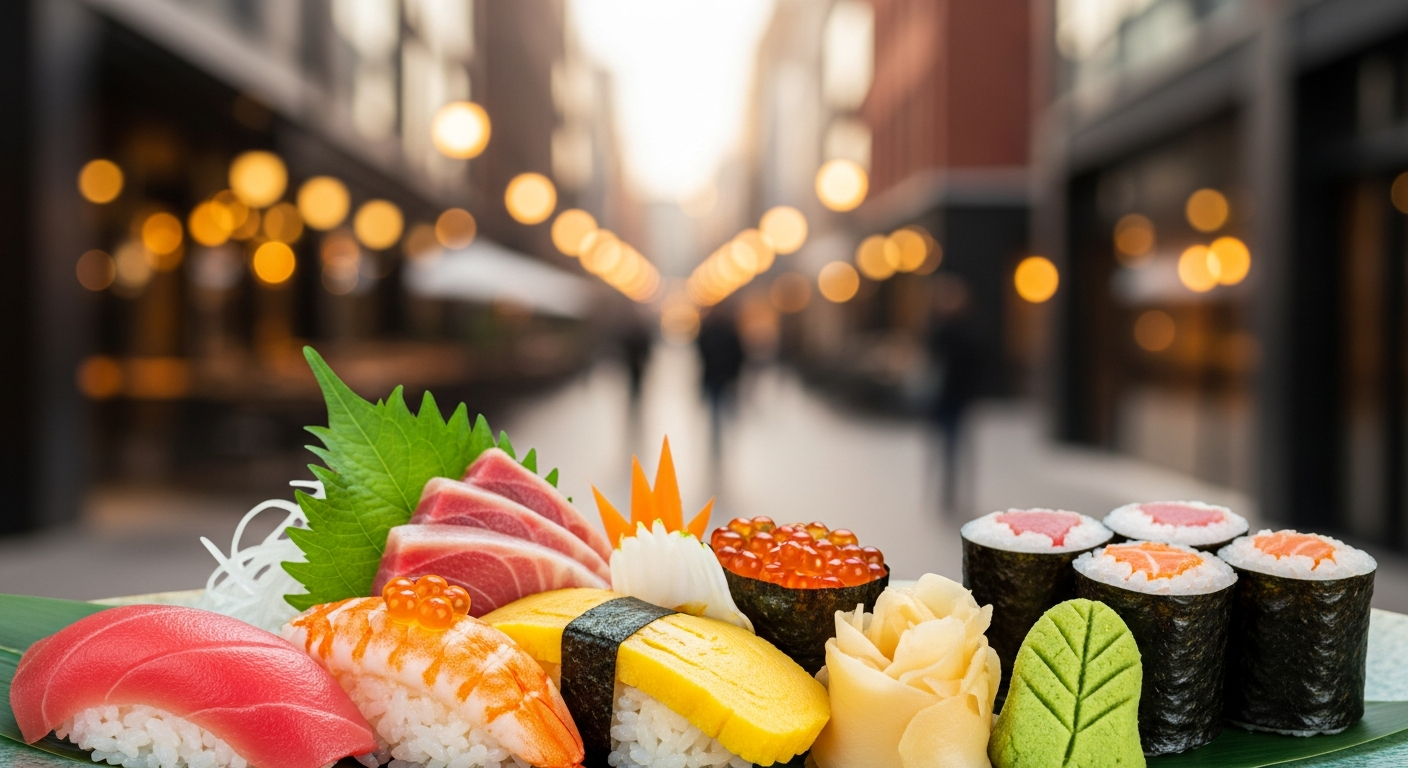
Horie has a split personality. On one side: concept stores, vintage boutiques, and the kind of coffee shops where the barista has a tattoo sleeve and a strong opinion about single-origin beans. On the other: a handful of serious sushi counters that have been quietly doing their thing for years, completely unbothered by the neighbourhood’s fashion credentials. That contrast is exactly what makes eating sushi here feel different from doing it in Namba or Shinsaibashi.
The counters in this part of Osaka’s Nishi-ku tend to be small — six to ten seats, chef-owner operations, no theatrics. You’re not paying for a famous address or a Michelin plaque on the door. You’re paying for fish sourced from the Seto Inland Sea, rice seasoned with red vinegar, and a chef who has been doing this for decades. If you want to find the best food in Osaka, Horie’s sushi scene is one of the most underrated places to start looking.
This guide covers three counters within easy walking distance of Yotsubashi and Nishiohashi stations — one that opened in 2024 with a serious omakase pedigree, one that has been a neighbourhood anchor for years, and one that keeps things casual enough for a Tuesday night without a reservation. All three are the real thing. None of them are on the tourist trail. Come hungry, and explore more of Horie before or after — the neighbourhood rewards wandering.
1. Sushi Etsu (鮨 悦)
- 📍 1-2-16 Kitahorie, Nishi-ku, Osaka (2F, Okini Saita Saita Building)
- 🕐 Dinner only: Tuesday–Sunday 18:00–23:00, closed Monday (as of May 2026)
- 💰 ¥15,000–¥20,000 per person (omakase course, food only)
- 🚃 Yotsubashi Station (2 min walk)
- 🗺 Open in Google Maps
- 📋 Tabelog
What to order: Omakase course (¥15,000–¥18,000)
Chef Kajitani spent twenty years running a fish-forward kappo restaurant before pivoting to sushi in 2024 — and that background shows. The menu is three omakase courses only, spotlighting not just tuna and the usual suspects but lesser-known fish that rarely make it onto a sushi counter. The rice changes seasoning depending on the topping, and the sake list leans toward natural and regional labels. Book ahead — this one fills up fast.
2. Hontozushi Kaiba Kitahorie (本等鮨 海馬 北堀江本店)
- 📍 1-2-16 Kitahorie, Nishi-ku, Osaka
- 🕐 Lunch: 11:30–14:00; Dinner: 17:30–22:30; closed Wednesday (as of May 2026)
- 💰 ¥1,800–¥3,500 per person (lunch sets) / ¥5,000–¥8,000 per person (dinner course, food only)
- 🚃 Yotsubashi Station (4 min walk)
- 🗺 Open in Google Maps
- 📋 Tabelog
- 🌐 Official site
What to order: Omakase nigiri set — dinner course (¥5,000–¥8,000)
The counter seats around ten, with a table section further back — but the counter is where you want to be. The name comes from the two founders’ surnames — one character each — which tells you something about how seriously they take the place. The shari runs slightly firm, the fish is fresh, and the conversation flows easily. Lunch is genuinely good value: a sushi set with a charcoal-grilled rice bowl option for around ¥1,800. Dinner steps up considerably, with a proper course that includes sashimi, small plates, and a run of nigiri to finish.
3. Kitaro Zushi Minamihorie (喜多郎寿し 南堀江店)
- 📍 2-1-10 Minamihorie, Nishi-ku, Osaka (1F)
- 🕐 Dinner: 17:00–23:00 daily (as of May 2026)
- 💰 ¥2,500–¥5,000 per person (food only)
- 🚃 Nishiohashi Station (5 min walk) / Yotsubashi Station (7 min walk)
- 🗺 Open in Google Maps
- 📋 Tabelog
- 🌐 Official site
What to order: Omakase nigiri (chef’s selection, ¥2,500–¥3,500) or individual pieces from ¥200
Kitaro Zushi is a Osaka chain with genuine neighbourhood credibility — the Minamihorie branch is the one locals actually go to on a weeknight when they don’t want to think too hard about it. The room has 21 seats: nine at the counter and twelve at tables. The fish comes in daily from the market, the rice is compact and well-seasoned, and the staff are the kind of cheerful that doesn’t feel forced. It’s not a destination meal, but it’s a very good Tuesday. Walk-ins are usually fine on weeknights; weekends get busier. The MICHI Osaka travel guide recommends pairing this with a post-dinner walk through the Horie backstreets — the neighbourhood is at its best after dark.
How to Order
At counter sushi restaurants in Horie, the default is omakase — you leave the selection to the chef. At higher-end spots like Sushi Etsu, this is the only option. At Hontozushi Kaiba, you can also order à la carte at the counter if you prefer. At Kitaro Zushi, you can order individual pieces or go with the chef’s set.
A few practical notes. Reservations are strongly recommended at Sushi Etsu and for dinner at Hontozushi Kaiba — both fill up, especially on weekends. Kitaro Zushi Minamihorie takes walk-ins most nights. At omakase counters, it’s polite to mention any allergies or strong dislikes when you book, not when you sit down. Shellfish and sea urchin are common in Osaka-style courses; if either is a problem, say so in advance.
Payment: all three accept major credit cards, but confirm when booking. Tipping is not practised in Japan — a sincere “oishikatta desu” (it was delicious) at the end is the right move. Dress code is smart-casual at Sushi Etsu; the other two are relaxed.
FAQ
Q: Is sushi in Horie expensive?
A: It depends on where you go. Kitaro Zushi Minamihorie runs ¥2,500–¥5,000 per person for a solid dinner. Hontozushi Kaiba sits in the ¥5,000–¥8,000 range for a full dinner course. Sushi Etsu is the splurge option at ¥15,000–¥20,000 — comparable to a mid-tier omakase anywhere in Osaka. Lunch at Hontozushi Kaiba is the best value in the neighbourhood, with sets from around ¥1,800.
Q: Do sushi shops in Horie have English menus?
A: Not reliably. Kitaro Zushi has some English signage and staff who can manage basic communication. At Sushi Etsu and Hontozushi Kaiba, the experience is primarily in Japanese — but omakase counters are actually easier to navigate without language skills, since you’re not choosing from a menu. Google Translate’s camera mode handles any written menus well. Booking via a concierge service or through Tablecheck/Omakase can help if you want English-language support at the reservation stage.
Q: When is the best time to visit?
A: Weeknight dinners (Tuesday through Thursday) are the sweet spot across all three. Sushi Etsu and Hontozushi Kaiba are quieter and more relaxed mid-week, and you’re more likely to get a counter seat without a long lead time on reservations. Kitaro Zushi is busiest on Friday and Saturday evenings from around 19:00 — arrive before 18:30 or expect a short wait. Lunch at Hontozushi Kaiba is a reliable option any day except Wednesday.
Information is accurate as of May 2026. We recommend checking Google Maps for the latest hours and prices before visiting.