Last updated: August 14, 2026
Information changes — always confirm with the venue/source before relying on it.
Introduction
You’ve just landed at Kansai International Airport (KIX) — or you’re about to board — and the sushi counters lining the terminal are calling your name. For plant-based travelers, the question isn’t whether sushi can be vegan. It absolutely can. The real question is knowing which rolls and nigiri are safe, which hidden ingredients to watch for, and how to communicate your needs clearly at an airport where English menus are not always guaranteed.
KIX sits on a man-made island in Osaka Bay, and its dining scene reflects the broader Kansai food culture: rice-forward, deeply umami, and — if you know what to look for — surprisingly plant-friendly. The airport’s food court includes dedicated sushi venues such as Osaka Tenma Sushi Nishiya, alongside a wide range of other Japanese dining options. This guide walks you through the traditional plant-based sushi canon, the hidden animal ingredients that catch even experienced vegan travelers off guard, the Japanese phrases you need at the counter, and the best backup options when the sushi bar falls short. For a broader picture of eating plant-based in the region, start with our Osaka vegan guide.
Why Sushi Is — and Isn’t — Automatically Vegan
The primary ingredients of sushi are vegan: sushi rice (seasoned with rice vinegar and water) and nori sheets (100% seaweed). Whether a roll is vegan or not depends entirely on the fillings and toppings used. That’s the good news. The complication lies in the seasoning layers that most diners never see.
Traditional sushi rice is seasoned with a mixture of rice vinegar, sugar, and salt. However, some restaurants add mirin (sweet rice wine) or dashi (Japanese soup stock) to the rice, which may contain fish products. Always inquire about the ingredients used in the rice seasoning.
The crux of this culinary dilemma often lies in the widespread use of dashi, a broth made from bonito flakes that forms the flavor backbone of many Japanese dishes. This fish-based ingredient is frequently found even in dishes that may appear plant-based at first glance. At a busy airport sushi counter, the rice may be pre-seasoned in bulk, making it difficult to verify on the spot. The safest approach is to ask directly — and the section below gives you the exact phrases to do that.
Inari and vegetable sushi are usually fine, but the rice or pouches can be seasoned with dashi. Even condiments deserve scrutiny: some variants of ponzu sauce are not vegan, containing katsuobushi flakes (dried fish chips), while the basic version is made from soy sauce, mirin, rice vinegar, sugar, and lemon juice.
🔗 Source: eatingchoice.com
The Classic Plant-Based Sushi Lineup
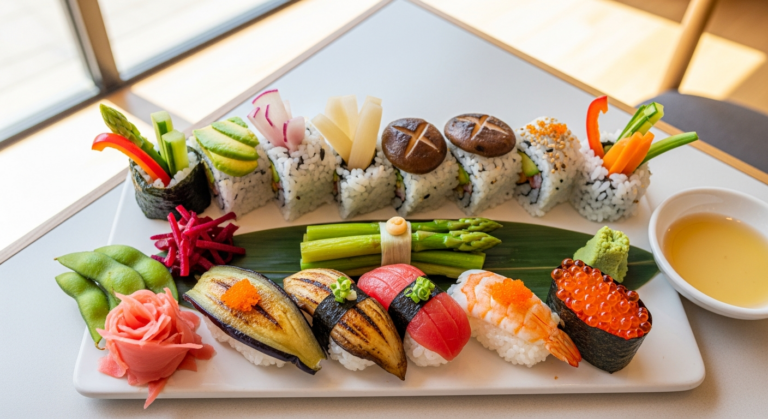
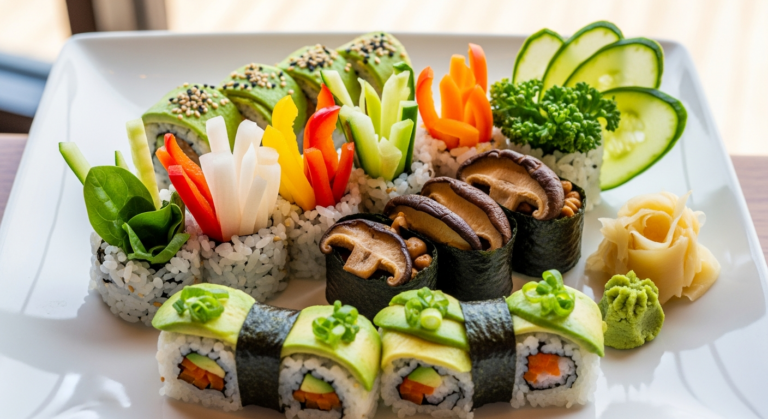
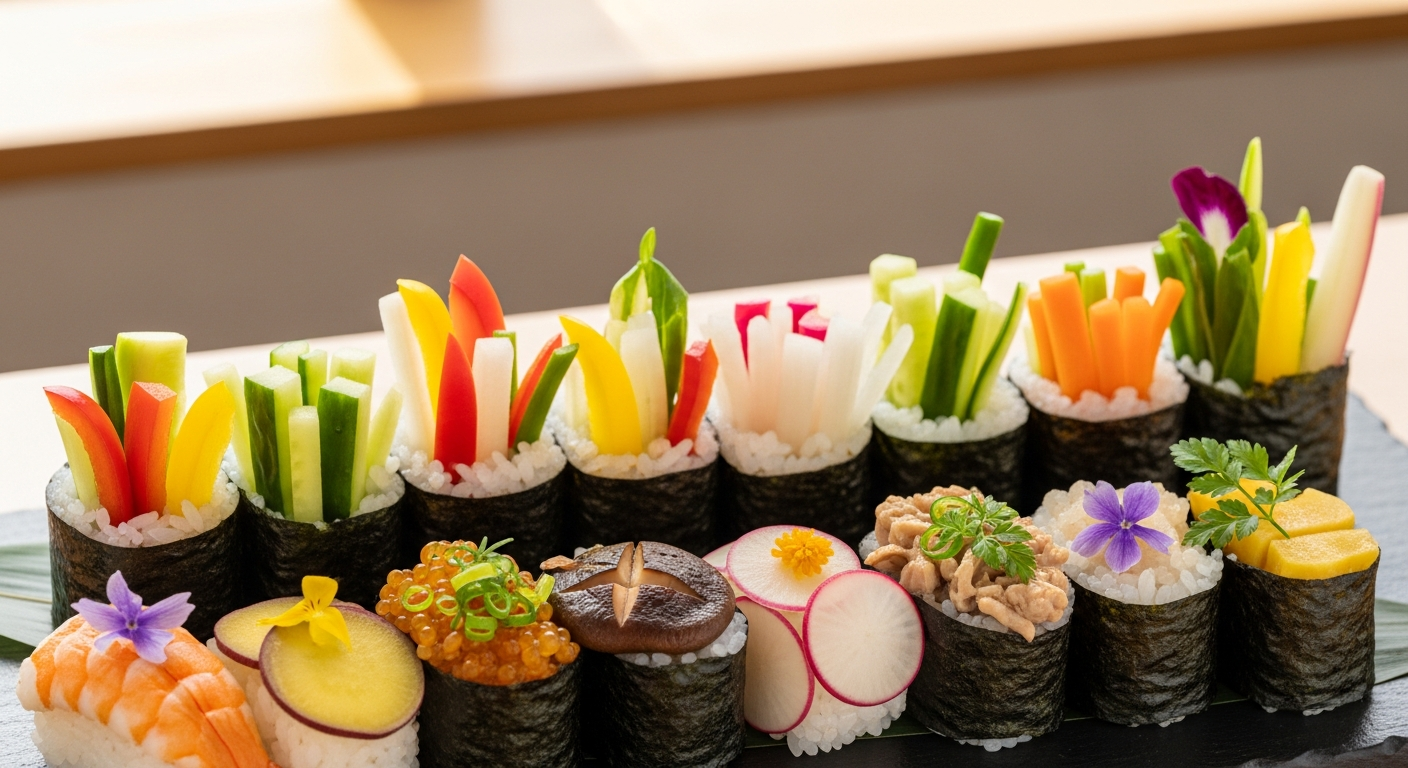
While sushi has long been associated with seafood, plant-based sushi is deeply rooted in tradition. Many classic sushi options, like kappa maki (cucumber rolls) and oshinko maki (pickled radish rolls), have always been vegetarian. At any sushi counter inside KIX — including the food-court venues — these are the rolls and nigiri most likely to be available and plant-based:
- Kappa maki — perhaps the simplest form of vegan sushi, the kappa maki includes fresh cucumber, making it an ideal palate cleanser.
- Oshinko / takuan maki — the pickled vegetables in shinko maki allow for great variety in taste and texture. Particularly popular is takuan maki, which includes pickled radish for extra crunch and tanginess.
- Kampyo maki — pickled strips of calabash (bottle gourd) have a salty-sweet flavour and are believed to aid digestion, making them a popular choice for finishing a meal. Ask the chef to confirm the simmering liquid uses kombu dashi rather than fish dashi.
- Ume-shiso maki — ume paste (made from Japanese pickled plums), shiso (Japanese mint), and sweet cucumber combine to make a light and refreshing maki-zushi choice.
- Inari sushi — traditional Japanese sushi made by filling inari tofu pockets (seasoned aburaage) with sushi rice. However, some traditional recipes use dashi to simmer the tofu pouches, and this broth sometimes contains katsuobushi (bonito flakes), a fish-derived ingredient. Always confirm the simmering liquid.
- Avocado roll — widely available at airport sushi counters and naturally plant-based when no mayonnaise is added.
- Natto maki — fermented soybean roll; this hand-rolled sushi is less tightly compressed than maki-zushi, meaning the rice retains its fluffy texture, which works well with the fermented soybean (natto) filling. Natto itself is fully vegan.
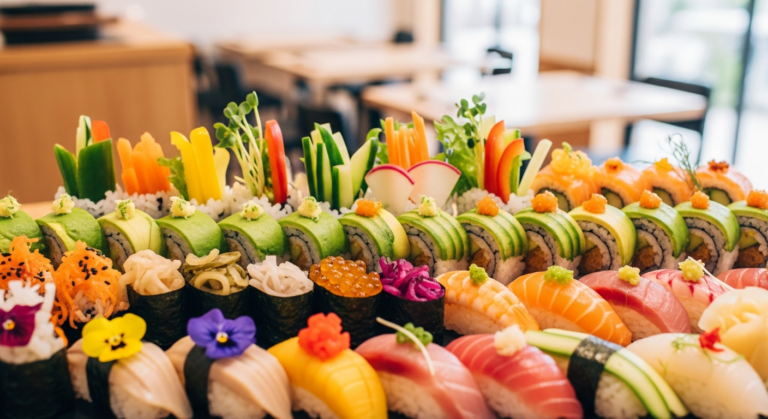
Modern sushi chefs have expanded on these simple creations, introducing innovative vegan alternatives that feature bold flavors and textures, often using fresh vegetables, fruits, and plant-based proteins. At airport venues, however, expect the traditional lineup rather than creative fusion rolls.
🔗 Source: kurukurusushihawaii.com
Hidden Animal Ingredients to Watch For at KIX
Airport sushi counters operate at speed. Sauces are pre-made, rice is seasoned in large batches, and staff may not have detailed ingredient knowledge on hand. These are the specific traps that catch plant-based travelers at Japanese sushi venues:
- Dashi in the rice — dashi, a traditional fish-based broth, appears in almost every soup, sauce, rice dish, and even salad dressing. Even when a dish looks entirely plant-based, dashi often finds its way in.
- Dashi in inari pouches — some traditional recipes use dashi to simmer the tofu pouches, and this broth sometimes contains katsuobushi (bonito flakes), a fish-derived ingredient.
- Ponzu and dipping sauces — check whether the ponzu on the table contains katsuobushi. Plain soy sauce (shoyu) is the safer default.
- Seaweed salad (wakame) — seaweed salad is often dressed with non-vegan sauces.
- “Vegetable” sides — dashi hides in miso soup, ramen and udon/soba broth, simmered dishes (nimono), savory egg custard, tempura dipping sauce (tentsuyu), many “vegetable” sides, and countless sauces.
- Miso soup accompaniments — miso soup is a common breakfast in Japan, but it’s not usually vegan, thanks to the fish stock mixed in with the miso. Decline the soup unless the venue confirms it uses kombu dashi.
The fully plant-based version of dashi is kombu dashi (kelp only), sometimes with shiitake. Some vegan and shojin restaurants use it by default — but assume fish dashi everywhere else.
🔗 Source: besttokyo.co
What’s Actually at KIX: Sushi Venues and Plant-Based Alternatives
Kansai International Airport has a range of shops and restaurants across its terminals. As the airport is a gateway to Kyoto and other destinations across the Kansai region, dining options span multiple floors and both pre- and post-security areas.
The airport’s official dining directory lists several sushi-focused venues. Osaka Tenma Sushi Nishiya operates in the food court with freshly made sushi. Sushi Otaku is another counter listed in the terminal. Neither venue currently markets a dedicated vegan menu, so the approach here is to order from the traditional plant-based lineup (kappa maki, oshinko maki, inari) and confirm dashi use directly with staff.
For travelers who want a more reliable plant-based option, OnigiriBurger at the Kansai International Airport Main Branch began selling new items from its “For Veggie Lovers” series from July 2025, including a “Vegan tuna and deep-fried tofu” rice ball burger and a “Lotus root and burdock vegetable kinpira” rice ball burger. These are not sushi in the traditional sense, but they represent the airport’s most clearly labeled plant-based Japanese rice options.
KIX Airport Café Lounge NODOKA, open 24/7, is noted for vegan light meal options — useful for early-morning or late-night departures when the main sushi counters may be closed or operating on reduced menus.
If you have time before your flight, Rinku Town is one station from Kansai Airport on both the JR and Nankai lines and offers a broader range of dining options than the terminal itself. To plan your time in the area, explore more of Kansai Airport with our area guide.
🔗 Source: kansai-airport.or.jp
How to Ask in Japanese at the Sushi Counter
Although the Japanese use the word “vegetarian” (bejitarian), its meaning is rather looser than you might expect. It is not at all unusual for restaurants to offer vegetarian customers shellfish or meals including fish-based products like dashi or bonito flakes as a substitute. This means you need to be very specific when ordering food to avoid misunderstanding.
Use these phrases at any KIX sushi counter. Showing the Japanese text on your phone screen is often more effective than speaking, especially in a noisy terminal environment.
| Situation | Japanese | Romaji |
|---|---|---|
| I am vegan | 私はヴィーガンです | Watashi wa vīgan desu |
| I don’t eat meat or fish | 肉と魚は食べません | Niku to sakana wa tabemasen |
| No dashi, please | だしを使わないでください | Dashi o tsukawanaide kudasai |
| Does this contain fish? | これは魚が入っていますか? | Kore wa sakana ga haitte imasu ka? |
| Is there a vegetarian/vegan menu? | ビーガンのメニューはありますか? | Bīgan no menyu wa arimasu ka? |
| No meat, fish, eggs, or dairy please | 肉なし、魚なし、卵なし、乳製品なしでお願いします | Niku nashi, sakana nashi, tamago nashi, nyūseihin nashi de onegaishimasu |
Note that not all staff will understand the words “vegetarian” or “vegan” even in Japanese, as they are relatively new terms. To make sure you are understood, print some phrase cards or learn some of the phrases before you travel. The HappyCow app and the Google Translate camera function are both useful backup tools at the counter.
🔗 Source: visitjapan-vegetarian.com
Beyond the Sushi Counter: Plant-Based Backup Options at KIX
Even with the best preparation, a sushi counter may not be able to confirm its dashi situation on a busy travel day. These alternatives keep you fed without compromise, and they’re all available within the airport or one train stop away. For a deeper dive into what plant-based eating looks like across the city, browse the best food in Osaka on MICHI.
- Convenience store onigiri — FamilyMart, Lawson, and 7-Eleven all operate inside KIX. Look for plain rice balls (onigiri) filled with umeboshi (pickled plum) or kombu (kelp), both of which are plant-based. Check the ingredient label for katsuobushi, which occasionally appears in kombu-flavored fillings.
- OnigiriBurger “For Veggie Lovers” series — as demand for vegetarian-friendly airport cuisine spreads internationally, OnigiriBurger at KIX has developed dedicated plant-based menu items, making it one of the most clearly labeled options in the terminal.
- Edamame and plain rice sides — most Japanese restaurant counters in the terminal serve edamame as a side. Boiled edamame with salt is fully vegan and a reliable protein source between flights.
- Nana’s Green Tea — listed in the KIX dining directory, this chain offers matcha drinks and some plant-based snack items. Confirm individual items with staff, as some contain dairy.
- Café Lounge NODOKA — open 24/7 with a range of seating options, NODOKA is noted for vegan light meal options, making it a reliable fallback for early departures or late arrivals.
🔗 Source: visitjapan-vegetarian.com
Practical Tips for Vegan Travelers at Kansai Airport
- Screenshot the Japanese phrase table above before you land. Airport Wi-Fi can be slow at immigration, and having the text ready on your camera roll means you can show staff immediately without typing.
- Order kappa maki or oshinko maki first — these two rolls are the lowest-risk plant-based sushi at any KIX counter. Cucumber and pickled radish fillings rarely involve dashi, and the rice seasoning question is the only variable to confirm.
- Use HappyCow before you clear customs — search “KIX” or “Izumisano” on HappyCow while you still have mobile data. The app lists venues with vegan options available near the airport and in Rinku Town, one stop away on the Nankai or JR line.
- At inari sushi counters, ask specifically about the aburaage simmering liquid — some traditional recipes use dashi to simmer the tofu pouches, and this broth sometimes contains katsuobushi (bonito flakes). The phrase dashi o tsukawanaide kudasai (だしを使わないでください) is your key ask.
- Pick up a convenience store backup before going airside — once past security, food options narrow. Grab an umeboshi onigiri or a pack of plain edamame from the FamilyMart or Lawson in the arrivals/departures hall before you go through the gate.
- For a pre-flight meal with more options, head to Rinku Town — from Kansai Airport, Rinku Town is the first stop on both the JR and Nankai lines. The shopping and dining complex there offers a wider range of restaurants than the terminal, with more time to communicate dietary needs without a boarding gate deadline.
Last updated: August 14, 2026 · Corrections: [email protected]