Last updated: July 3, 2026
This article reflects information available at the time of writing. Check Google Maps for the latest hours and availability.
Introduction
Most visitors to Osaka never make it to Tanimachi. They stay on the Dotonbori–Shinsaibashi axis, eat their takoyaki, and leave. That’s their loss — and quietly, your gain. Tanimachi is the long, elevated ridge running south from Tenmabashi along the Uemachi Plateau, flanked by ancient temples, the Osaka Prefectural Government, and a neighbourhood that has been feeding office workers, priests, and serious eaters for decades without ever needing to advertise itself to tourists.
The area stretches from Tanimachi 1-chome near Tenmabashi down to Tanimachi 9-chome, with the most interesting eating concentrated around Tanimachi 4-chome and Tanimachi 6-chome. The latter bleeds into the Karahori shotengai — a covered shopping street lined with old machiya townhouses, independent cafés, and a handful of restaurants that have been quietly earning Tabelog and Michelin recognition for years. If you want to understand the best food in Osaka beyond the tourist circuit, this is where you start looking.
The range here is genuinely wide. You can spend ¥1,400 on a donburi that won a national prize, or ¥25,000 on one of the most technically ambitious tasting menus in western Japan. Between those poles: Michelin Bib Gourmand soba, a century-old udon shop reborn as a sake bar, a spice curry served in a retro kominka, and a chocolate atelier inside a 200-year-old kura. This guide covers all of it. Explore more of Tanimachi once you’ve eaten your way through the list.
1. Fujiya1935 (フジヤイチキュウサンゴ)
- 📍 4-4-9 Tanimachi, Chuo-ku, Osaka
- 🕐 Lunch: Fri–Sun 12:00–13:30 (last entry); Dinner: Wed–Sun 18:00–20:30 (last entry) (as of May 2026)
- 💰 ¥14,000–¥16,000 (lunch) / ¥25,000–¥30,000 (dinner, food only)
- 🚃 Sakaisuji-Hommachi Station (7 min walk) / Tanimachi 4-chome Station (8 min walk)
- 🗺 Open in Google Maps
- 📋 Tabelog
- 🌐 Official site
What to order: Seasonal omakase course (¥14,000 lunch / ¥25,000 dinner)
Chef Tetsuya Fujiwara trained under a neurosurgeon-turned-chef in Catalonia, and that background shows: every course at Fujiya1935 is engineered to trigger a specific sensory memory. The restaurant even has a waiting room designed to prime your senses before you sit down. This is Osaka’s most intellectually serious tasting menu, and it has held three Michelin stars. Book weeks ahead.
2. Sobakiri Gakku (そば切り 岳空)
- 📍 7-1-54 Tanimachi, Chuo-ku, Osaka
- 🕐 Lunch: Thu–Sat 11:30–14:00; Dinner: Thu–Sat 18:00–21:00. Closed Mon, Sun (as of May 2026)
- 💰 ¥3,000–¥4,000 (lunch) / ¥6,000–¥8,000 (dinner, food only)
- 🚃 Tanimachi 6-chome Station (4 min walk)
- 🗺 Open in Google Maps
- 📋 Tabelog
What to order: Zaru soba (¥1,500) or seasonal soba course (¥6,000+)
Gakku earned a Michelin Bib Gourmand in both the 2024 and 2025 Kyoto–Osaka guides, and made Tabelog’s Soba WEST Top 100 for 2025. The hand-cut buckwheat noodles are made fresh daily; the dipping broth is clean and precise. Dinner is a full soba course — a format that sounds austere until you’re actually sitting there, and then it makes complete sense. Closed Monday and Sunday, so plan accordingly.
3. Karahori Kinugawa (饂飩とお酒 からほり きぬ川)
- 📍 7-6-35 Tanimachi, Chuo-ku, Osaka (Karahori shotengai area)
- 🕐 Lunch: Wed–Sun 11:30–14:00; Dinner: Wed–Sun 17:30–22:00. Closed Mon, Tue (as of May 2026)
- 💰 ¥1,000–¥1,500 (lunch) / ¥2,000–¥4,000 (dinner with drinks)
- 🚃 Tanimachi 6-chome Station (5 min walk)
- 🗺 Open in Google Maps
- 📋 Tabelog
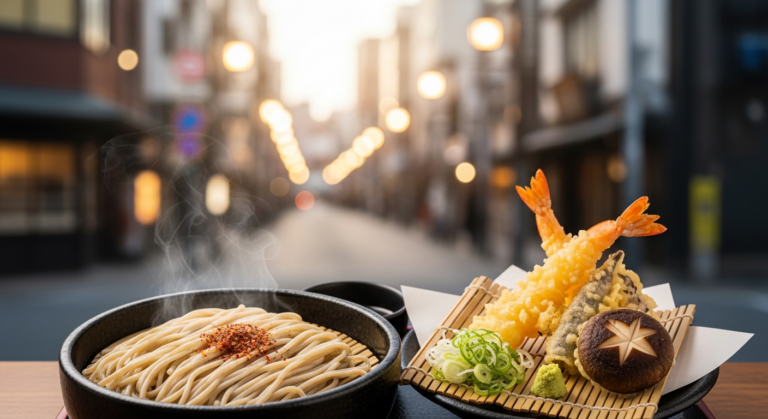
What to order: Tori-tama ten donburi set with mini udon (¥1,400) at lunch; cold kakeudon (¥1,200) at dinner
Formerly just “Kinugawa,” this udon shop rebranded to lean into its evening identity as a sake bar — hence the full name, which translates roughly as “Udon and Sake, Karahori Kinugawa.” It made Tabelog’s Udon WEST Top 100 in 2024, and the dashi broth is the reason: deeply savoury, clean, and built on quality kombu and bonito. At lunch it’s a neighbourhood canteen; at dinner, order cold udon alongside a carafe of sake and stay a while.
4. Ectura Karahori Kura (エクチュア からほり蔵 本店)
- 📍 6-17-43 Tanimachi, Chuo-ku, Osaka (inside Ren-LEN complex)
- 🕐 11:00–19:00 daily (check Instagram for irregular closures) (as of May 2026)
- 💰 ¥500–¥1,500 (café drinks and sweets) / ¥300–¥800 (takeaway chocolates)
- 🚃 Matsuyamachi Station (1 min walk) / Tanimachi 6-chome Station (5 min walk)
- 🗺 Open in Google Maps
- 📋 Tabelog
What to order: Tiramisu almond chocolate (¥220 per piece); hot chocolate drink (¥700)
Ectura is a Osaka-born chocolatier founded in 1986, and this flagship sits inside a 200-year-old kura (storehouse) that’s a registered tangible cultural property. The Ren-LEN complex it occupies — a cluster of renovated machiya townhouses in the Karahori neighbourhood — is worth the detour on its own. The tiramisu almond chocolates are the thing to buy as a souvenir; the hot chocolate is thick and serious. A good mid-afternoon stop between the soba and the udon.
5. Tanimachi Ichimizen (谷町一味禅)
- 📍 6-4-23 Tanimachi, Chuo-ku, Osaka
- 🕐 Lunch: Tue–Sun 11:30–14:30; Dinner: Tue–Sat 17:30–21:00. Closed Mon (as of May 2026)
- 💰 ¥1,200–¥1,600 (lunch) / ¥2,000–¥3,500 (dinner)
- 🚃 Tanimachi 6-chome Station (3 min walk)
- 🗺 Open in Google Maps
- 📋 Tabelog
What to order: Yokubari-don (¥1,400) — half tempura, half seafood donburi with red miso soup
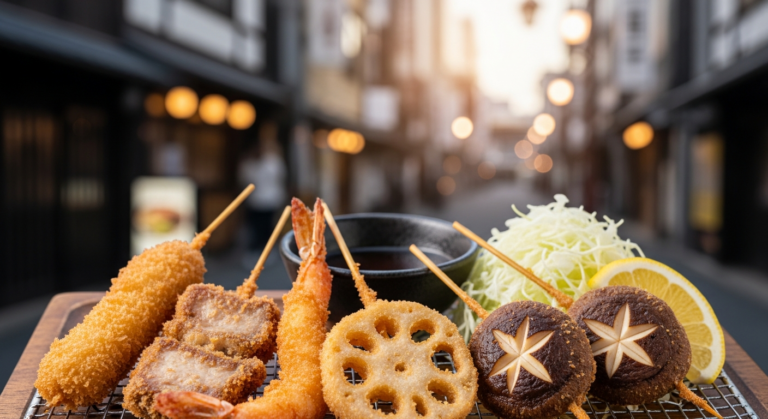
The yokubari-don — “greedy bowl” — is exactly what it sounds like: one half is a classic tendon with prawn, lotus root, and aubergine; the other half is a seafood rice bowl with negitoro, tuna, octopus, sea bream, and ikura. It won a national donburi grand prix gold award, and the 72-seat dining room fills up fast on weekends. The red miso soup with sea bream is not an afterthought. Come at 11:30 to avoid the queue.
6. Spice Curry Karahori (スパイスカレー からほり)
- 📍 6-4-23 Tanimachi, Chuo-ku, Osaka
- 🕐 Lunch: Wed–Sun 11:30–15:00 (sold out when it’s gone). Closed Mon, Tue (as of May 2026)
- 💰 ¥1,000–¥2,000 (lunch only)
- 🚃 Tanimachi 6-chome Station (3 min walk)
- 🗺 Open in Google Maps
- 📋 Tabelog
What to order: Chicken keema curry with clam dashi and squid ink (¥1,200–¥1,500)
This is the spice curry shop that made Tabelog’s Curry WEST Top 100 in 2024, operating out of a retro kominka in the Karahori neighbourhood. The signature chicken keema is built on a base of clam dashi and squid ink — an Osaka-inflected twist that gives the curry a depth you don’t find in the standard Minami spice curry circuit. The upstairs tatami room is the one to aim for. Arrive before noon on weekends; it sells out.
7. Sushi Yuden (鮨 遊電)
- 📍 9-chome, Tanimachi, Chuo-ku, Osaka (Uehommachi area)
- 🕐 Dinner only: Wed–Mon 18:00–22:00. Closed Tue (as of May 2026)
- 💰 ¥20,000–¥30,000 (omakase, food only)
- 🚃 Tanimachi 9-chome Station (5 min walk)
- 🗺 Open in Google Maps
- 📋 Tabelog
What to order: Omakase nigiri course (¥20,000+)
Chef Yuya Nishimura trained at Fukukizushi and then at Sushi Mizuki inside The Ritz-Carlton Kyoto before opening Yuden. He visits Kuromon Market every morning and sources his tuna directly from a Toyosu wholesaler he’s worked with since his apprenticeship. The Michelin Guide lists it as a Selected Restaurant in the Kyoto–Osaka edition. The style leans Osaka — white fish cured with kelp, emphasis on supreme freshness over aged complexity. Eight counter seats. Reserve well in advance.
8. Yakitori Matsuoka (焼鳥 松岡)
- 📍 Tanimachi, Chuo-ku, Osaka (near Tenmabashi)
- 🕐 Dinner: Tue–Sun 18:00–23:00. Closed Mon (as of May 2026)
- 💰 ¥18,000–¥22,000 (omakase course, food only)
- 🚃 Tenmabashi Station (5 min walk)
- 🗺 Open in Google Maps
- 📋 Tabelog
What to order: Yakitori omakase course (¥21,000)
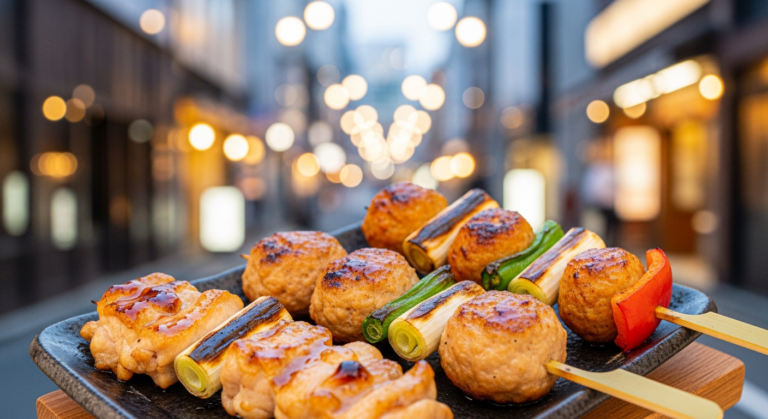
Self-taught chef Hiroki Matsuoka is one of the newer names on Tanimachi’s fine-dining map, and he’s already drawing serious attention. He ages his black Satsuma chicken before charcoal-grilling it, which gives the skewers a depth of flavour that most yakitori restaurants don’t bother chasing. The course format means you eat what he decides — which, given the technique on display, is the right call. This is yakitori as a full evening out, not a quick bite.
How to Order
Tanimachi’s dining scene splits cleanly into two modes: casual lunch spots where you walk in, point at a menu board, and pay at the counter; and reservation-only dinner restaurants where you book weeks ahead and commit to a set course. Know which you’re dealing with before you show up.
For the casual end — Ichimizen, Kinugawa, the spice curry shop — no Japanese is required. Most have picture menus or display cases. At Ichimizen, the yokubari-don is written in large characters on the wall; just point. At Kinugawa, the lunch set is usually a single daily option; nod and sit down.
For the fine-dining end — Fujiya1935, Sushi Yuden, Yakitori Matsuoka — reservations are essential and almost always require a credit card to hold. Use Tableall, Omakase, or the restaurant’s own website. Most of these restaurants have English-speaking staff or can communicate via email in English. Cancellation policies are strict; if you need to cancel, do it at least 48 hours ahead.
Sobakiri Gakku sits in the middle: no reservation needed for lunch, but the dinner course fills up fast. Arrive at opening or book via Hotpepper Gourmet. The menu is in Japanese only, but the staff are used to pointing at things.
Tipping is not practised in Japan. Service charges are sometimes added at higher-end restaurants — check when booking. Cash is still widely accepted, but all the restaurants listed here take major credit cards.
FAQ
Q: Is dining in Tanimachi, Osaka expensive?
A: It depends entirely on where you go. Lunch at Kinugawa or Ichimizen runs ¥1,200–¥1,600. The spice curry is ¥1,000–¥1,500. At the other end, Fujiya1935 is ¥25,000+ for dinner and Sushi Yuden is ¥20,000+. The area genuinely covers every budget — the trick is knowing which category you’re in before you arrive.
Q: Do restaurants in Tanimachi have English menus?
A: The casual lunch spots generally don’t, but picture menus and display cases make ordering manageable. Fine-dining restaurants like Fujiya1935 and Sushi Yuden typically have English-speaking staff or English course descriptions. Sobakiri Gakku is Japanese-only but the staff are patient. Google Translate’s camera function handles most situations.
Q: When is the best time to visit?
A: Weekday lunches are the sweet spot for the casual spots — shorter queues, more relaxed atmosphere. Ichimizen and the spice curry shop both sell out on weekend lunchtimes, so arrive by 11:30. For fine dining, evenings Thursday through Saturday are the most active; book at least two to four weeks ahead for Fujiya1935 and Sushi Yuden. The Karahori neighbourhood is particularly pleasant on weekend afternoons when the shotengai is busy but not overwhelming.
Q: How do I get to Tanimachi?
A: The Osaka Metro Tanimachi Line runs the length of the area. Tanimachi 4-chome Station (also on the Chuo Line) is the main hub for the northern cluster; Tanimachi 6-chome Station serves the Karahori neighbourhood; Tanimachi 9-chome Station covers the southern end near Sushi Yuden. Tenmabashi Station (Tanimachi Line and Keihan Line) is the northern gateway. All are within the central Osaka fare zone.
Information is accurate as of May 2026. We recommend checking Google Maps for the latest hours and prices before visiting.