Last updated: July 3, 2026
This article reflects information available at the time of writing. Check Google Maps for the latest hours and availability.
Introduction
Osaka has a reputation for udon, takoyaki, and kushikatsu — and that reputation is well-earned. But if you know where to look, the city also has a quietly serious soba scene, and Tanimachi is where much of it lives. This long, temple-lined corridor running south from Tenmabashi is one of Osaka’s most underrated neighbourhoods: old machiya townhouses, independent galleries, and a pace that feels nothing like Namba. It also happens to be home to some of the most technically accomplished handmade soba in the city.
The three shops in this guide are all within the Tanimachi corridor — from Tanimachi 4-chome down to Tanimachi 6-chome — and each takes a distinct approach to the craft. One mills its own buckwheat in-house and lets you grind fresh Izu wasabi at the table. Another holds a Michelin Bib Gourmand and serves soba inside a restored traditional townhouse with a garden. The third is a compact counter shop with a Kanto-style broth and a loyal local following. If you’re building a day around the best food in Osaka, this stretch of the city deserves a proper slot on the itinerary.
All three shops are lunch-only or close early in the afternoon, so plan accordingly. Portions are honest, prices are reasonable, and none of them will rush you. Come hungry, come early, and explore more of Tanimachi while you’re at it — the neighbourhood rewards a slow walk.
1. Shuhari Tanimachi 4-chome (自家製粉石臼挽手打蕎麦 守破離 谷町四丁目店)
- 📍 1-3-20 Tokiwa-cho, Chuo-ku, Osaka 540-0028 (Ando Building 1F)
- 🕐 Lunch: 11:30–15:00 (L.O. 14:30) / Dinner: 17:30–22:00 (L.O. 21:30) (as of May 2026)
- 💰 ¥1,000–¥2,500 (food only) / ¥2,000–¥4,000 (with drinks)
- 🚃 Tanimachi 4-chome Station (5 min walk, Exit 4 or 6)
- 🗣 English menu: Yes (QR code)
- 🗺 Open in Google Maps
- 📋 Tabelog
- 🌐 Official site
What to order: Kamo tsuke soba — duck dipping broth soba (¥1,980)
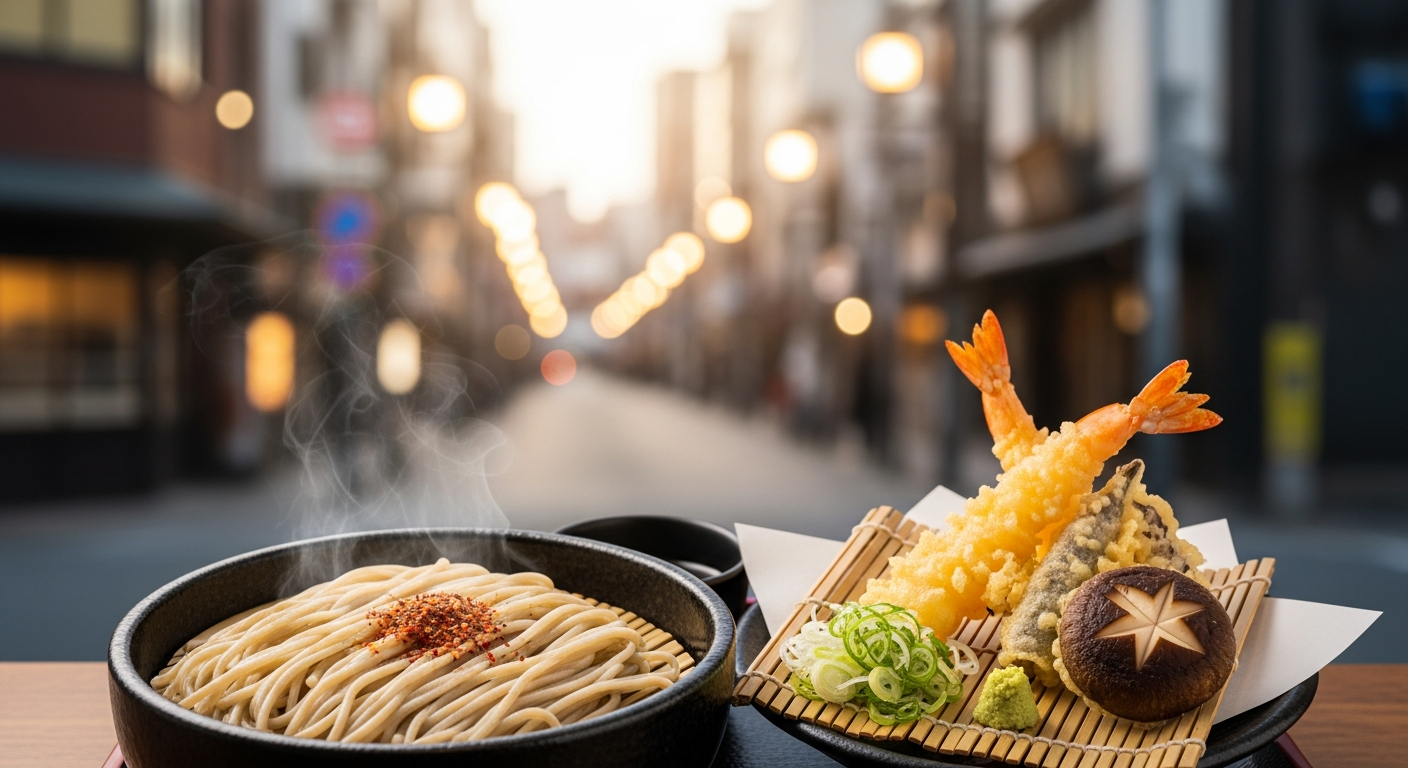
Shuhari handles the entire soba-making process in-house, from grinding the buckwheat seeds all the way through to cutting the noodles. The result is three distinct noodle styles on the menu at once — juwari (100% buckwheat), arabiki (coarsely ground), and futogiri/hosohiki (thick-cut or lightly ground) — which is unusual even by serious soba standards. Fresh wasabi arrives from Izu, Shizuoka Prefecture each week, and you grind it yourself at the table on a small ceramic grater. The kamo tsuke soba is the dish that keeps people coming back: cold soba paired with a small bowl of rich duck broth for dipping, complete with duck slices, duck meatballs, and leeks cooked until soft and sweet. Staff don’t speak much English, but there’s a QR code English menu — just point at what you want. Lunch queues form fast; arrive five minutes before opening and there may already be a line of 20-plus people.
2. Ayamedo (菖蒲堂)
- 📍 2-5-8 Anjoji-cho, Chuo-ku, Osaka 540-0006
- 🕐 Lunch: 11:30–14:30 (L.O. 14:00); closed Mondays and Tuesdays (as of May 2026)
- 💰 ¥1,000–¥2,500 (food only)
- 🚃 Tanimachi 6-chome Station (1 min walk)
- 🗺 Open in Google Maps
- 📋 Tabelog
What to order: Arabiki soba — coarse-ground cold soba (from ¥1,000)
Set in a restored traditional Japanese house in a quiet part of Osaka, Ayamedo is a Michelin Bib Gourmand restaurant. Its retro interior, coupled with a calming inner garden, is made for long meals. The dining room seats 22, which means it fills up quickly and stays full. The noodles come two ways: the hosogiri (thin-cut) soba is made purely from hulled buckwheat flour — smooth, with a delicate sweetness — while the arabiki (coarse-ground) soba has a rustic appearance and a richer, nuttier mouthfeel, thanks to buckwheat ground whole with chaff. Beyond the noodles, there’s a short list of classic and seasonal home-cooked dishes: miso-cured tofu, salt-grilled duck, Japanese rolled omelette. Soba starts from ¥1,000, making this one of the better-value Michelin meals in the city. Closed Mondays and Tuesdays — don’t show up on a long weekend without checking first.
3. Soba Kiri Gaku (蕎麦切り学)
- 📍 1-4-6 Tanimachi, Chuo-ku, Osaka 540-0012
- 🕐 Lunch: 11:30–14:30; closed Wednesdays (as of May 2026)
- 💰 ¥950–¥2,000 (food only)
- 🚃 Tanimachi 4-chome Station (4 min walk)
- 🗺 Open in Google Maps
- 📋 Tabelog
What to order: Mori soba — cold buckwheat with dipping broth (¥950)
Soba Kiri Gaku focuses on fresh, handmade buckwheat noodles paired with local ingredients, with a culinary philosophy built around simplicity and purity. With roots in the Tanimachi district, the shop has built a reputation not just for its food but for its commitment to an authentic, seasonally driven experience. The mori soba at ¥950 is the entry point and the benchmark — clean, firm noodles with a well-balanced dipping broth. The chef’s seasonal recommendation is often the grilled mackerel sushi paired with cold sudachi soba, a combination that shows how far this kitchen reaches beyond the basics. The duck tsukesoba is another standout, particularly in the cooler months. It’s a compact, focused menu — the kind of place that does a handful of things and does them properly. The MICHI Osaka travel guide recommends pairing a visit here with a walk through the temple streets of Tanimachi 4-chome before or after lunch.
How to Order
Soba shops in Tanimachi follow a fairly consistent rhythm, but a few things are worth knowing before you walk in.
Cold vs. hot: Most menus offer both. Cold soba (zaru or mori) is served on a bamboo tray with a dipping broth on the side — you dip the noodles, you don’t pour the broth over them. Hot soba (kake) comes in a bowl of broth. In summer, cold is the default; in winter, the duck hot-pot style (kamo nanban) is worth ordering.
Noodle types: Where a shop offers multiple noodle styles — juwari (100% buckwheat), arabiki (coarse-ground), or standard — the difference is real and worth exploring. Juwari has the strongest buckwheat flavour and a slightly grittier bite. Arabiki is earthier and more textured. Standard (niwari-hachi) is smoother and more delicate.
Soba-yu: When you finish your cold soba, the kitchen will bring a small pot of the starchy water used to cook the noodles. Pour it into your leftover dipping broth and drink it. This is standard practice — don’t skip it.
Timing: All three shops are lunch-focused and sell out. Arrive at opening or within the first 30 minutes. Showing up at 13:30 on a weekend is a gamble. Cash is accepted everywhere; card acceptance varies, so carry yen.
FAQ
Q: Is soba in Tanimachi expensive?
A: Not particularly. A basic mori or zaru soba runs ¥950–¥1,100. Add tempura or a duck broth set and you’re looking at ¥1,800–¥2,600. Dinner at Shuhari with drinks can push to ¥4,000, but lunch at all three shops is well under ¥2,500 per person.
Q: Do these shops have English menus?
A: Shuhari has a QR code English menu. Ayamedo and Soba Kiri Gaku are Japanese-only, but the menus are short and picture-based ordering or pointing works fine. Google Translate’s camera mode handles most soba menus without trouble.
Q: When is the best time to visit?
A: Arrive at opening — 11:30 for all three. Shuhari in particular draws a queue that forms before the doors open on weekends. Weekday lunches are calmer. Avoid the 12:30–13:30 window if you want to walk straight in. Ayamedo is closed Mondays and Tuesdays; Soba Kiri Gaku is closed Wednesdays — double-check before you go.
Information is accurate as of May 2026. We recommend checking Google Maps for the latest hours and prices before visiting.