Last updated: July 4, 2026
Information changes — always confirm with the venue/source before relying on it.
Introduction
Tenma is one of Osaka’s most lived-in neighbourhoods — a dense tangle of izakayas, fishmongers, and century-old market stalls clustered around Tenjinbashi-suji, a shotengai shopping street that extends from the 1-chome neighbourhood all the way to the 6-chome neighbourhood, covering approximately 2.6 km and holding the title of Japan’s longest shotengai. For a vegan traveller, that length can feel both exciting and daunting: all of Osaka’s main dishes include meat and/or fish in the form of dashi or bonito flakes on top, and even though Japanese cuisine is full of vegetables, rice, and soy products, it is actually very tricky to tell apart truly vegan dishes from the rest.
This guide is not a restaurant directory. It is a practical primer on how to eat plant-based in Tenma and along Tenjinbashi-suji — covering the hidden ingredients to watch for, the local dishes that can work in your favour, where to look beyond dedicated vegan restaurants, and the Japanese phrases that will save you at a standing izakaya counter. By the end, you will know how to navigate this neighbourhood with confidence. For a broader city overview, see our Osaka vegan guide.
The Dashi Problem: Japan’s Most Misunderstood Ingredient
Before you set foot on Tenjinbashi-suji, you need to understand dashi — because it is the single biggest obstacle to eating vegan in Tenma’s izakayas and market stalls. Traditional Japanese dashi is almost always a dual-component stock: while it begins with kombu (dried kelp), it is nearly always finished with katsuobushi (dried, fermented bonito flakes) or niboshi (dried baby sardines). Because dashi is clear and often used to season vegetables or tofu, a dish may appear perfectly vegetarian while being saturated with fish protein.
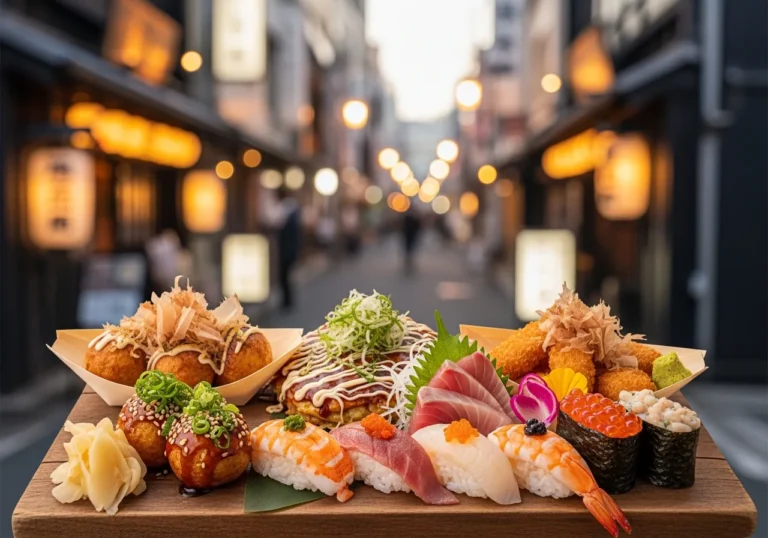
Dashi is not vegan as it includes katsuobushi (dried bonito fish flakes), but many restaurants will still claim a dish is vegan or vegetarian even if it uses dashi — not out of malice, but simply because the definition of “vegan” is a little different in Japan. This is especially relevant in Tenma, where Tenma and Tenjinbashi-suji are packed with izakayas and standing bars where locals actually drink and eat after work. These are not tourist-facing restaurants with English allergy menus — they are neighbourhood joints where dashi is as invisible as salt.
The practical upshot: the use of dashi is so ingrained in Japanese cooking that it is often overlooked. As a general rule, always assume there could be hidden animal ingredients in all food across Japan unless stated, or you visit a dedicated vegan restaurant. On Tenjinbashi-suji specifically, this means that miso soup served at a market stall, the dipping sauce for a vegetable tempura, and even the seasoning on grilled corn are all worth questioning.
- 出汁 / だし (dashi) — fish-based stock, extremely common in soups, noodles, and sauces
- かつおぶし (katsuobushi) — dried bonito flakes, often sprinkled on top of dishes
- 魚介エキス (gyokai ekisu) — seafood extract, found in many packaged seasonings
- みりん (mirin) — sweet rice wine, itself plant-based, but often used alongside fish-based stocks
- ラード (raado) — lard, sometimes used in fried foods and ramen broths
On modern menus, the katakana term “プラントベース” (puranto-beesu / plant-based) is the most reliable marker. It indicates a dish designed without animal products from the ground up. When you see it, you can order with confidence.
🔗 Source: voyapon.com
What Vegan Actually Means in a Japanese Context
Japan does not have a single, legally standardised definition of “vegan” on menus. In Japan, “vegetarian” often means “no visible meat,” which can still include fish sauce, bonito flakes, or pork-based stock. This cultural gap is not unique to Tenma, but it is amplified here because the neighbourhood’s food culture is rooted in traditional izakaya cooking rather than health-conscious café dining.
There are, however, two Japanese culinary traditions that are genuinely plant-based by design and worth knowing about:
- Shōjin ryōri (精進料理) — a long-standing Buddhist practice of temple cuisine that is entirely vegan, though it is limited to specific temples and regions. You will not find it on Tenjinbashi-suji, but it is a useful reference point for understanding Japan’s plant-based heritage.
- Genmai (玄米) cuisine — brown-rice-centred cooking, popular in natural food restaurants near Tenma, which tends to avoid animal products and refined ingredients by philosophy rather than by label.
Nowadays, many veggie restaurants are displaying an official vegan or vegetarian sticker of approval issued by The Japan Vegan Society, VegeProject Japan, or The Japan Vegetarian Association. If you see one of these stickers in a window on or near Tenjinbashi-suji, it is a reliable signal that the kitchen understands the full scope of vegan requirements — including dashi.
When in doubt, print out a written explanation or card detailing your dietary requirements in Japanese. Restaurants and izakayas with photo menus can be very helpful, but be sure to check the dashi and base ingredients for fish or animal products. Carrying a printed vegan card in Japanese (available free from sites such as HappyCow and VegeProject Japan) is one of the most effective tools you can bring to Tenma.
🔗 Source: japan.travel
Plant-Based Eating Along Tenjinbashi-suji: What to Look For
Tenjinbashi-suji is not a vegan destination in the way that Nakazakicho or Shinsaibashi are. It is one of Japan’s most popular food streets, and while strolling the 2.6-kilometre stretch you will encounter a number of restaurants and food stands — the vast majority of which are built around meat, seafood, and dashi-heavy broths. That said, the street and its immediate surroundings offer several genuine plant-based opportunities if you know where to look.
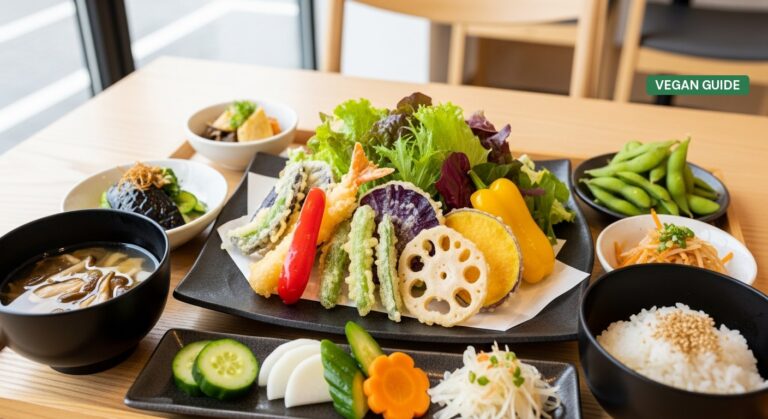
Dedicated vegan restaurants near the street. The closest fully vegan option to the Tenma end of Tenjinbashi-suji is Megurimeshi Megumi, a small restaurant near Osaka Tenmangu Shrine. All food is vegan — no animal products such as meat, fish, egg, or dairy — and the kitchen uses buckwheat flour and roasted brown rice flour instead of wheat flour. The restaurant specialises in brown rice steamed with sea salt, and the dinner menu features vegan versions of popular Japanese dishes such as gyoza and okonomiyaki, traditionally made with animal products. Reservations are recommended, as all food is cooked from scratch without using a microwave, so it may take time to prepare.
At the northern end of the street, near Tenjinbashisuji 6-chome Station, Babel Cafe sits just off the arcade in the Nakazakicho direction. It is a charming, must-visit vegan cafe close to the stylish Nakazakicho area, located along Tenjinbashisuji, the longest shotengai in Japan. Diners can enjoy seasonal dishes, drinks, and desserts while relaxing inside, made with whole ingredients that are often organic, with each plate presented beautifully. Note that it occasionally hosts parties, some of which include dairy cheese, so checking their schedule is recommended.
Naturally vegan street snacks. Not everything on Tenjinbashi-suji requires a deep ingredient interrogation. Osaka has plenty of naturally vegan treats to discover, like mochi, dango, and yakiimo (roasted sweet potato). Traditional Japanese confectionery shops — of which Tenjinbashi-suji has several — often carry yokan (sweet bean jelly) and plain mochi that are plant-based by default, though modern versions sometimes add dairy, so double-checking is worthwhile. Roasted sweet potato vendors, particularly in autumn and winter, are a reliable vegan snack with no hidden ingredients.
Indian restaurants. The Tenma and Umeda area has a growing number of Indian restaurants, many of which offer naturally plant-based dal, chana masala, and vegetable curries. Indian cuisine in Japan is often a vegan traveller’s best friend, as the concept of vegetarianism is deeply embedded in the cooking tradition and staff are generally well-versed in dairy-free requests. Always confirm that ghee has not been used in cooking.
🔗 Source: megumi168.com, matcha-jp.com
Konbini and Supermarket Backup on Tenjinbashi-suji
One of the practical advantages of Tenjinbashi-suji is that it boasts around 600 shops, and several convenience stores (konbini) are dotted along its length. On days when dedicated vegan restaurants are closed — and restaurant opening times can be irregular, with most closed at least one or two days per week and usually not open all day — konbini become an important fallback.
Chains like 7-Eleven, FamilyMart, and Lawson carry a growing selection of plant-based items if you know what to look for. The safest bets are:
- Onigiri (rice balls) — grab onigiri filled with umeboshi or seaweed, both of which are typically vegan. Be sure to avoid varieties with tuna, salmon, or mayonnaise. Always read the label, as formulations change between chains and seasons.
- Edamame and plain salads — edamame, plain salads with sesame dressing, and fruit cups are safe and refreshing options.
- SOYJOY Crispy bars — the crispy line of these soy bars is vegan-friendly across its banana, mixed-berry, and white-macadamia flavours, and sells in nearly every konbini in the country.
- Dried sweet potato — a reliable, naturally plant-based snack found at most chains.
- Soy milk drinks — look for KIKKOMAN Tounyu soy milk in the refrigerated section; several flavours are plant-based.
For a more substantial shop, the covered street itself has several small grocery and produce stalls where you can find surprisingly cheap fresh vegetables, fruits, and sundries. These are excellent for assembling a simple plant-based meal if you have access to a kitchen or hotel kitchenette. When reading packaged labels, look for 植物性 (shokubutsusei) meaning “plant-based,” and avoid anything listing 出汁 (dashi) or 魚介エキス (gyokai ekisu) in the ingredients.
For the best food in Osaka beyond convenience stores, the HappyCow app and Vegewel (vegewel.com) both have searchable maps that cover the Kyobashi, Sakuranomiya, and Tenma area, making it easy to find vegan options within walking distance of the shopping street.
🔗 Source: matcha-jp.com, cheku.co
How to Ask in Japanese: Essential Phrases for Tenma’s Izakayas
Tenma’s izakayas are neighbourhood institutions, not tourist restaurants. Many soups, sauces, and even rice dishes use dashi as a base, and it is rarely listed in English. Add to that a language barrier where explaining dietary needs can be complicated, and you understand why planning ahead is essential. The following phrases will help you communicate clearly and politely at any counter on or near Tenjinbashi-suji.
| Situation | Japanese phrase | Pronunciation |
|---|---|---|
| I am vegan | 私はヴィーガンです | Watashi wa vīgan desu |
| No dashi, please | だしを使わないでください | Dashi o tsukawanaide kudasai |
| Does this contain fish? | これは魚が入っていますか? | Kore wa sakana ga haitte imasu ka? |
| I don’t eat meat | 肉は食べません | Niku wa tabemasen |
| I don’t eat fish | 魚は食べません | Sakana wa tabemasen |
| Is this vegan? | これはヴィーガンですか? | Kore wa vīgan desu ka? |
| No eggs or dairy | 卵も乳製品も食べません | Tamago mo nyūseihin mo tabemasen |
As an increasing number of restaurants in Japan are accommodating dietary preferences, a little dialogue can go a long way in customising your dish to suit your needs. At Tenma’s izakayas, where the menu is often handwritten on a chalkboard and the kitchen is open, pointing at dishes and using these phrases is usually enough to get a clear answer. Translation apps such as Google Translate can also be a great tool to have on hand — the camera scan function works well on Japanese menus and ingredient lists.
🔗 Source: japantravel.com
Apps and Resources for Navigating Tenma as a Vegan
Spontaneous dining is genuinely difficult as a vegan in Japan. As a vegan in Japan, spontaneous dining isn’t really an option — you have to plan ahead. The good news is that the digital tools available in 2026 make pre-trip research faster than ever.
- HappyCow — the most widely used international directory of vegan and vegetarian restaurants. Search “Tenma” or “Tenjinbashisuji” to find current listings with user reviews. The Happy Cow website or app is the best resource for finding veggie-friendly meals nearby.
- Vegewel (vegewel.com) — a Japan-specific restaurant database with a dedicated search area for “Kyobashi, Sakuranomiya, Tenma.” Listings include vegan, vegetarian, and gluten-free filters.
- Japan VegeMap (vegemap.org) — a crowd-sourced map of fully vegan and vegan-friendly shops across Japan, with detailed ingredient notes for each listing.
- Google Translate camera mode — point your phone camera at any Japanese menu or ingredient label for a real-time translation. Not perfect, but reliable enough to catch dashi and seafood extract warnings.
- VegeProject Japan vegan card — a free, printable card in Japanese explaining a full vegan diet including the exclusion of dashi, eggs, and dairy. Download before your trip and keep it on your phone.
Beyond apps, various online platforms provide additional support. Websites like Japan Vegan and VegeProject Japan offer a wealth of information about plant-based eating in Japan, while forums on platforms such as Reddit (r/VeganInJapan) provide real-time advice and shared experiences from fellow travellers.
🔗 Source: triptojapan.com
Practical Tips for Vegan Travellers in Tenma
- Enter from the Tenma Station end. The nearest train access is Osakatemmangu Station on the JR Tozai Line and Temma Station on the JR Osaka Loop Line. Starting from the southern (Tenma) end puts you closest to Megurimeshi Megumi and Osaka Tenmangu Shrine, where traditional wagashi confectionery stalls sometimes carry plant-based sweet bean treats.
- Book Megurimeshi Megumi in advance. All food is cooked from scratch without using a microwave, so it may take time to prepare — advance reservations are appreciated. The restaurant is fully vegan and also stocks a small natural food shop attached to the dining space.
- Head to Babel Cafe for the northern stretch. The closest stations are Tenma Station on the JR Osaka Loop Line or Nakazakicho Station on the Tanimachi Line on the Osaka Metro. The cafe has vegan options available and is a good mid-walk rest stop if you are walking the full length of the street.
- Use the HappyCow app before you leave your hotel. Save two or three backup options within 500 metres of Tenjinbashi-suji in case your first choice is closed. Restaurant opening times can be irregular — before visiting, make sure to check the opening days and times.
- Carry a printed vegan card in Japanese. At izakayas where staff speak little English, a card listing your restrictions — including “no dashi” — is faster and more accurate than a translation app. VegeProject Japan offers a free downloadable version at vegeproject.org.
- Stock up at konbini for market-day snacking. SOYJOY Crispy bars, plain rice snacks, and dark chocolate are reliable picks at 7-Eleven, Lawson, and FamilyMart — all of which have branches on or near Tenjinbashi-suji. Pair with fresh fruit from the market stalls for a satisfying plant-based lunch on the go.
Last updated: July 4, 2026 · Corrections: [email protected]