Last updated: July 4, 2026
Information changes — always confirm with the venue/source before relying on it.
Introduction
For plant-based travelers, the morning meal is often the hardest to crack in Japan. Convenience stores are everywhere, but their breakfast shelves are riddled with hidden dashi and egg-based fillings. Hotel buffets lean heavily on fish and dairy. And most kissaten — the classic Japanese coffee shops — were never designed with vegans in mind. As any early-bird traveler knows, starting your day early can sometimes mean skipping breakfast or settling for mediocre options.
Nakazakicho changes that equation. Known for its narrow alleys, renovated machiya townhouses, and creative neighborhood atmosphere, it is one of the most distinctive food and café scenes in Osaka. Crucially for plant-based visitors, it also has a higher concentration of owner-run cafés with genuine vegan awareness than almost anywhere else in the city. This guide explains what a vegan brunch in Nakazakicho actually looks like — the types of food on offer, the hidden ingredient traps to sidestep, how to communicate your needs, and how to use the neighborhood’s walkable layout to your advantage. By the end, you’ll know exactly how to plan a relaxed, fully plant-based morning in one of Osaka’s most charming districts. For a broader overview of eating vegan across the city, see our Osaka vegan guide.
🔗 Source: osaka.com
Why Nakazakicho Is a Natural Fit for Vegan Brunch
Nakazakicho, in Kita-ku, is a retro area filled with restaurants that are hidden away, making it a very fun area to walk around and explore. In contrast to the area around Umeda Station undergoing redevelopment, many old houses remain here, and draw new life from the restaurants and cafes located within. That independent, anti-chain spirit is exactly what makes the neighborhood hospitable to vegan dining: the owners who set up shop here tend to be passionate about their food philosophy, not just their profit margins.
Nakazakicho is packed with small alleyways, independent coffee shops, and a really creative, local vibe. That density matters for vegan brunch-seekers. You can walk from one café to the next in under five minutes, which means if one spot is closed for its irregular day off — a common reality for small owner-run venues in Japan — you have genuine alternatives within the same block. Nakazakicho Hall, an open-air event space in the neighborhood, even hosts annual events such as a vegan festival, which speaks to how embedded plant-based culture has become in the local identity.
The area is also conveniently positioned for inbound visitors. The closest stations are Tenman Station on the JR Osaka Loop Line or Nakazakicho Station on the Tanimachi Line on the Osaka Metro. From central Umeda, it is a short ride or a pleasant 15-minute walk north — making it easy to fold into a morning itinerary before heading elsewhere. To explore more of Nakazakicho beyond its cafés, the vintage shops and independent boutiques along the same alleys are worth an hour of wandering after brunch.
🔗 Source: savorjapan.com
What Vegan Brunch Actually Looks Like Here
Vegan brunch in Nakazakicho is not a single format. The neighborhood supports several distinct styles, and understanding them helps you choose the right venue for your mood and appetite.
The macrobiotic set meal is the most distinctly Japanese option. Rooted in whole-grain cooking and seasonal vegetables, it typically arrives as a tray of small dishes — rice (often brown or mixed grain), miso soup made with kombu or shiitake dashi rather than fish stock, pickles, and two or three vegetable sides. Diners can enjoy seasonal dishes, drinks, and desserts while relaxing inside. Made with whole ingredients that are often organic, every bite is delicious. Babel Cafe, located along Tenjinbashisuji just steps from Nakazakicho Station, is a long-standing example of this style. For dessert or teatime, the cafe offers homebaked vegan sweets, and many options are gluten-free.
The Western-influenced plate is the format most familiar to international visitors. Think toast with plant-based spreads, house-made vegan sausage, a side salad, and pickles — the kind of composed plate that signals a kitchen that has thought carefully about what a complete morning meal means without eggs or dairy. This style of “have a good day plate” — featuring toast with a tofu and hummus spread, house-made vegan sausage, a side salad, and pickles — is a great breakfast choice to try a bit of everything. While that specific example is from Optimus Cafe near Kitahama, the format has spread to several Nakazakicho-area venues.
The café-and-sweets brunch suits those who prefer a lighter start. Several of the neighborhood’s owner-run cafés open mid-morning and serve plant-based baked goods, soymilk lattes, and seasonal cake slices alongside single-origin coffee. Some owners have used backgrounds in antique dealing to display art and interesting objects in their cafés, carefully brewing each cup by hand with beautiful copper drippers. The aesthetic care that goes into the space often extends to the food sourcing.
The vegan izakaya brunch is a newer format worth knowing about. A small, hidden vegan izakaya just one stop away from Osaka/Umeda Station serves veganised Japanese classic dishes like okonomiyaki (savoury pancake) and yakitori (chicken skewers). The yakitori plate uses soy protein, konjac, and other vegan ingredients to mimic the look and texture of different grilled chicken skewers. Some of these spots open for lunch from late morning, making them viable for a late brunch.
🔗 Source: itravelforveganfood.com
Hidden Animal Ingredients to Watch For
Even in a neighborhood as vegan-aware as Nakazakicho, not every café is fully vegan. When you step outside the dedicated plant-based spots, the risk of hidden animal ingredients rises sharply. Understanding what to look for is the single most important skill for vegan brunch navigation in Japan.
Dashi is the primary concern. The biggest culprit making the search difficult is dashi — soup stock that is used in tons of dishes, including ramen, takoyaki, and miso soup. Dashi is not vegan as it includes katsuoboshi (dried bonito fish flakes), but many restaurants will still claim a dish is vegan or vegetarian even if it uses dashi. Because dashi is clear and often used to season vegetables or tofu, a dish may appear perfectly vegetarian while being saturated with fish protein. At a brunch table, the highest-risk items are miso soup, any simmered vegetable side dish, and dipping sauces.
Bonito flakes (katsuobushi) are a secondary hazard. Shaved dried fish is sprinkled over tofu, noodles, or rice, and is often added as a garnish without being listed on menus. Always check before ordering tofu dishes or rice sets at non-specialist venues.
Eggs and mayonnaise appear in unexpected places. Eggs and mayonnaise are frequently used in sauces, dressings, and as a binder in rice balls or croquettes. Japan’s popular mayonnaise brand (Kewpie) contains eggs. Sandwiches, croquettes, and even some bread doughs at non-vegan bakeries may contain egg.
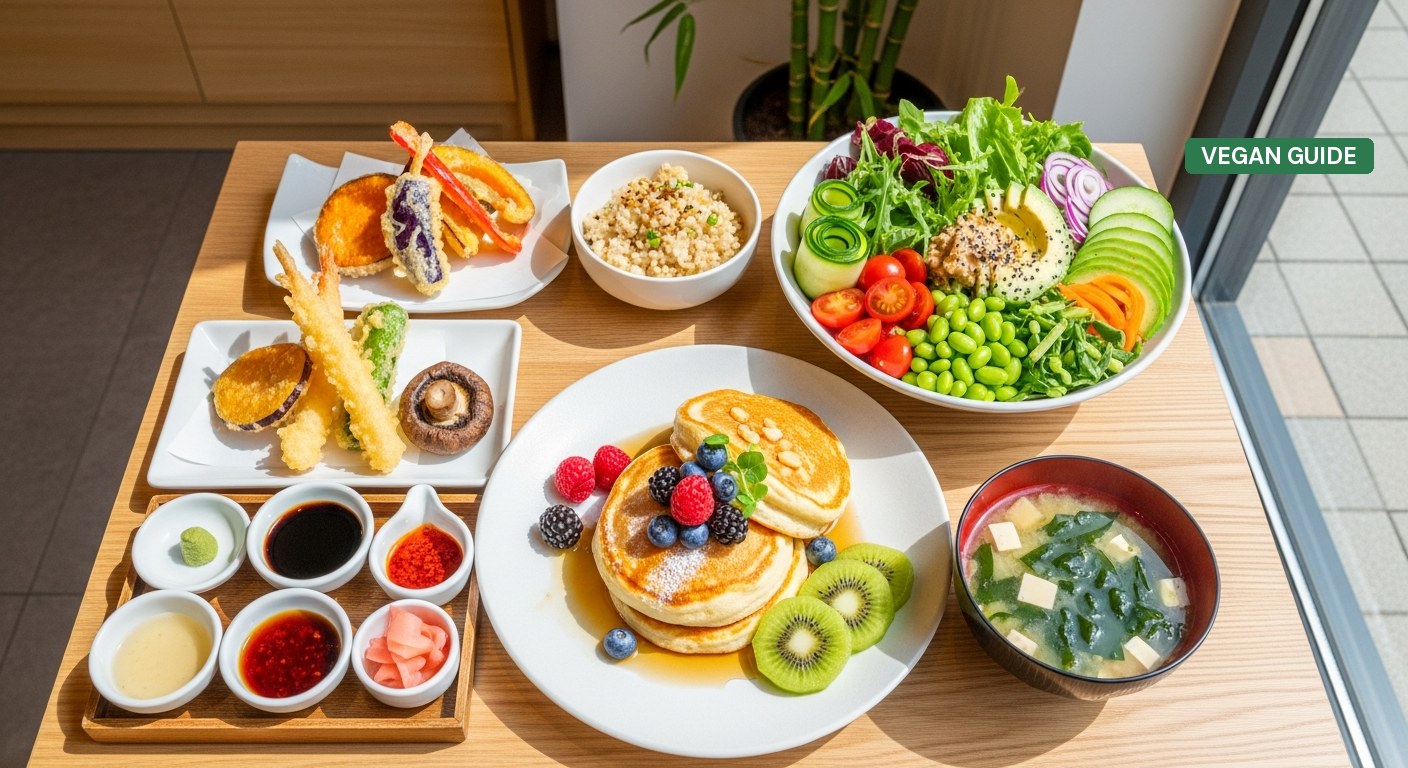
Tempura batter is a specific trap at brunch sets that include vegetable tempura. While the ingredients may be plant-based — root vegetables like pumpkin, lotus root, sweet potato — tempura batter often contains chicken’s eggs, and the dipping sauce is almost universally made with fish-based dashi.
The safest approach at any non-specialist café is to ask directly. The key phrase is: “Sakana no dashi wa haitte imasu ka?” — meaning “Is there fish stock inside?” At fully vegan venues in Nakazakicho, this question is unnecessary — but it is essential anywhere else.
🔗 Source: voyapon.com
How to Read the Vegan Landscape: Certified vs. Aware vs. Accommodating
Not all plant-based-friendly venues in Nakazakicho operate the same way, and knowing the difference saves time and prevents disappointment.
- Fully vegan venues serve no animal products at all. Every item on the menu is safe to order without interrogating the kitchen. Babel Cafe, which sits on the Tenjinbashisuji shopping street adjacent to Nakazakicho, is a well-documented example: made with whole ingredients that are often organic, every bite is delicious, and the owner has built a community around the space. Art is displayed at the cafe, and the owner regularly holds community events.
- Vegan-certified venues carry official recognition from bodies such as VegeProject Japan or the Japan Vegan Society. Many veggie restaurants are now displaying an official vegan or vegetarian sticker of approval issued by The Japan Vegan Society, VegeProject Japan, or The Japan Vegetarian Association. Look for these stickers in windows — they are a reliable signal that the kitchen genuinely understands cross-contamination and hidden ingredients.
- Venues with vegan options available are omni cafés that have made a deliberate effort to mark and accommodate plant-based diners. Despite a name suggesting a fully vegetarian or vegan focus, some cafés are not fully vegan — however, they do a good job of marking the vegan options on their menu and listing allergens for each dish. These venues require more care when ordering but can be excellent choices.
- General cafés with no vegan awareness are the majority of Nakazakicho’s coffee shops. They may serve oat milk on request and have one or two plant-based items, but the kitchen is not set up to guarantee vegan preparation. Coffee shops in Japan usually have at least soy milk, which is a useful baseline — but soy milk in your latte does not make the rest of the menu safe.
When in doubt, apps like HappyCow and VegeMap make it easy to find vegan-friendly restaurants near your hotel and major sightseeing areas. HappyCow remains the gold standard for navigating Japan. In major cities like Tokyo, Osaka, and Kyoto, it is indispensable for locating dedicated vegan restaurants or shops that explicitly understand — and offer — kombu-based dashi.
🔗 Source: happycow.net
Brunch Timing and the Rhythm of the Neighborhood
Nakazakicho operates on its own clock, and vegan travelers need to plan around it. Unlike the 24-hour convenience store culture of central Osaka, the independent cafés here tend to open later and close earlier — and many keep irregular hours or take unannounced days off.
As a vegan in Japan, spontaneous dining isn’t really an option — you have to plan ahead. While Japanese monuments and landmarks will always be there, cafes and restaurants might not be open on the days you plan to visit. This is especially true in Nakazakicho, where one-person operations are common. Some venues are one-person operations, with the owner handling everything from cooking to serving. Be prepared for a wait if there are other customers — there’s even a card at some spots saying the owner can’t handle more than four customers at a time.
The practical upshot: aim for a brunch window between 11:00 and 13:00, when most of the neighborhood’s cafés are open and kitchens are fully running. Arriving before 11:00 narrows your options significantly. If you want an earlier start, the broader Umeda area — a short walk or one metro stop away — has fully vegan cafés that open as early as 8:00–8:30am, including options with bilingual menus and English-speaking staff. OPTIMUS Café, for example, opens at 8:30am — a rare spot where you can enjoy a vegan breakfast. The menu is bilingual, written in Japanese and English, and they have an English-speaking French chef.
Always check Instagram or the venue’s official social media the morning of your visit. Posts are usually in Japanese, but checking Facebook or Instagram for up-to-date business hours is essential for small Nakazakicho venues. Google Maps hours are frequently out of date for this type of owner-run café.
For a broader sense of what plant-based eating looks like across the city at any hour, the best food in Osaka guide covers the full spectrum from street snacks to sit-down meals.
🔗 Source: itravelforveganfood.com
Practical Tips for Vegan Travelers
- Use HappyCow before you leave your hotel. Search “Nakazakicho” or filter by the Kita-ku area in Osaka to pull up fully vegan and vegan-options-available listings with current reviews. The HappyCow website or app is the best resource for finding veggie-friendly meals nearby. Cross-reference with Google Maps for the most recent opening hours.
- Carry a vegan card in Japanese. The phrase 「肉、魚、卵、乳製品、だしは食べません」(Niku, sakana, tamago, nyūseihin, dashi wa tabemasen) — “I don’t eat meat, fish, eggs, dairy, or fish broth” — is far more effective than simply saying “vegan.” Print it or screenshot it on your phone before heading out.
- Target the 11:00–13:00 brunch window. Most Nakazakicho owner-run cafés are open and fully staffed during this window. Arriving before 11:00 significantly limits your options; arriving after 14:00 risks sell-outs of daily specials at smaller venues.
- Look for the VegeProject Japan or Japan Vegan Society sticker in windows. Keep an eye out for “Vegan” or “Plant-Based” stickers in restaurant windows. Thanks to the work of local advocates, these labels are a growing development in Japan and a reliable indicator that the establishment truly understands the requirements of a plant-based diet.
- Ask specifically about dashi in miso soup. Even at cafés that seem plant-based, miso soup is the most common hidden-animal-ingredient trap. Ask: “Sakana no dashi wa haitte imasu ka?” (Is there fish stock inside?) A kombu or shiitake dashi is vegan; katsuobushi dashi is not.
- Have a konbini backup plan. If your target café is closed, the FamilyMart and Lawson branches near Nakazakicho Station carry a small selection of plant-based items. Onigiri (rice balls) are sometimes vegan — the plain salted (shio) or plum (ume) varieties are often safer bets, but ingredients can be tricky and sometimes include non-vegan hidden ingredients. Use a translation app to scan labels, and check the “Is It Vegan Japan” website for a curated list of confirmed vegan convenience store items.
Last updated: July 4, 2026 · Corrections: [email protected]