Looking for halal food in Namba, Osaka? You’ll find at least three verified Muslim-friendly spots within walking distance of Namba Station — a halal-certified ramen counter, a Japanese diner with a prayer room inside an OCAT mall, and an okonomiyaki institution on Dotonbori. Most lunch sets land well under ¥1,500. Browse our Osaka halal guide for the full city picture.
MICHI’s Pick — Selected by our Osaka-based team, based on places we’ve visited and on research using Tabelog and Google Maps ratings. In Japan, a Tabelog score of 3.4+ is genuinely high — Japanese reviewers are famously strict, and most locals consider anything above 3.4 a place worth a detour. We feature venues meeting at least one of: Tabelog 3.4+, Google Maps 4.3+, or 100+ reviews — the kind of spots locals quietly trust.
Tabelog and Google Maps scores are accurate as of the time of writing.
1. Halal Ramen Honolu Osaka Namba
Halal Ramen Honolu is a halal ramen chain run by an Indonesian-Japanese team, operating under halal certification and using halal-certified chicken stock as the base — no pork bones or pork-derived fats anywhere in the kitchen.
- ☪️ Halal status: halal-certified
- 🍜 Must-order: Spicy Fried Chicken Ramen (¥1,000)
- 📍 Access: Namba Station (10 min walk); address: 2-5-27 Motomachi, Naniwa-ku
- 🕒 Hours: Mon–Fri 11:30–14:30, 17:30–22:00 · Sat–Sun & holidays 11:30–22:00 (Open daily)
- 📞 Reservation: Not needed
- 🧎 Prayer room: Available on-site
- 🍷 Alcohol served: No
- 🗣 English menu: Limited
- 🗺 View on Google Maps
- 🔗 Source: halalgourmet.jp
What to order: The signature dish is the Chicken Paitan Ramen, featuring a rich chicken broth prepared fresh daily and noodles made from Hokkaido wheat — for extra indulgence, the ramen topped with wagyu beef or special fried chicken is highly recommended. A clean prayer room is provided inside the restaurant, making it very convenient for Muslim diners.
2. Halal Restaurant 585 Namba (Asian Diner 585)
Located inside OCAT Mall in Namba, Halal Restaurant 585 offers a wide variety of authentic Japanese dishes and is popular among Muslim travelers for its convenience, generous portions, and diverse menu.
- ☪️ Halal status: Muslim-friendly
- 🍛 Must-order: Spicy Miso Kobe Beef Ramen (¥1,100–¥1,300)
- 📍 Access: JR Namba Station (1 min walk); OCAT 5F, 1-4-1 Minatomachi, Naniwa-ku
- 🕒 Hours: Lunch 11:00–15:00 · Dinner 17:00–20:30 (Open daily)
- 📞 Reservation: Recommended
- 🧎 Prayer room: Available on-site
- 🍷 Alcohol served: No
- 🗣 English menu: Yes
- 🗺 View on Google Maps
- 🔗 Source: muslim-guide.jp
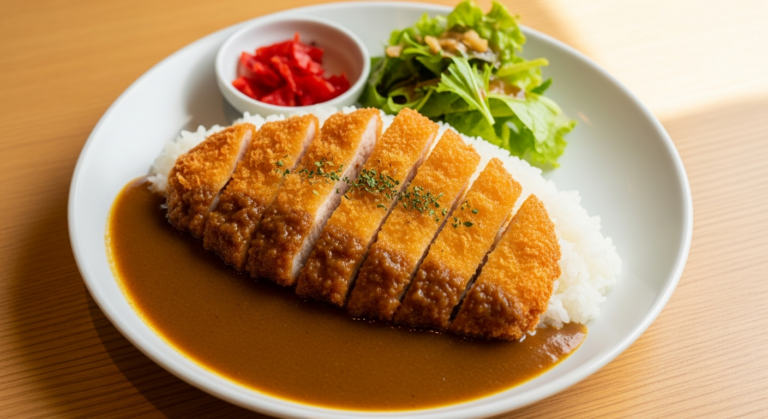
What to order: The menu spans Soy Sauce Base Ramen, Spicy Miso Kobe Beef Ramen, Special Tempura-don, Chicken Katsudon, and Gyoza — reviewers praise the large portions, reasonable prices, and the fact that everything is halal. The restaurant also provides a spacious prayer room with an ablution area inside. If you want to explore more of Namba, OCAT is a perfect base — it connects directly to JR Namba Station and the airport bus terminal.
3. CHIBO Diversity Dotonbori (Muslim & Vegetarian Friendly)
CHIBO Diversity is a restaurant specialising in okonomiyaki and teppanyaki that opened in 1973 and has since expanded to offer a Muslim-friendly menu on the main street of Dotonbori, with dishes such as halal-certified okonomiyaki and teppanyaki made with Japanese domestic halal wagyu beef.
- ☪️ Halal status: Muslim-friendly
- 🥞 Must-order: Chiboyaki Okonomiyaki — beef, shrimp, scallop & squid (¥1,500~)
- 📍 Access: Namba Station (5 min walk); 7F Dotonbori Building, 1-5-5 Dotonbori, Chuo-ku (Dotonbori, immediately adjacent to Namba)
- 🕒 Hours: Mon–Sat 11:00–20:00 (Closed: Sunday)
- 📞 Reservation: Recommended
- 🧎 Prayer room: Available on-site
- 🍷 Alcohol served: Yes
- 🗣 English menu: Yes
- 🗺 View on Google Maps
- 🔗 Source: halalfoodinjapan.com
What to order: CHIBO uses halal-certified meat and Muslim-friendly seasonings for its signature Chiboyaki, alongside deluxe variations of okonomiyaki, yakisoba, and teppanyaki dishes — all prepared without any contact with pork or alcohol. The halal section is on the 7th floor with a separate kitchen, so you can dine with complete peace of mind. Note that alcohol is served on other floors of the building; the dedicated halal floor is entirely separate. For more ideas on where to eat across the city, check out the best food in Osaka.
Frequently Asked Questions
Q. Is it easy to find halal food in Namba, Osaka?
The number of restaurants where Muslim visitors can enjoy meals with peace of mind is increasing in Osaka, with establishments that have obtained halal certification or offer Muslim-friendly services. In Namba specifically, the OCAT mall (directly connected to JR Namba Station) houses two halal restaurants on the same floor, making it one of the most convenient halal dining clusters in the city.
Q. What does “Muslim-friendly” mean in Japan?
In Japan, “Muslim-friendly” typically means a restaurant has removed pork and alcohol from specific menu items and uses halal-certified meats and seasonings, but may not hold formal certification from a recognised halal body. At Halal Restaurant 585, for example, the restaurant itself is not halal certified, but all foods served are halal. Always check the specific label in each shop’s entry above — MICHI uses “halal-certified”, “Muslim-friendly”, or “no pork no lard” to make the distinction clear.
Q. Are there prayer rooms near halal restaurants in Namba?
Halal Restaurant 585 provides a spacious prayer room with an ablution area inside the restaurant. Halal Ramen Honolu also has a clean prayer room inside. CHIBO Diversity on Dotonbori has a wudu facility and prayer space on the halal floor. All three shops in this article offer on-site prayer facilities, making Namba one of the most prayer-room-friendly dining areas in Osaka.
Q. What hidden ingredients should Muslim travelers watch out for in Japan?
The most common hidden concerns in Japanese cooking are mirin (a sweet rice wine used in sauces and glazes), sake (used in marinades and broths), pork-derived dashi (stock), and lard in fried dishes. Even soy sauce can contain trace alcohol from fermentation. At the restaurants in this article, these ingredients have been replaced with halal-certified alternatives — but at any restaurant not listed here, always ask staff specifically about mirin, sake, and dashi before ordering.
Last updated: July 7, 2026 · Corrections: [email protected]