Last updated: July 3, 2026
This article reflects information available at the time of writing. Check Google Maps for the latest hours and availability.
Introduction
Tenma doesn’t do subtlety. One stop from Osaka Station on the JR Loop Line, it’s the kind of neighbourhood where the drinking starts at noon, the izakaya signs glow red by 5pm, and the smoke from a dozen yakiniku grills drifts out into the lantern-lit alleys behind Tenjinbashisuji — Japan’s longest covered shopping arcade. This is old Osaka at its most unfiltered.
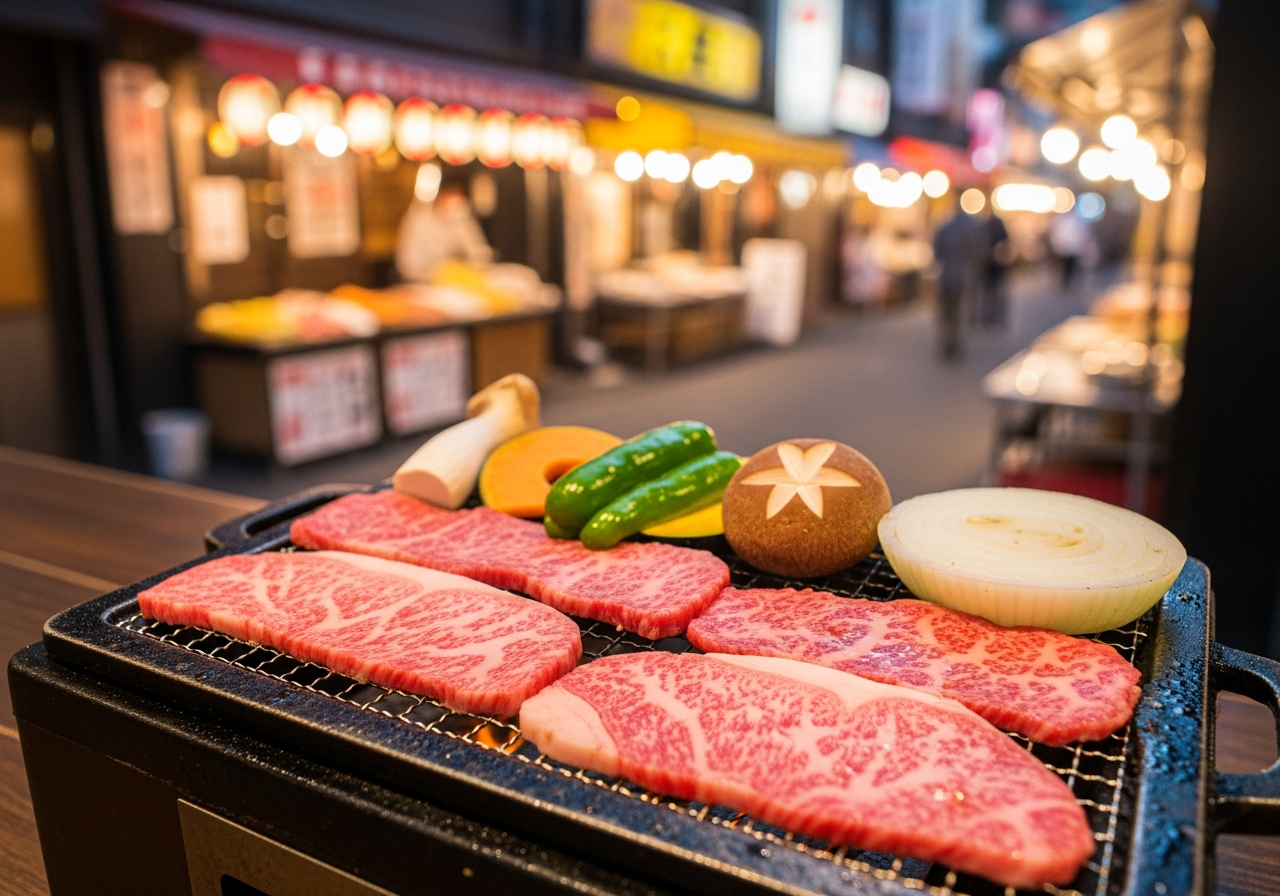
The yakiniku scene here runs the full spectrum. You’ve got A5 wagyu from rare virgin heifers served alongside freshly cooked clay-pot rice. You’ve got standing horumon bars where the menu runs to 30 cuts of offal and the shichirin charcoal brazier is your only company. You’ve got lava-stone roasters, counter-only date spots, and all-you-can-eat tongue specialists that stay open until the early hours. What you won’t find is the tourist-facing polish of Namba or the expense-account pricing of Kitashinchi.
This guide covers six of the best yakiniku spots in and around Tenma — from aged wagyu specialists to no-frills horumon joints — with verified addresses, current hours, and honest takes on what to order. Reservations are strongly recommended at most of these places, especially on weekends. Come hungry.
1. Niku no Tenmaya Kaguratei (肉の天満屋 神楽亭)
- 📍 4-11-10 Tenjinbashi, Kita-ku, Osaka
- 🕐 Mon–Fri 11:30–15:00 / 17:00–23:30; Sat, Sun & Holidays 11:30–23:30 (as of May 2026)
- 💰 ¥3,000–4,000 (lunch) / ¥5,000–7,000 (dinner with drinks)
- 🚃 JR Tenma Station (2 min walk)
- 🗣 English menu: Available (multilingual menus confirmed)
- 🗺 Open in Google Maps
- 📋 Tabelog
- 🌐 Official site
What to order: Thick-cut tongue — negiShio style (¥1,200–1,500); Toro-tecchan horumon (¥880)
The headline act here is the beef: A5-grade kuroge wagyu from virgin heifers, a category that accounts for roughly 10% of the Japanese market and produces meat with a noticeably lower melting point. The kitchen hand-cuts everything to order, and the clay-pot silver rice — cooked to order, served still steaming in the iron pot — is worth ordering early. Tabelog’s top-ranked yakiniku in Osaka for a stretch, and the weekend lunch crowd proves it hasn’t gone complacent.
2. Manryo Higashi-Tenma (万両 東天満店)
- 📍 2-7-25 Tenma, Kita-ku, Osaka (Shiomi Building 1F)
- 🕐 Check Google Maps for current hours (as of May 2026)
- 💰 ¥4,000–6,000 (dinner, food only)
- 🚃 Osaka Metro / Keihan Temmabashi Station (7 min walk) / Osaka Metro Minamimorimachi Station (5 min walk)
- 🗺 Open in Google Maps
- 📋 Tabelog
- 🌐 Official site
What to order: Premium upper loin (¥1,595); Harami skirt steak (¥1,298); Horumon assortment (¥660–880)
Manryo buys whole carcasses, which means the menu runs deep into rare cuts most restaurants never see. The lava-stone smokeless roasters are a genuine upgrade — the far-infrared heat cooks more evenly and your jacket won’t smell like a grill at the end of the night. Named to Tabelog’s Yakiniku WEST Top 100 in 2024, and with a sommelier on staff and 50-plus organic wines on the list, this is the place to bring someone you’re trying to impress without spending Kitashinchi money.
3. Yakiniku Nikutenma (焼肉 ニクテンマ)
- 📍 2-3-14 Tenma, Kita-ku, Osaka
- 🕐 Mon–Sat 17:00–23:30; closed Sundays (as of May 2026 — note: day of closure recently changed from Tuesday to Sunday; confirm before visiting)
- 💰 ¥3,500–5,500 (dinner with drinks)
- 🚃 JR Tenma Station (2 min walk)
- 🗺 Open in Google Maps
- 📋 Tabelog
What to order: Negi-shio beef tongue (¥1,200); “Airers Rock” fillet block (market price, per 100g)
A counter-forward spot with a wood-grain interior that feels more like a craft cocktail bar than a yakiniku joint — until the smoke starts. The owner-chef’s signature is the negi-shio tongue: sear it on one side only, as instructed. The “Airers Rock” — a whole block of fillet served tableside — is the showpiece order for groups, but the everyday menu of fresh-cut harami and seared loin holds up just as well on a Tuesday night for two.
4. Hormon Nikugoro Tenma (ホルモン肉五郎 天満店)
- 📍 2-chome, Tenma, Kita-ku, Osaka (near JR Tenma Station)
- 🕐 Daily 11:00–23:00 (as of May 2026)
- 💰 ¥2,500–4,500 (food only)
- 🚃 JR Tenma Station (3 min walk)
- 🗺 Open in Google Maps
- 📋 Tabelog
- 🌐 Official site
What to order: Horumon assortment — wagyu tecchan, heart, red sen (¥880–1,100); Rare loin (¥1,200)
Nikugoro buys whole animals through its own sourcing channel, which keeps prices low and the offal selection wide. The gas-flame grill runs hot — the tecchan (large intestine) puffs up fast, so watch it. Lunch opens at 11am, making this one of the few places in Tenma where you can eat a proper horumon set before the evening crowd descends. The lunchtime happi-hour drinks deal (¥50 highball) is not a typo.
5. Dengeki Horumon Tsugie (電撃ホルモン次家)
- 📍 5-6-33 Tenjinbashi, Kita-ku, Osaka
- 🕐 Mon–Fri 17:00–24:00; Sat, Sun & Holidays 12:00–24:00; irregular closures (as of May 2026)
- 💰 ¥2,000–3,500 (food only)
- 🚃 JR Tenma Station (5 min walk)
- 🗺 Open in Google Maps
- 📋 Tabelog
What to order: Horumon assortment — work through the 30-cut menu (¥400–800 per plate)
Standing room only, a bright red sign, and a shichirin charcoal brazier at every counter spot. Dengeki Horumon Tsugie stocks around 30 types of offal, all purchased fresh that morning — and the menu changes based on what came in. This is not a sit-down dinner; it’s a drink-and-graze situation, best approached as a first stop on a Tenma bar crawl. Cash only, no reservations, and it sells out. Come early or come late.
6. Wagyu Tanjiro Tenma (和牛タン次郎 天満)
- 📍 1-chome, Tenma, Kita-ku, Osaka (adjacent to JR Tenma Station)
- 🕐 Daily — check Google Maps for current hours (as of May 2026)
- 💰 ¥4,500–7,000 (all-you-can-eat course, per person)
- 🚃 JR Tenma Station (1 min walk)
- 🗺 Open in Google Maps
- 📋 Tabelog
- 🌐 Official site
What to order: All-you-can-eat Sendai wagyu tongue course (from ¥4,500 per person)
The entire concept here is beef tongue — specifically thick-cut Sendai wagyu tan, hand-sliced in-house and aged with a house red wine sauce. The all-you-can-eat format is the main draw, and the dry-ice beef tongue platter presentation is the kind of thing that photographs well and tastes even better. Opened in 2022 and has built a loyal following among tongue obsessives. The lemon sour cocktail — you pour it yourself from a separate jug — is the drink to order.
How to Order
Most Tenma yakiniku restaurants use table grills with either gas burners or charcoal shichirin braziers. At counter-style spots like Dengeki Horumon Tsugie, you manage the grill yourself from the start. At sit-down restaurants, staff will often light the grill and demonstrate the first cut — watch what they do with the tongue especially, as most places want it seared on one side only.
Ordering sequence matters. Start with lighter cuts — tongue and lean harami — before moving to fattier kalbi and horumon. Tecchan (large intestine) needs time on the grill; don’t rush it. If you’re at a place serving fresh liver, order it early — it sells out fast and the kitchen won’t restock mid-service.
At set-course restaurants, the rice (often clay-pot silver rice) takes 20 minutes to cook from order. Put it in early. At all-you-can-eat spots, the clock starts when you sit down — typically 90 or 120 minutes. Don’t waste the first 20 minutes deciding.
Payment: most mid-range and upscale spots accept cards. Standing horumon bars like Dengeki Horumon Tsugie are cash only. Bring ¥5,000–10,000 in cash as backup regardless.
FAQ
Q: Is yakiniku in Tenma expensive?
A: It spans a wide range. A standing horumon bar like Dengeki Horumon Tsugie will run you ¥2,000–3,500 per person with drinks. A sit-down A5 wagyu dinner at Niku no Tenmaya Kaguratei or Manryo will land around ¥5,000–7,000 with drinks. All-you-can-eat tongue courses at Wagyu Tanjiro start from around ¥4,500. Compared to Kitashinchi or Namba, Tenma prices are consistently 20–30% lower for equivalent quality.
Q: Do yakiniku shops in Tenma have English menus?
A: Some do. Niku no Tenmaya Kaguratei has confirmed multilingual menus. Wagyu Tanjiro Tenma has English-speaking staff noted by international visitors. At smaller counter spots and horumon bars, expect Japanese-only menus — Google Translate’s camera function handles most yakiniku menus well, as the dishes are usually listed with kanji and a price.
Q: When is the best time to visit?
A: Weekday evenings (Monday–Thursday) are the easiest for walk-ins, though popular spots like Manryo and Niku no Tenmaya Kaguratei fill up even then. Friday and Saturday nights require reservations at most sit-down restaurants — book at least two to three days ahead via Tabelog or the restaurant’s official site. Lunch is genuinely underrated: Niku no Tenmaya Kaguratei and Nikugoro both open at 11:00–11:30, and the lunch sets offer serious value. Dengeki Horumon Tsugie opens at noon on weekends — arrive by 13:00 if you want the full menu.
Information is accurate as of May 2026. We recommend checking Google Maps for the latest hours and prices before visiting.