Last updated: July 3, 2026
This article reflects information available at the time of writing. Check Google Maps for the latest hours and availability.
Introduction
Tanimachi doesn’t get the same tourist foot traffic as Namba or Shinsaibashi, and that’s exactly why its yakiniku scene is worth your attention. The neighbourhood runs along a ridge east of Osaka Castle, lined with law offices, antique dealers, and the kind of restaurants that survive on repeat local business rather than walk-in tourists. That means the wagyu here tends to be better sourced, the prices more honest, and the atmosphere considerably less performative than what you’ll find in the city’s flashier dining corridors.
The five spots in this guide cover the full range — from a standing-room izakaya-style grill where A5 female wagyu costs less than you’d expect, to a private-room omakase experience built around a single Hokkaido breed most visitors have never heard of. Whether you’re after a ¥1,500 weekday lunch set or a proper evening blowout, Tanimachi has a grill for it. For a broader look at the best food in Osaka, the neighbourhood punches well above its profile.
The area clusters around two subway stations — Tanimachi 4-chome and Tanimachi 6-chome — both on the Tanimachi Line, making it easy to combine with a visit to Osaka Castle or the Osaka Museum of History. If you want to explore more of Tanimachi beyond the grill, the streets between the two stations reward a slow walk. This guide focuses on restaurants that are open as of May 2026 and have been verified against closure records.
1. Taishu Yakiniku Sakaba Maun Tanimachi (大衆焼肉酒場 まうん 谷町店)
- 📍 2-4-8 Tanimachi, Chuo-ku, Osaka 540-0012
- 🕐 Mon–Sat 17:00–23:30 (L.O. 23:00); Sun 16:00–23:00 (as of May 2026)
- 💰 ¥3,000–¥5,000 (food only) / ¥4,500–¥7,000 (with drinks)
- 🚃 Tanimachi 4-chome Station (1 min walk)
- 🗺 Open in Google Maps
- 📋 Tabelog
What to order: Maun Mori assorted platter (¥1,980), Garlic Negi Salt Tongue (¥980)
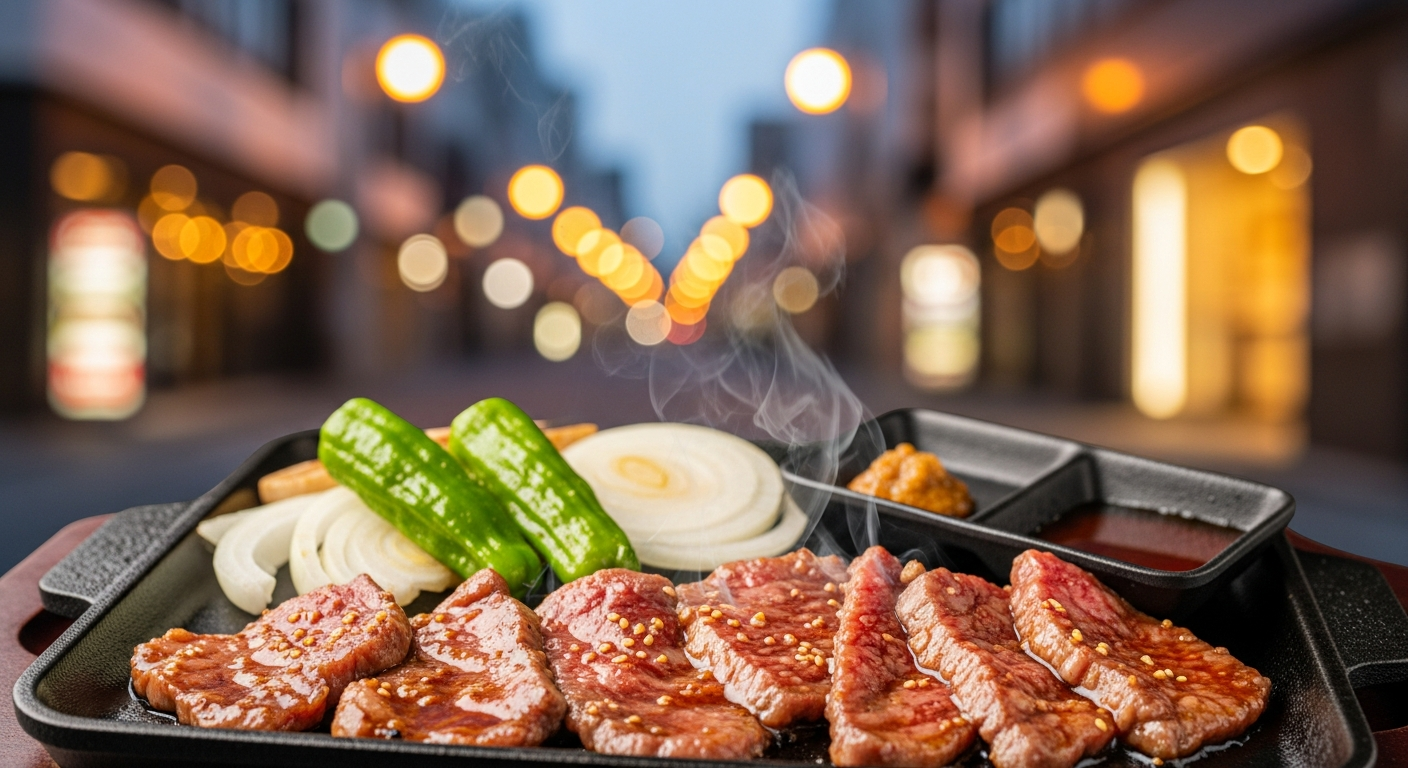
The owner personally selects A5-grade female kuroge wagyu and fresh raw offal, keeping prices well below what the quality would suggest. The signature five-second brisket — thin-sliced, barely kissed by the flame, wrapped around onion with house sauce — is the dish regulars order first. Reviews consistently flag the yukkhe at around ¥800 and the yakisuki at roughly ¥400 as absurdly good value for the grade of meat on offer. Book ahead; it fills up fast on weeknights.
2. Nikusho Sakura (肉匠 さくら)
- 📍 B1F, Tanimachi 333 Building, 2-7-4 Tanimachi, Chuo-ku, Osaka 540-0012
- 🕐 Dinner 17:00–23:00 (L.O. 22:30) (as of May 2026)
- 💰 ¥4,000–¥8,000 (food only) / ¥6,000–¥12,000 (with drinks)
- 🚃 Tanimachi 4-chome Station (5 min walk) / Tenmabashi Station (5 min walk)
- 🗺 Open in Google Maps
- 📋 Tabelog
What to order: Abe Wagyu omakase course (from ¥6,000 per person)
Nikusho Sakura buys whole carcasses of “Abe Wagyu” — an A5-grade Hokkaido breed that gained international attention at the G7 summit — direct from the farm, which means rare cuts appear on the menu that most yakiniku restaurants never see. The antique-styled basement dining room, with its VIP private rooms, makes this the right call for a business dinner or a date that needs to impress. Average dinner spend sits around ¥4,000 per person before drinks, which is reasonable for the pedigree.
3. Tanimachi Nikuhachi (谷町 肉八)
- 📍 1-2-6 Tanimachi, Chuo-ku, Osaka 540-0012
- 🕐 Lunch 11:30–14:00 (L.O. 13:30); Dinner 17:00–23:00 (L.O. 22:30); open Sundays (as of May 2026)
- 💰 ¥1,500–¥3,000 (lunch) / ¥3,500–¥6,000 (dinner, food only)
- 🚃 Tanimachi 6-chome Station (2 min walk)
- 🗺 Open in Google Maps
- 📋 Tabelog
What to order: Lunch wagyu set (from ¥1,500); dinner A4–A5 loin (¥1,800–¥2,500 per portion)
The owner personally selects A4–A5 grade beef, and the restaurant uses a far-infrared roaster that keeps the meat juicy without the smoke. The thin-sliced wagyu, quickly seared and dipped in house-made ponzu, is the move here — it’s the way regulars eat it. Lunch is the best-value entry point in the neighbourhood: a proper wagyu set for under ¥2,000, with banquet courses from ¥3,900 in the evening. Seats up to 24 for group bookings.
4. Yakiniku Uma Tanimachi 4-chome (焼肉 牛魔 谷町四丁目店)
- 📍 1-5-3 Tanimachi, Chuo-ku, Osaka 540-0012
- 🕐 Lunch 11:30–14:00; Dinner 17:00–23:00 (as of May 2026)
- 💰 ¥1,360 (lunch set) / ¥3,000–¥5,000 (dinner, food only)
- 🚃 Tanimachi 4-chome Station (3 min walk)
- 🗺 Open in Google Maps
- 📋 Tabelog
What to order: Kuroge wagyu yakiniku set lunch (¥1,360); domestic horumon (offal) platter (¥980)
Uma Tanimachi 4-chome serves A5-grade kuroge wagyu and domestic horumon at prices that make it a practical choice for both casual and celebratory meals. The restaurant buys whole carcasses through its own sourcing network, which keeps rare cuts on the menu and single-portion orders (from 50g) available — useful if you want to try several cuts without committing to a full plate of each. The lunch set at ¥1,360 is one of the most straightforward wagyu entry points in the area.
5. Yakinikuya Daibokujo Tanimachi (焼肉屋 大牧場 谷町店)
- 📍 Excel Dai-roku Building, 2-4-9 Tokiwamachi, Chuo-ku, Osaka 540-0028
- 🕐 Lunch 11:30–14:30; Dinner 17:00–23:00 (as of May 2026)
- 💰 ¥3,500–¥6,000 (all-you-can-eat course, food only) / ¥5,500–¥9,500 (with drinks)
- 🚃 Sakaisuji Honmachi Station (5 min walk)
- 🗣 English menu: Yes
- 🗺 Open in Google Maps
- 📋 Tabelog
What to order: Kuroge Wagyu all-you-can-eat course (from ¥3,500 per person)
Daibokujo Tanimachi serves only A5-grade beef carefully selected by its chefs, which makes it unusual for an all-you-can-eat format — most buffet-style yakiniku restaurants drop the grade significantly. Beyond the meat, the unlimited menu includes bibimbap, soup, and soft drinks, and the 90-minute format keeps things moving. It’s the most foreigner-friendly option on this list, with English menus and Klook vouchers available. Good for groups who want a reliable, no-surprises evening.
How to Order
Most Tanimachi yakiniku restaurants use a table grill — either charcoal (sumibiyaki) or a smokeless electric roaster. Staff will light or activate the grill when you sit down. At course-menu restaurants, dishes arrive in a set sequence; at a la carte spots, order as you go.
Pacing matters. Don’t pile everything on the grill at once. Wagyu fat burns fast, and overloaded grills produce smoke and uneven cooking. Two or three pieces at a time is the standard approach.
Dipping sauces. Most tables have both tare (sweet soy-based sauce) and salt options. For well-marbled cuts like kalbi or loin, salt and a squeeze of lemon lets the fat speak. Tare works better on leaner cuts and offal.
Booking. Maun and Nikusho Sakura both fill up by 19:00 on weekends — reserve at least a day ahead via Tabelog or the restaurant’s own booking page. Daibokujo accepts Klook reservations in English, which is the easiest option for non-Japanese speakers.
Lunch sets. Nikuhachi and Uma both run weekday lunch sets that include rice, soup, and a wagyu portion for under ¥2,000. These are not advertised in English anywhere, but you can simply point at the lunch board (ランチメニュー) near the entrance.
Solo dining. Uma and Maun are both comfortable for solo diners. Nikuhachi has a second-floor section specifically for single guests.
FAQ
Q: Is yakiniku in Tanimachi expensive?
A: It depends on the format. Lunch sets at Nikuhachi and Uma run ¥1,360–¥2,000 per person. A casual a la carte dinner at Maun lands around ¥3,000–¥5,000 with a couple of drinks. A full omakase course at Nikusho Sakura will cost ¥8,000–¥12,000 per person with drinks. The neighbourhood generally offers better value for the quality than Namba or Shinsaibashi.
Q: Do yakiniku restaurants in Tanimachi have English menus?
A: Daibokujo is the most reliably English-friendly, with translated menus and English-language booking options. The others are Japanese-only, but most have photo menus or QR codes that translate reasonably well with Google Lens. Staff at Maun and Uma are used to pointing and gesturing — it works fine.
Q: When is the best time to visit?
A: Weekday lunches (11:30–13:00) are the quietest and best-value window. Dinner from 18:00–19:00 is peak time at most spots — arrive at opening (17:00) or book ahead. Weekends fill up faster than weekdays across the board. The MICHI Osaka travel guide has more timing tips for navigating Osaka’s busiest dining hours.
Information is accurate as of May 2026. We recommend checking Google Maps for the latest hours and prices before visiting.