Last updated: July 3, 2026
This article reflects information available at the time of writing. Check Google Maps for the latest hours and availability.
Introduction
Nakazakicho is Osaka’s most self-consciously cool neighbourhood — renovated machiya townhouses, independent coffee roasters, vintage clothing shops — and it’s easy to assume the food scene skews towards brunch and natural wine. It doesn’t. Tucked between the narrow alleys and behind the shotengai arcade, there’s a surprisingly strong yakiniku scene that runs from cheap-and-cheerful drum-can BBQ joints to late-night A5 wagyu counters that would hold their own in Kitashinchi.
What makes eating yakiniku here different from, say, Namba or Shinsaibashi is the neighbourhood itself. You’re not fighting through tourist crowds to find your table. The restaurants are smaller, the atmosphere is more local, and the operators tend to be genuine enthusiasts rather than chain managers. Several of the spots below are run by people who eat at yakiniku restaurants obsessively and opened their own because they thought they could do it better.
This guide covers five verified, currently operating yakiniku restaurants within walking distance of Nakazakicho Station — from a harami-specialist with a cult following to a charcoal grill that stays open until 1 AM. Budget ranges from around ¥3,000 a head for a solid weeknight dinner to ¥8,000 if you’re going deep on A5 cuts and drinks. Reservations are strongly recommended at most of these; walk-ins on weekends are a gamble.
1. Yakiniku Tamaki (焼肉たまき)
- 📍 3-22 Kurozakicho, Kita-ku, Osaka 530-0015
- 🕐 Tue–Sat 17:00–05:00 (food LO 04:00); Sun & public holidays 17:00–03:00 (food LO 02:30); closed Monday (as of May 2026)
- 💰 ¥6,000–¥8,000 per person (food only)
- 🚃 Nakazakicho Station (1 min walk)
- 🗺 Open in Google Maps
- 📋 Tabelog
What to order: Black wagyu harami sashimi (¥1,480); A5 sirloin truffle TKG (¥1,980)
The owner eats at over 100 yakiniku restaurants a year and opened this place because he couldn’t find exactly what he wanted — premium A5 black wagyu at prices that don’t require a corporate expense account. The kitchen sources A5-grade black wagyu at reasonable prices, with the premium harami coming from the same suppliers used by high-end Kitashinchi restaurants. The signature move is the “divine liver” — a rare black wagyu seared harami sashimi served with grated wasabi — which has generated a serious repeat-customer following. Open until 5 AM on weekdays, so it doubles as one of the best late-night options in the area. Book ahead; walk-ins are rarely possible.
2. Sumibi Yakiniku Chosekai (炭火焼肉 超世界)
- 📍 1-5-19 Nakazaki, Kita-ku, Osaka 530-0016, 2F
- 🕐 Daily 18:00–01:00 (as of May 2026)
- 💰 ¥3,500–¥5,500 per person (food only)
- 🚃 Nakazakicho Station (1 min walk from Exit 1)
- 🗺 Open in Google Maps
- 📋 Tabelog
What to order: Daily 5-cut assorted platter (market price, approx. ¥1,800); yukhoe-jang ramen (¥880)
Backed by a Kyoto-based operator with a reputation for quality, Chosekai is a hideaway-style yakiniku spot in Nakazakicho where the raw preparations — heart sashimi, cheek sashimi — are as much a draw as the grilled cuts. The kitchen focuses on domestic beef throughout, with quality tongue and harami alongside rarer cuts that change with the day’s delivery. The house lemon sour is made in-store and worth ordering. Compact second-floor space, so reservations via DM or phone are the move.
3. Sumibi Yakiniku Shinchan (炭火焼肉 しんちゃん)
- 📍 Dozan-cho area, Kita-ku, Osaka (near Nakazakicho Station, south exit)
- 🕐 Tue–Sun 17:00–04:00; closed Monday (as of May 2026)
- 💰 ¥3,000–¥5,000 per person (food only) / ¥4,500–¥6,500 (with drinks)
- 🚃 Nakazakicho Station (5 min walk)
- 🗺 Open in Google Maps
- 📋 Tabelog
What to order: Thick-cut premium salt tongue (¥1,780); whole mino (beef tripe, ¥1,180); cold noodles (¥968)
A charcoal grill that runs until 4 AM and doesn’t take shortcuts on the sourcing. The restaurant uses charcoal to grill over a seven-rin, drawing out the full flavour of the meat. The thick-cut salt tongue is the standout — genuinely thick, not the thin-sliced version most places pass off as “premium.” Condiments including gochujang, sesame oil, and garlic are free on request. Course menus run ¥4,500–¥6,500 with an optional all-you-can-drink add-on for ¥1,500. A solid option for a group that wants to eat well without booking a month in advance.
4. Soso Kalbi Ushi Ten (ソソカルビ 牛天)
- 📍 2-1-1 Nakazaki, Kita-ku, Osaka 530-0016, 1F Ogawa Building
- 🕐 Daily from 17:00; check Google Maps for latest closing time (as of May 2026)
- 💰 ¥2,500–¥4,500 per person (food only)
- 🚃 Nakazakicho Station (2 min walk)
- 🗺 Open in Google Maps
- 📋 Tabelog
What to order: Bone-in kalbi (¥1,480); house soy tare set
In business for over 14 years, Ushi Ten is one of Osaka’s original drum-can yakiniku spots — the kind of place where you sit around a repurposed oil drum with a grill on top and eat bone-in kalbi dipped in the house soy tare. The bone-in kalbi with the house soy sauce is the signature dish, and it’s been drawing regulars since the restaurant opened. The format is casual and loud, better suited to a group of three or four than a quiet date night. Weekends fill up fast — call ahead.
5. Yakiniku Head Honten (焼肉 ヘッド 本店)
- 📍 Nakazakicho area, Kita-ku, Osaka (2F, look for the cow-face sign; 4 min from Exit 2)
- 🕐 Dinner only; check Google Maps for current hours (as of May 2026)
- 💰 ¥3,000–¥5,000 per person (food only)
- 🚃 Nakazakicho Station (4 min walk from Exit 2)
- 🗺 Open in Google Maps
- 📋 Tabelog
- 🌐 Official site
What to order: Head tongue assortment — 5 cuts including thick-sliced tongue and the rare “tongue base” (tange-ta) cut; yukhoe-jang ramen for the finish
Housed on the second floor of a renovated old building in Nakazakicho’s back streets, Yakiniku Head is identifiable by the cow-face sign outside. The owner is a talker, and the counter seats are where you want to be — you’ll end up in a conversation about beef cuts whether you planned to or not. The tongue assortment covers five different cuts, with the thick-sliced tongue as the most popular order, and the rare tange-ta (tongue base) as the one to ask about. Solo diners are explicitly welcome, which is rarer than it should be in this category.
How to Order
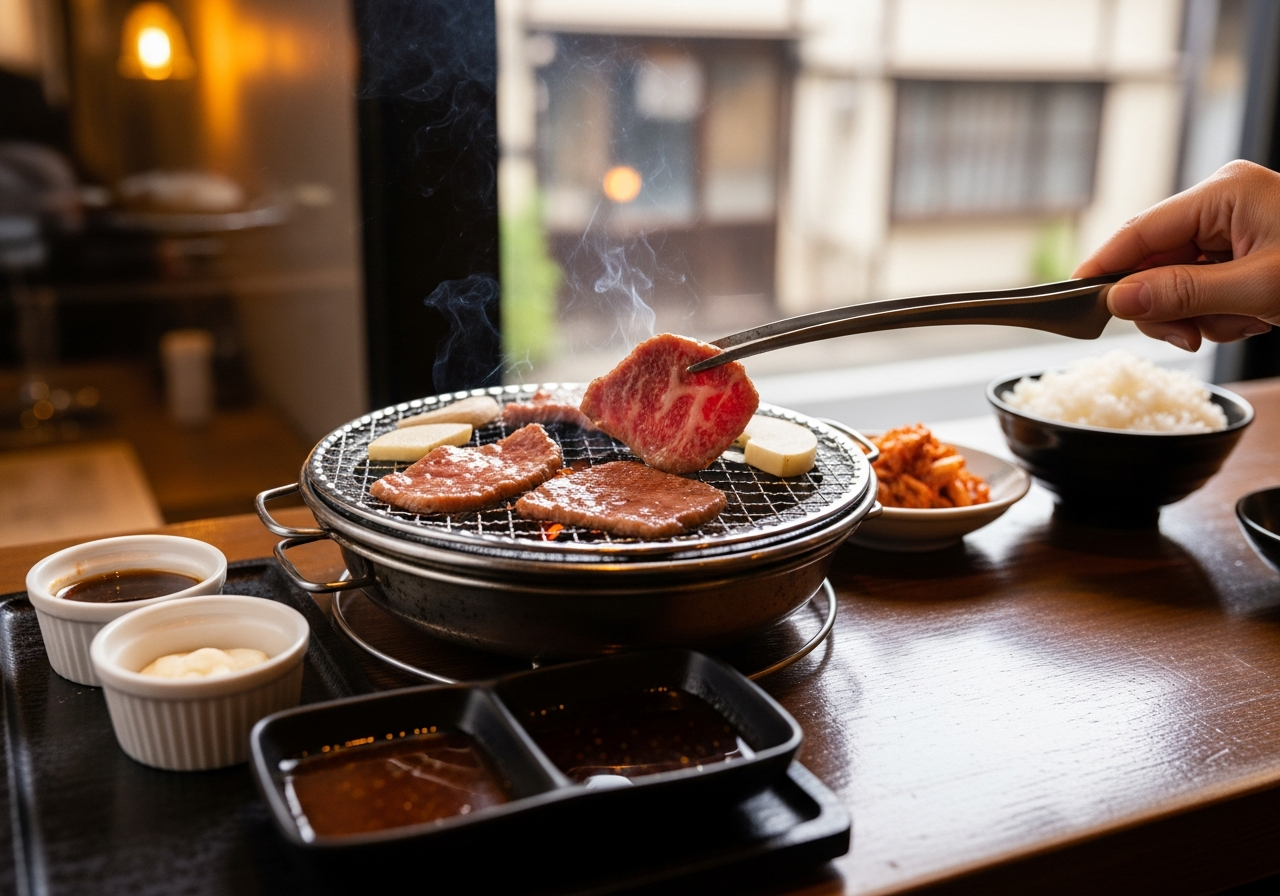
Most yakiniku restaurants in Nakazakicho operate on a table-grill system where you cook the meat yourself. Staff will usually demonstrate the correct technique for each cut when it arrives — pay attention, because harami and tongue cook very differently. As a rule: tongue goes on high heat, quick sear; harami needs medium heat and a rest before you cut into it; wagyu with heavy marbling should be cooked briefly on one side only.
Ordering sequence matters. Start with lighter cuts — tongue, lean red meat — before moving to fattier cuts like kalbi and marbled wagyu. Finish with a rice dish, cold noodles, or the house ramen if the restaurant offers one.
At most of these spots, you order by the plate (one plate typically serves one to two people). If you’re unsure how much to order, ask for the assorted platter first — it’s usually the best value and gives you a sense of what the kitchen does well before you start ordering individual cuts.
Reservations: Tamaki and Chosekai in particular fill up on weekends by early evening. Book via Tabelog, the restaurant’s Instagram DM, or by phone. For walk-ins, arriving right at opening time (17:00–18:00) is your best shot.
FAQ
Q: Is yakiniku in Nakazakicho expensive?
A: It depends on where you go. Ushi Ten and Shinchan will run you ¥3,000–¥4,500 per person with drinks — reasonable for a full dinner. Tamaki and Chosekai sit in the ¥5,000–¥8,000 range when you factor in drinks, but the quality of meat justifies it. None of these are the ¥15,000-per-head omakase wagyu experience you’d find in Kitashinchi.
Q: Do yakiniku restaurants in Nakazakicho have English menus?
A: Most don’t have printed English menus, but several have photo menus or QR-code ordering systems that make it easy to point and order. Tamaki has enough international visitors that staff are generally comfortable with basic English communication. Google Translate’s camera function works well for paper menus — photograph the menu and translate in real time.
Q: When is the best time to visit?
A: Weekday evenings between 18:00 and 20:00 are the sweet spot — restaurants are open, not yet at full capacity, and staff have time to explain the menu. Friday and Saturday nights are busy from 19:00 onwards; without a reservation, you’re likely to wait or be turned away at the most popular spots. Tamaki is open until 5 AM on weekdays, making it one of the few genuinely good late-night options in the area if you miss the dinner rush.
Information is accurate as of May 2026. We recommend checking Google Maps for the latest hours and prices before visiting.