Last updated: July 3, 2026
This article reflects information available at the time of writing. Check Google Maps for the latest hours and availability.
Introduction
Namba’s udon scene runs deeper than most visitors realise. While the crowds line up for takoyaki and okonomiyaki, locals quietly slip into narrow storefronts for bowls that have defined Osaka comfort food for generations. This isn’t the thick-noodle spectacle of Sanuki udon — Namba’s handmade bowls sit in the gentler, dashi-forward Kansai tradition, where the kelp does most of the work and patience does the rest.
From the legendary Chitose (1972), where Yoshimoto comedians invented “nikusui” — meat broth without noodles — to small counters serving ¥300 bowls, the district offers something rarer than ramen fame: generations of technique passed down through small family operations. These aren’t Instagram destinations — they’re workshops where noodles get cut fresh daily and the broth simmers without shortcuts.
Expect queues that move fast, no English menus, and flavours that explain how Osaka got its reputation as Japan’s kitchen. Below are five shops where “handmade” still means something.
1. Dotonbori Imai Honten (道頓堀今井本店)
- 📍 1-7-26 Dotonbori, Chuo-ku, Osaka-shi, Osaka 542-0071
- 🕐 11:00-21:00 (as of May 2026)
- 💰 ¥800–1,200 (food only) / ¥1,200–2,000 (with drinks)
- 🚃 Namba Station (8 min walk)
- 🗺 Open in Google Maps
- 📋 Tabelog
- 🌐 Official site
What to order: Kitsune udon (¥800)
Open since 1946, this Dotonbori institution built its reputation on a kelp-and-bonito dashi that’s never made in advance — they batch it fresh for exactly 30 bowls at a time, all day long. The signature nabe dishes showcase traditional udon-suki technique in a room that refuses to compromise on old-school Osaka service.
2. Chitose Honten (千とせ本店)
- 📍 8-1 Namba Sennichimae, Chuo-ku, Osaka-shi, Osaka 542-0075
- 🕐 10:30-14:30 (sold out = closed) (as of May 2026)
- 💰 ¥800–1,200 (food only)
- 🚃 Namba Station (3 min walk)
- 🕐 Closed: Tuesday, Friday
- 🗺 Open in Google Maps
- 📋 Tabelog
- 🌐 Official site
What to order: Nikusui with tofu (¥850) + Kodama egg rice (¥200)
What started as comedian Hanakikyō asking for “meat udon, hold the udon” during a 1970s hangover became Osaka’s most famous comfort-food invention. Lines form before 10:30am at this four-hour-only operation; the signature nikusui layers beef and scallions over a hidden poached egg in a bonito-rich broth regulars drink to the bottom.
3. KASUYA Hozenji Ten (加寿屋法善寺店)
- 📍 1-5-20 Namba, Chuo-ku, Osaka-shi, Osaka 542-0076
- 🕐 11:00-02:00 (Mon-Thu, Sun), 11:00-03:00 (Fri-Sat) (as of May 2026)
- 💰 ¥500–800 (food only)
- 🚃 Osaka Namba Station (4 min walk)
- 🗺 Open in Google Maps
- 📋 Tabelog
What to order: Kasu udon (¥550)
A narrow counter-only spot built around kasu udon — an Osaka dish topped with fried beef-intestine cracklings that get more flavourful the more you chew. Free rice balls until 5pm and late-night service make this the local after-work essential; lunch runs until 5pm daily.
4. Tenmasa (天政)
- 📍 3-3-3 Namba, Chuo-ku, Osaka-shi, Osaka 542-0076
- 🕐 09:00-19:00 (as of May 2026)
- 💰 ¥300–600 (food only)
- 🚃 Namba Station (4 min walk)
- 🗺 Open in Google Maps
- 📋 Tabelog
What to order: Tempura udon (¥360) + Kayaku gohan (¥200)
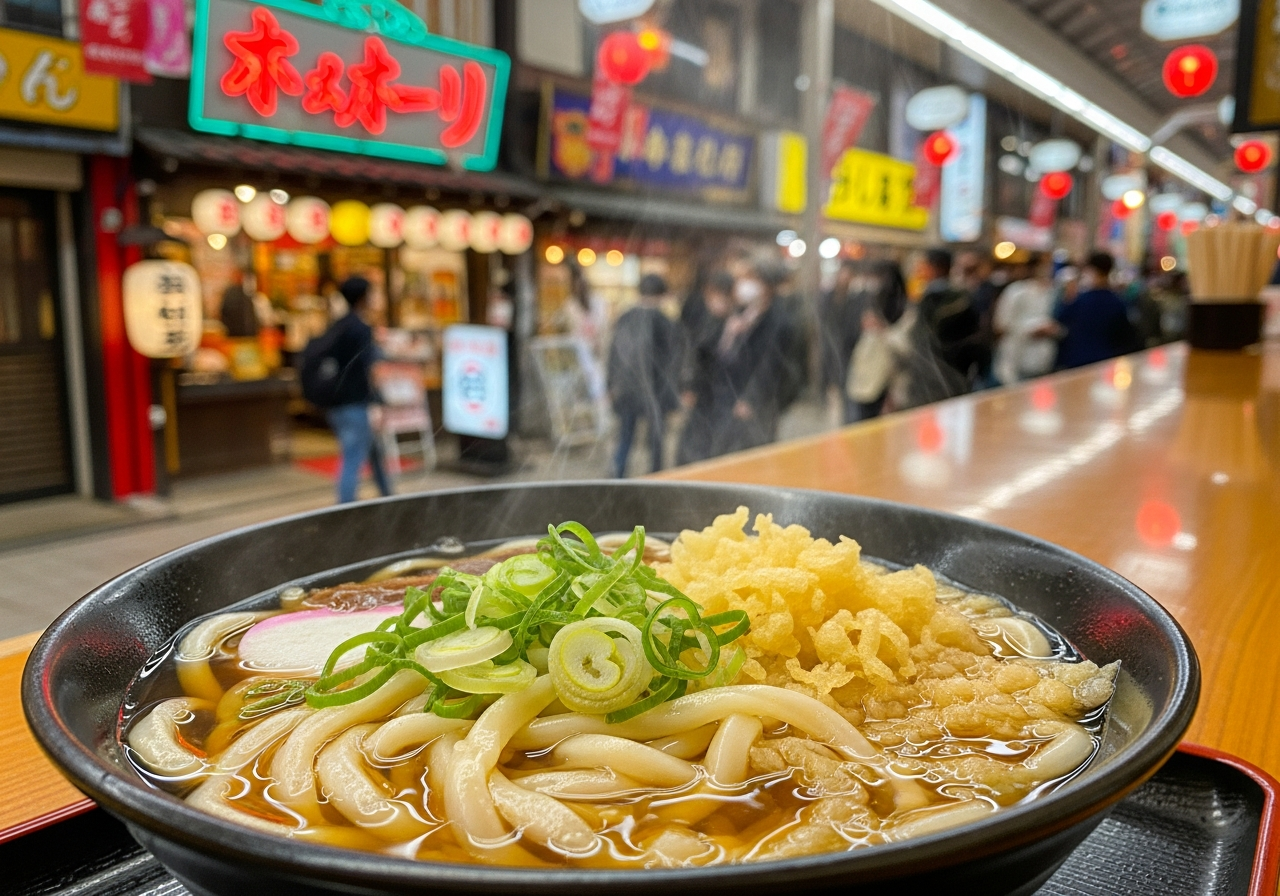
A Tabelog 100 Famous Stores pick that has anchored Namba’s food culture for generations — with prices and flavours that seem to ignore inflation. The tempura udon comes with whole shrimp rather than the thin discs you’ll see elsewhere, and the kayaku gohan (seasoned rice) shows the same dashi work that carries the bowls.
5. Mimiu Namba Ten (美々卯なんば店)
- 📍 5-1-18 Namba, Chuo-ku, Osaka-shi, Osaka (Namba Dining Maison 7F)
- 🕐 11:00-22:00 (as of May 2026)
- 💰 ¥1,500–2,500 (food only) / ¥2,500–4,000 (with drinks)
- 🚃 Nankai Namba Station (1 min walk)
- 🗺 Open in Google Maps
- 📋 Tabelog
- 🌐 Official site
What to order: Udon-suki for two (¥3,600 each)
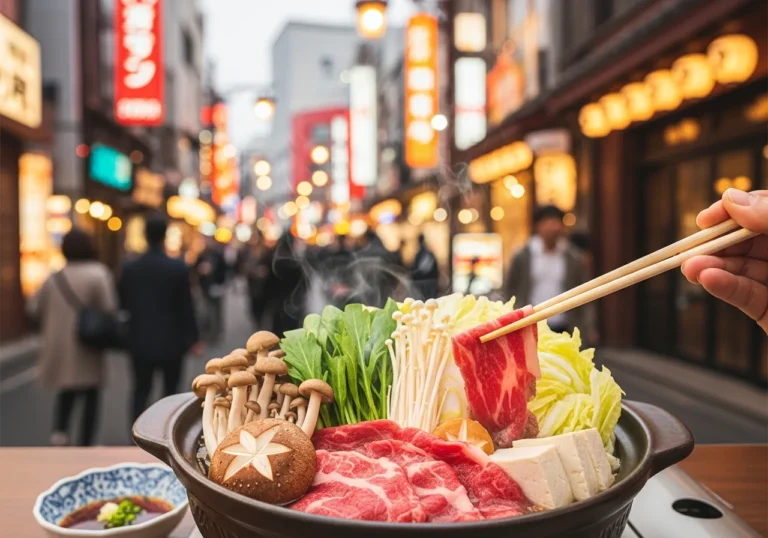
A 250-year-old institution that perfected udon-suki — a refined hot pot where handmade noodles share the pot with premium ingredients in a dashi that takes two hours of daily prep. The golden broth runs on bonito and Rishiri kelp; the noodles are specially formulated so they don’t overcook during the tableside service. Simple ingredients turned into Osaka’s most elegant comfort food.
How to Order
Most traditional Namba udon shops are cash-only with no English menu. Point at the next table or use basic Japanese: “kitsune udon” (sweet fried tofu), “tempura udon” (with shrimp tempura), or “niku udon” (with beef). Counter seating dominates — grab any open spot and order immediately. Add-on toppings like “kimchi” (scallions), “tamago” (egg), or “niku” (extra meat) run an additional ¥100–200.
At Chitose, the standard order for nikusui is “nikusui, kodama” — the meat broth with the egg rice. At Kasuya, ask for “tofu iri” if you want tofu on top of the kasu udon. At Tenmasa, you need to say both items: “tempura udon, kayaku gohan.” Peak lunch (12:00–13:00) means a longer wait outside but faster service inside.
Water is self-serve from pitchers at most spots. Finish the bowl — leaving broth reads as a complaint about the flavour. Payment is after the meal at the traditional places, before at the more modern operations. Several shops close when ingredients run out, regardless of the posted hours.
FAQ
Q: Is udon in Namba expensive?
A: Traditional spots run ¥300–800 for a basic bowl, ¥1,000–1,200 with premium toppings. Mimiu’s udon-suki is the top end at ¥3,600 per person; Tenmasa holds the line at an impossibly low ¥220 kake udon.
Q: Do shops in Namba have English menus?
A: Rarely. Traditional counter shops serve regulars who’ve ordered the same bowls for decades. Pointing works fine. Mimiu offers more tourist-friendly service on Takashimaya’s dining floor.
Q: When is the best time to visit?
A: Early lunch (11:30am) or mid-afternoon (around 2:30pm) avoids peak crowds. Chitose needs a morning arrival given its limited hours. Late-night options include Kasuya (until 2–3am) and a few 24-hour operations near the major stations.
Information is accurate as of May 2026. We recommend checking Google Maps for the latest hours and prices before visiting.