Last updated: July 3, 2026
This article reflects information available at the time of writing. Check Google Maps for the latest hours and availability.
Introduction
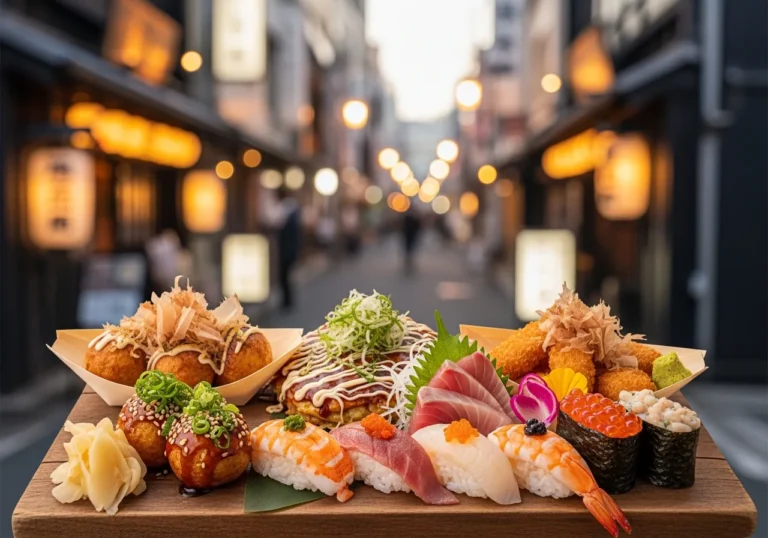
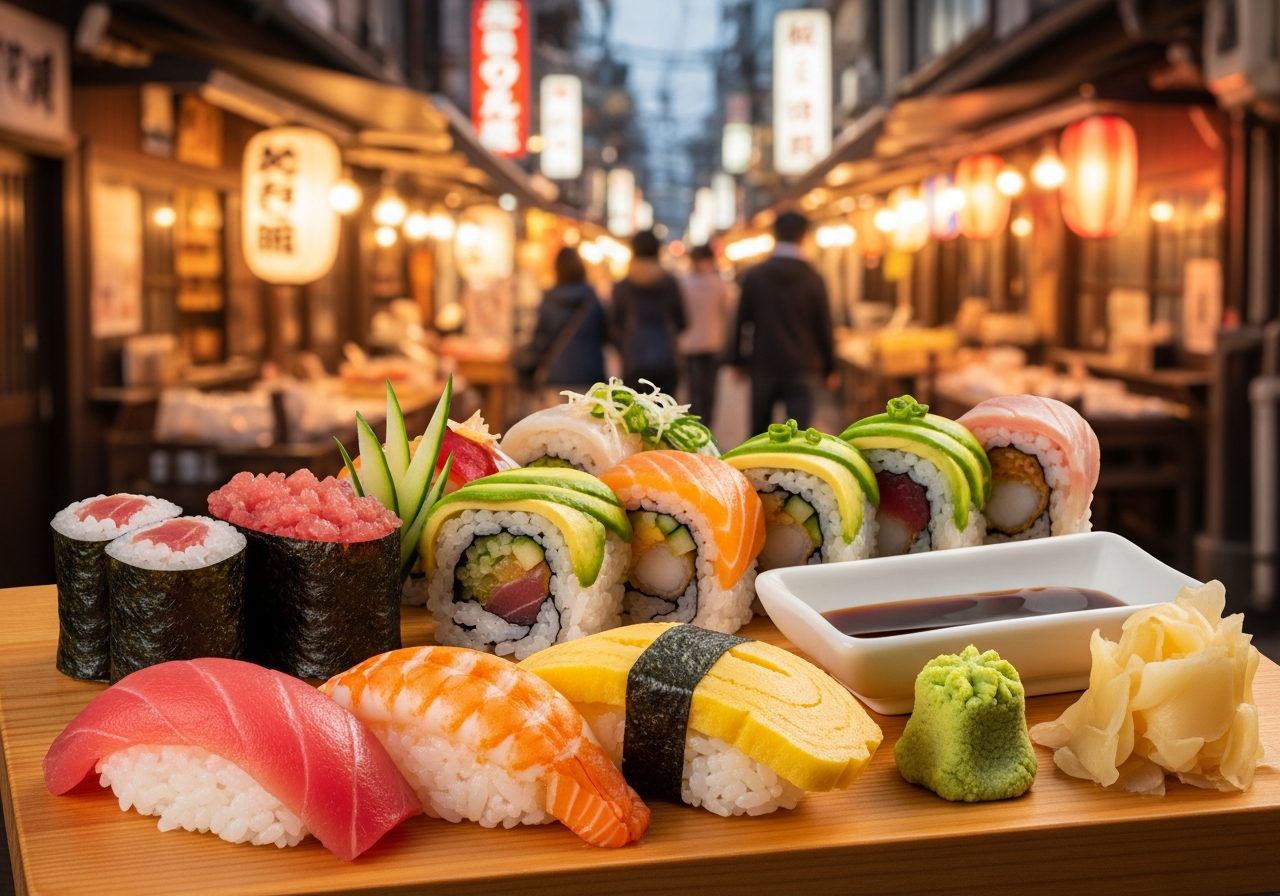
Tenma doesn’t do subtle. Japan’s longest shopping street, Tenjinbashi-suji, runs straight through it, and the side streets branching off are packed with sushi counters at every price point — from standing bars where two pieces of toro cost ¥550 to omakase rooms where reservations run over a year out. The neighbourhood has earned a genuine reputation as Osaka’s sushi district, and it deserves it.
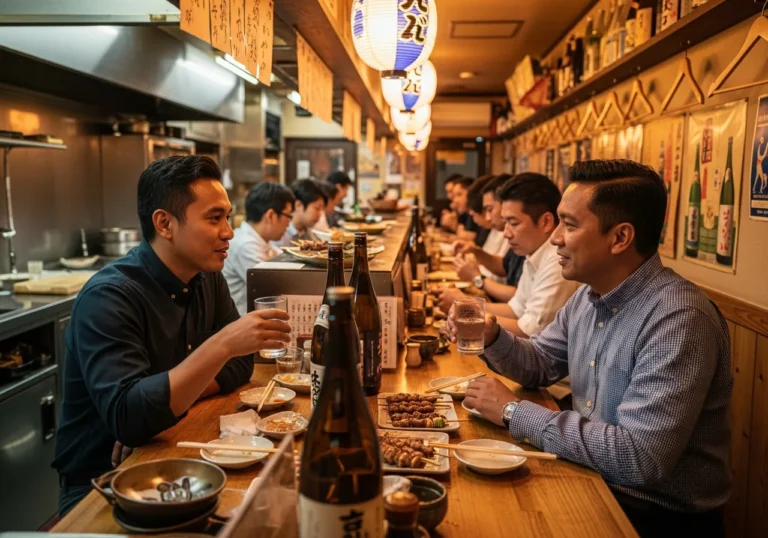
What makes Tenma different from Namba or Shinsaibashi isn’t just price — it’s atmosphere. This is a working-class drinking neighbourhood that happens to have serious fish. You’ll find yourself eating abalone at a counter next to a salaryman on his third beer at 5pm, and that’s exactly the point. The sushi here is confident, not performative.
This guide covers five counters across the full spectrum: the legendary standing-style neighbourhood institution that draws hour-long queues, a 50-year-old multi-branch operation that feeds the whole street, a red-vinegar sushi bar built for drinking, a market-stall counter with oversized toppings, and one of Osaka’s most coveted omakase rooms — a 10-seat counter where reservations are booked more than a year in advance. Whether you have ¥2,000 or ¥30,000, Tenma has a seat for you.
1. Harukoma Honten (春駒 本店)
- 📍 2-5-2 Tenjinbashi, Kita-ku, Osaka
- 🕐 Tue–Sun 11:30–22:00 (last entry varies; popular items sell out early) as of May 2026
- 💰 ¥2,000–¥4,000 per person (food only)
- 🚃 Tenjimbashisuji Rokuchome Station (4 min walk) / JR Tenma Station (5 min walk)
- 🗺 Open in Google Maps
- 📋 Tabelog
What to order: Toro (¥550 for 2 pieces), unagi (¥440 for 2 pieces), awabi (¥550 for 2 pieces)
Harukoma is the reason people talk about Tenma sushi in the first place. Founded in 1954, it operates on a write-your-order-on-paper system, serves over 100 types of nigiri starting from ¥165 for two pieces, and regularly has 50 people queuing outside the main branch before dinner. The toppings are famously oversized — the unagi alone is worth the wait. Go before 5pm if you want first pick of the premium cuts; popular items disappear fast. The branch location at 5-6-8 Tenjinbashi (Harukoma Shiten) typically has a shorter queue and is a perfectly reasonable alternative.
2. Sushi Masa Nakaten (すし政 中店)
- 📍 5-6-19 Tenjinbashi, Kita-ku, Osaka
- 🕐 Tue–Sun 11:10–23:00 (lunch 11:20–17:00) as of May 2026
- 💰 ¥1,500–¥3,000 per person (food only)
- 🚃 JR Tenma Station (5 min walk)
- 🗺 Open in Google Maps
- 📋 Tabelog
What to order: Service teishoku lunch set (¥660 with miso soup), toro (¥550 for 2 pieces)
Sushi Masa has been feeding Tenma for over 50 years and now runs multiple branches within a few minutes’ walk of each other — the Nakaten (middle branch) is the most accessible. The system is the same as Harukoma: write your order on a slip of paper and hand it over. Two pieces start at ¥110, the shari is small so the toppings dominate, and the lunch set at ¥660 is one of the best-value meals in this part of Osaka. It’s a no-ceremony, all-substance counter — the kind of place where you eat fast, drink well, and leave happy.
3. Tenma Sakaba Sushi Kin (天満酒場 すし金)
- 📍 2-3-2 Tenjinbashi, Kita-ku, Osaka (2 min walk from JR Tenma Station north exit)
- 🕐 Lunch and dinner daily; irregular holidays (closed Dec 31–Jan 3) as of May 2026
- 💰 ¥1,500–¥3,500 per person (food only) / ¥2,500–¥5,000 (with drinks)
- 🚃 JR Tenma Station (2 min walk)
- 🗣 English menu: QR code ordering system available
- 🗺 Open in Google Maps
- 📋 Tabelog
- 🌐 Official site
What to order: Uni and ikura luxury sushi (¥1,100), hon-maguro otoro teppomaki (¥990), nigiri from ¥330 per piece
Sushi Kin is the most foreigner-friendly counter in Tenma — QR code ordering, some English-speaking staff, and a bright, unhurried room with both counter and table seating. The red-vinegar shari has a sharp, clean acidity that works well against fatty toppings, and the “nadare sushi” — a tower of salmon, tuna, and ikura — is the kind of thing that photographs well and tastes even better. Come for a long lunch or an early evening drink; the oden and tempura side dishes are worth ordering alongside the nigiri.
4. Anaba Tenma (穴場 天満店)
- 📍 1-8-1 Tenjinbashi, Kita-ku, Osaka
- 🕐 Dinner daily (check ahead for lunch hours) as of May 2026
- 💰 ¥2,500–¥5,000 per person (food only) / ¥3,500–¥7,000 (with drinks)
- 🚃 JR Tenma Station (1 min walk)
- 🗺 Open in Google Maps
- 📋 Tabelog
What to order: Anaba-maki (house roll, price varies), seasonal nigiri omakase selection
Anaba sits one minute from Tenma Station and has built a loyal following on the strength of its toppings — the salmon alone is reportedly too large to eat in a single bite. The kitchen uses a heritage Edo-period vinegar process and a specific rice variety called Hatsuyuki, and the 200-plus item menu means you can spend a full evening here without running out of things to try. Phone reservations on the day are no longer reliable; book ahead or arrive early.
5. Osaka Tenmangu Sushi Toyonaga (大阪天満宮 鮨とよなが)
- 📍 2-5-3 Tenjinbashi, Kita-ku, Osaka
- 🕐 Mon–Fri, two seatings: 17:30–20:00 and 20:30–23:00; closed 1st & 2nd Wednesdays, 3rd–5th Sundays as of May 2026
- 💰 Omakase course from ¥29,000–¥33,000 per person (food only)
- 🚃 Osaka Tenmangu Station (1 min walk)
- 🗺 Open in Google Maps
- 📋 Tabelog
What to order: Omakase course (¥29,000–¥33,000); the anago (conger eel) in both salt and tare is the signature piece
Ten counter seats. Reservations booked well over a year in advance. The chef trained at Sushi Noguchi in Kitashinchi — one of Osaka’s most respected high-end sushi houses — and the omakase here reflects that rigour: tuna sourced from Tokyo’s Toyosu market, uni from Hokkaido, shari cooked to order in a clay pot for each sitting, and individual plates made by a single ceramic artist. The room is a sukiya-style space near Osaka Tenmangu Shrine, and the atmosphere, despite the price, is warm rather than stiff. This is Tenma’s answer to the question of what Osaka sushi looks like at its absolute ceiling. Plan at least six months ahead, ideally more.
How to Order
At the neighbourhood counters — Harukoma, Sushi Masa, and their peers — the system is almost always the same: you write your order on a small slip of paper and hand it to the chef or a server. Pieces come in pairs (two pieces per order), and prices are listed per plate. There’s no pressure to order a set amount; most locals graze through five to ten plates over an hour or two, mixing nigiri with a bowl of red miso soup (asari or fish-based, both worth ordering).
At Sushi Kin, QR code ordering makes the process easy for non-Japanese speakers. At Anaba, the menu is extensive — ask the chef what’s fresh that day rather than working through the list.
For Sushi Toyonaga, reservations are essential and must be made months in advance via TableCheck or by phone. The omakase is a set course with no substitutions; dietary restrictions should be communicated at the time of booking.
Across all five counters, counter seats are preferable to table seats — you’ll see the fish, interact with the chef, and get pieces at their best temperature. Arrive early at the walk-in spots; popular toppings like toro, uni, and awabi sell out before closing time.
FAQ
Q: Is sushi in Tenma expensive?
A: It covers the full range. At Harukoma and Sushi Masa, you can eat well for ¥2,000–¥3,000 per person including drinks. Sushi Kin and Anaba run ¥3,000–¥5,000 with alcohol. Sushi Toyonaga’s omakase starts at ¥29,000 per person, food only.
Q: Do the sushi shops in Tenma have English menus?
A: Sushi Kin has QR code ordering that works well in English. At Harukoma and Sushi Masa, the paper-slip ordering system is straightforward — most items are listed with prices, and pointing works fine. Sushi Toyonaga is omakase only, so no menu is needed; the chef will explain each piece.
Q: When is the best time to visit?
A: For Harukoma and Sushi Masa, weekday afternoons between 3pm and 5pm are your best shot at a short wait. Weekends from 6pm onward can mean queues of 30–50 people at the main Harukoma branch. Sushi Kin and Anaba are easier to walk into on weeknights. Sushi Toyonaga is fully reservation-only, so timing is irrelevant — just book as far ahead as possible.
Information is accurate as of May 2026. We recommend checking Google Maps for the latest hours and prices before visiting.