Last updated: July 3, 2026
This article reflects information available at the time of writing. Check Google Maps for the latest hours and availability.
Introduction
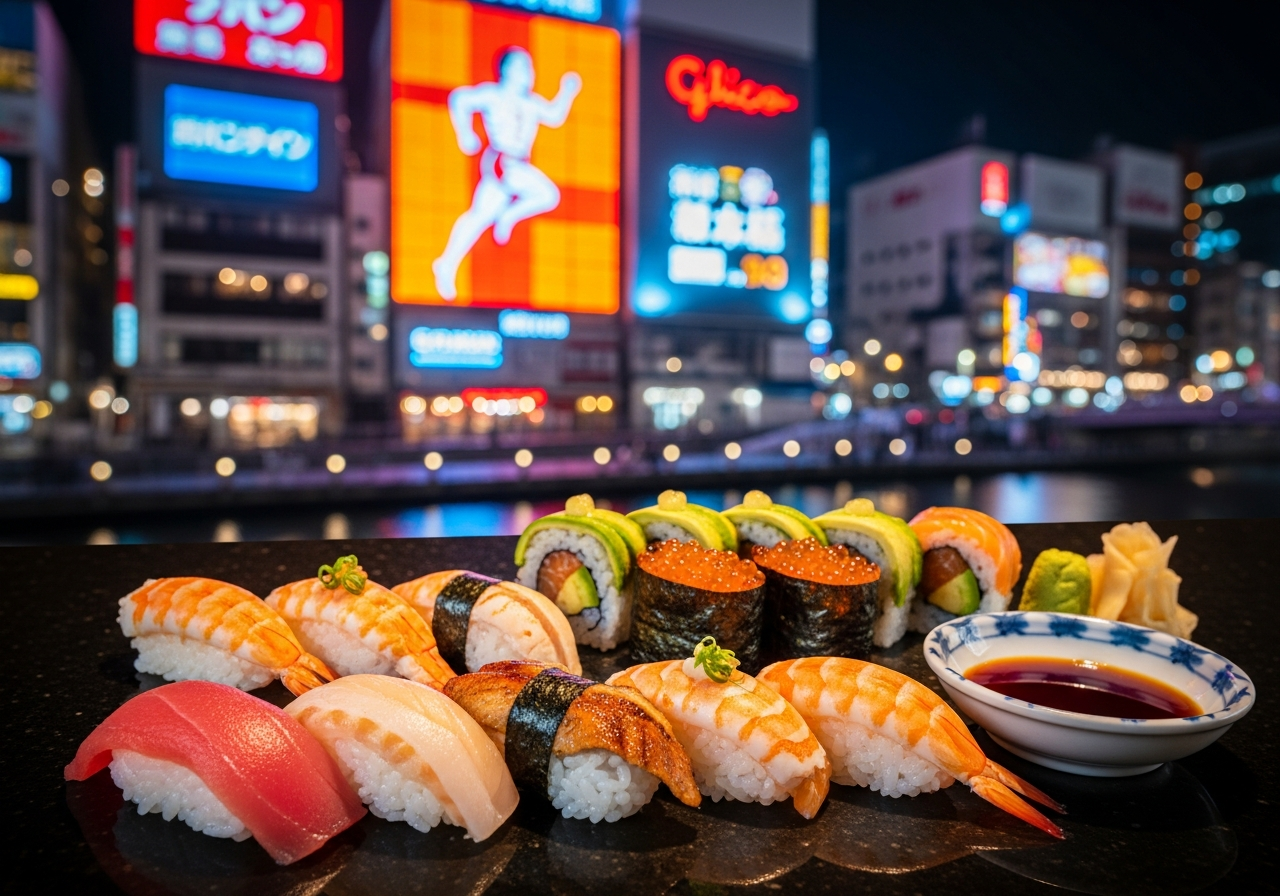
Dotonbori is best known for takoyaki and okonomiyaki, but tucked between the chaos is some of Osaka’s most varied sushi. The strip runs from 24-hour chains slinging fresh tuna to intimate counters working Edomae classics — quick kaiten on one end, full omakase on the other. The tourist traffic means English menus are common, and it also keeps the bar high; the chefs here know they’re being judged by sushi fans from everywhere.
What you don’t always get in Osaka is the combination here: dock-to-counter freshness from direct fishery deals, paired with the kind of presentation Dotonbori does well. Expect “bucchigiri” cuts hanging off the rice next to precise, classical work. Several counters stay open past midnight too — Dotonbori is one of the few places in Japan where late-night sushi after a show or a bar is genuinely on the table.
1. Sushizanmai Dotonbori (すしざんまい 道頓堀店)
- 📍 1-7-21 Dotonbori, Chuo-ku, Osaka 542-0071 (Nakaza Kuidaore Building 1F)
- 🕐 11:00-05:00 (as of May 2026)
- 💰 ¥2,000-3,000 (food only) / ¥3,000-4,500 (with drinks)
- 🚃 Namba Station (5 min walk)
- 🗣 English menu: Available
- 🗺 Open in Google Maps
- 📋 Tabelog
What to order: Hon-maguro sammai (¥1,980)
The flagship of Japan’s tuna-obsessed sushi chain, life-sized cardboard of the president and all. Open nearly 24 hours, which makes it the default for a late-night sushi rescue.
2. Daiki Suisan Kaiten Sushi Dotonbori (大起水産回転寿司 道頓堀店)
- 📍 1-7-24 Dotonbori, Chuo-ku, Osaka 542-0071 (Shikairo Dotonbori Building 1F)
- 🕐 11:00-23:00 (as of May 2026)
- 💰 ¥1,500-2,500 (food only) / ¥2,000-3,500 (with drinks)
- 🚃 Namba Station (5 min walk)
- 🗣 English menu: Available
- 🗺 Open in Google Maps
- 📋 Tabelog
What to order: Hon-maguro kama-toro (¥550)
There’s a daily tuna-breakdown show in the open kitchen — same-day fish from their own buyers at Sakaiminato port. Plates start at ¥110, which makes this the most democratic sushi in Osaka.
3. Ganko Sushi Dotonbori (がんこ寿司 道頓堀店)
- 📍 1-8-24 Dotonbori, Chuo-ku, Osaka 542-0071
- 🕐 Mon-Thu, Sun: 11:30-22:00 / Fri-Sat: 11:30-22:00 (as of May 2026)
- 💰 ¥1,500-2,500 (food only) / ¥2,500-4,000 (with drinks)
- 🚃 Namba Station (4 min walk)
- 🗺 Open in Google Maps
What to order: Anago (sea eel) nigiri set (¥1,280)
The first thing you see is the giant “ganko oyaji” (stubborn old man) statue glaring at the street. Inside, the cutting and prep happens at open counters in full view of the room.
4. Uoshin Minami (魚心 南店)
- 📍 1-7-9 Sennichimae, Chuo-ku, Osaka 542-0074 (Aji Building Minami 1F)
- 🕐 Mon-Sun: 11:30-23:00 (as of May 2026)
- 💰 ¥2,000-3,500 (food only) / ¥3,000-5,000 (with drinks)
- 🚃 Osaka Namba Station (4 min walk)
- 🗺 Open in Google Maps
- 📋 Tabelog
What to order: Anago no tomoe-nigiri (¥680)
Known for “bucchigiri” sushi — fish cuts three times the usual size, hanging off the rice. Their signature “tomoe” piece wraps thick eel all the way around the rice ball.
5. Genroku Sushi Dotonbori (元禄寿司 道頓堀店)
- 📍 1-6-9 Dotonbori, Chuo-ku, Osaka 542-0071 (Matsukawa Building)
- 🕐 Daily: 11:00-22:30 (as of May 2026)
- 💰 ¥1,000-2,000 (food only) / ¥1,500-2,500 (with drinks)
- 🚃 Osaka Namba Station (5 min walk)
- 🗺 Open in Google Maps
- 📋 Tabelog
What to order: Aburi anago (¥220)
The original kaiten sushi shop — this is where the conveyor belt started, back in 1958. The purple signage and tuna-shaped hand logo make it impossible to miss on the main drag.
6. Sushi-dokoro Ginza-zushi (すし処 銀座鮨)
- 📍 4-12 Soemoncho, Chuo-ku, Osaka 542-0084 (Shunpan Building 1F)
- 🕐 17:30-06:30 (next day) (as of May 2026)
- 💰 ¥3,000-4,000 (food only) / ¥4,500-6,000 (with drinks)
- 🚃 Nihonbashi Station (4 min walk)
- 🗺 Open in Google Maps
What to order: Ginza-maki special roll (¥880)
A late-night institution that became famous as Takeshi Rikiya’s regular spot in the “Minami no Teio” yakuza films. Open until 6:30am, no days off — the after-hours sushi address.
7. Sushi Shiorian Yamashiro Namba (鮨 栞庵やましろ 難波店)
- 📍 3-3 Soemoncho, Chuo-ku, Osaka 542-0084 (Canal Side Soemoncho 8F)
- 🕐 Weekdays: Lunch 11:30-14:00, Dinner 17:00-23:00 / Weekends: Lunch 11:30-14:00, Dinner 16:00-23:00 (as of May 2026)
- 💰 ¥12,000-18,000 (food only) / ¥15,000-25,000 (with drinks)
- 🚃 Nihonbashi Station (2 min walk)
- 🗺 Open in Google Maps
- 🌐 Official site
What to order: Omakase nigiri course (¥14,800)
The Osaka outpost of a Michelin-starred Ginza institution — classic Edomae technique, eight floors up, looking out over the neon. Entry-level omakase starts at ¥11,800.
How to Order
Kaiten shops like Daiki Suisan and Genroku price by plate colour — grab whatever looks good as it goes past. At traditional counters, point to the display case or say “osusume” (chef’s choice). Most shops in the tourist zone have English menus, and hand gestures handle the rest.
At the higher-end places like Yamashiro, reservations are essential and omakase is the default. Lunch is significantly better value — the ¥5,800 lunch omakase is close in quality to dinner courses that cost twice as much. For late-night, Sushizanmai and Ginza-zushi stay open past midnight long after the rest have closed.
FAQ
Q: Is sushi in Dotonbori expensive?
A: Kaiten plates start at ¥110; high-end omakase runs ¥11,800–18,000. Mid-range counter service averages ¥2,500–4,000 per person.
Q: Do shops in Dotonbori have English menus?
A: Most chains and tourist-facing shops have English menus and multilingual staff. Traditional counters lean more on pointing and gestures.
Q: When is the best time to visit?
A: Peak times mean long queues, especially at Genroku. Early afternoons and late evenings are quieter. A handful of shops stay open past midnight for post-show dinners.
Information is accurate as of May 2026. We recommend checking Google Maps for the latest hours and prices before visiting.