Last updated: July 3, 2026
This article reflects information available at the time of writing. Check Google Maps for the latest hours and availability.
Introduction
Kyobashi doesn’t try to impress you. It just works. Step off the JR Loop Line at the east exit after 5pm and you’ll walk straight into one of Osaka’s most concentrated drinking districts — a tangle of covered arcades, neon-lit alleys, and the low rumble of trains overhead. Much of Kyobashi’s drinking district resembles a perfectly preserved film set from the Showa Era, Japan’s post-war economic boom period. The tachinomi — the standing bar — is the engine that keeps it all running.
Tachinomi culture here isn’t a trend or a tourist attraction. This era shaped the modern salaryman image: grueling work hours, unwavering company loyalty, and the essential after-work drinking sessions. The tachinomi bars that thrived during this time were designed for one purpose: to serve cheap, satisfying food and drinks quickly and efficiently to a massive workforce. That DNA is still very much alive. You’ll find ¥350 chuhai, ¥500 sashimi platters, and counters packed shoulder-to-shoulder with office workers, retirees, and the occasional curious traveller.
What makes Kyobashi different from, say, Namba or Shinsaibashi is the lack of performance. Nobody’s here to be seen. The food is the point — and if you want to understand what the best food in Osaka actually tastes like at street level, this is where you start. This guide covers ten standing bars worth your time, from a legendary blowtorch seafood stall to a newly reopened neighbourhood classic. Plan to hit three or four in a single evening — that’s the whole idea.
Ready to explore more of Kyobashi? Start with the east exit and work your way through the alleys. You won’t need a reservation at any of these places. You’ll just need to show up.
1. Izakaya Toyo (居酒屋とよ)
- 📍 3-2-26 Higashinodamachi, Miyakojima-ku, Osaka
- 🕐 Tue, Wed, Fri, Sat: approx. 3:30pm–7:00pm (sells out early) (as of May 2026)
- 💰 ¥1,500–¥3,500 per person (food + drinks)
- 🚃 Kyobashi Station (JR / Keihan / Osaka Metro) — 2 min walk
- 🗺 Open in Google Maps
- 📋 Tabelog
What to order: Aburi maguro hoho-niku / blowtorched tuna cheek (¥450 per half order)
Chef Toyo — Toyoji Chikumoto — works the counter with a blowtorch that he handles with the confidence of someone who has been doing this since 1992. The Tabelog Tachinomi Hyakumeiten recognition places Toyo among the hundred best standing bars in Japan — and on a Tuesday evening, the queue will tell you everything you need to know. Open four days a week only; arrive by 4pm or expect to wait.
2. Tachinomi Kimuraya (立ち飲み木村屋)
- 📍 1-8-24 Higashinodamachi, Miyakojima-ku, Osaka
- 🕐 Mon–Sat: approx. 3:00pm–11:00pm (as of May 2026)
- 💰 ¥1,000–¥2,500 per person (food + drinks)
- 🚃 Kyobashi Station (Osaka Metro Nagahori Tsurumi-ryokuchi Line) — 1 min walk
- 🗺 Open in Google Maps
- 📋 Tabelog
What to order: Assorted meat platter, 4 types (¥500); draft beer (¥400)
Located in Kyobashi, Osaka, Tachinomi Kimuraya is a popular standing bar known for its delicious meat dishes. The yellow-painted exterior is hard to miss right by the Metro exit. It’s the kind of place where regulars come five times a week — and the prices make that entirely understandable.
3. Marushin (まるしん / 丸進)
- 📍 3-2-19 Higashinodamachi, Miyakojima-ku, Osaka
- 🕐 Mon–Sat: approx. 12:00pm–10:00pm; Sun: 12:00pm–9:00pm (as of May 2026)
- 💰 ¥1,000–¥2,500 per person (food + drinks)
- 🚃 Kyobashi Station (JR Osaka Loop Line) — 3 min walk
- 🗺 Open in Google Maps
- 📋 Tabelog
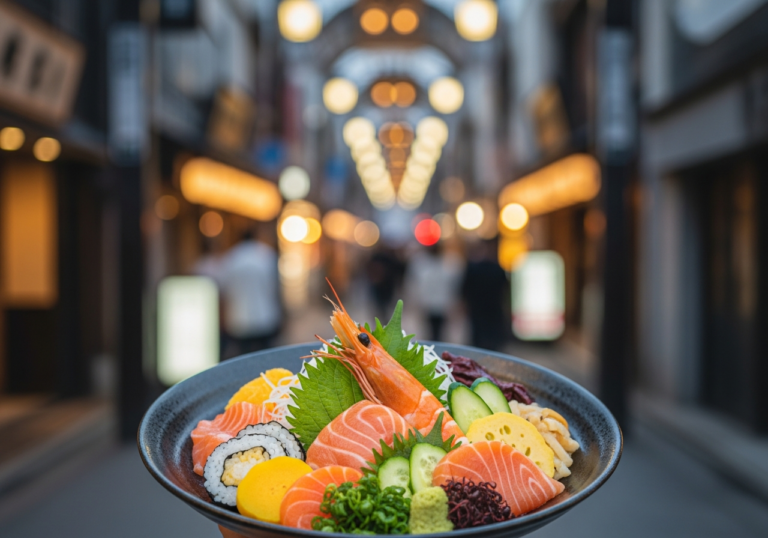
What to order: Sashimi assortment, 3 types (¥550); dashimaki tamago (¥350)
A Kyobashi institution on the so-called “tachinomi street” north of the station. Marushin reopened on January 23, 2025, with the original master’s son taking over the reins. The menu and the Showa-era atmosphere are largely intact — fresh sashimi, cold beer, and a counter that fills up fast after 6pm. Worth noting: the legendary original owner has retired, so the vibe is slightly quieter than the old days, but the food quality holds.
4. Washington Shokudo (ワシントン食堂)
- 📍 2-9-1 Higashinodamachi, Miyakojima-ku, Osaka
- 🕐 Mon–Fri: approx. 4:00pm–11:00pm; Sat–Sun: approx. 12:00pm–11:00pm (as of May 2026)
- 💰 ¥1,000–¥2,500 per person (food + drinks)
- 🚃 Kyobashi Station (JR Osaka Loop Line) — 3 min walk
- 🗺 Open in Google Maps
- 📋 Tabelog
What to order: Yakiton skewers (¥150–¥200 each); large bottle Akaboshi beer (¥390)
Washington Shokudo opened in October 2024 as the sister store of the long-established liquor wholesaler’s standing bar Lincoln Shokudo, serving yakiton and Western-style dishes. The no-smoking policy is a genuine rarity on this street, and the mozzarella nanbanzuke is the kind of menu curveball that keeps regulars coming back. New enough that it hasn’t been overrun yet.
5. Nishogo (二升五合)
- 📍 3-9-20 Higashinodamachi, Miyakojima-ku, Osaka
- 🕐 Daily: approx. 11:00am–10:00pm (as of May 2026)
- 💰 ¥800–¥2,000 per person (food + drinks)
- 🚃 Kyobashi Station (JR Osaka Loop Line) — 3 min walk (north exit)
- 🗺 Open in Google Maps
- 📋 Tabelog
What to order: Oden — daikon or konnyaku (¥110 each); Thai chicken curry (¥380)
The name reads “nishogo” but locals say it as “masu-masu hanjou” — a play on the kanji meaning “ever-prospering.” The shop is about a 3-minute walk from Kyobashi Station’s north exit, with drinks and food priced low enough to draw a crowd of regulars. The U-shaped counter is wide enough to breathe, and the lunchtime set (¥550 for a drink, oden, a small dish, and a fried item) is one of the better daytime deals in the area.
6. Tachinomi Inaseya Kyobashi (立ち飲み いなせや 京橋店)
- 📍 Under the elevated JR tracks, Higashinodamachi, Miyakojima-ku, Osaka
- 🕐 Mon–Fri: approx. 3:00pm–11:30pm; Sat–Sun: approx. 12:00pm–11:30pm (as of May 2026)
- 💰 ¥1,000–¥2,000 per person (food + drinks)
- 🚃 Kyobashi Station (JR Osaka Loop Line) — 2 min walk
- 🗺 Open in Google Maps
- 📋 Tabelog
What to order: Sashimi platter (¥850); draft beer (¥350)
This restaurant is located just under the elevated tracks, easily accessible from the north exit. Inaseya is a chain with multiple Osaka locations, but the Kyobashi branch has its own loyal crowd. The fish is reliably fresh, the counter is long enough that you can usually find a spot without waiting, and the eel liver skewers — when available — are worth ordering immediately.
7. Tachinomi Shomin Kyobashi (立ち飲み庶民 京橋店)
- 📍 3-4-13 Higashinodamachi, Miyakojima-ku, Osaka (Claire Kyobashi 1F)
- 🕐 Mon–Fri: 1:00pm–11:30pm; Sat–Sun–Hol: 12:00pm–11:30pm (as of May 2026)
- 💰 ¥1,000–¥3,500 per person (food + drinks)
- 🚃 Kyobashi Station (JR Osaka Loop Line) — 3 min walk
- 🗺 Open in Google Maps
- 📋 Tabelog
What to order: Sashimi assortment, 5 types (¥700); Kirin Ichiban Shibori medium draft (¥350)
A recent April 2026 visit confirmed the place is running smoothly, with a medium draft beer at ¥350 and a menu that covers both seafood and grilled dishes. Shomin sits in a ground-floor unit of a small commercial building, which gives it slightly more elbow room than the street-level stalls nearby. Good option if you want a proper sashimi spread without the queue at Toyo.
8. Kyobashi Sakaba (京橋酒場)
- 📍 3-11-20 Higashinodamachi, Miyakojima-ku, Osaka
- 🕐 Mon–Fri: 3:00pm–midnight; Sat–Sun–Hol: 1:00pm–11:00pm (as of May 2026)
- 💰 ¥1,000–¥3,000 per person (food + drinks)
- 🚃 Kyobashi Station (JR Osaka Loop Line) — 4 min walk
- 🗺 Open in Google Maps
- 📋 Tabelog
What to order: Rare roast pork ham yukke (¥380); doteni (braised offal in miso, ¥350)
Kyobashi Sakaba is a non-smoking yakiton and tonteiki standing bar with a budget of around ¥2,999 per person, open from 3pm on weekdays and 1pm on weekends. The owner’s personality drives the room — bold flavours, generous pours, and the kind of izakaya energy that makes you order one more round than you planned. The rare pork ham yukke is the dish to start with.
9. Juu Santsubo — Chinese Standing Bar (十Santsubo)
- 📍 Higashinodamachi, Miyakojima-ku, Osaka (near Kyobashi Station north exit)
- 🕐 Mon–Fri: approx. 5:00pm–11:00pm; Sat–Sun: approx. 3:00pm–11:00pm (as of May 2026)
- 💰 ¥1,000–¥2,500 per person (food + drinks)
- 🚃 Kyobashi Station (JR Osaka Loop Line) — 3 min walk
- 🗺 Open in Google Maps
- 📋 Tabelog
What to order: Mapo tofu in clay pot (¥680); Akaboshi large bottle beer (¥310 until 7pm)
A Chinese standing bar is a rare thing in Kyobashi, and Juu Santsubo pulls it off well. The self-service drink system lets you pour your own from the server, and the Akaboshi large bottle beer is ¥310 until 7pm — one per person, but at that price, you’ll take it. The Sichuan-style mapo tofu arrives in a clay pot, still bubbling. Order it first.
10. Lincoln Shokudo (リンカーン食堂)
- 📍 Katamachi area, Miyakojima-ku, Osaka (near Kyobashi Station)
- 🕐 Mon–Fri: approx. 3:00pm–11:00pm; Sat–Sun: approx. 12:00pm–11:00pm (as of May 2026)
- 💰 ¥1,000–¥2,500 per person (food + drinks)
- 🚃 Kyobashi Station (JR Osaka Loop Line / Keihan) — 4 min walk
- 🗺 Open in Google Maps
- 📋 Tabelog
What to order: Gyutan (beef tongue) stir-fry (¥560); Akaboshi large bottle beer (¥370)
The original liquor-wholesaler standing bar that spawned Washington Shokudo. Lincoln Shokudo is the older sibling in the same group, known for its gyutan and a rotating specials board that changes daily. The Katamachi location puts it slightly off the main tachinomi strip, which means it’s a touch quieter — useful if you want to actually hear yourself think between rounds. The mozzarella nanbanzuke and the beef tongue are the two dishes that keep regulars coming back. Pair it with Washington Shokudo for a two-stop crawl through the same family of bars.
How to Order
Most Kyobashi standing bars operate on a simple system: walk in, find a gap at the counter, and catch the staff’s eye. There’s no host, no table assignment, and usually no English menu. That said, pointing works fine — most dishes are written on chalkboards or laminated cards with photos.
Payment is almost always cash only, settled at the end of your visit. Keep ¥3,000–¥5,000 in small notes on you per stop. Some older spots (Nishogo, Marushin) have no posted prices on certain items — ask “ikura desu ka?” (how much is it?) if you’re unsure.
The unwritten rule of tachinomi is turnover. Typically, the stay lasts about twenty to forty minutes — just enough time for one or two drinks and a few small plates. Don’t linger over a single beer for an hour when the counter is packed. Have your two or three dishes, finish your drink, say “okaikei onegaishimasu” (bill, please), pay, and move on to the next spot. That’s hashigo-zake — bar-hopping — and it’s the correct way to do Kyobashi.
For Izakaya Toyo specifically: arrive before 5pm. The stall runs out of its best cuts early, and once the tuna cheek is gone, it’s gone. The MICHI Osaka travel guide has more on planning a full evening around Kyobashi’s food scene.
FAQ
Q: Are standing bars in Kyobashi expensive?
A: No. Budget ¥1,000–¥2,500 per person per stop, including two drinks and two or three small dishes. Izakaya Toyo can run higher (¥2,000–¥3,500) if you order the fatty tuna set, but most bars on this list will cost you under ¥2,000 for a satisfying session.
Q: Do Kyobashi standing bars have English menus?
A: Rarely. Izakaya Toyo has no English menu at all — everything is in Japanese, and you order by pointing or gesturing. A few newer spots like Washington Shokudo may have some English labelling, but don’t count on it. Download Google Translate’s camera function before you go; it handles handwritten Japanese menus reasonably well.
Q: When is the best time to visit?
A: Weekday evenings from 5pm to 7pm are the sweet spot — the after-work crowd is in full swing, the energy is high, and most bars are fully stocked. Weekends from 3pm onwards are also lively. Izakaya Toyo is the exception: it opens around 3:30pm and regularly sells out by 6:30pm, so go early. Avoid arriving after 9pm if you want the full menu at any of these spots.
Q: Is Kyobashi safe for solo travellers or women travelling alone?
A: Yes. The tachinomi culture here is inclusive by design — in Osaka, the tachinomi is a social space first, and a drinking space second. Solo visitors, including women, are a common sight at all ten bars on this list. The counters are open, the staff are used to all kinds of customers, and the standing format means you’re never stuck in a corner.
Information is accurate as of May 2026. We recommend checking Google Maps for the latest hours and prices before visiting.