Last updated: July 3, 2026
This article reflects information available at the time of writing. Check Google Maps for the latest hours and availability.
Introduction
Osaka has a legitimate claim to being Japan’s spice curry capital — not Tokyo, not Kyoto. The city’s version of the dish evolved separately from the Indian and Japanese curry traditions, blending house-ground spice blends with local dashi, miso, and fermented ingredients into something that doesn’t quite exist anywhere else. And within Osaka, Nakazakicho is where that evolution has been most restless.
The neighbourhood itself sets the tone. Machiya townhouses converted into record shops and vintage clothing stores, narrow lanes that dead-end into coffee roasters, a general atmosphere of creative low-key cool. It attracted independent curry cooks the same way it attracted independent everything else — low rents, foot traffic from curious visitors, and a local crowd willing to try something new. The result is a stretch of maybe ten blocks with more interesting curry per square metre than most cities manage in their entirety.
What you’ll find here isn’t a single style. There’s the dashi-forward keema that put the area on the map, Sri Lankan rice-and-curry plates, izakaya-style curry-and-drinks combos, and wagyu-sujiko bowls topped with baked cheese. Prices are honest — most bowls land between ¥900 and ¥1,400 — and the walk between shops is rarely more than five minutes. This guide covers seven spots worth your time, from the most-talked-about newcomer to the neighbourhood institution that’s been feeding locals for decades.
1. Dramatic Curry Golden Nakazaki (ドラマチックカリー ゴールデン中崎)
- 📍 1-6-18 Nakazaki, Kita Ward, Osaka
- 🕐 Lunch 11:30–15:00, Dinner 17:30–21:00 (closed Tuesdays) (as of May 2026)
- 💰 ¥1,200–¥1,600 (food only)
- 🚃 Nakazakicho Station (1 min walk)
- 🗺 Open in Google Maps
- 📋 Tabelog
- 🌐 Official site
What to order: Dramatic Aigake Curry (¥1,390)
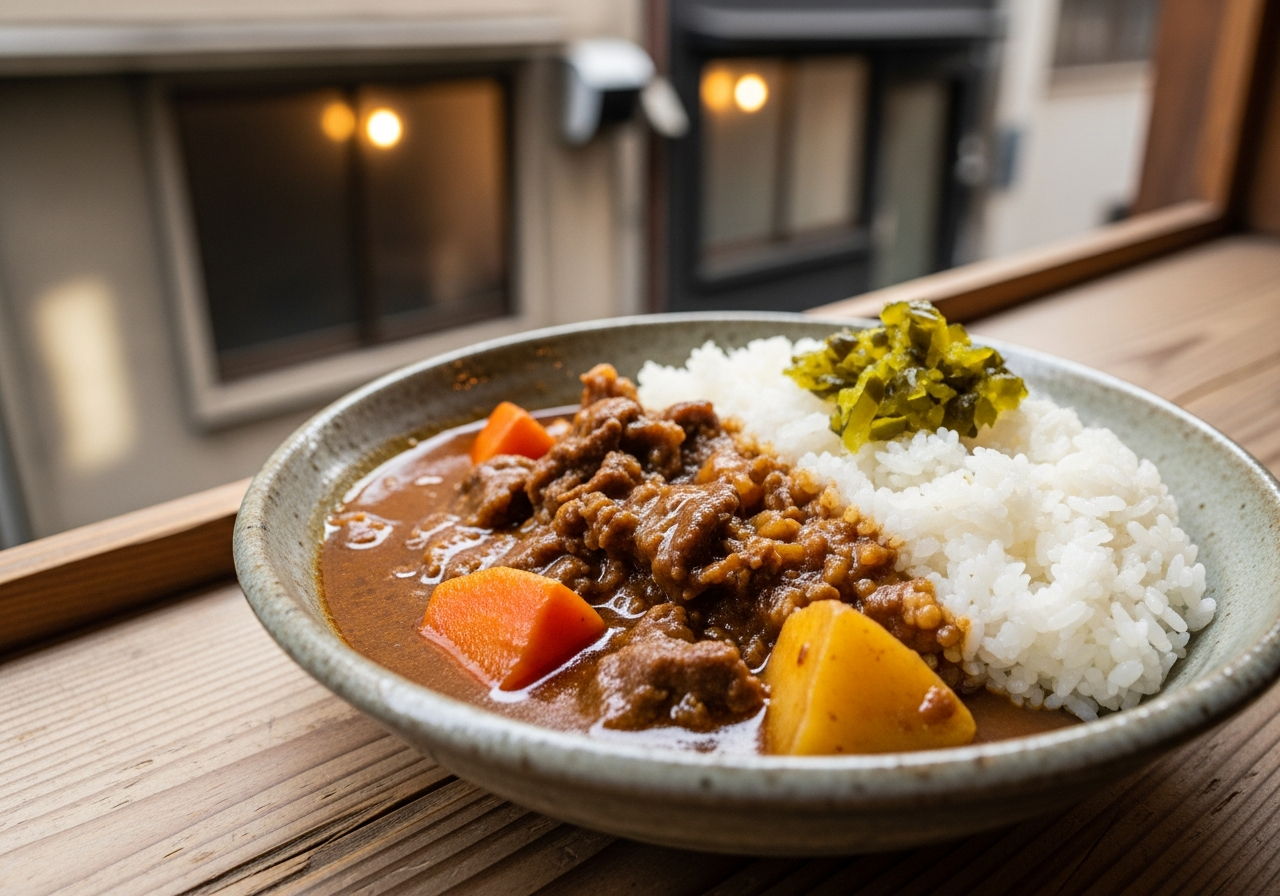
The shop that everyone in Nakazakicho is talking about, and for once the hype is justified. The signature aigake arrives as two curries side by side — a spiced keema and a European-style beef — with a pool of translucent golden dashi sauce made from eight varieties of seafood. You’re instructed to taste the dashi first on its own, then mix progressively. It sounds gimmicky; it isn’t. The table also comes stocked with Sichuan pepper chilli oil, yuzu vinegar, and a beef-specific booster sauce, so the bowl keeps changing as you eat it.
2. Spice Salon Babiru no To Nakazakicho (スパイスサロン バビルの塔 中崎町店)
- 📍 8-5 Kurosaki-cho, Kita Ward, Osaka
- 🕐 Lunch 12:00–14:30, Dinner 18:00–22:00 (L.O. 21:30; closed days irregular) (as of May 2026)
- 💰 ¥850–¥1,100 (food only) / ¥1,500–¥2,500 (with drinks)
- 🚃 Nakazakicho Station (5 min walk)
- 🗺 Open in Google Maps
- 📋 Tabelog
What to order: 3-variety aigake — Katsuo Dashi Keema + Chicken Masala + weekly special (¥1,000)
The Nakazakicho branch of the legendary Ura-Tani-Yon original, and the one that made the neighbourhood’s curry reputation before Golden Nakazaki arrived. The house-roasted spice blend is assertive and aromatic without being punishing, and the katsuo dashi keema — bonito stock folded into minced meat — is the dish that launched a thousand imitators. At night it pivots to a spice-bar format: order a round of craft beer alongside spiced tofu or Indian-style tempura fritters. Note that closing days are irregular; check their social media before making a special trip.
3. Spice Jungle (スパイス ジャングル)
- 📍 11-17 Doyamacho, Kita Ward, Osaka
- 🕐 Lunch 11:30–17:00, Dinner 18:00–20:00 (closed Sundays) (as of May 2026)
- 💰 ¥1,100–¥1,500 (food only)
- 🚃 Nakazakicho Station (4 min walk)
- 📋 Tabelog
- 🗺 Open in Google Maps
What to order: Chicken and Four-Mushroom Sansho Dashi Keema Curry (¥1,200)
A calmer, more spacious room than most of the neighbourhood’s curry spots — wide enough that you can actually have a conversation. The kitchen’s angle is dashi-brined spice curry with a Sichuan pepper twist: the signature chicken-and-mushroom keema has a slow, numbing heat from hua jiao that builds across the bowl rather than hitting you upfront. The saffron rice is cooked dry and fluffy, which handles the dashi-forward sauce better than the sticky Japanese rice you’d get elsewhere.
4. Zipangu Curry Cafe Hige Bowz (ジパングカリーカフェ 和風カレー ヒゲ ボウズ 中崎町本店)
- 📍 3-4-9 Nakazaki, Kita Ward, Osaka
- 🕐 Lunch 11:30–15:00, Dinner 17:30–21:30 (closed Wednesdays) (as of May 2026)
- 💰 ¥1,000–¥1,600 (food only)
- 🚃 Nakazakicho Station (4 min walk) / Hankyu Umeda Chayamachi Exit (5 min walk)
- 📋 Tabelog
- 🗺 Open in Google Maps
What to order: Toro Suji Yaki Bejji Cheese Curry (wagyu tendon + baked cheese + vegetables, ¥1,450)
The concept here is wagyu beef tendon braised until it collapses, laid over a katsuobushi-and-kombu dashi curry base, then finished with baked cheese. It reads like a lot, but the kitchen keeps it coherent — the fat from the tendon enriches the dashi roux without making it heavy, and the cheese crust gives you something to crack through. The Hawaiian-inflected interior is cheerful without being obnoxious, and the lunch crowd skews heavily female, which tells you something about how approachable the spice level is.
5. Den Nakazakicho (でん 中崎店)
- 📍 3-4-2 Nakazaki, Kita Ward, Osaka
- 🕐 Lunch 11:30–14:30, Dinner 17:00–23:00 (closed Mondays) (as of May 2026)
- 💰 ¥900–¥1,400 (food only) / ¥1,500–¥2,500 (with drinks)
- 🚃 Nakazakicho Station (2 min walk)
- 📋 Tabelog
- 🗺 Open in Google Maps
What to order: Beef Curry (¥950) or Katsu Curry (¥1,300)
Den has been in Nakazakicho long enough that it predates the spice curry boom entirely — it operates as a curry restaurant by day and a neighbourhood izakaya by night, and it does both without apology. The beef curry is the one to start with: the roux is spiced properly but not aggressively, with a sweetness up front that gives way to a slow warmth. The katsu is fried to order, which matters more than it sounds. If you’re visiting after 9pm and want curry with a cold beer rather than a full meal, this is your spot.
6. Ambalama (アンバラマ / AMBALAMA)
- 📍 3-5-19 Nakazaki, Kita Ward, Osaka
- 🕐 Lunch 11:30–15:00 (Sunday/Monday/holidays: buffet lunch); Dinner 17:30–22:00 (closed Tuesdays) (as of May 2026)
- 💰 ¥1,200–¥1,800 (food only) / ¥2,000–¥3,000 (with drinks)
- 🚃 Nakazakicho Station (3 min walk)
- 📋 Tabelog
- 🗺 Open in Google Maps
What to order: Ambalama Plate — large (¥1,400)
The outlier on this list, and a useful one. While every other shop on this guide is riffing on Osaka’s dashi-spice tradition, Ambalama is cooking Sri Lankan food: a wide plate of basmati rice surrounded by dal, coconut-based vegetable curries, and spiced sides, all meant to be mixed together as you eat. The chicken curry can be dialled up to genuinely hot on request, and the garnish is mint rather than coriander — a small detail that makes a real difference if you’re in the anti-coriander camp. The terrace out front is good in warm weather.
7. Spice Curry Babiru no To (スパイスカリー バビルの塔) — the Original
- 📍 2-4-8 Tanimachi, Chuo Ward, Osaka (Tanimachi 4-chome, approx. 15 min walk or one subway stop from Nakazakicho)
- 🕐 Lunch 11:30–14:00 (weekdays); 12:00–14:30 (weekends); Dinner 18:00–22:00 (closed Sundays and Mondays) (as of May 2026)
- 💰 ¥900–¥1,200 (food only)
- 🚃 Tanimachi 4-chome Station (3 min walk)
- 📋 Tabelog
- 🗺 Open in Google Maps
What to order: Daily 2-curry aigake — Meat Curry + Dal (¥950)
Technically in Tanimachi rather than Nakazakicho, but no serious guide to this area’s curry scene omits it — this is the shop that started the “Ura-Tani-Yon” movement and, by extension, much of what Nakazakicho’s curry culture became. The menu is stripped back to two daily curries, served as a single or aigake, with no frills and no substitutions. The spice blend is house-roasted and noticeably more complex than what most competitors manage. Worth the extra subway stop if you want to understand where all of this came from.
How to Order
Aigake is the format you’ll encounter most often: two or three curries served side by side on a single plate, usually over rice, so you can eat them separately or mix as you go. Most shops charge a small premium (¥50–¥150) to add a second or third variety. When ordering, you’ll typically be asked for your spice level — most shops offer three to five options, and “medium” (中辛, chukara) is a safe starting point for most palates.
Lunch service at popular spots fills up fast, particularly on weekends. Arriving at opening time (usually 11:30) or after 13:30 will save you a wait. Most Nakazakicho curry shops are small — ten to twenty seats — so solo diners are common and counter seats are the norm. Don’t expect to linger; turnover is quick and the staff will generally clear your table promptly once you’re done.
Payment is cash-only at several of the smaller spots, including Den. Carry ¥2,000 in cash to be safe. Mobile ordering via QR code is used at Golden Nakazaki, so you won’t need to flag down staff. Tipping is not practised in Japan — don’t leave money on the table.
FAQ
Q: Is spice curry in Nakazakicho expensive?
A: No. Most bowls run ¥900–¥1,400 for a single curry with rice. Aigake (two curries) adds ¥50–¥150. A full lunch with a drink comes in under ¥1,800 at almost every shop on this list. Den is the most affordable; Golden Nakazaki and Hige Bowz are at the higher end.
Q: Do shops in Nakazakicho have English menus?
A: Inconsistently. Golden Nakazaki uses a QR-code mobile ordering system that has English support. Ambalama’s staff speak enough English to take your order. At the others, pointing at photos or using Google Translate on the printed menu works fine — the menus are short and the staff are used to non-Japanese speakers.
Q: When is the best time to visit?
A: Weekday lunches between 11:30 and 12:00 are the least crowded. Saturday and Sunday lunch between 12:00 and 13:30 is peak time at Golden Nakazaki and Babiru no To — expect a short queue. Dinner is generally easier to walk into, though Den fills up on Friday and Saturday nights once the izakaya crowd arrives. Most shops close on Mondays or Tuesdays; check before you go.
Information is accurate as of May 2026. We recommend checking Google Maps for the latest hours and prices before visiting.