Last updated: July 3, 2026
This article reflects information available at the time of writing. Check Google Maps for the latest hours and availability.
Introduction
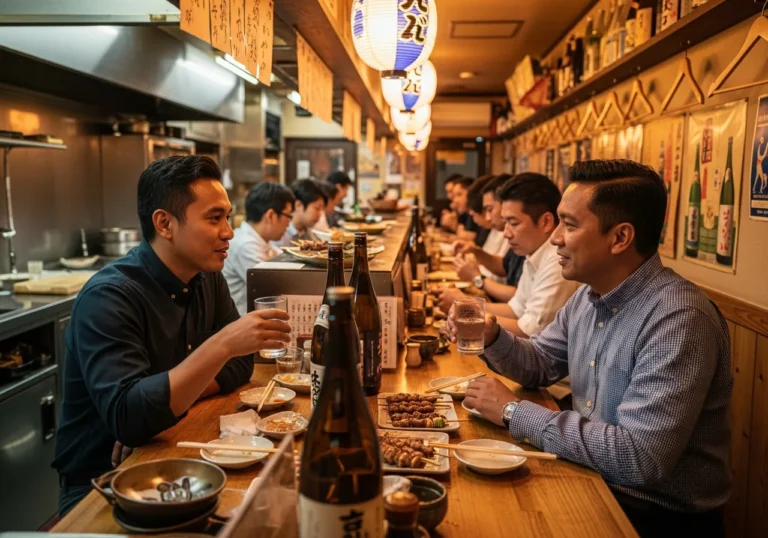
Tenma doesn’t get the international press that Dotonbori does, and that’s exactly the point. One stop from Osaka Station on the JR Loop Line, this neighbourhood runs on a different frequency — older, louder, and considerably cheaper. The backbone is Tenjinbashi-suji, Japan’s longest covered shopping street, but the real action happens in the lanes behind it: a dense tangle of standing bars, izakaya, and counter-only joints where the fish is fresh and the beer is cold and nobody is performing for a camera.
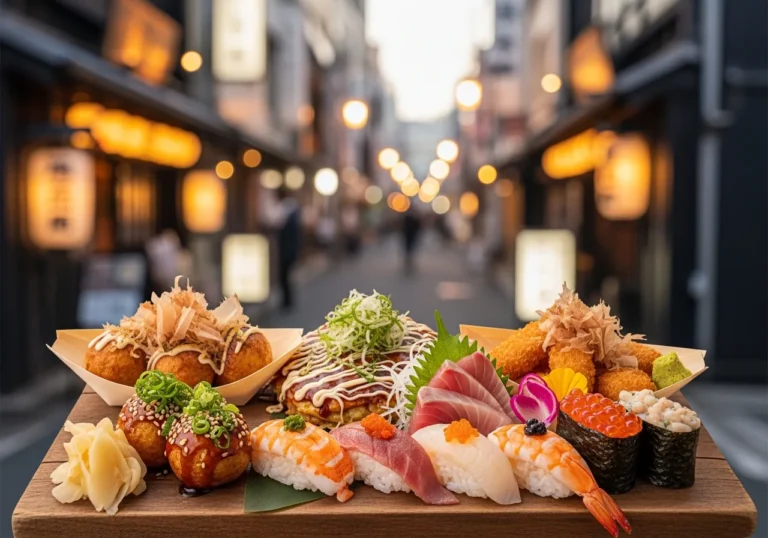
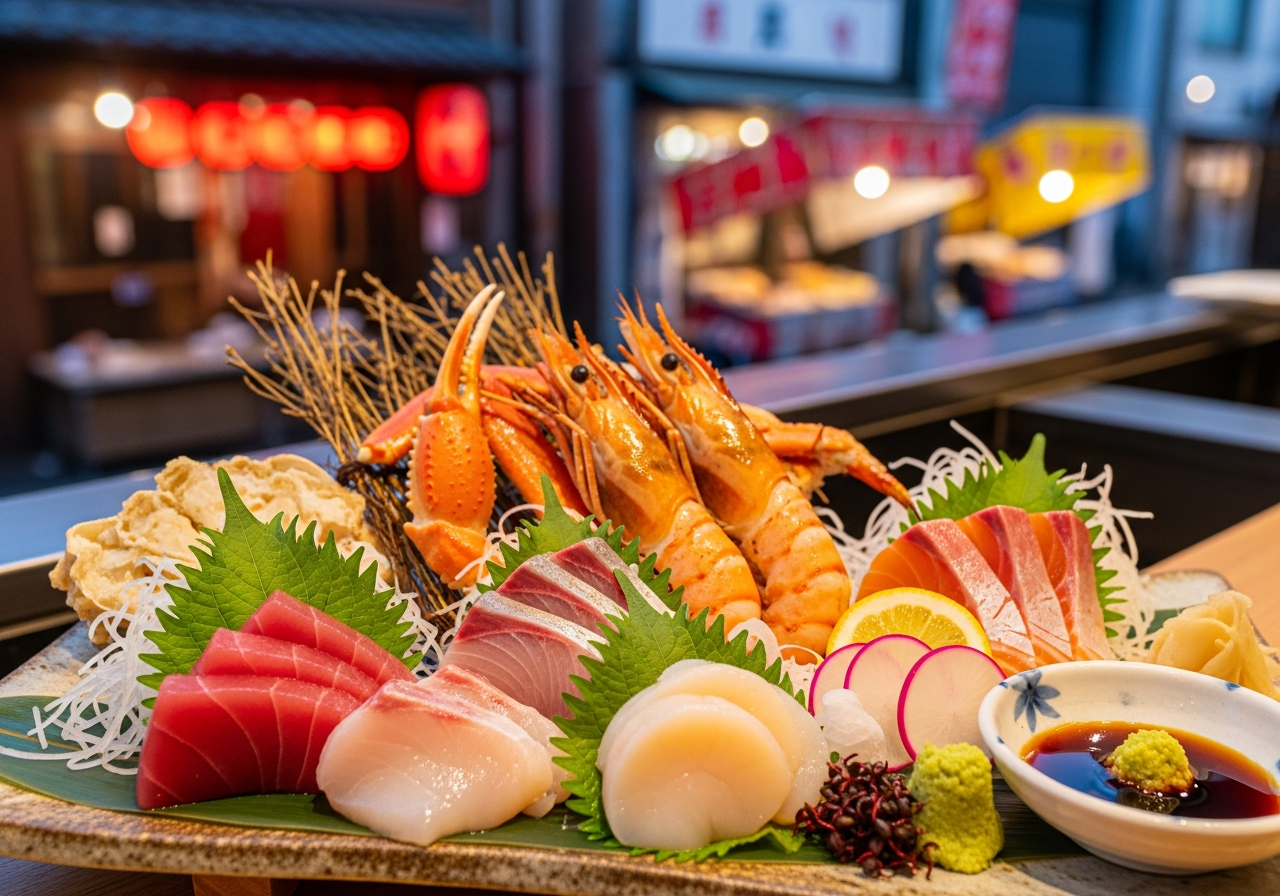
Seafood is the engine of Tenma’s eating culture. The area sits close to the old Osaka Tenma Market, and that proximity still shapes what ends up on the plate — sashimi platters built around whatever came off the boat that morning, hamayaki (tabletop grilling) with live shellfish, and sushi made with red-vinegar rice at prices that feel almost implausible. You can eat extremely well here for ¥2,000–¥4,000 a head, drinks included.
This guide covers five seafood spots that are genuinely worth your time — from a 24-hour hamayaki chain that punches above its weight to a tiny sushi counter where the chef still hand-selects every piece of fish. Whether you’re after a solo counter seat or a rowdy table with a group, Tenma has something for you.
1. Isomaru Suisan Tenma Ekimae (磯丸水産 天満駅前店)
- 📍 4-9-5 Tenjinbashi, Kita-ku, Osaka
- 🕐 Open 24 hours (as of May 2026)
- 💰 ¥1,500–¥3,000 (food only) / ¥2,000–¥4,000 (with drinks)
- 🚃 JR Tenma Station (1 min walk)
- 🗣 English menu: Available
- 🗺 Open in Google Maps
- 📋 Tabelog
- 🌐 Official site
What to order: Hamayaki set — scallops, white clams, and squid (¥1,200–¥1,500); Crab miso shell gratin (¥680)
A chain, yes — but one that earns its place. The concept is a vibrant seaside atmosphere where you grill live shellfish right from the tank, with the sounds and aromas of cooking at your own table. It’s open around the clock, which makes it the most reliable late-night seafood option in the neighbourhood. The address is 4-9-5 Tenjinbashi, and it’s essentially right outside Tenma Station. Note: the Tenma branch has been operating under the updated “Isomaru Sakaba” branding at some listings — the concept and menu remain the same, so don’t be confused if you see both names.
2. Tenma Sakaba Sushi Kin (天満酒場 すし金)
- 📍 Tenjinbashi, Kita-ku, Osaka (2 min walk from Tenma Station North Exit)
- 🕐 Weekdays: Lunch 12:00–14:30, Dinner 17:00–22:00; Sat/Sun/Holidays: 12:00–22:00 (as of May 2026)
- 💰 ¥1,500–¥3,000 (food only) / ¥2,500–¥4,000 (with drinks)
- 🚃 JR Tenma Station (2 min walk)
- 🗣 English menu: Available
- 🗺 Open in Google Maps
- 📋 Tabelog
What to order: Uni and ikura luxury sushi (¥550–¥880 per piece); Red-vinegar chirashi (¥1,200); Oden set
This place does authentic sushi at affordable prices, proud of its fresh ingredients and sushi rice made with red vinegar that carries a strong, clean sourness. Customers consistently highlight the quality of the sashimi, especially the salmon yukke and bluefin tuna. The two-floor setup — counter downstairs, tables upstairs — means it works equally well for a solo lunch or a group dinner. English menus are available, and the lunch set runs weekdays from noon.
3. Anaba Tenma (穴場 天満店)
- 📍 Tenjinbashi, Kita-ku, Osaka (near Tenma Station)
- 🕐 Dinner from approx. 17:00; closed Sundays (as of May 2026 — confirm before visiting)
- 💰 ¥1,500–¥3,000 (food only) / ¥2,500–¥4,000 (with drinks)
- 🚃 JR Tenma Station (3 min walk)
- 🗺 Open in Google Maps
- 📋 Tabelog
What to order: Anaba Maki roll (¥800–¥1,000); Sashimi platter; Nigiri selection
Anaba is a popular neighbourhood sushi bar known for its traditional rolls, maki, and sashimi in a casual, quaint setting — and the Anaba Maki, stuffed with an abundance of ingredients, is the standout dish. Despite its small size, it’s often packed with people seeking fresh seafood at reasonable prices. The name translates loosely as “hole-in-the-wall,” and the place lives up to it — reservations are strongly recommended, and if you walk in without one, you’ll likely be given a time limit. The menu is handwritten, so be ready to order quickly. No English menu, but pointing at neighbouring tables works fine.
4. Jizakanayatai Tottsan Tenma (地魚屋台 とっつぁん 天満店)
- 📍 6-14-1F Ikeda-cho, Kita-ku, Osaka
- 🕐 Approx. 17:00–23:00 (as of May 2026)
- 💰 ¥1,500–¥2,500 (food only) / ¥2,000–¥3,500 (with drinks)
- 🚃 JR Tenma Station (4 min walk)
- 🗺 Open in Google Maps
- 📋 Tabelog
What to order: Sashimi of the day (¥390–¥490 per plate); Freshly fried tempura from ¥110; Kaisendon (¥650)
The atmosphere hits you the moment you walk in — staff shouts, food flying out of the kitchen, and a menu that covers sashimi, tempura, and grilled seafood at prices that feel almost confrontationally cheap. It’s a family-style, energetic izakaya with a nostalgic yatai (food stall) feel. There’s no English menu, but a few staff members speak some English, and pointing at what other tables are eating gets you most of the way there. Part of a small seven-branch chain, so the fish sourcing is consistent and reliable.
5. Odanna (おだんな)
- 📍 4-1-2 Tenjinbashi, Kita-ku, Osaka
- 🕐 Mon–Fri 15:00–24:00; Sat/Sun/Holidays 12:00–24:00 (as of May 2026)
- 💰 ¥1,500–¥3,000 (food only) / ¥2,500–¥4,000 (with drinks)
- 🚃 JR Tenma Station (3 min walk) / Osaka Metro Ogimachi Station (5 min walk)
- 🗺 Open in Google Maps
- 📋 Tabelog
What to order: Daily sashimi specials; Teppanyaki seafood; Seasonal fish dishes
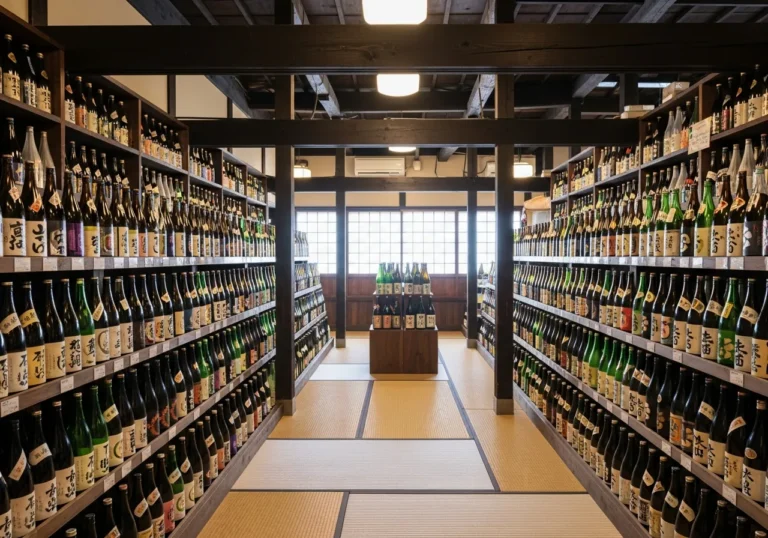
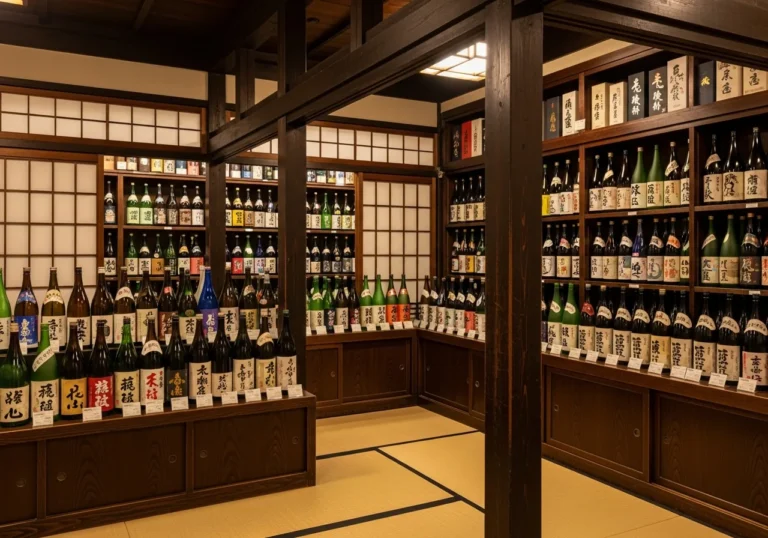
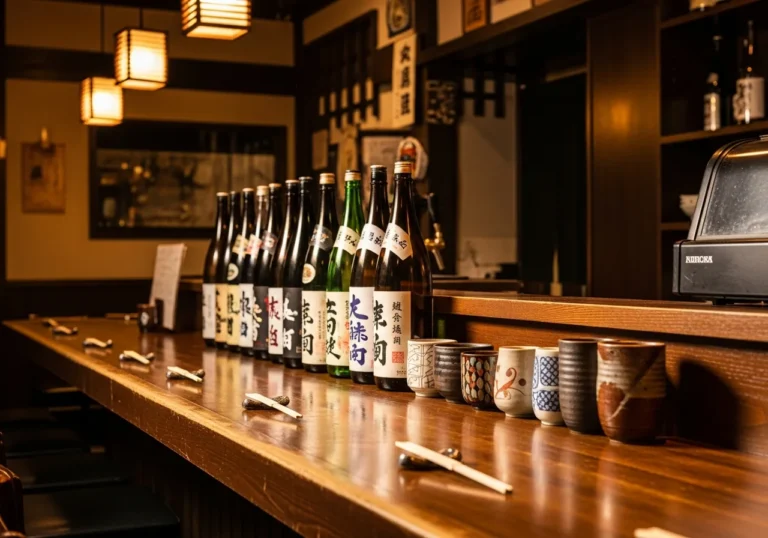
Odanna sits on the south side of JR Tenma, about halfway toward Ogimachi Station — you’ll spot it by the large noren curtain out front. Inside, over 50 seats spread across tables and counter space make it the kind of place you can walk into with a big group. The menu covers seafood, appetizers, teppanyaki, fried dishes, and daily specials, with a sake list deep enough that your bar-hopping evening might end here before it really begins. Cash only — no credit cards accepted.
How to Order
Most Tenma seafood spots operate on a ticket machine, QR code, or handwritten order slip system. At places like Sushi Kin, you can order via QR code at the table, which makes the whole process straightforward even without Japanese. At Anaba and Tottsan, the menus are handwritten in Japanese — use Google Translate’s camera function to scan dishes, or simply point at what looks good on a neighbouring table.
Sashimi in Tenma is typically priced per plate (one to three pieces), not per piece as in higher-end sushi restaurants. A standard sashimi platter for two runs ¥800–¥1,500. At hamayaki spots like Isomaru, you choose raw shellfish from a display or tank, pay by the piece or set, and grill it yourself on the tabletop konro. Scallops and white clams are the safest starting point — they’re hard to overcook and taste excellent with a splash of soy.
Lunch sets (teishoku) are exceptional value across the board — most spots offer a sashimi or chirashi set with miso soup and rice for ¥800–¥1,200. Dinner is where the drinking culture kicks in; all-you-can-drink (nomihodai) courses typically start at ¥1,500–¥2,000 on top of food.
One practical note: Tenma’s most popular spots fill up fast from around 18:30 on weeknights. Either arrive before 18:00 or book ahead via Tabelog or the restaurant’s own site.
FAQ
Q: Is seafood in Tenma expensive?
A: No — it’s one of the most affordable seafood neighbourhoods in Osaka. A full dinner with drinks typically runs ¥2,500–¥4,000 per person. Sashimi plates start from ¥390, and lunch sets with sashimi or chirashi are commonly ¥800–¥1,200. The higher-end spots in this guide (Sushi Kin, Anaba) still come in well under what you’d pay for equivalent quality in Namba or Shinsaibashi.
Q: Do seafood spots in Tenma have English menus?
A: Some do, some don’t. Isomaru Suisan and Tenma Sakaba Sushi Kin both have English menus or QR-code ordering that works in English. Anaba and Tottsan are Japanese-only, but both are manageable with Google Translate’s camera mode or by pointing at dishes. Staff at most spots are used to international visitors and will do their best to help.
Q: When is the best time to visit?
A: Weekday lunches (noon–14:00) are the sweet spot — fresh fish, shorter queues, and excellent value sets. For dinner, aim to arrive before 18:30 or after 20:30 to avoid the post-work rush. Weekends are busier all day. Isomaru is open 24 hours, so it’s a reliable option if you’re eating late after a night out elsewhere in Osaka.
Information is accurate as of May 2026. We recommend checking Google Maps for the latest hours and prices before visiting.