Last updated: July 3, 2026
This article reflects information available at the time of writing. Check Google Maps for the latest hours and availability.
Introduction
Kyobashi doesn’t get the ramen headlines that Namba or Shinsaibashi do, but that’s exactly why it’s worth your time. This is a working neighbourhood — three train lines, a dense izakaya strip, and a crowd that eats late and eats well. The ramen scene here reflects that energy: standing counters that turn tables in under ten minutes, late-night bowls designed to close out a long evening, and a handful of serious shops that would hold their own anywhere in the city.
The range is genuinely wide. You’ll find a Michelin-pedigreed chef doing refined chicken paitan a short walk from a standing-only counter that’s been slinging old-school shoyu since before Instagram existed. There’s mackerel-broth soba for the fish-forward crowd, a motsu curry ramen that sounds like a dare and tastes like a revelation, and a thick-cut chashu bowl that’s become a go-to for the post-drinking crowd. If you’re looking for the best food in Osaka, Kyobashi’s ramen scene is one of the most underrated arguments for making the trip east of the castle.
This guide covers eight shops within walking distance of Kyobashi Station — a mix of styles, price points, and opening hours, so you can plan around lunch, dinner, or a late-night craving. Want to explore more of Kyobashi beyond ramen? The neighbourhood has plenty more going on after the bowls are empty.
1. Chuka Soba Maruoka Shoten Kyobashi Honten (中華そば 丸岡商店 京橋本店)
- 📍 3-9-20 Higashinodamachi, Miyakojima-ku, Osaka
- 🕐 11:00–15:00 / 17:30–00:30 (Mon–Fri until 00:30; Sat–Sun until 02:00) (as of May 2026)
- 💰 ¥700–¥900 (food only)
- 🚃 Kyobashi Station (1 min walk)
- 🗺 Open in Google Maps
- 📋 Tabelog
What to order: Chuka Soba (¥700)
Standing room only, no stools, and you’ll be done in eight minutes — that’s the whole point. This is a standing-style ramen shop just one minute from JR Kyobashi Station’s south exit, and the yuzu-tinged shoyu broth made from domestic chicken and pork bones with zero MSG is the kind of thing you’ll think about on the train home. The raw egg on the side is optional but correct.
2. Saba Roku Seimenjo Kyobashi (サバ6製麺所 京橋店)
- 📍 1-4-68 Shinkita, Joto-ku, Osaka
- 🕐 11:30–23:30 (L.O.) (as of May 2026)
- 💰 ¥700–¥1,000 (food only)
- 🚃 Kyobashi Station (1 min walk, JR south exit)
- 🗺 Open in Google Maps
- 📋 Tabelog
What to order: Saba Shoyu Soba (¥700)
The menu runs to three choices: saba shoyu soba at ¥700, saba shio soba at ¥700, and chuka soba at ¥650 — and the mackerel-forward broth is the reason to come. The soup uses two types of mackerel flakes and chicken oil; aside from the soy sauce and salt mackerel noodles, there’s also a Chinese-style option using pork fat for those who aren’t into mackerel. Add the half fried rice set for ¥250 and you’ve got a complete meal for under ¥1,000.
3. Menya Ichizan (麺屋いち山)
- 📍 Osaka Business Park area, Miyakojima-ku, Osaka (approx. 1-2-3 Shiromi, Chuo-ku)
- 🕐 11:30–14:30 / 18:00–22:00; closed Sundays (as of May 2026)
- 💰 ¥950–¥1,400 (food only)
- 🚃 Kyobashi Station (5 min walk) / Osaka Business Park Station (3 min walk)
- 🗺 Open in Google Maps
- 📋 Tabelog
What to order: Shin Tori Paitan Ramen (¥950)
Kyobashi Station is five minutes away, and the chef here comes from a Michelin-starred restaurant background — which explains why the chicken paitan here tastes more like a refined consommé than the usual cloudy white sludge. Reviews describe the soup as creamy and concentrated, with a clean finish that’s surprisingly delicate for a white broth. The modern Japanese interior makes it one of the few ramen spots in the area where you’d feel comfortable on a date.
4. Niku to Men to (肉と麺と)
- 📍 2-8-7 Higashinodamachi, Miyakojima-ku, Osaka (Saokoma Building 1F)
- 🕐 11:00–15:00 / 17:00–22:00 (as of May 2026)
- 💰 ¥1,000–¥1,300 (food only)
- 🚃 Kyobashi Station (3 min walk)
- 🗺 Open in Google Maps
- 📋 Tabelog
What to order: Ramen with thick-cut chashu (¥1,100); Cold Buta Mazesoba (¥1,100)
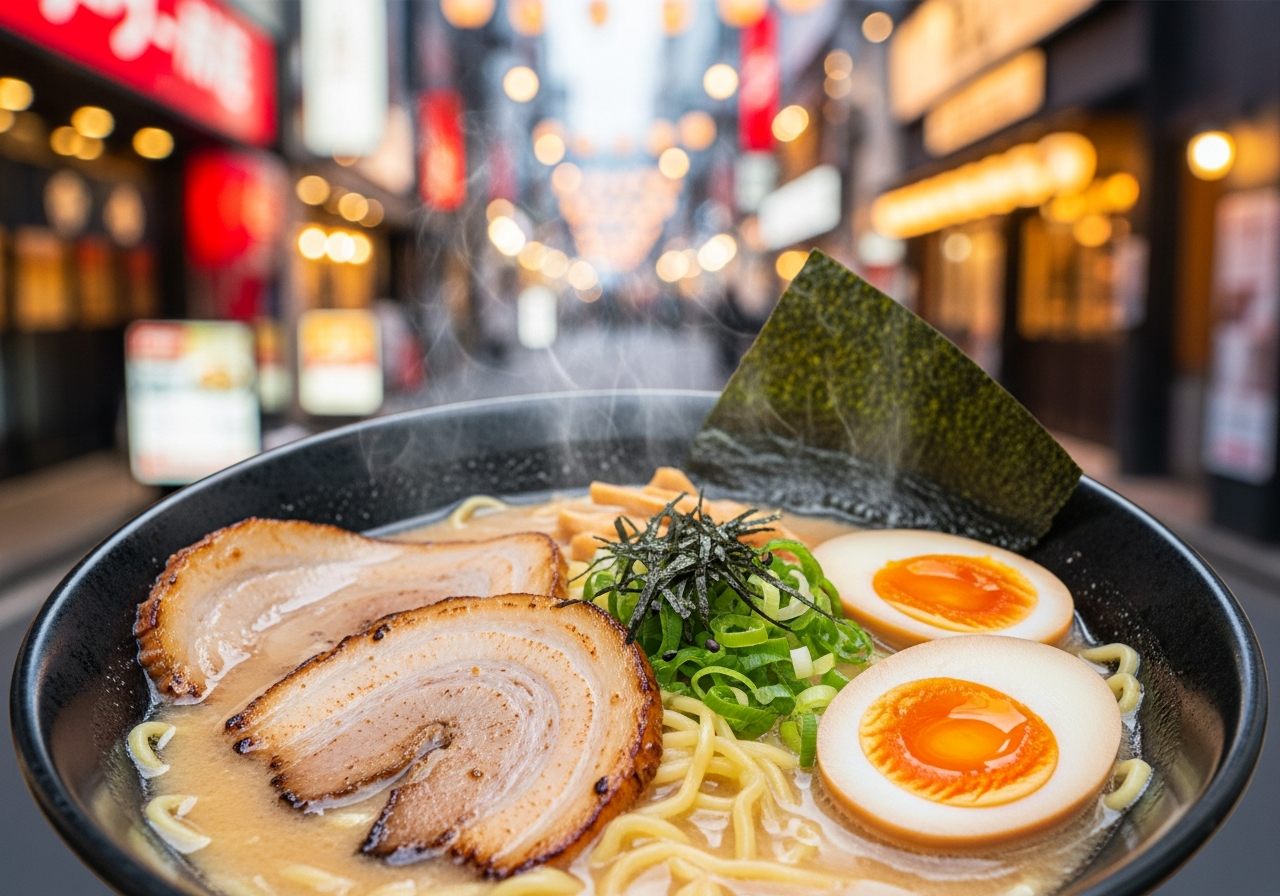
The double chicken-and-pork broth is rich but sharp, and the chashu is cut thick — chunky, deeply flavoured, and the kind of topping that makes you reconsider every thin-sliced version you’ve had before. Noodles run from 150g to 450g at no extra charge; the standard 300g is plenty. About half the customers on any given visit are international tourists, so the staff are used to pointing at the menu.
5. Niryo Han Kyobashi (二両半 京橋店)
- 📍 3-9-1 Higashinodamachi, Miyakojima-ku, Osaka (Nakaze Building 1F)
- 🕐 11:00–00:00; closed Sundays (as of May 2026)
- 💰 ¥800–¥1,100 (food only)
- 🚃 Kyobashi Station (1 min walk)
- 🗺 Open in Google Maps
- 📋 Tabelog
What to order: Shoyu Ramen (¥850)
The chicken-and-pork-bone broth is light but has real depth, with a Kansai-style soy tare that doesn’t overpower. This is the kind of place that’s been feeding the neighbourhood for years without needing to reinvent itself — thin straight noodles, soft chashu, and a bowl that tastes like it was made by someone who’s done it ten thousand times. Note: the Miyakojima branch of the same chain has closed, but this Kyobashi location remains open.
6. Kawachi Ramen Kishin Kyobashi (河内らーめん喜神 京橋店)
- 📍 2-1-38 Higashinodamachi, Miyakojima-ku, Osaka (Hotel Keihan Kyobashi, Keihan Mall Hotel Wing)
- 🕐 11:00–23:00 (L.O. 22:00); no regular closing day (as of May 2026)
- 💰 ¥680–¥1,300 (food only)
- 🚃 Kyobashi Station (1 min walk)
- 🗺 Open in Google Maps
- 📋 Tabelog
What to order: Kishin Ramen (¥1,180 incl. tax)
The base here is a 100% black soybean shoyu — darker and more complex than standard soy sauce — with the full Kishin Ramen adding a marinated egg and generous chashu on top of the ¥680 base bowl. It’s inside the Hotel Keihan building, which makes it easy to dismiss as a hotel restaurant, but the kitchen takes the broth seriously. The half fried rice add-on (¥200) is worth it.
7. Hayashiya (林家)
- 📍 3-10-4 Higashinodamachi, Miyakojima-ku, Osaka
- 🕐 11:30–13:30 / 16:00–01:00 (approx.); closed Sundays (as of May 2026)
- 💰 ¥750–¥1,100 (food only)
- 🚃 Kyobashi Station (1 min walk)
- 🗺 Open in Google Maps
- 📋 Tabelog
What to order: Motsu Curry Ramen (¥900 approx.)
Hayashiya is the late-night outlier on this list — open until around 1am and built for the post-izakaya crowd that wants something with more personality than a standard tonkotsu. The motsu (offal) curry ramen is the signature: a rich, spiced curry broth loaded with tender braised offal that sounds chaotic but lands as one of the most satisfying bowls in the neighbourhood. One minute from the station, which is exactly what you need at midnight.
8. Menjo Ehimenkken (麺処 愛媛ん軒)
- 📍 3-11-17 Higashinodamachi, Miyakojima-ku, Osaka
- 🕐 11:00–15:00 / 18:00–23:00; Sun 06:00–09:00 / 11:00–15:00; closed Mondays (as of May 2026)
- 💰 ¥800–¥1,100 (food only)
- 🚃 Kyobashi Station (3 min walk)
- 🗺 Open in Google Maps
- 📋 Tabelog
What to order: Shio Ramen (¥900 approx.)
The owner is from Ehime Prefecture, and the broth uses Seto Inland Sea iriko (dried sardines) and sea bream flakes — a fish-forward base that’s clean and savoury rather than heavy. The salt ramen is the one to order: pale, delicate, and more complex than it looks. Seasonal limited bowls using Ehime citrus add a bright, aromatic note that you won’t find anywhere else in the neighbourhood. Sunday mornings they open at 6am — one of the very few ramen shops in Osaka worth setting an alarm for. The MICHI Osaka travel guide has more on early-morning eating options across the city.
How to Order
Most ramen shops in Kyobashi use a ticket vending machine (券売機) at the entrance. Insert cash, press the button for your bowl, and hand the ticket to the staff when you sit down. Machines at busier spots like Maruoka Shoten and Niku to Men to have photo buttons, so you can point even without reading Japanese. Carry ¥1,000–¥2,000 in coins and small notes — many machines don’t accept ¥10,000 bills, and card payment is rare at counter-style shops.
For toppings, the standard upgrades are: ajitsuke tamago (marinated soft-boiled egg, ¥100–¥150), extra chashu (¥150–¥300), and nori (dried seaweed, ¥50–¥100). At shops with free noodle size upgrades — Niku to Men to offers this — always ask for the standard portion first unless you’re genuinely hungry; the bowls here are larger than they look.
Kyobashi’s ramen scene skews late. Several shops don’t hit their stride until after 9pm when the izakaya crowd starts filtering in. If you’re visiting for lunch, arrive right at opening — queues form fast at Maruoka Shoten and Saba Roku, and both sell out of certain broths before the afternoon break.
FAQ
Q: Is ramen in Kyobashi expensive?
A: No. Most bowls run ¥700–¥1,100. A full meal with a side dish and drink lands around ¥1,200–¥1,500 at the mid-range spots. Maruoka Shoten and Saba Roku are the budget picks at ¥700 a bowl. Menya Ichizan is the priciest at around ¥950–¥1,400, but the quality justifies it.
Q: Do ramen shops in Kyobashi have English menus?
A: Some do, most don’t. Niku to Men to has photo-based menus that make ordering easy regardless of language. Menya Ichizan and Kawachi Ramen Kishin are the most visitor-friendly in terms of staff communication. At standing counters like Maruoka Shoten, the menu is short enough that pointing works fine.
Q: When is the best time to visit?
A: Lunch (11:30–13:00) and late night (21:00–23:00) are the peak windows. If you want to avoid queues, aim for 11:00 right at opening or between 14:00–17:00 at shops that stay open through the afternoon. Maruoka Shoten closes between 15:00 and 17:30, so plan around that gap. Weekends are busier across the board, especially after 20:00.
Information is accurate as of May 2026. We recommend checking Google Maps for the latest hours and prices before visiting.