Last updated: July 3, 2026
This article reflects information available at the time of writing. Check Google Maps for the latest hours and availability.
Introduction
Utsubo doesn’t shout about its food scene the way Namba or Shinsaibashi does. The neighbourhood — anchored by the long green corridor of Utsubo Park, flanked by architecture firms and small trading companies — runs on lunch. Office workers here eat seriously, and the curry shops that have taken root around Higobashi, Awaza, and Nishi-Hommachi reflect that: tight counters, focused menus, and queues that form before the doors open.
What makes this pocket of Osaka worth a dedicated curry crawl is the range. Within a fifteen-minute walk of the park you’ll find a Michelin Bib Gourmand European-style curry that’s been drawing lines since the 1980s, a Sri Lankan spot that’s been quietly operating for over 26 years, a botanical spice counter that changes its menu with the seasons, and a South Indian lunch that costs under ¥1,000. That’s a lot of ground for one neighbourhood. If you’re already exploring more of Utsubo, the curry circuit here is one of the best reasons to linger past the park.
Most of these places are lunch-only or close early, so plan your day around the 11:30–13:30 window. Queues are real — especially on Saturdays — but they move. This guide covers eight bowls, from a fruit-sweetened European roux that’s been perfected over decades to a seasonal dry curry plated like a still life. For more eating ideas across the city, check out the best food in Osaka.
1. Spice Curry 43 (スパイスカレー43)
- 📍 2-5-2 Utsubo-Hommachi, Nishi-ku, Osaka
- 🕐 Thu–Sun 11:30–14:15 (last order; closes when sold out) (as of May 2026)
- 💰 ¥1,000–¥1,500 (food only)
- 🚃 Awaza Station (8 min walk) / Hommachi Station (8 min walk)
- 🗺 Open in Google Maps
- 📋 Tabelog
What to order: Seasonal dry curry with botanical potage (¥1,200–¥1,400, varies by season)
Right on the edge of Utsubo Park, this is the most visually arresting curry counter in the neighbourhood. The menu rotates every month — think Seto Inland Sea lemon keema, sakura dry curry with almond potage, or Sichuan dan-dan keema with sesame soy milk soup — and the plating is genuinely considered: colour-matched bowls, edible flowers, seasonal garnishes. It’s earned a spot on the Tabelog Curry WEST 100 list for 2024, and the queue on Thursdays and Fridays confirms it. Lunch only, Thursday through Sunday, and it sells out. Get there by 11:30.
2. Ghar (ガル)
- 📍 1-4-5 Edobori, Nishi-ku, Osaka
- 🕐 Mon, Wed–Fri 11:30–14:00 (closed when sold out); closed Tue, Sat, Sun (as of May 2026)
- 💰 ¥800–¥1,000 (food only)
- 🚃 Higobashi Station (5 min walk)
- 🗺 Open in Google Maps
- 📋 Tabelog
What to order: Chicken curry (¥800) with red achar (+¥100)
Ghar has a Tabelog score of 3.93 — one of the highest of any curry shop in western Osaka — and the queue outside at noon on a weekday tells you everything. The Indian-style chicken curry is rich without being heavy, served with a lassi that makes the price feel almost unreasonable. The red achar is sold separately now (¥100), but order it. Weekdays only, lunch only, and it runs out. This is the one to plan your morning around.
3. Shirogane-tei Higobashi (白銀亭 肥後橋店)
- 📍 1-8-14 Edobori, Nishi-ku, Osaka
- 🕐 Mon–Fri 11:30–14:30 (as of May 2026)
- 💰 ¥1,000–¥1,500 (food only)
- 🚃 Higobashi Station (5 min walk) / Hommachi Station (5 min walk)
- 🗺 Open in Google Maps
- 📋 Tabelog
What to order: Hire tonkatsu curry (¥1,150) with spinach (+¥250)
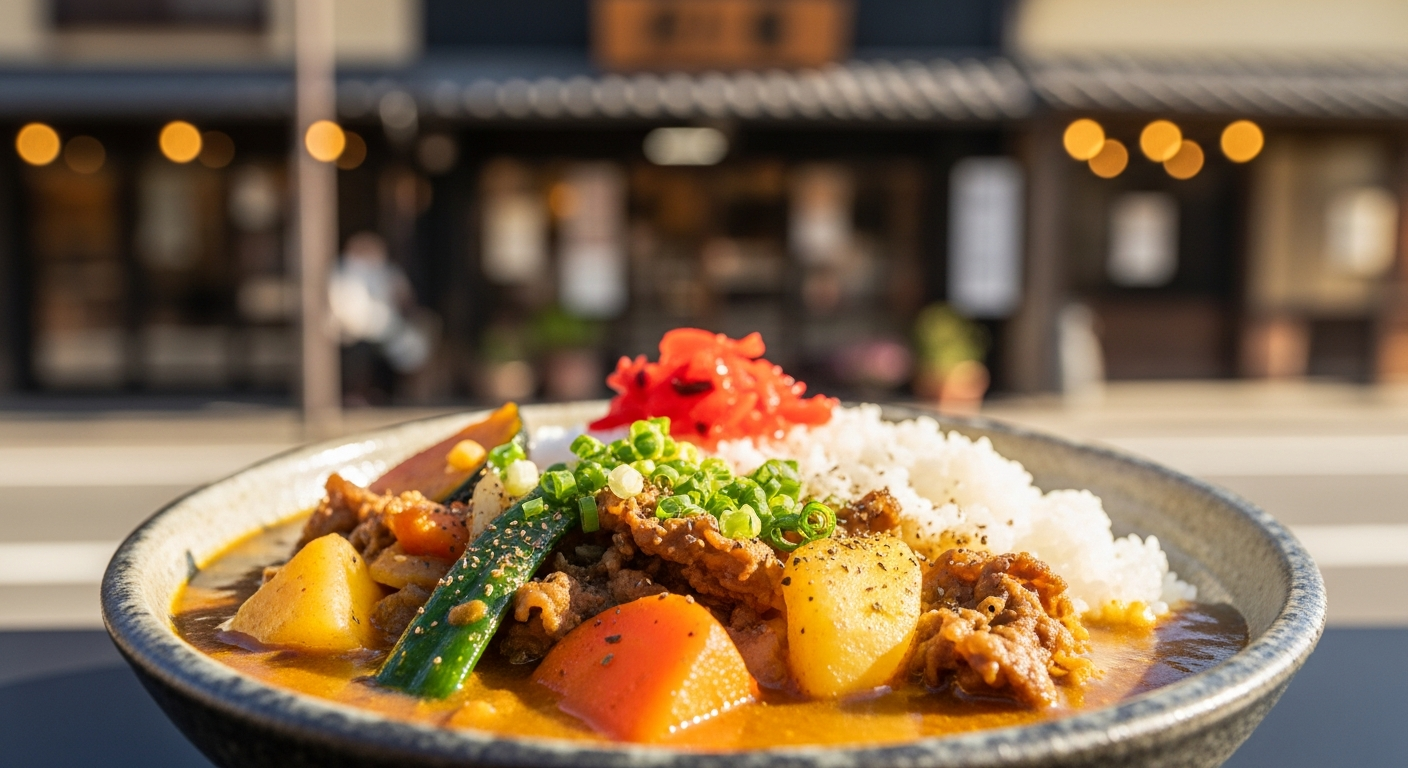
This is the European-style curry that Osaka office workers have been eating for decades. The roux is built on slow-cooked domestic beef, onions, and several kinds of fruit — sweet up front, then a slow spice burn at the back. Michelin Bib Gourmand 2023, Tabelog Curry WEST 100 2024, and a queue of 18 people at 1:15pm on a Tuesday. The spinach topping (main branch only) and a raw egg are the standard upgrades. Counter seating only, 16 seats. Weekdays only.
4. Shirogane-tei Ito Building (カレー専門店白銀亭 イトゥビル店)
- 📍 2-2-9 Hommachi, Chuo-ku, Osaka
- 🕐 Mon–Sat 11:30–14:30 (as of May 2026)
- 💰 ¥850–¥1,000 (food only)
- 🚃 Hommachi Station (3 min walk)
- 🗺 Open in Google Maps
- 📋 Tabelog
What to order: Curry (¥850) with raw egg (+¥50)
The Ito Building branch of Shirogane-tei is the solo-diner’s version of the main shop — same European-style roux, same sweet-then-spicy contrast, but a ¥850 base price and a three-minute walk from Hommachi Station. The owner runs the weekend service single-handedly, which means Saturday queues of 19 people and a slightly slower pace. Worth it. Tabelog Curry WEST 100 2024. The raw egg is the move here — it rounds out the roux without dulling the spice.
5. KALUTARA (カルータラ)
- 📍 1-15-9 Edobori, Nishi-ku, Osaka (Flags Higobashi 1F)
- 🕐 Mon–Fri 11:30–14:00 (as of May 2026)
- 💰 ¥850–¥1,200 (food only)
- 🚃 Higobashi Station (4 min walk)
- 🗺 Open in Google Maps
- 📋 Tabelog
What to order: Lentil curry and beef curry combo (¥850)
Named after a city on the southern coast of Sri Lanka, KALUTARA has been operating in this neighbourhood for over 26 years — which in Osaka’s curry scene is a serious statement. The Sri Lankan-style curries are thin and aromatic rather than thick and rich: a coconut-forward lentil curry alongside a spiced beef curry, served on turmeric rice. The portions run small, so order the large rice. Tabelog Asia-Ethnic WEST 100 2024. No queue, no fuss — just a quiet counter and a bowl that rewards attention.
6. GRAND CANTE Utsubo Park (グランカンテ 靭公園店)
- 📍 2-1-10 Utsubo-Hommachi, Nishi-ku, Osaka
- 🕐 Mon–Fri 11:00–22:00; Sat–Sun 10:00–22:00 (as of May 2026)
- 💰 ¥1,200–¥2,000 (food only)
- 🚃 Hommachi Station (5 min walk) / Awaza Station (7 min walk)
- 🗺 Open in Google Maps
- 📋 Tabelog
What to order: Spice curry set with naan (¥1,400–¥1,600)
GRAND CANTE is the only curry spot in this guide where you can actually see the park while you eat. The floor-to-ceiling windows face Utsubo Park directly, and the open-sided seating in good weather makes it the most relaxed lunch in the neighbourhood. The Indian-influenced curry is spiced properly — not dumbed down for a cafe crowd — and the set comes with multiple curry types so you can mix heat levels. Google rating 4.04. Open evenings and weekends, which makes it the rare option when the lunch-only counters are dark.
7. Spice Shokudo Nikki (スパイス食堂ニッキ)
- 📍 1-16-19 Nishi-Shinsaibashi, Chuo-ku, Osaka (near Nishi-Ohashi)
- 🕐 Thu–Tue 11:30–14:30 (closed Wed) (as of May 2026)
- 💰 ¥1,100–¥1,400 (food only)
- 🚃 Nishi-Ohashi Station (3 min walk) / Hommachi Station (5 min walk)
- 🗺 Open in Google Maps
- 📋 Tabelog
What to order: Two-curry plate — mackerel basil coconut + chicken masala (¥1,250)
Nikki runs a rotating daily special alongside a small set of regulars, and the two-curry plate is the way to order. The mackerel and basil coconut curry is mild and fragrant; the chicken masala is the most popular item on the menu and earns it. Smoked pickled egg (+¥130) is the topping to add. Turmeric rice, two types of achar, and a counter that fits twelve people. Tabelog Asia-Ethnic WEST 100 2024. The short queue at opening moves fast.
8. Akira Curry (あきらカレー)
- 📍 1-9-17 Edobori, Nishi-ku, Osaka
- 🕐 Lunch: Mon–Fri 11:30–14:00; Dinner: Mon–Fri 18:00–23:00 (as of May 2026)
- 💰 ¥1,000–¥1,500 (lunch); ¥2,000–¥3,000 (dinner with drinks)
- 🚃 Higobashi Station (5 min walk)
- 🗺 Open in Google Maps
- 📋 Tabelog
What to order: Weekly-changing curry set (¥1,200)
Akira Curry is the neighbourhood’s most versatile option: a weekly-rotating lunch curry by day, a spice bar by night. The lunch menu draws on Osaka’s deep spice-curry tradition — dashi-forward bases, mapo-style keema, Sri Lankan-influenced pol sambol — and the combinations shift every week. Evenings are worth knowing about too: the bar format means you can drink natural wine alongside a spice-forward small plate menu, which almost no other curry shop in the area offers. The MICHI Osaka travel guide covers more evening options in the neighbourhood if you want to extend the night.
How to Order
Most curry shops in this area operate on a verbal-order system at the counter — no ticket machines, no apps. Walk in, find a seat or join the queue, and tell the staff what you want when they come to you. At places like Ghar and Shirogane-tei, the menu is short enough that you can point at what the person next to you is eating if you’re unsure.
Toppings are usually listed on a small board near the counter. The most common upgrades are a raw egg (生卵, nama tamago, ¥50–¥100), a soft-boiled spiced egg (煮たまご, nitamago, ¥100–¥150), and extra spinach or achar. At Spice Curry 43, the seasonal potage is included in the set price — don’t skip it.
Rice size is often adjustable at no extra charge. At KALUTARA, the standard portion is on the small side — ask for large (大盛り, oomori) when you order. Most shops are cash-only or have limited card acceptance; bring ¥2,000 in cash to cover any lunch here comfortably.
Queues form before opening at the most popular spots (Ghar, Shirogane-tei). Arriving five minutes before the 11:30 opening is usually enough to get a seat in the first seating. If you arrive at 12:30, expect a 15–25 minute wait at the busiest counters.
FAQ
Q: Is curry in Utsubo expensive?
A: No. Most bowls land between ¥850 and ¥1,400. Ghar is the best value at ¥800 for a full curry with lassi. GRAND CANTE runs slightly higher (¥1,400–¥1,600 for a set) but is the only option open evenings and weekends.
Q: Do curry shops in Utsubo have English menus?
A: Most do not. Menus are short — typically two to four options — and pointing works fine. GRAND CANTE has the most accessible setup for non-Japanese speakers, with a larger menu and a more relaxed pace. Spice Curry 43 posts its seasonal menu on Instagram in Japanese, but the dish names are descriptive enough to navigate with a translation app.
Q: When is the best time to visit?
A: Weekday lunches between 11:30 and 12:00 give you the best chance of a seat without a long wait. Saturday is the busiest day across the board — Shirogane-tei Ito Building regularly has 19+ people queuing by 1pm. Several shops (Ghar, Shirogane-tei Higobashi) are closed on weekends entirely, so check before you go. GRAND CANTE is the only shop in this guide open on both Saturday and Sunday evenings.
Information is accurate as of May 2026. We recommend checking Google Maps for the latest hours and prices before visiting.