Last updated: July 3, 2026
This article reflects information available at the time of writing. Check Google Maps for the latest hours and availability.
Introduction
Nakazakicho sits about a 10-minute walk northeast of Umeda’s main drag, and the contrast is immediate. The pachinko noise and department store crowds drop away. In their place: narrow lanes, renovated machiya townhouses, vintage clothing shops, and the kind of low-lit yakitori counter where the grill master barely looks up when you walk in. That’s the appeal.
Yakitori in this pocket of Osaka tends to skew more serious than the all-you-can-drink chains that dominate the Umeda station area. The shops here are mostly owner-operated, the charcoal is usually binchotan, and the chicken is often sourced whole — butchered in-house so rare cuts like tamahimo (ovarian string), sori resu (oyster), and segimo (back liver) actually make it onto the menu. Prices are honest. A full evening of skewers and drinks rarely tops ¥5,000 per person at the casual end, and the mid-range spots sit comfortably around ¥4,000–¥5,000.
This guide covers five charcoal-grill spots within walking distance of Nakazakicho Station — from a Tabelog-rated neighbourhood institution to a JR-underpass counter that punches well above its setting. Book ahead for the popular ones. Walk in early (before 7pm) for the rest.
1. Yakitori Hakkodo (焼鳥 八功堂)
- 📍 1-5-13 Nakazaki, Kita-ku, Osaka
- 🕐 Tue–Sat 18:00–25:00, Sun 18:00–24:00, closed Monday (as of May 2026)
- 💰 ¥3,000–¥5,000 per person (food only) / ¥4,000–¥6,000 (with drinks)
- 🚃 Nakazakicho Station (1 min walk)
- 🗺 Open in Google Maps
- 📋 Tabelog
What to order: Momo aburi-yaki (¥950), 10-skewer omakase course (¥1,750)
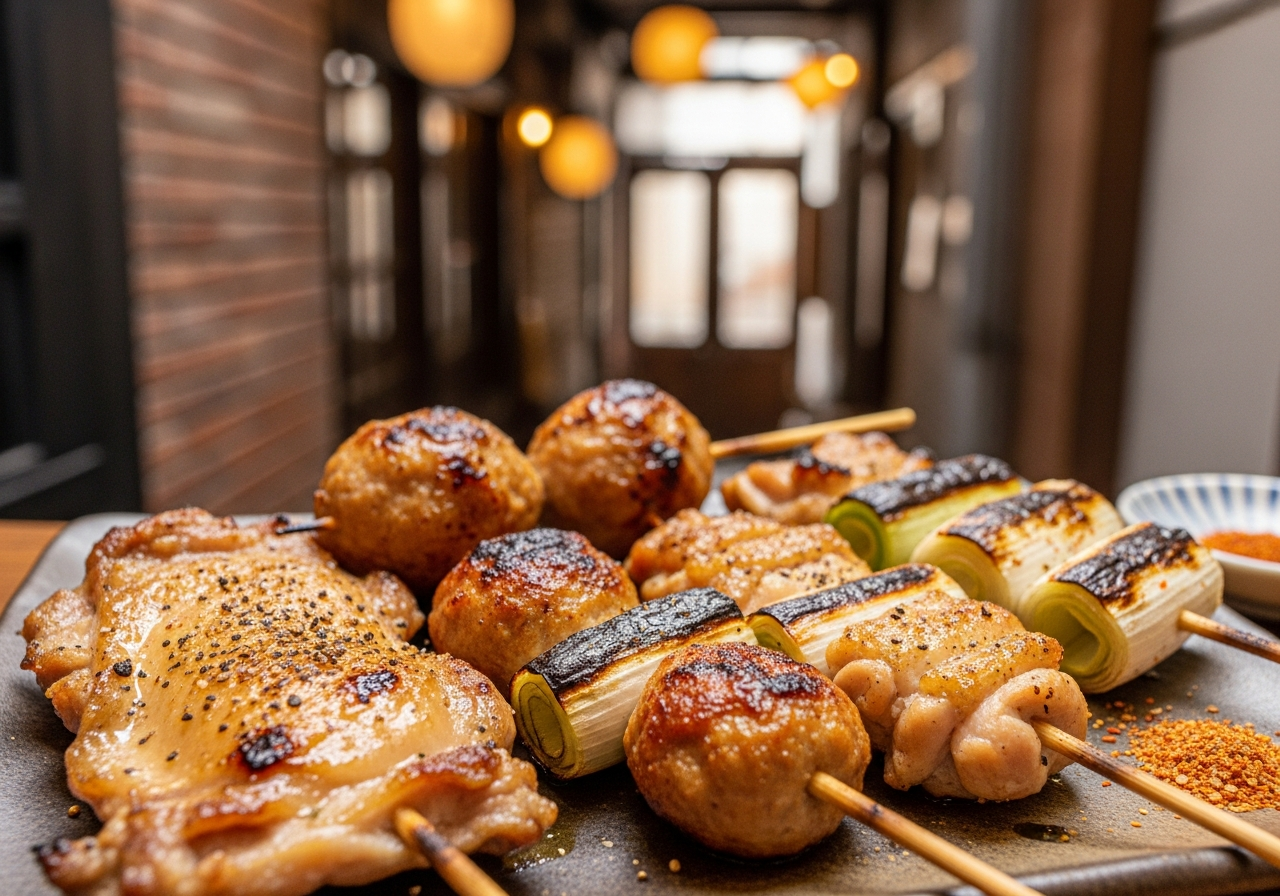
The most-reviewed yakitori spot in the immediate Nakazakicho area, and the one most likely to be full on a weekday. The thick-cut thigh, seared over charcoal and finished with scattered salt, is the signature — genuinely juicy in a way that makes you order a second round. Rare cuts like tamahimo and the raw liver sashimi are the reason regulars book days ahead. Counter seating only; eight seats plus two small tables, so reservations are non-negotiable on weekends.
2. Sumibi Yakitori Asai Nakazakicho (炭火焼鳥 あさヰ 中崎町)
- 📍 8-6 Kurosaki-cho, Kita-ku, Osaka
- 🕐 Mon–Sat 17:00–23:00 (L.O. food 22:00), Sun 17:00–22:00 (L.O. food 21:00), no fixed closing day (as of May 2026)
- 💰 ¥3,000–¥3,999 per person (food only) / ¥4,000–¥5,000 (with drinks)
- 🚃 Nakazakicho Station (3 min walk)
- 🗺 Open in Google Maps
- 📋 Tabelog
What to order: Omakase yakitori course, 6 dishes (¥3,000 food only / ¥5,000 with all-you-can-drink)
Located along the Tenjin Nakazakicho shopping arcade, this place operates on a whole-bird philosophy — the chicken is butchered fresh each morning, which means rare cuts are available early and sold out by late evening. The shop rebranded from its previous name (Yamamoto-ya) in late 2024 under new management, but the charcoal grill and morning-catch sourcing remain the same. Go before 7pm if you want the full range of parts.
3. Nonotori Umemido (野乃鳥 梅味堂)
- 📍 3-3-15 Nakazakinishi, Kita-ku, Osaka (JR Viaduct Unit 34)
- 🕐 Daily 16:00–22:30 (L.O. 22:00), no regular closing day (as of May 2026)
- 💰 ¥3,000–¥4,999 per person (food only) / ¥4,500–¥6,000 (with drinks)
- 🚃 Nakazakicho Station (5 min walk) / Osaka Umeda Station (6 min walk)
- 🗺 Open in Google Maps
- 📋 Tabelog
What to order: Momo tare + Tasmanian mustard + cumin (¥280 per skewer), tori gyoza (¥490)
Tucked under the JR railway viaduct, Nonotori Umemido uses Banshu Hyakujitsu chicken — a regional breed from Hyogo — and the difference in flavour is noticeable even on the standard thigh skewer. The mustard-and-cumin tare option is the house move: a little heat, a little funk, and it works. Reviewed positively as recently as May 2025, with no closure indicators. Private rooms available, which makes it a solid group booking option in an area where most spots are counter-only.
4. Sakaso (咲花草)
- 📍 3-2-17 Nakazakinishi, Kita-ku, Osaka, 1F
- 🕐 From 18:00 daily (check Google Maps for current closing time) (as of May 2026)
- 💰 ¥3,000–¥3,999 per person (food only) / ¥4,000–¥5,000 (with drinks)
- 🚃 Nakazakicho Station (4 min walk)
- 🗺 Open in Google Maps
- 📋 Tabelog
What to order: Sasami sashimi, seseri (neck) salt skewer,焼きおにぎり (grilled rice ball) to finish
Sakaso has been pulling in repeat visitors for years — the kind of place where regulars show up alone at the counter, order the sasami sashimi without looking at the menu, and stay for two hours. The chicken is treated with care: the sasami is served barely cooked, the neck meat is grilled with enough char to stay interesting. It’s a smaller, quieter room than the other spots on this list, which suits it perfectly.
5. Tori Tatsu (とり達)
- 📍 3-3-26 Nakazaki, Kita-ku, Osaka
- 🕐 Thu–Tue from 18:00, closed Wednesday (as of May 2026)
- 💰 ¥2,000–¥2,999 per person (food only) / ¥3,000–¥4,000 (with drinks)
- 🚃 Nakazakicho Station (3 min walk)
- 🗺 Open in Google Maps
- 📋 Tabelog
What to order: Kawa (skin) salt skewer (¥150/skewer), kinkan (¥200/skewer)
The most old-school entry on this list — a counter-only Showa-era spot run by a single owner, where the skewers are small, the prices are low, and the atmosphere is exactly as serious as the grill master wants it to be. The otoshi (table charge) comes as three skewers, which is a fine way to start. Reviewers noted visits as recently as April 2025, confirming it’s still operating. Best for solo diners or couples who want a genuine neighbourhood yakitori experience rather than a group night out.
How to Order
Most yakitori counters in Nakazakicho operate on a per-skewer basis, with an optional omakase course (set number of skewers chosen by the chef) as the easier entry point. If you’re new to yakitori, the omakase is the right call — it usually runs 5, 8, or 10 skewers and covers the range from standard cuts (thigh, neck, heart) to whatever rare parts are available that evening.
Seasoning comes in two styles: shio (salt) and tare (a sweet soy-based sauce). Salt is generally recommended for delicate cuts like sasami and seseri; tare works well on thigh and tsukune (meatball). If you’re unsure, ask — most grill masters will tell you what they prefer for each cut.
Rare parts sell out early. At shops that butcher whole birds in-house (Asai, Hakkodo), the best cuts — back liver, ovarian string, oyster — are gone by 8pm on busy nights. Arriving at opening time (typically 17:00–18:00) or booking in advance is the practical solution.
Drinks are almost always ordered separately. A draft beer or highball runs ¥400–¥600. Several spots offer an all-you-can-drink add-on for ¥2,000 if you’re planning a longer session. Cash is accepted everywhere; card acceptance varies, so carry some yen.
FAQ
Q: Is yakitori in Nakazakicho expensive?
A: No — it’s one of the more affordable ways to eat well in the Umeda area. Most people spend ¥3,000–¥5,000 per person including drinks. The priciest spot on this list (Hakkodo) averages around ¥4,000–¥5,000 with drinks. The cheapest (Tori Tatsu) can come in under ¥3,000 if you’re not drinking heavily.
Q: Do these shops have English menus?
A: Mostly no. Nonotori Umemido has the most accessible setup for non-Japanese speakers, with a broader menu format and private rooms where staff have more time to help. At counter-only spots like Hakkodo and Tori Tatsu, pointing at what the person next to you is eating works fine. Google Translate’s camera function handles most yakitori menus without trouble.
Q: When is the best time to visit?
A: Weekday evenings between 17:30 and 19:00 are the sweet spot — you’ll get a seat without a reservation at most spots, and the rare cuts haven’t sold out yet. Friday and Saturday nights fill up fast; book at least a day ahead for Hakkodo and Asai. Sunday evenings are quieter than you’d expect and a good fallback option.
Information is accurate as of May 2026. We recommend checking Google Maps for the latest hours and prices before visiting.