Last updated: July 3, 2026
This article reflects information available at the time of writing. Check Google Maps for the latest hours and availability.
Introduction
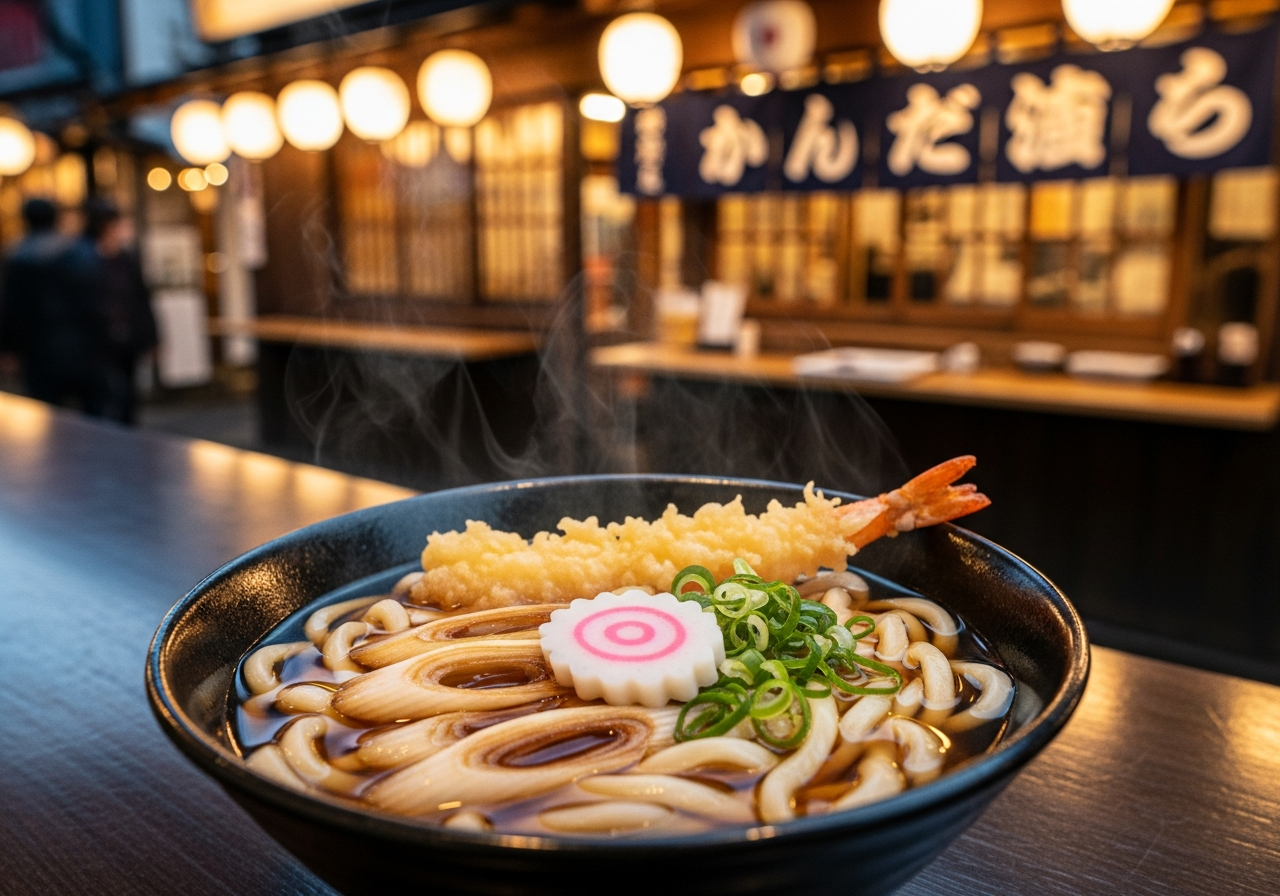
Tenma doesn’t do subtle. Japan’s longest covered shopping arcade runs straight through it, the izakayas spill onto the street by 5pm, and the udon shops — the good ones — have queues out the door before noon. This is a working neighbourhood that has been feeding itself well for a long time, and the noodle culture here reflects that: no-nonsense bowls, serious dashi, and handmade noodles that bear no resemblance to anything that came out of a factory bag.
What makes the Tenma udon scene worth a dedicated trip is the range packed into a small radius. Within ten minutes of JR Tenma Station you can eat Michelin-recognised Osaka-style noodles with a silky, iriko-forward broth, proper Kagawa-style sanuki udon with the kind of firm chew that only comes from a chef who grew up eating the real thing, and old-school hand-pulled bowls that have been feeding the neighbourhood for decades. None of these places are trying to be Instagram-friendly. They’re trying to make good udon, and they’re succeeding.
This guide covers three verified, currently operating handmade udon shops in and around Tenma. All three are worth the queue — and all three will have a queue.
1. Ogimachi Udonya Asuro (扇町うどん屋 あすろう)
- 📍 3-8-3 Tenjinbashi, Kita-ku, Osaka 530-0041 (Machisu Building 1F)
- 🕐 Mon, Tue, Fri–Sun: 11:00–16:00 (or until sold out) as of May 2026
- 💰 ¥750–¥1,350 (food only)
- 🚃 Ogimachi Station (2 min walk) / JR Tenma Station (5 min walk)
- 🗺 Open in Google Maps
- 📋 Tabelog
What to order: Tori-ten to tai-chikuwa-ten to ontama bukkake (¥1,250)
Asuro holds a Michelin Bib Gourmand in the 2025 Guide, and the queue that forms before the 11am opening on weekends tells you everything you need to know about its reputation. The owner trained at two of Osaka’s most respected udon houses — Takeuchi Udon and Kisuke — and the result is a noodle that sits squarely in the Osaka tradition: medium-thin, high-hydration, with a yielding chew that’s softer than Sanuki but far more interesting than anything you’d call limp. The iriko-based dashi in the cold bukkake is sharp and clean, and the tai-chikuwa tempura — fish cake fried to order — is the topping you didn’t know you needed. The shop closes when the noodles run out, which on busy days can be well before 4pm, so aim for an early arrival or accept the queue.
2. Sanuki Udon Imayuki (讃岐うどん 今雪)
- 📍 3-10 Kamiyamacho, Kita-ku, Osaka 530-0026 (Crown Maeda Building 1F)
- 🕐 Lunch: 11:30–14:30 (LO 14:00) / Dinner: 18:00–21:00 (LO 20:30); irregular holidays as of May 2026
- 💰 ¥550–¥1,200 (food only)
- 🚃 JR Tenma Station (7 min walk) / Nakazakicho Station (6 min walk)
- 🗺 Open in Google Maps
- 📋 Tabelog
- 🌐 Official site
What to order: Hiya-hiya kake udon (¥550) / Hiya-hiya lemon udon — summer seasonal (¥750)
The owner grew up in Kagawa Prefecture eating sanuki udon, then made the trip back to master the craft before opening Imayuki in Kamiyamacho in 2012. The noodles are made with carefully selected flour and salt to replicate the firm, powerful chew of the real thing, and the broth is built from a generous quantity of iriko — the dried sardines that give Kagawa udon its distinctive punch. The base kake udon at ¥550 is one of the better-value bowls in the city. The summer seasonal lemon udon — cold noodles in cold dashi with sliced lemon — is a genuinely refreshing variation that’s worth timing your visit around. The shop has an official website and takes reservations via Tabelog, which is worth using for dinner.
3. Komaichi Teuchiudon (こまいち手打ちうどん)
- 📍 Near Tenjinbashi, Kita-ku, Osaka (Ogimachi/Tenma area)
- 🕐 Lunch hours; check Google Maps for current schedule as of May 2026
- 💰 ¥700–¥1,200 (food only)
- 🚃 Ogimachi Station (1 min walk) / JR Tenma Station (5 min walk)
- 🗺 Open in Google Maps
- 📋 Tabelog
What to order: Teuchiudon kake (¥750) / Nabe-yaki udon (seasonal, ¥1,100)
The handmade noodles are visible through a glass panel as they’re being made — the kind of transparency that only works when the product is worth watching. This is the most neighbourhood-facing of the three shops: a counter-heavy room, a short menu, and a style that sits between Osaka softness and Sanuki chew. The broth keeps the seasoning restrained, letting the natural sweetness of the wheat come through, and the noodles are slightly thicker than average — good for the nabe-yaki hot pot in winter, when the clay pot arrives bubbling and the egg is still just set. It’s a short walk from Ogimachi Station’s Exit 4, tucked just off the main arcade strip.
How to Order
All three shops operate on a walk-in basis — no reservations for lunch at Asuro or Komaichi, though Imayuki takes dinner bookings via Tabelog. At Asuro, the queue forms outside before opening; join it, and staff will take your order while you wait. At Imayuki and Komaichi, you order at the counter or from a server once seated.
The key vocabulary: kake is a plain hot broth bowl; hiya-hiya means cold noodles in cold broth; hiya-atsu is cold noodles in hot broth; bukkake is a concentrated dipping-style sauce poured directly over the noodles. Tori-ten is chicken tempura; ontama is a soft-boiled egg. Most menus have photos, and pointing works fine.
Cash is safest at all three, though Imayuki accepts cards and IC cards. Portions are generous — a regular bowl is filling. If you’re planning to hit more than one shop in a session, order small at the first stop. Sold-out closures are common at Asuro, especially on weekends; if you arrive after 2pm and the shutters are down, that’s why.
FAQ
Q: Is udon in Tenma expensive?
A: No. A solid bowl at any of these three shops runs ¥550–¥880 for a plain or lightly topped udon. Even a fully loaded bowl with chicken tempura, fish cake, and a soft egg stays under ¥1,400. Budget ¥1,000–¥1,200 per person for a satisfying lunch with one topping.
Q: Do these shops have English menus?
A: Not reliably. Asuro and Komaichi have photo menus which make ordering straightforward — point at what looks good. Imayuki’s official website has a menu in Japanese, but the dishes are simple enough that a quick translation app photo will handle it. None of the three require Japanese to navigate successfully.
Q: When is the best time to visit?
A: Weekday lunches between 11:30am and 12:30pm are your best window — busy, but manageable. Asuro on a Saturday or Sunday morning will have a queue of 10–20 people by opening time; arrive at 10:50am if you want to be near the front. Imayuki is the only one with dinner service, making it the easiest option if your schedule doesn’t allow for a midday stop.
Information is accurate as of May 2026. We recommend checking Google Maps for the latest hours and prices before visiting.