Last updated: July 3, 2026
This article reflects information available at the time of writing. Check Google Maps for the latest hours and availability.
Introduction
Nakazakicho is the kind of Osaka neighbourhood that resists easy categorisation. Vintage clothing shops, independent coffee roasters, and narrow shotgun houses sit side by side on streets that feel genuinely unhurried — a rare thing this close to Umeda. It’s not a food destination in the way Dotonbori or Shinsekai are, but that’s precisely the point. The udon shops here aren’t performing for tourists. They’re feeding the neighbourhood.
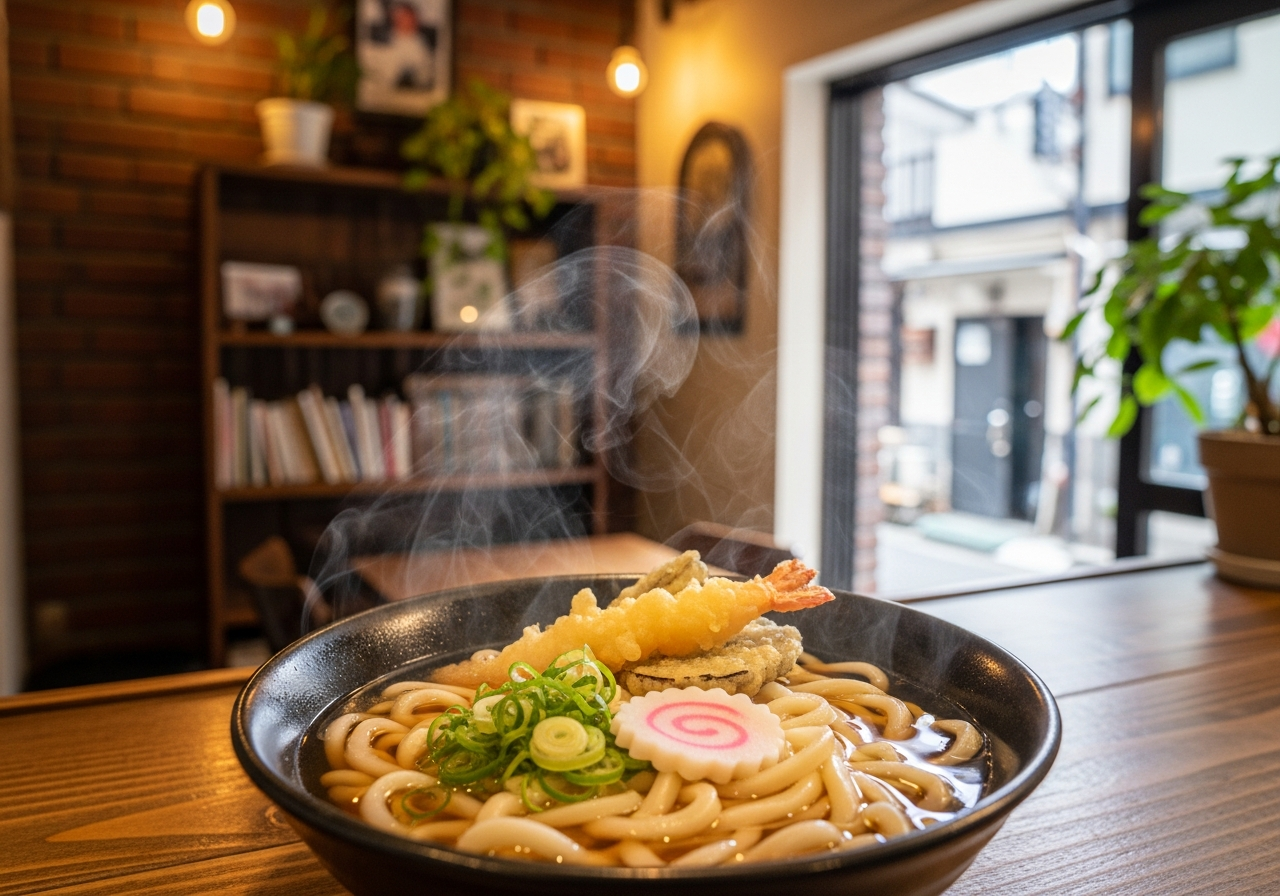
What you’ll find in and around Nakazakicho is a tight cluster of noodle shops that each take a different approach to the bowl. One is a Tabelog Top 100 pick running authentic Sanuki-style noodles with iriko-heavy dashi and a menu that changes with the seasons. Another is a cult favourite with some of the chewiest, most aggressively textured udon in Osaka — the kind of place that draws a queue on weekday lunchtimes. The third is a Showa-era neighbourhood canteen that’s been feeding locals since 1977, with a house-made curry udon unlike anything else in the city.
All three are within a ten-minute walk of Nakazakicho Station. Prices are almost uniformly under ¥1,000. This guide covers what to order, when to go, and what to expect at each one.
1. Sanuki Udon Imayuki (讃岐うどん 今雪)
- 📍 1F Crown Maeda Building, 3-10 Kamiyamacho, Kita-ku, Osaka
- 🕐 Lunch: 11:30–14:30 (L.O. 14:00) / Dinner: 18:00–21:00 (L.O. 20:30) (as of May 2026)
- 💰 Budget per person: ¥700–¥1,000 (food only)
- 🚃 Nakazakicho Station (6 min walk) / Ogimachi Station (5 min walk)
- 🗺 Open in Google Maps
- 📋 Tabelog
- 🌐 Official site
What to order: Kamatama udon (¥750) / Hiyahiya lemon udon — seasonal (¥950)
Imayuki holds a spot on the Tabelog Udon West Top 100 for 2024 — the most credible recognition in the Japanese udon world. The owner is from Kagawa Prefecture, trained there, and built the menu around iriko dashi made with Ibuki Island dried sardines and Rishiri kombu, paired with house-made high-hydration aged noodles. The result is a broth that’s deeper and more savoury than most Osaka bowls, with noodles that have real chew. The summer lemon cold udon is worth timing your visit around.
2. Udonya Kisuke (うどん屋 きすけ)
- 📍 1F Coop Nomura Umeda Building A, 4-11 Tsuruno-cho, Kita-ku, Osaka
- 🕐 Weekdays: 12:00–16:00 / Weekends: 12:00–20:00 (closes when noodles run out) (as of May 2026)
- 💰 Budget per person: ¥800–¥1,300 (food only)
- 🚃 Nakazakicho Station (6 min walk)
- 🗣 English menu: Yes
- 🗺 Open in Google Maps
- 📋 Tabelog
What to order: Tai chikuwa ten to onsen tamago no bukkake udon — sea bream fishcake tempura and soft-boiled egg cold udon (¥850)
Located near Umeda, Kisuke is one of Japan’s Tabelog Top 100 udon restaurants. It’s a popular udon restaurant in Nakazakicho that regularly draws long lines, but is consistently recommended for its udon and tempura. The noodles are made in-house and have an unusually firm, elastic texture — noticeably chewier than the soft Osaka norm. They have an English menu and are cash only; no photos or videos are allowed except of your food. Go early on weekends — they close when the noodles run out, and that happens faster than you’d expect.
3. Chikara Mochi Shokudo Nakazaki (力餅食堂 中崎店)
- 📍 1-9-2 Nakazaki, Kita-ku, Osaka
- 🕐 11:00–19:30 (as of May 2026)
- 💰 Budget per person: ¥500–¥700 (food only)
- 🚃 Nakazakicho Station (2 min walk)
- 🗺 Open in Google Maps
- 📋 Tabelog
What to order: Curry sara udon with rice (¥650) / Kitsune udon (¥550)
Founded in 1977, this branch of the Chikara Mochi chain sits right on the Tengo Nakazaki covered shopping arcade — the kind of street that still has a fishmonger and a hardware store. The shop’s signature is a curry udon made with noodles that have curry powder kneaded directly into the dough, giving them a distinctive yellow colour. The dashi — pulled from Rishiri kombu and katsuobushi — goes into the udon, soba, and donburi broths alike, and the owner hasn’t changed the recipe in decades. Nothing here costs more than ¥700. It’s the most honest bowl in the neighbourhood.
How to Order
All three shops are counter or table-service — no ticket machines. At Kisuke and Imayuki, staff will take your order verbally. Kisuke has an English menu, so point if needed. At Imayuki, the menu is Japanese only, but the dishes are straightforward: kaketama (hot broth), bukkake (cold, concentrated dashi poured over), kamatama (egg-mixed), and shoyu (soy sauce). At Chikara Mochi, just say “curry sara udon” or “kitsune udon” — it’ll land.
Udon in this area is a lunch-and-early-afternoon affair. Kisuke closes when the noodles run out, which on weekends can be as early as 3pm. Imayuki runs a dinner service, but the lunch crowd is the main event. Chikara Mochi keeps the longest hours and is the safest bet if you arrive after 2pm.
All three are cash-only or cash-preferred — bring yen. Portions are generous by default; a standard bowl is 300g of noodles at Imayuki, with large (450g) and extra-large (600g) available on most dishes. Don’t over-order on your first visit.
FAQ
Q: Is udon in Nakazakicho expensive?
A: No. Most bowls run ¥700–¥950. A full meal with a side at any of these three shops will come in under ¥1,200. Chikara Mochi is the cheapest of the three, with most dishes under ¥700.
Q: Do these shops have English menus?
A: Kisuke has a confirmed English menu. Imayuki and Chikara Mochi are Japanese only, but the menus are short and the dishes are simple enough to navigate with a translation app or by pointing at photos on Tabelog.
Q: When is the best time to visit?
A: Weekday lunchtimes are the sweet spot — busy enough to feel lively, but without the weekend queues. Kisuke in particular draws a 20–30 minute wait on Saturday and Sunday afternoons. Arrive at opening (12:00 for Kisuke, 11:30 for Imayuki) to walk straight in. Chikara Mochi rarely has a queue at any time.
Information is accurate as of May 2026. We recommend checking Google Maps for the latest hours and prices before visiting.